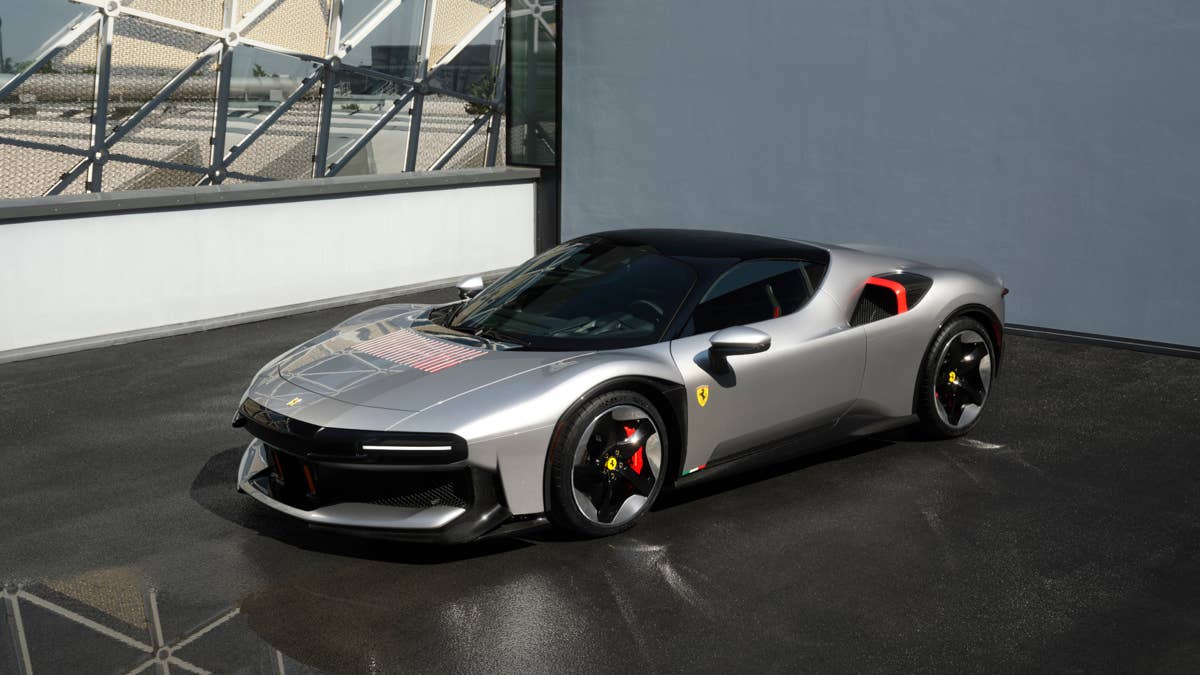
Following the one-off HC25 revealed earlier this year, Ferrari has just revealed another such creation, and its styling appears to have been influenced by the controversial Luce EV. Yet, while futuristic, the design also feels very much Maranello-made. It’s called the CZ26, and it was commissioned by an anonymous U.S.-based collector on the bones of the SF90 Stradale, the predecessor to today’s 849 Testarossa. That means a 4.0-liter twin-turbo V8 plug-in hybrid powertrain, but with figures of 1,017 hp and 593 lb-ft, this is the same setup as the hardcore SF90 XX that arrived between the SF90 and Testarossa. Ferrari estimates 0-62 mph in 2.5 seconds, 0-124 mph in 6.7 seconds, and a top speed of 204 mph. However, the main drawcard here isn’t speed, but unique style.
Ferrari CZ26: Futuristic Design Meets Flowing Lines
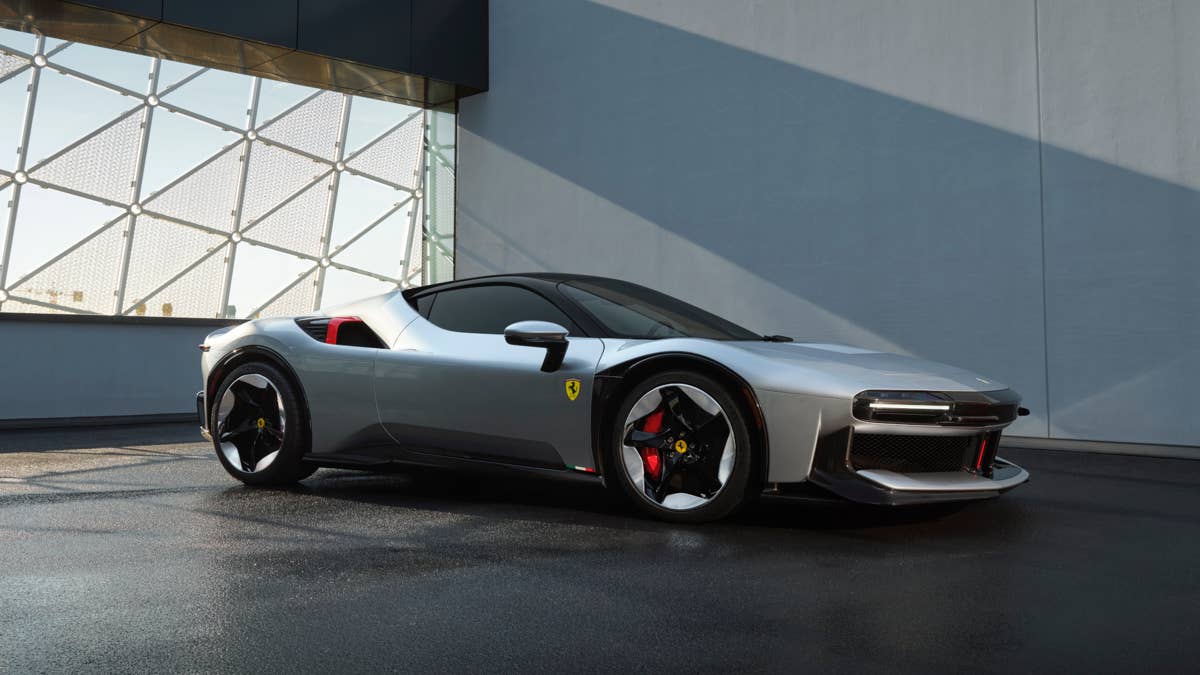
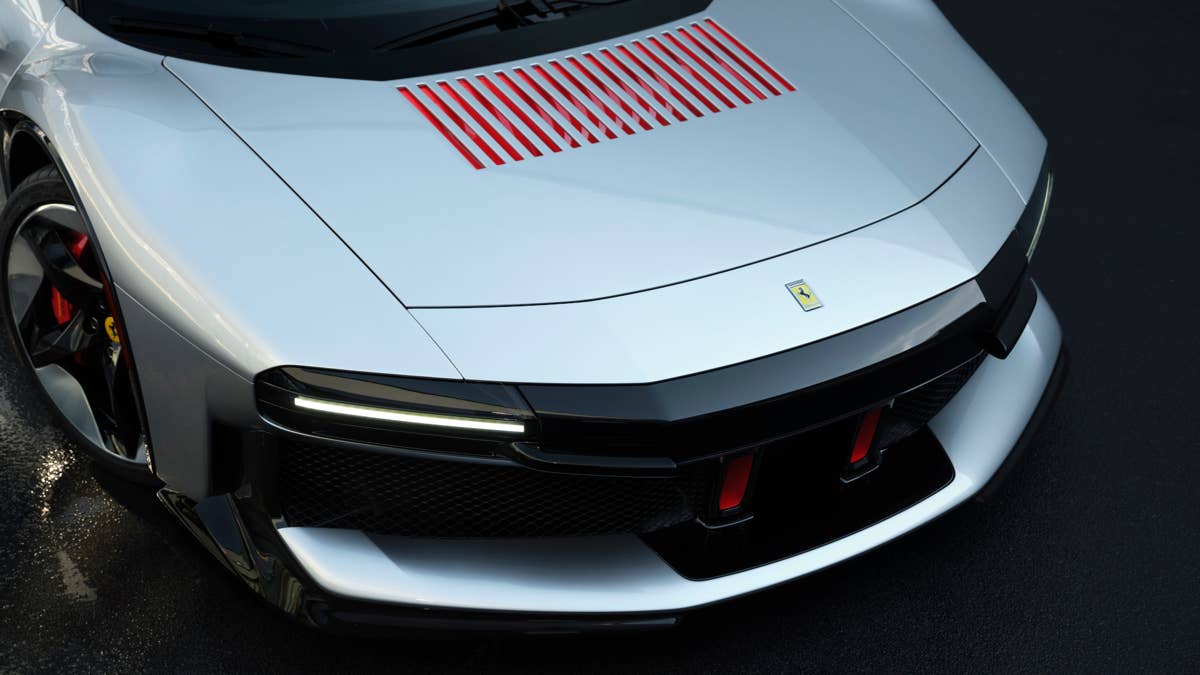
The CZ26 was designed by the Ferrari Design Studio as part of Ferrari’s Special Projects program under the supervision of Flavio Manzoni, and the result is undeniably clean. At the front, super-slim LEDs in a full-width black mask tie the car to the Luce and other recent Ferraris, like the 12Cilindri. Strakes in the front hood help evacuate air from the nose, improving downforce, but the red accenting behind it is a little odd, at least until you see the side intakes on the shoulders and the matching brake calipers. Underneath the upper fascia are two uprights in red, pronouncing the gap between the hood line and the splitter. Concealed intakes and sensors add to the smooth look, and in profile, the unusual shapes become more pronounced, especially the bulge over the front wheels, which has been outlined in black carbon fiber to create a more dynamic shape behind the wells. A recess in the lower sides of the doors and side skirts makes the car more voluptuous, while the glasshouse is still reminiscent of the SF90.
Further back, muscular rear haunches lead the eye to a truncated rear end with a pert integrated spoiler, below which cantilevered taillights appear. These look similar to those on the 12Cilindri, but they’re bespoke to this car. Lower down, dual exhaust exits mimic those of the SF90 but are finished in titanium, and a new diffuser with loads more carbon fiber reduces the rear’s visual mass. Complete with the Scuderia shield on the doors, complemented by a tricolore flag, the CZ26 looks both fresh and distinctively Ferrari, compliments that can also be paid to the bespoke wheels, which feature a gloss black painted finish contrasted by a shot-peened polished surface blasted by microscopic beads. Finally, the paint is an exclusive shade called Argento Veloce, while the red accents are a hue called Rosso Lampante. Similar coloring appears in the cabin.
Ferrari CZ26 Interior: Simple But Stylish
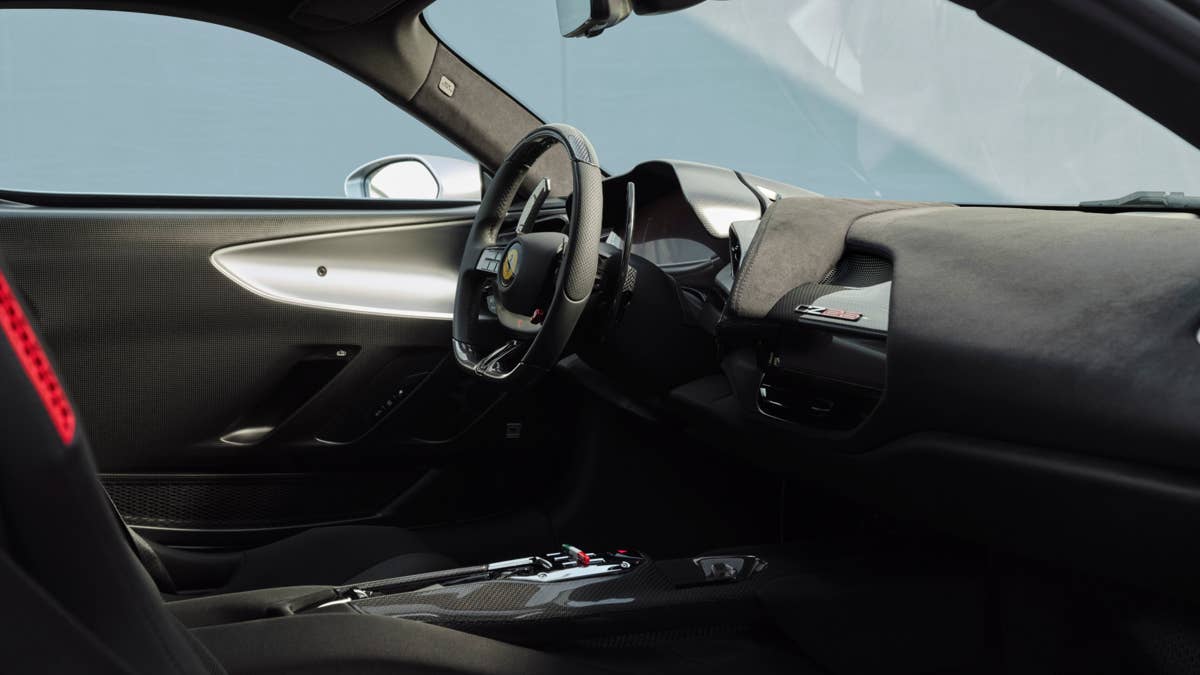
The cabin of the Ferrari CZ26 is dressed in a “technical” fabric with 3D-printed seat inserts in the aforementioned Rosso Lampante shade, with embroidered CZ26 logos. Badge logos also appear between the seats and on the carbon fiber-rich dashboard, which is uplifted by Argento Veloce accents. It’s simple but effective, and the lucky commissioning buyer can drive the car at its full potential knowing that the exterior reimagining was comprehensively tested in the wind tunnel. What they paid is a mystery, but you can bet it was probably in the seven-figure range.
The only concern I have is that, after the CZ26, the HC25, and the SC40 before it, Ferrari is now producing more than a single one-off each year. Does that risk watering down the exclusivity factor a little? Perhaps, but there was a gap in 2024, when no Special Projects cars were revealed. Still, there are more “special” supercars saturating the landscape than ever before, and standing out is proving increasingly difficult.