A bipartisan House effort is underway to fundamentally change how sexual misconduct and other bad behavior on Capitol Hill is identified, investigated and eradicated.
But the widely-held goal of transforming the workplace culture of Congress could quickly run up against longstanding lawmaker resistance to tools necessary to police themselves, with some worried it will turn into another avenue for partisan mudslinging.
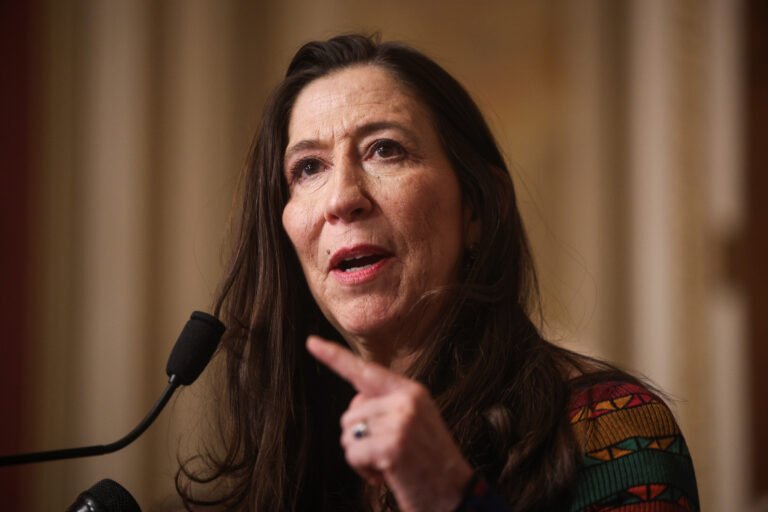
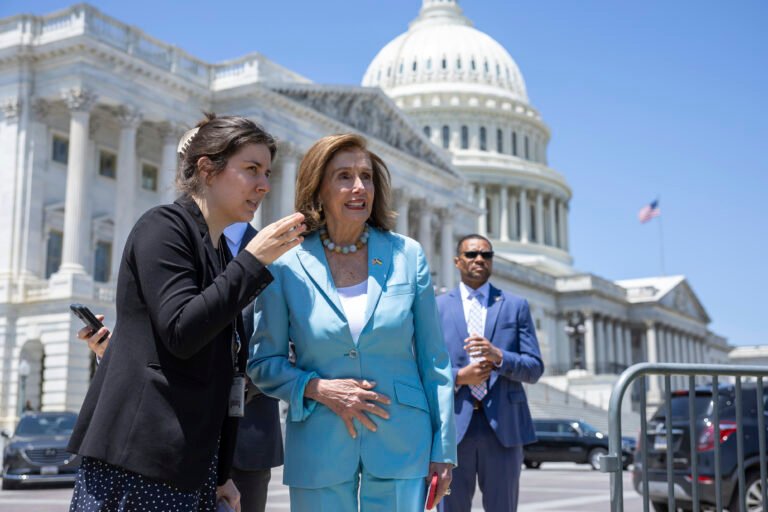
Reps. Kat Cammack (R-Fla.) and Teresa Leger Fernández (D-N.M.), the chairs of their respective party’s women’s caucuses, have been working on legislation to change how the Ethics Committee functions and streamline the various processes by which staffers can report violations, with plans to unveil a framework in September after the summer recess.
“I am incredibly optimistic that when we get back into session that we will have a set of reforms that we can all agree on,” Leger Fernández said in an interview this past week.
“We’ve been hard at work all summer, and we’re on track to unveil our proposal next month,” Cammack said in a statement.
The rash of sexual misconduct allegations over the past year against male members of Congress that resulted in two resignations in the same week — from former Reps. Eric Swalwell of California and Tony Gonzales of Texas — has increased the urgency for action. Cammack and Leger Fernández also have support from Speaker Mike Johnson and Democratic Leader Hakeem Jeffries, giving their effort more legitimacy.
Cammack said in an interview before the break she was in touch with Johnson’s office “every single week” on her collaboration with Leger Fernández, describing the speaker as “very aggressive in trying to get this moved along.”
Ultimately, it remains to be seen whether lawmakers are prepared to make big changes that would open themselves and their aides up to more scrutiny amid fears the policies could stoke frivolous claims, finger-pointing and partisan witch hunts.
The last major push to overhaul the congressional ethics process was in 2018, trailing the #MeToo movement a year earlier. Congress sent legislation to President Donald Trump’s desk — which he signed into law — to hold lawmakers liable for harassment and require them to reimburse the Treasury Department for settlements stemming from misconduct.
That effort also established a voluntary mediation process for congressional staffers, giving employees the option to consult with a confidential adviser from the Office of Congressional Workplace Rights to walk them through the process.
What the new law did not do was eliminate the convoluted maze of options where staffers can go to formally register their complaints: The bipartisan House Ethics Committee, the Office of Congressional Workplace Rights or the Office of Congressional Conduct — the non-partisan investigative body that vets outside referrals and makes recommendations of official action to the Ethics Committee.
Leger Fernández said she wants her bill with Cammack to establish a “one stop shop where somebody can know where to call, they’re talking to somebody who has trauma-informed training who will help them understand what the remedies and avenues are.”
“The current system failed the people it was supposed to protect, and everyone here knows it,” Cammack said. “Coming forward is extraordinarily difficult. Fear of retaliation and institutional pressure silence victims long before justice has a chance to speak.”
They also are likely to recommend overhauling how the House Ethics Committee itself functions, including by addressing the speed at which the panel releases reports.
Sometimes the panel has moved quickly. For instance, members issued a report in early August finding Rep. Chuck Edwards participated in “persistent unprofessional and inappropriate conduct towards two young female staffers” — less than five months after allegations against the North Carolina Republican surfaced.
The report recommended that Edwards be censured. While he has denied improper behavior, he also dropped his bid for reelection.
But other inquiries pending before the Ethics Committee have languished, such as the two-year-old probe into allegations that Rep. Cory Mills (R-Fla.) violated campaign finance laws and omitted information from financial disclosures.
Additional allegations involving Mills surfaced after a 2025 incident in which the Washington, D.C, Metropolitan Police Department responded to a report that Mills assaulted a woman he was in a relationship with that the House Ethics Committee is also investigating. Mills has denied the allegations and said he has confidence in the congressional ethics process.
Providing more resources to increase the number of investigative staff and setting stricter deadlines for producing reports could help speed up pending inquiries. But Cammack and Leger Fernández also want to guarantee there are sufficient consequences for lawmakers when misconduct is determined. They plan to recommend that all members of the House be prohibited from having intimate relationships with any congressional staffer, not just those who work in their offices.
The two women want to ensure punishments are meaningful and consistent across the board, too. In the case of Edwards, Leger Fernández said, “we have an incredibly damning and disturbing Ethics Committee report of years of sexual harassment and all they’re recommending is a censure. That, I do not think, is adequate.”
There is a need, she added, for a “stronger and clearer delineation of what happens when you violate the rules of Ethics.”
“Enforcement is where the difficult conversations are happening because enforcement is what makes this real. We’re working through those questions with members directly, which is how real reform gets done,” Cammack said.
Cammack added that every provision must pass the test of “does it actually hold people accountable, or does it just look like it does? Anything that can’t clear that bar isn’t reform, and I’m not interested in reform that’s just for show.”
Tom Rust, the staff director for the Ethics Committee, declined to comment.
Leger Fernández said much of the legislation she is fine-tuning with Cammack could be integrated into the House rules package, which lawmakers must adopt at the start of every Congress.
She acknowledged, however, that other proposed changes would require buy-in from the Senate. That could include codifying the Office of Congressional Conduct into law. The OCC currently only has the authority to investigate members and staff in the House and needs House lawmakers to reauthorize it every two years.
The OCC receives referrals of alleged staff and member misconduct and can then choose to begin an investigation, which requires sign-off by two board members — one chosen by the speaker and one by the minority leader. Once that investigation is complete, it triggers a countdown in which the House Ethics Committee has to either continue with its own investigation or release the OCC’s findings.
This process has spurred the House Ethics Committee to act on countless occasions, including in the cases of former Reps. Chris Collins in 2017, Duncan Hunter in 2016 and, most recently, Sheila Cherfilus-McCormick. Collins went on to plead guilty to participating in an insider trading scheme and was sentenced to over two years in federal prison, while Hunter also pleaded guilty to stealing campaign funds and was sentenced to just under a year in jail. Trump later pardoned them both.
Cherfilus-McCormick, meanwhile, was indicted on federal fraud charges and has pleaded not guilty, with her trial expected to start next year.
But the OCC has consistently been on the receiving end of bipartisan vitriol since its inception in 2008, with members deeply uncomfortable with the idea of being put under the microscope by a slate of outsiders. In 2010, Democrats were eager to gut the OCC’s authority and Republicans in 2017 moved to bulldoze its power, but reversed course after public blowback.
While it wasn’t politically viable to kill the office at the start of the 119th Congress, either, GOP leadership slow-walked appointing members to the OCC’s board, delaying the start of its work for months.
It’s far from certain the Senate would support giving the OCC the force of law or agree to come under its umbrella, primarily for the same reasons why it makes many members uneasy in the House — though momentum is growing around the idea.
Earlier this summer, the Congressional Progressive Staff Association, which represents more than 1,500 House and Senate employees, sent a letter to the leaders on the House Administration Committee and the Senate Committee on Rules, urging the OCC be expanded to the Senate and given limited subpoena authority.
One person granted anonymity to share details about ongoing negotiations over the Cammack-Leger Fernández package said there has been some outreach to Sen. Adam Schiff (D-Calif.). A spokesperson for Schiff said the senator “has been engaging with other offices about possible reforms to the Senate’s rules surrounding sexual misconduct and workplace rights.”
A spokesperson with the Senate Ethics Committee did not respond to a request for comment.
“Our focus right now is getting it right in the House first,” Cammack said.
“The leaders of both parties support it, and members on both sides are done looking the other way. Everyone who comes to work in the People’s House deserves dignity, respect, and protection from abuse,” she added.