
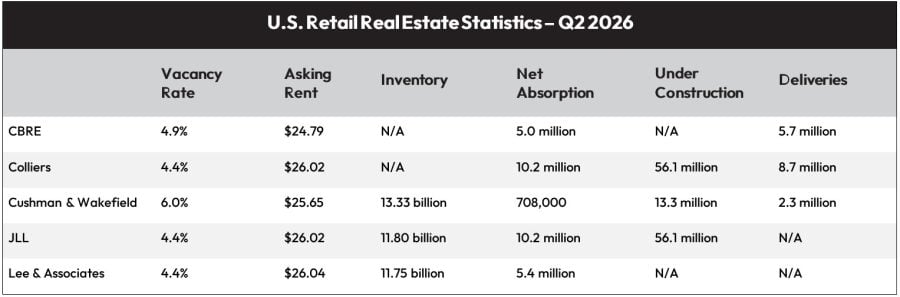
After a soft first quarter, the retail sector regained positive momentum in Q2 as tenant demand returned, vacancies remained stable and new construction stayed limited.
According to second-quarter reports from CBRE, Colliers, Cushman & Wakefield, JLL and Lee & Associates, the combination is creating a favorable setup for landlords and investors, even as retailers contend with increasingly selective consumers.
Absorption
- Retail demand returned in the second quarter, reversing the Q1 negative absorption created, in part, by multiple move-outs.
- Ongoing tenant demand and the backfilling of vacant space in Q2 helped overcome that first-quarter softness.
- Some retail categories also benefited from back-to-school spending, with clothing, sporting goods and school supplies among the areas reporting sales growth.
Construction
- New retail supply remained limited, with higher construction costs and continued financing challenges discouraging speculative development.
- Most new projects are concentrated in build-to-suit and grocery-anchored developments, where tenant demand provides greater certainty.
- Sunbelt markets continue to account for the lion’s share of construction activity.
- The supply constraints are helping support modest rent growth nationwide.
Investment
- Investors remain actively interested in retail, with first-half 2026 sales volume reaching $33 billion, a 14% increase from the same period last year.
- Stronger sales momentum is putting pressure on pricing and contributing to cap-rate compression.
Outlook
- Retail construction is expected to remain sluggish and concentrated in select Sunbelt metros, keeping vacancies low into 2027.
- Consumers are likely to remain value-conscious, benefiting discount retailers as well as specialty and off-price centers.
- Well-capitalized retailers and those with strong value propositions should remain better positioned to handle potential headwinds.
- Limited new supply should continue to support rent growth, while landlords and tenants with strong balance sheets, flexibility and omnichannel capabilities will be better equipped to adapt.
- Investors are likely to remain in acquisition mode, although scarce inventory could increasingly drive activity toward off-market deals and secondary markets.
The post Retail Regains Its Footing as Demand Returns and Supply Stays Soft appeared first on Connect CRE.