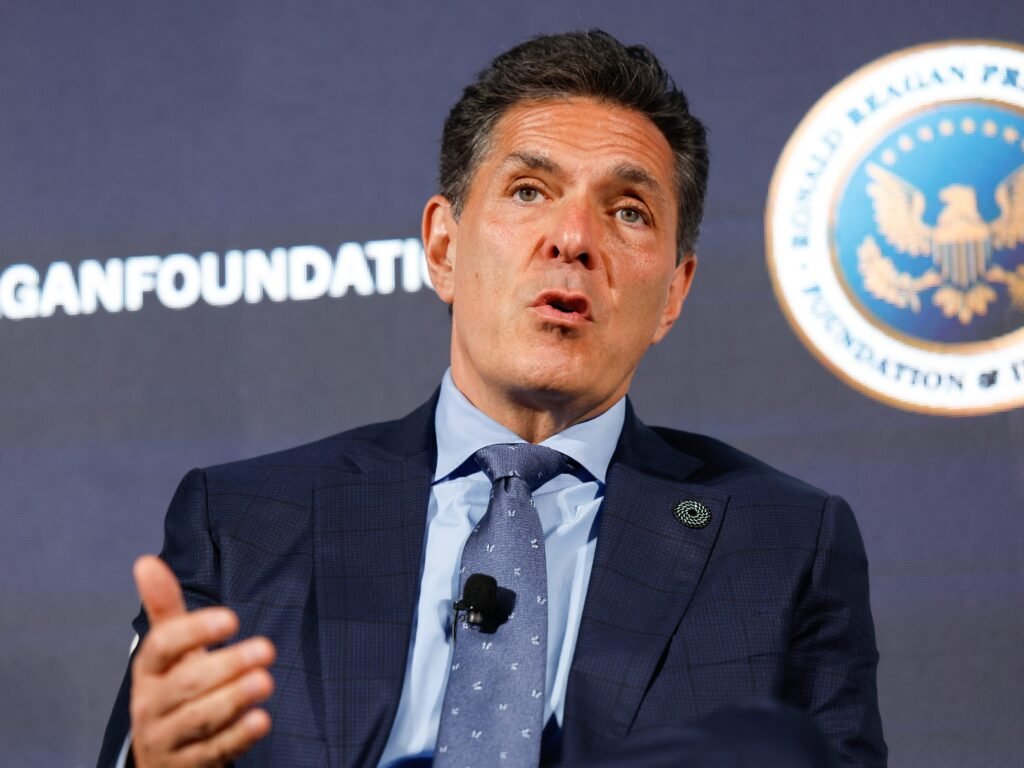
Bloomberg/Getty Images
- Daniel Lubetzky said he struggled with burnout while building KIND Snacks into a huge business.
- He said the kind of nonstop grind he embraced early on left little room for recovery.
- The “Shark Tank” investor shares 4 ways founders can protect their ambition from burnout.
Daniel Lubetzky built KIND Snacks into a multibillion-dollar business while running on four or five hours of sleep a night.
The “Shark Tank” investor said the grind left him looking like a “phantom raccoon,” with little sleep, little sun, and no time to work out. Founders often have to work intensely, he said, but the experience taught him that ambition needs boundaries.
That balancing act is getting harder in the age of AI. The technology can help founders work across multiple projects and take on tasks they might once have outsourced, but its always-on nature can also encourage them to keep pushing — while fragmenting their attention in the process.
“You have to work hard, but you need to find the balance between working hard and also reminding yourself that it’s a marathon, it’s not a sprint,” Lubetzky told Business Insider.
Lubetzky, who is launching the “Build or Break” podcast on September 3, shared four ways founders can protect themselves from burnout without abandoning their goals.
1. Take deliberate recovery time
Lubetzky said founders should expect periods of intense work, especially in the early years of building a company. But he learned while running KIND that the pace can become unsustainable if there is no space to recover.
He said he sometimes gave himself permission to step away after a stretch of hard work — even if only for a morning.
“I would work like crazy, but then sometimes I would just take that morning off, and I would just decompress,” Lubetzky said.
2. Schedule time to truly disconnect
Lubetzky said founders should establish a recurring time to completely switch off from work and devices.
He drew a parallel to the Jewish holy day of Shabbat, a weekly day of rest when observant Jews refrain from work and technology use. He said entrepreneurs should find their own equivalent of such a day of rest.
“At some point in your week, you need to find a time to disconnect,” he said. “And truly disconnect.”
3. Create space to process information
Founders do not have to wait for a vacation or a weekly day off to get a mental break, Lubetzky said. Smaller device-free moments throughout the day can help, too.
He suggested taking a walk without a phone, meditating, showering without music, or simply sitting alone with your thoughts. The point is to make room to process information rather than constantly taking in more.
“The amount of inputs we’re throwing into our bodies is so much greater than the amount of processing of those inputs,” he said. “Increase your digestion rate instead of just input, input.”
Lubetzky said the constant flow of messages, content, and updates can make it hard to think clearly. Taking short breaks from those inputs can give founders more space to reflect, reset, and generate better ideas.
4. Turn off nonessential notifications
Lubetzky said founders should also take back control of the notifications competing for their attention.
Apps are designed to draw users back repeatedly, he said, making it easy to check messages and updates thousands of times a day without realizing how much focus is being lost.
“Turn off all of your notifications,” he said. “Regain control over your lives by deciding when you want to check and don’t check 3,000 times a day.”
Lubetzky said he keeps one communication channel open for emergencies, which he declined to share, but turns alerts off elsewhere.
The goal is not to ignore urgent issues or become less committed to the work, he said, but to decide when to engage instead of allowing every platform to set the agenda.