A fast-growing maker of nutrient-dense macaroni-and-cheese could soon be elbowing for more shelf space in grocery stores thanks to its acquisition by a pasta powerhouse.
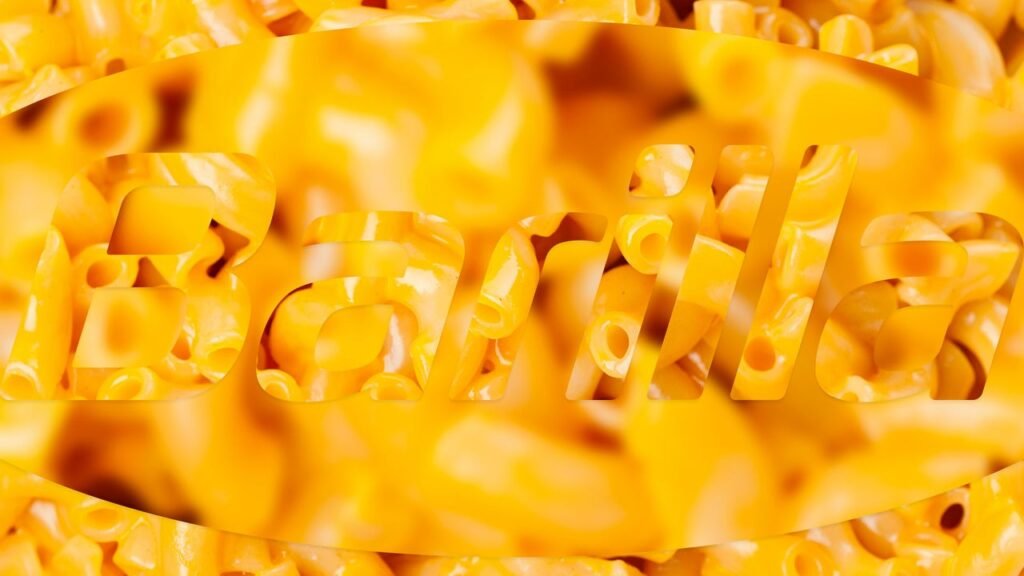
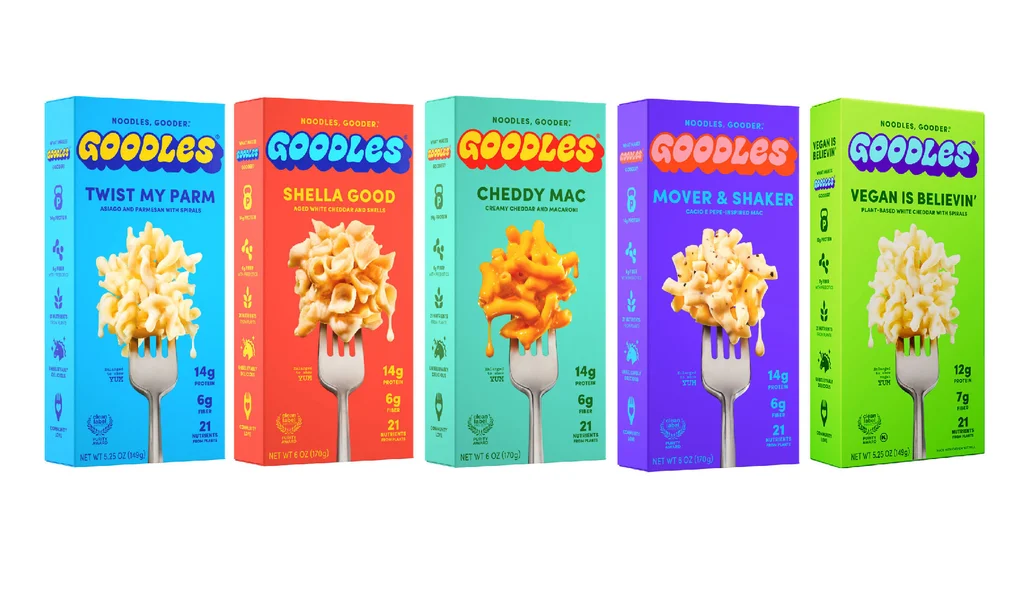
The iconic Italian pasta maker Barilla Group announced Wednesday that it has agreed to acquire Goodles, a relative newcomer to the pasta aisle, for an undisclosed amount. The deal will usher in a new era of growth for the Santa Cruz-based company that was founded in 2020 to offer a healthier alternative and new innovations to the boxed mac-and-cheese market that’s long been dominated by Kraft Heinz’s Kraft and Velveeta brands and General Mills-owned Annie’s Homegrown.
The deal will help the mac-and-cheese maker to expand internationally without causing much of a stir internally, as Jen Zeszut, co-founder and CEO, will remain at the helm of the company and it will continue to operate independently as a standalone brand once the deal is finalized. In characteristic fashion for Goodles, which has become known for its cheeky marketing and brightly-colored packaging, it announced the deal in a press release that was sprinkled with exclamation points and the sorts of details not typical for such announcements.
“I knew the Barilla Group was the perfect partner when I jokingly offered The Chairman (Mr. Barilla) a Goodles bumper sticker for his new car that read ‘Me and My Homies Love Macaronis’ and he actually took it!” Zeszut said in the statement. “I am so excited to see how our two worlds continue to collide.”
Guido Barilla, chairman of the Barilla Group, was more restrained, noting that the family company saw an “exciting” opportunity for the future that it had come to realize with time. “We had been following Goodles closely for some time and became increasingly impressed by the strength of the brand, the quality of its products, and the momentum behind its growth,” he said.
HOW THE ACQUISITION COULD CHANGE GOODLES
But the deal is also serious business for a company that was valued at $88 million after its most-recent funding round in 2023, according to PitchBook. Privately-held Barilla Group had annual revenue of approximately $5.7 billion in 2025, according to the company, and owns a broad portfolio of other global pasta brands, including its eponymous brand.
Even if Zeszut maintains that nothing will change with this acquisition, Goodles will now have the backing of a big pasta player to scale a strategy that previously relied heavily on word-of-mouth advertising and by exploiting its advantages as small, scrappy, and nimble.
While speaking at the Fast Company Grill at SXSW in March, she said the company has intentionally done things its competitors couldn’t—like sending handwritten notes to customers or shipping its products to customers for a tasting party.
“We just knew that we couldn’t outspend them,” Zeszut said during the panel discussion. “We couldn’t rent cuter kids for our commercials—we couldn’t afford a commercial, are you kidding me?—so we had to out-something them and we decided to outwear them.”
That strategy has worked; Goodles commanded 7.8% of the spending on shelf-stable macaroni and cheese in the 12 months through June, according to consumer data firm Numerator, as The Wall Street Journal reported. While Kraft Heinz has long dominated the mac-and-cheese aisle, market share for its flagship Kraft Mac & Cheese brand has slipped over time, to 42.2% during the same period, while sibling Velveeta has also lost share, to 18.9%.
HOW GOODLES HAS OVERCOME CHALLENGES
But its success has also brought new challenges, as Goodles was bracing for increased competition this year from Kraft Heinz, the Chicago-based food-and-beverage behemoth. “They’re coming at us this year with $600 million to try to slow us down,” Zeszut said in March.
That’s hardly the first time that competitors have tried to box out the upstart in its effort to shake up the shelves in the mac-and-cheese aisle, a market that generates an estimated $2.1 billion to $2.3 billion in sales each year in the U.S., according to data firm Consumer Edge. Goodles had trouble winning over investors early on, as Zeszut recalled that “a hundred” venture capitalists told the co-founders their idea of creating a nutrient-dense pasta for young adults with crazy flavors would simply never work.
Goodles ultimately proved those naysayers wrong by pegging its design, marketing and flavors to young adults, many of whom had veered away from mac-and-cheese after childhood or college. The company now makes dozens of products, including gluten-free pasta options and it launched on-the-go microwavable cups last year in response to customer demand.
Now Zeszut is once again preparing for some potential pushback, this time from customers. But she emphasized that Goodles is just getting started on its mission to win over more mac-and-cheese lovers and won’t forget those who’ve brought it this far.
“I know that consumers are going to probably be like, ‘Oh no, Goodles is going to get gutted” and worry that the ingredients will change, Zeszut told The Wall Street Journal. “That’s totally natural. There’s many data points from many other companies to make them feel that way, and the only thing we can say is, ‘Just watch us.’”