Nothing here is confirmed — VinFast Canada’s own statement stopped short of an actual announcement, saying only that bringing the VF 2 west “would not be entirely out of place.” But the reasoning behind the hint is specific enough to take seriously: the company points directly to rising new-car prices, noting the average new vehicle sold for more than $50,000 by the end of last year, as the gap the VF 2 could fill.
Small Even By Microcar Standards
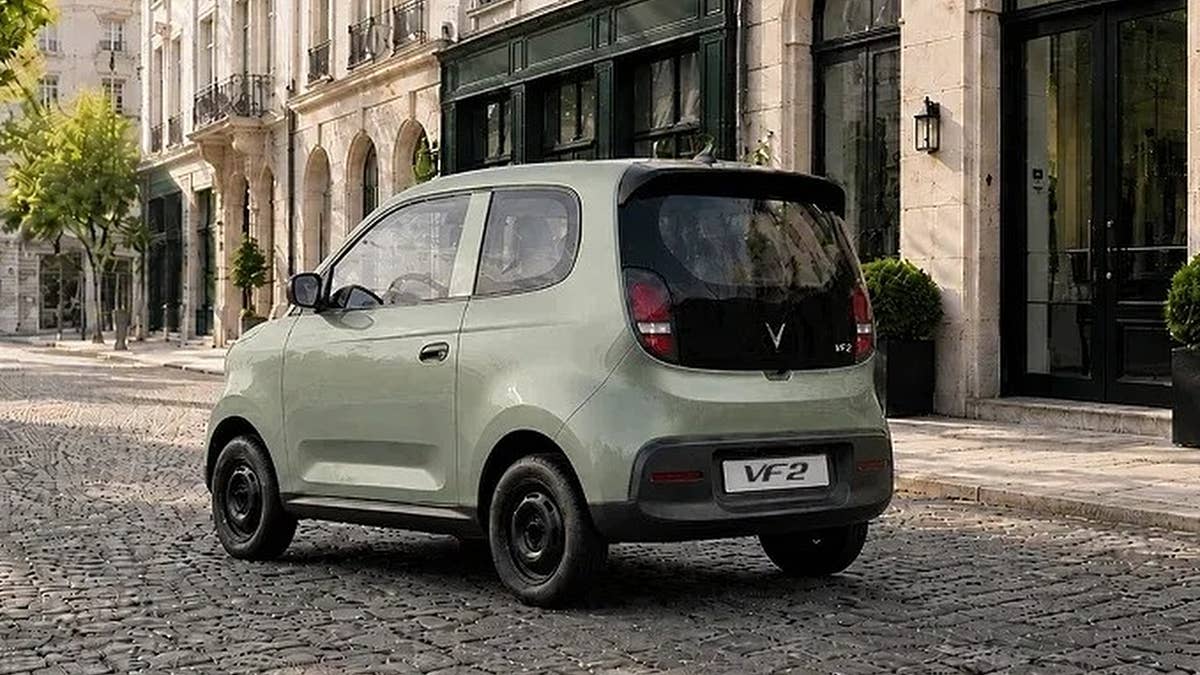
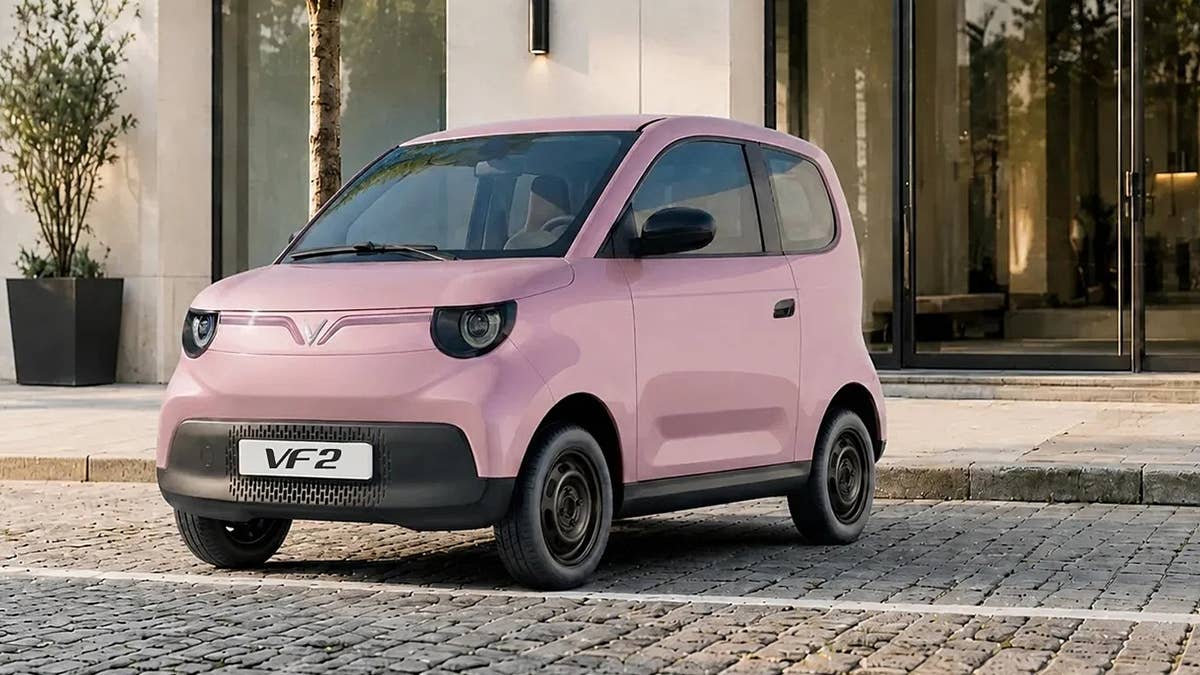
The VF 2 is genuinely tiny: 121.7 inches long, 58.9 inches wide, and 65.5 inches tall, over 21 inches shorter than a Fiat 500e despite seating four across two doors. Power comes from an 18.3-kWh battery feeding a rear-mounted motor good for 40 hp and 48 lb-ft, enough for a 130-mile NEDC-rated range — a figure that tends to run more optimistic than real-world driving, so actual US range would likely land meaningfully lower once tested under EPA methodology. A 24-kW DC fast charger can take it from 10-70 percent in about 34 minutes. Equipment includes the available options of LED headlights, air conditioning, a 7-inch display, 13-inch alloy wheels, a driver’s airbag, ABS, and traction control — genuinely more than Fiat’s own microcar offers at nearly double the price.
Vinfast
A Real Speed Advantage Over Its Closest US Rival
The detail that actually separates the VF 2 from the Topolino already selling in America is top speed: 50 mph versus the Topolino’s 19 mph. That gap matters enormously for US regulation, since the Topolino currently isn’t street-legal on regular roads at all, confined instead to private roads and low-speed communities until an LSV kit arrives later this year. A 50-mph top speed would put the VF 2 in a different conversation entirely — potentially capable of real street use on roads with posted limits up to 45 mph, not just golf-cart paths.
VinFast
Following A Playbook Already In Motion
VinFast is explicitly leaning on the Topolino’s momentum as proof of concept, and the timing tracks with an argument already being made about ultra-cheap microcars finding a real niche in America — not as primary vehicles, but as a genuine alternative to the golf carts already common in dense residential communities and self-contained developments. Whether VinFast follows through with an actual US launch, or this stays a hint aimed at generating headlines, is still an open question.