First there was the brick-and-mortar store, then came online shopping, and now the sky seems to be the limit as brands find new ways to use AI to create innovative customer experiences.
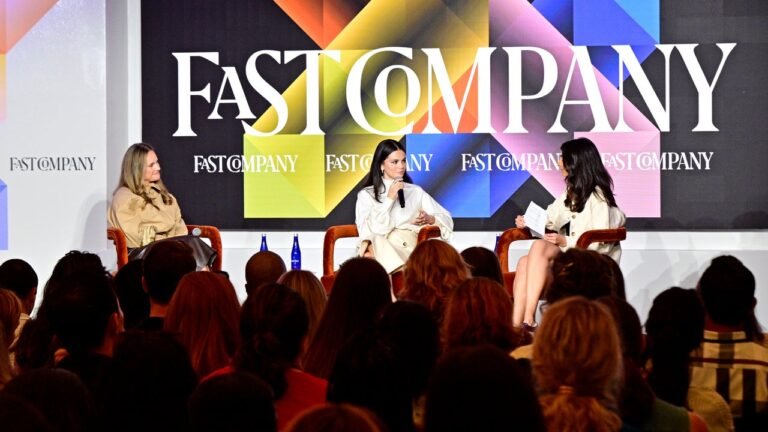
At the Fast Company Innovation Festival in New York on Thursday, executives from Fast Company‘s newly launched Pacesetters list shared how their companies are using AI to move the customer experience—and their companies—forward.
Fran Bell, EVP and chief technology officer at The Home Depot, and Eugene Nikolavsky, chief information officer of North America at Stellantis, were named among the 40 Pacesetters—an honor that recognizes executives who are leveraging AI in innovative ways for business.
For both Bell and Nikolavsky, AI is not just about optimizing workflows, but also about reimagining the way customers can interact with their respective businesses.
At The Home Depot, Bell identifies her customers as belonging in two main buckets: professionals and DIYers. But their experience is unified by a shared need for home supplies, inspiring the creation of the brand’s Magic Apron generative AI shopping assistant and project guide.
According to Bell, using AI to benefit customers means offering an AI assistant that can help shoppers before and after purchases—and even improve the in-person experience.
“I’m a huge believer that the biggest value from artificial intelligence is when AI augments human ingenuity and really supercharges the expertise of our associate,” she said.
To do so, the technology also helps associates navigate The Home Depot’s stores in favor of faster and more streamlined customer experiences.
“The store associate can now take a picture of this light bulb and immediately see in which aisle, which bay, this light bulb is available, or if it’s available online, [and] how long it would take to order it for the customer as well,” Bell shared.
For Nikolavsky—whose auto manufacturing company makes brands like Jeep, Ram, Dodge, and Chrysler—the typical customer journey is longer, beginning well before the purchase and continuing throughout the product’s life cycle.
Buying a light bulb is different from buying a car, but Nikolavsky shares a similar ethos, also aiming to use AI to improve the shopping experience by following through with the customer after purchase.
“We created this unique experience where you can start at the dealership, come home and finish it—or vice versa, you can start at home and finish it,” Nikolavsky said. “We are receiving really positive feedback, and we’re going to scale it in other countries.”
For both executives, keeping the customer’s experience as their guiding star is what has shaped the way they navigate innovation successfully.
“Deeply understand the customer and the user, and start from there first,” Bell said. “Don’t build technology for uniqueness or for technology’s sake.”