Every September, I think about an index card I filled during Parent Night at my daughter’s middle school.
“Connecting with each student is very important to me,” Mr. B explained. “I want to know what makes them excited… what makes them come alive.”
As he continued speaking, it became clear that knowing his students wasn’t an extra part of teaching to him. It was the foundation of it.
He told us that school had once felt like a prison to him. He knew what it was like to walk through the hallways with a desolate look on his face, believing no one noticed or cared enough to ask why. Mr. B wanted something different for the students who entered his classroom.
By the time the intercom sounded, I had filled every inch of the index card with details about my child. I looked down at it and felt tears spring to my eyes.
The teacher had asked about my girl. And more importantly, he wanted to know her.
At the time, I thought I was giving Avery’s teacher information he could use that school year. Eight years later, I understand that Mr. B was teaching me something too:
To know someone is to remain interested in what makes them come alive.
No matter how old my children are, I still hope they encounter teachers who care as deeply as Mr. B did—educators who understand that connecting with their students is every bit as important as knowing the curriculum they teach.
Last fall, Avery was a college freshman trying to find her footing in a place where almost no one knew her yet. I never imagined that in a class where she could have felt most anonymous, she would feel less alone.
Like many freshmen, she found those first weeks overwhelming. She watched groups form around her and wondered where she might fit. At times, she even questioned whether she had chosen the wrong school. I could hear the uncertainty in her voice when we talked, but for the first time in her life, I couldn’t see the places she was entering or the people she encountered there.
I wanted to reassure her that she would find her people and her place. But when someone feels alone, promises about the future don’t always reach the place that hurts in the present.
One bright spot was her government class.
In a large lecture hall, a white-haired professor shared stories from a life that had taken him across the globe. He had come to know people caught in conflicts whose consequences were still unfolding, and when he spoke about what he had witnessed, history no longer seemed like something safely contained in a textbook.
Through his stories, he brought the people inside it into the room. Sometimes tears filled his eyes as he spoke.
“Sometimes I get tears in my eyes too,” Avery told me.
As a deep feeler from an early age, Avery has always cared about human suffering and injustice. In this professor, she recognized something familiar: a person whose heart had not been hardened by painful things he had experienced.
During those first uncertain weeks, his classroom became one of the places where she felt most like herself.
As the weeks passed, she began finding her footing. She became more comfortable navigating friendships, dorm life, and the academic demands of college. One day, she decided to move closer to the front of her government classroom.
She had noticed that not every student seemed interested in the stories her professor told, and she didn’t want him to become discouraged. She wanted him to be able to look out into that large lecture hall and see at least one face letting him know:
What you are sharing matters to me.
His aliveness had awakened something in Avery, and in her own way, she wanted to protect that aliveness in him.
Perhaps that is one of the beautiful things about being seen: the gift rarely moves in only one direction. When someone helps us feel less alone in who we are, we often become more capable of seeing them too.
I was grateful Avery had offered me this image of herself sitting in the lecture hall, soaking up her professor’s stories. From a hundred miles away, I could see something I might otherwise have missed about the person she was becoming.
Without realizing it, she had given me another line for the index card.
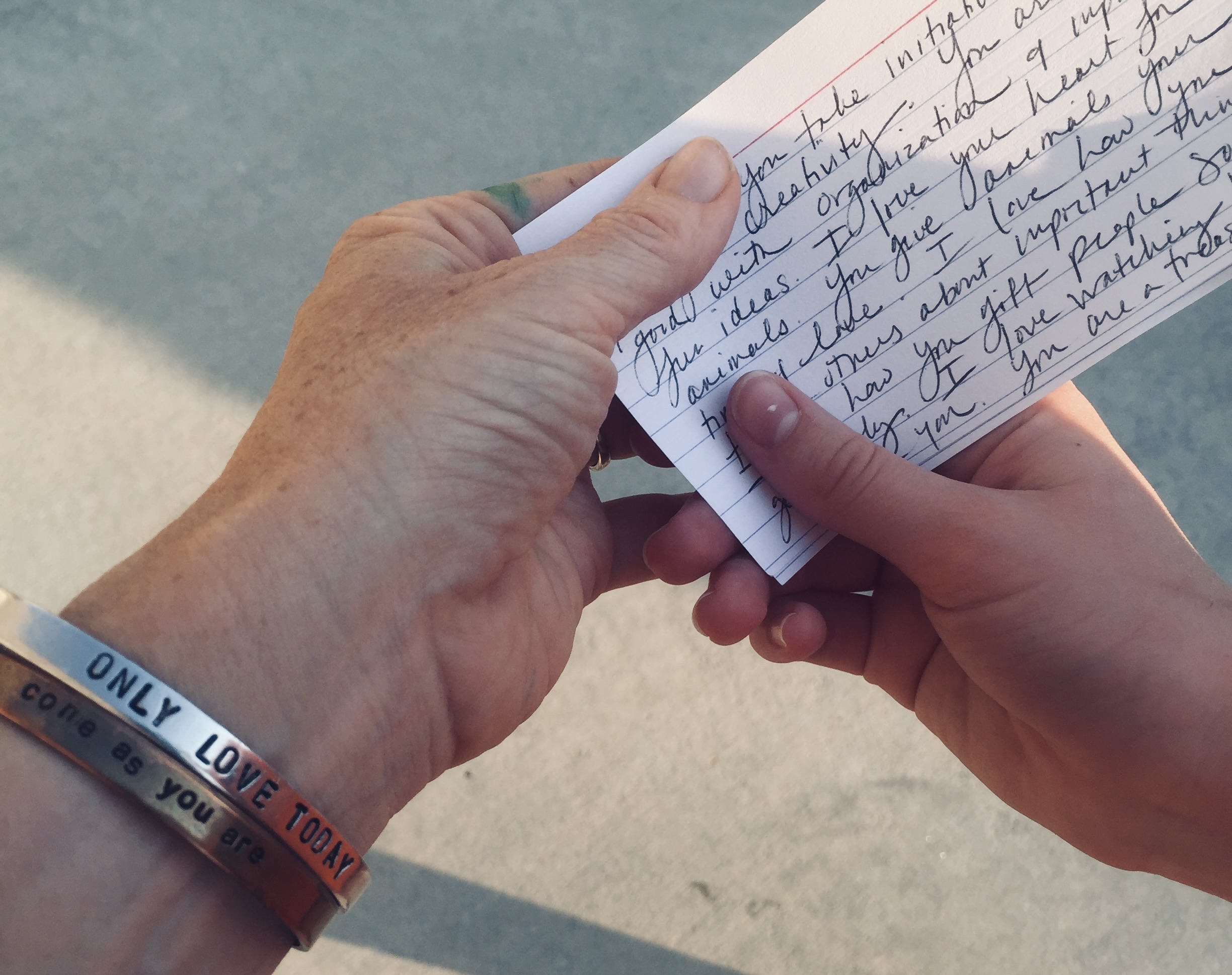
When our children are younger, knowing them happens partly through proximity. We see which books they carry everywhere. We know what they create when no one assigns it and what makes them lose track of time. We notice the places where they linger and the subjects that bring sudden light to their faces.
But proximity changes as they grow.
I can no longer see the look on my child’s face when she walks through the front door. I don’t know which subjects make her lean forward with interest or what conversations stay with her long after they end. I am not there when someone says something that changes the trajectory of her day… or her life.
My job of knowing her has had to change. I don’t get to observe nearly as much, which means I have to become more curious. I have to ask questions that invite more than a report of what she is doing:
What are you learning that you are really excited about?
Who do you feel most comfortable being yourself around?
What is making you come alive?
And then I have to make room for answers that may differ from the ones she would have given when she was twelve—or the ones I might have hoped or expected her to offer now.
Perhaps that is what I didn’t yet understand as I filled every inch of Mr. B’s index card.
The card was never meant to be finished.
The things that light our children up may change. An interest may fade while something we never anticipated begins calling their name. Gifts that once existed slowly begin finding their way into the world. Sometimes a part of them that went silent or unseen begins speaking again.
And yet, if we continue paying attention, we may notice a thread. I saw that thread recently when Avery called to tell me about an assignment in her anthropology class. Her professor had asked the students to interview a stranger about what made life feel fulfilling.
Avery interviewed her Uber driver. She began with the questions required for the assignment, but soon the two of them were talking about what he valued, what he hoped for, and what gave his days meaning.
I wasn’t surprised the man felt safe sharing so much with Avery. She has always been interested in the person beneath the surface, in what they have lived through, what they care about, and what has shaped the way they see the world..
After Avery turned in the essay she wrote about their conversation, her professor returned it with glowing remarks, including this one:
“You are becoming a true anthropologist!”
When Avery read those words to me, I could hear the delight in her voice. It is a wonderful thing when someone else notices something true in us and gives it a name. Sometimes their words allow us to recognize a part of ourselves that has been emerging all along.
As I listened to Avery, I thought about the twelve-year-old girl whose mother had filled both sides of an index card because a teacher wanted to know her.
I thought about the student who moved closer to the front because she didn’t want her professor to mistake distraction for disinterest and lose heart.
I thought about the young woman who spent last summer as a camp counselor for children facing great adversity and came home telling me, “I’ve never found a place where I get to use all of myself.”
And now here she was, sitting in an anthropology classroom, being recognized for her instinct to look beneath the surface of another human life.
The middle-school Avery on my index card is not exactly the twenty-year-old Avery interviewing an Uber driver about fulfillment, but the thread is there.
She has always wanted people to feel noticed.
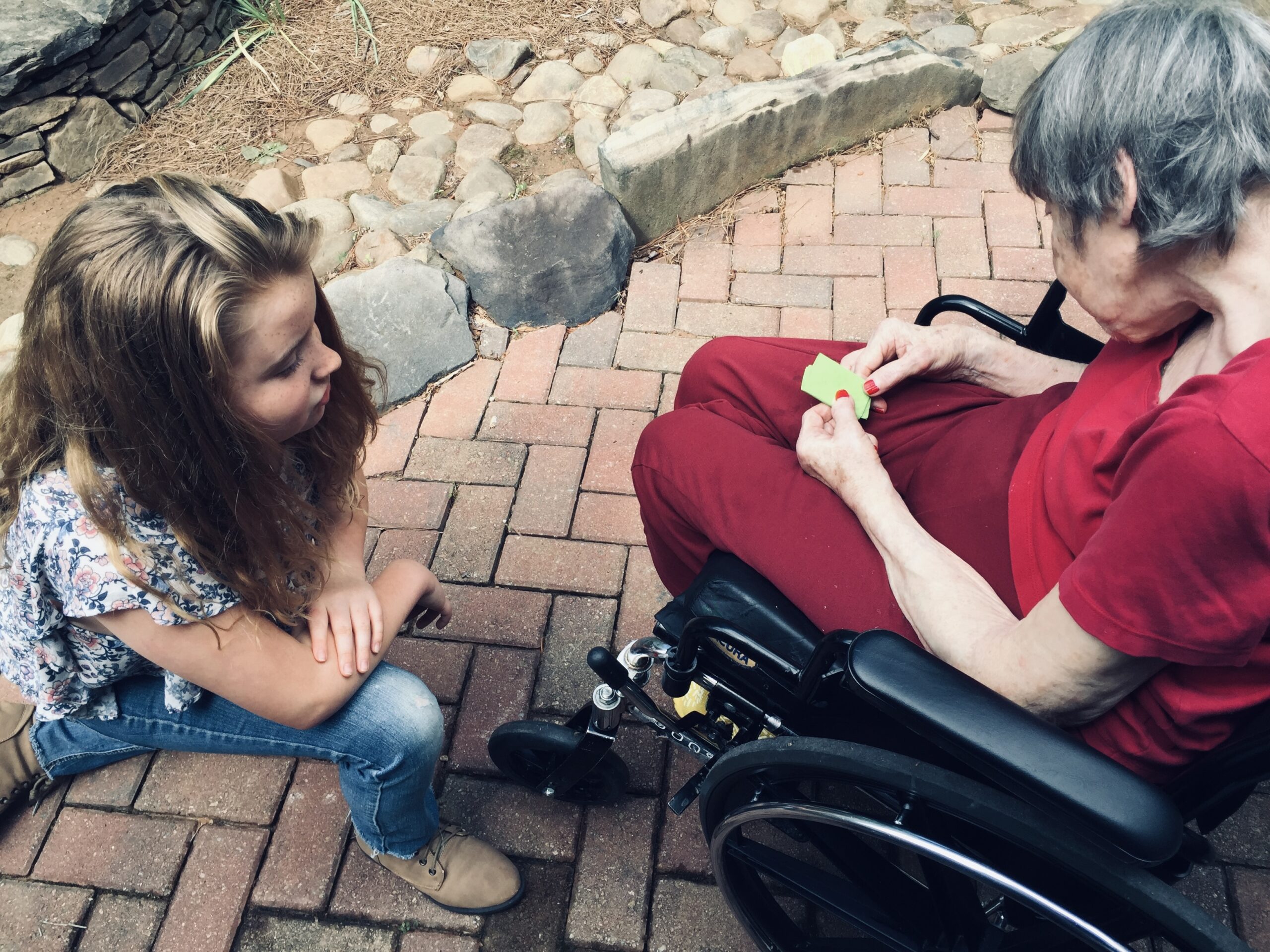
One of the most powerful ways to love people is to remain interested in who they are becoming and tell them what we see.
The person we knew at twelve will not be exactly the same person standing before us at twenty. The person we married years ago may carry different dreams, fears, and longings today. Even the people we know most intimately cannot be contained by the roles they have always held in our lives.
Loving them means remaining curious.
So we keep watching, asking, and listening for what brings excitement to their voices. And every once in a while, we hand the card back to them so they can see what we see.
But lately, as I acclimate to life as an empty nester, I have been wondering what might happen if we offered that same abiding curiosity to ourselves.
While reading Cleo Wade’s Remember Love, I came across two lines that caused me to stop:
“Are you interested in yourself?
You are worthy of your own curiosity.“
I thought about how naturally we ask children what they are interested in when they are young. We want to know what books they love, what their favorite subject is, what they would happily spend an entire afternoon doing. We understand these details tell us something important about who they are.
But somewhere along the way, many of us stop asking those questions of ourselves. We assume we should already know who we are.
We continue living according to answers we gave years ago—before the children left home, before the loss, before the diagnosis, before the relationship changed, before we changed.
We become so familiar with who we have needed to be that we stop asking who we are becoming.
Perhaps that is why curiosity matters so much in seasons of transition. Curiosity allows us to approach ourselves without the pressure of already having the answers.
What interests me now?
What am I drawn toward?
Which relationships allow me to feel most like myself?
What awakens something in me?
What part of me has gone quiet?
What part of me might be ready to return?
These are not questions reserved for children trying to find their place in the world. They matter at twenty, forty, sixty, and eighty. They matter whenever we look around at the life we are living and realize an earlier version of us made many of the choices that brought us here.
When Avery was twelve, a teacher handed me an index card and asked me to tell him what made my daughter come alive. I filled both sides.
Eight years later, I understand that the card was never meant to be finished. Our children keep becoming. The people we love keep becoming. And so do we.
Keep filling the card. Every once in a while, hand it back to someone you love so they can see what you see. Then take out a fresh one for yourself.
There is still so much more of you to know.
My hand in yours,
Rachel
 A Personal Note of Gratitude
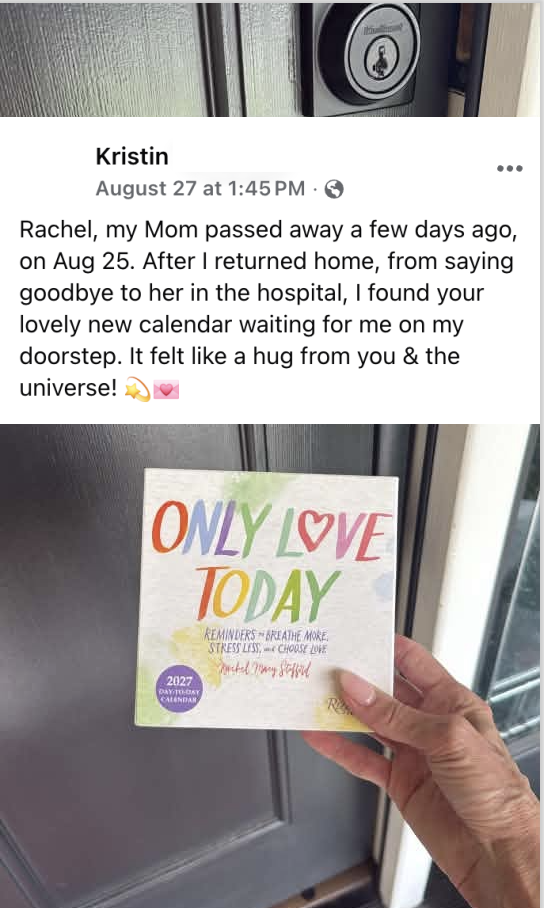
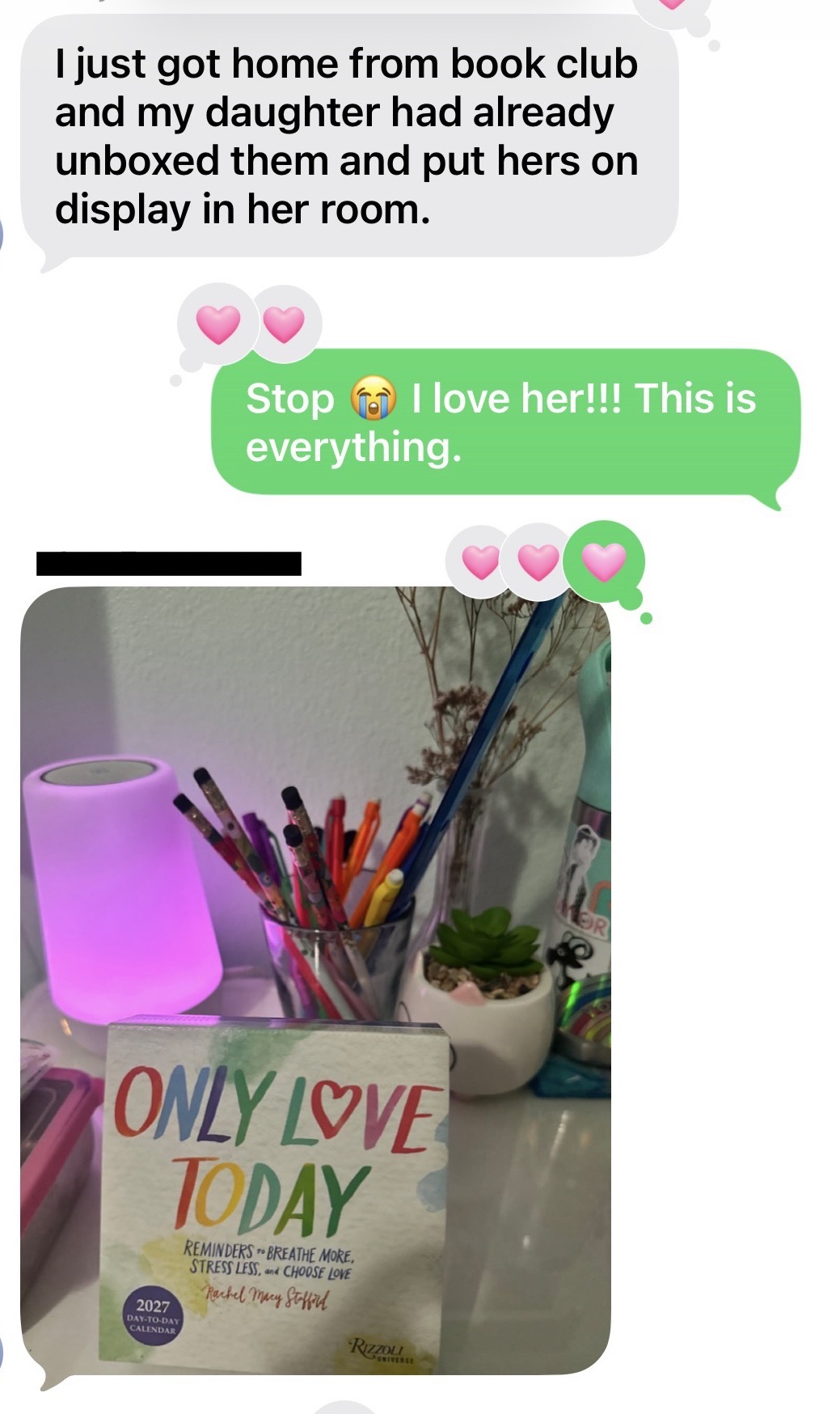
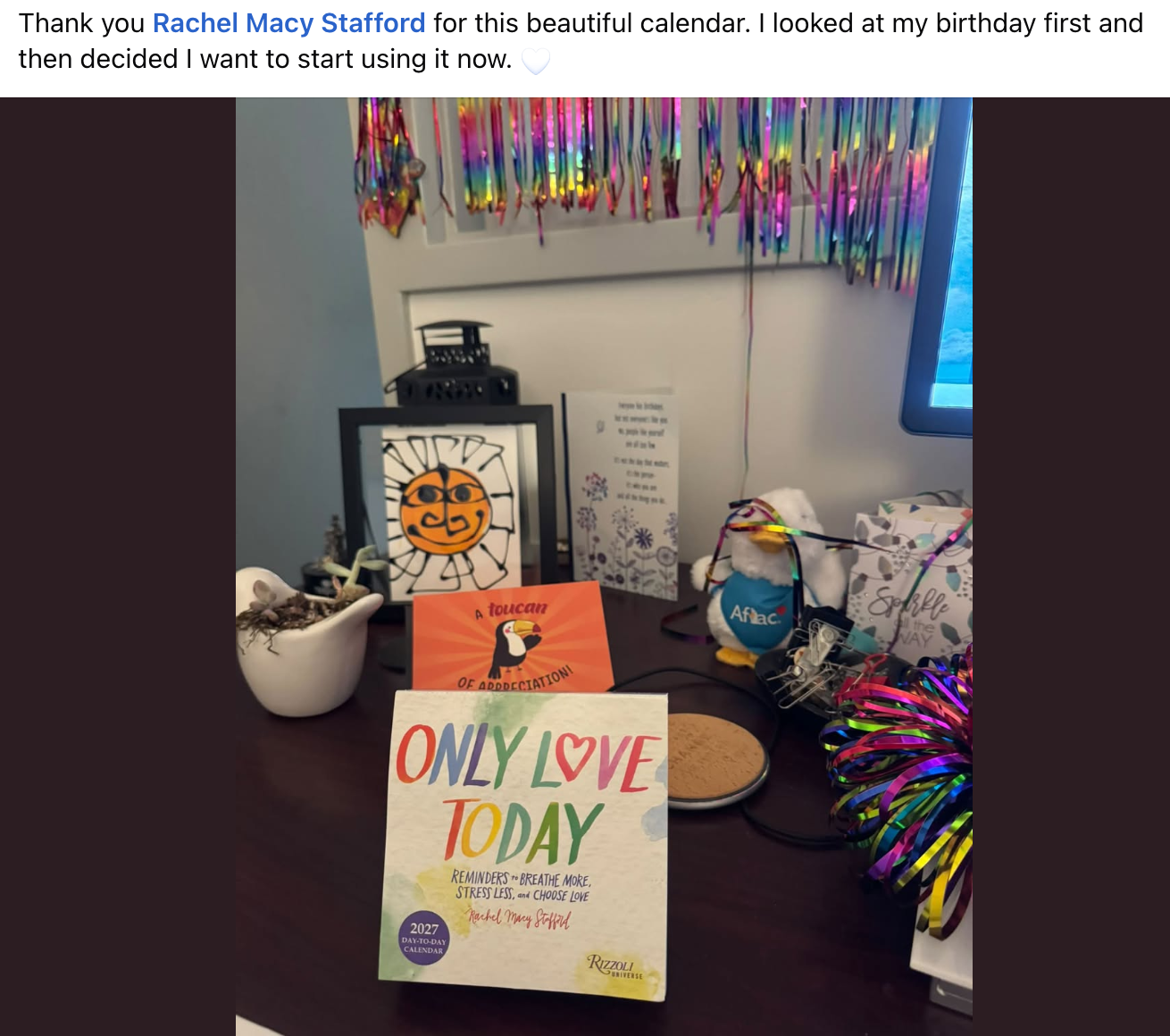
Over the past few weeks, photos of the Only Love Today 2027 Page-a-Day Calendar in your hands and homes have reached me. With every “It’s here!” and “I got mine!” a question was answered: Who buys a calendar in August? You do. I couldn’t be more grateful for the ways you showed up for this latest work-of-heart.
If you’ve been meaning to purchase a calendar or are thinking about getting a few as holiday gifts, it would be best not to wait. The publisher has confirmed there will only be one print run, and all available copies have been distributed to retailers. What is out there now is what is left.
Bookshop and Walmart are now out of stock, but there are still copies available through Amazon and Books-a-Million. Some retailers in Canada and the UK are also carrying it, and you can check with your favorite local bookstore.
If you’re interested in purchasing 25 calendars, Bulk Books also has copies available at a discounted price.
Thank you so much for your support. Messages like these mean more than I can ever express.