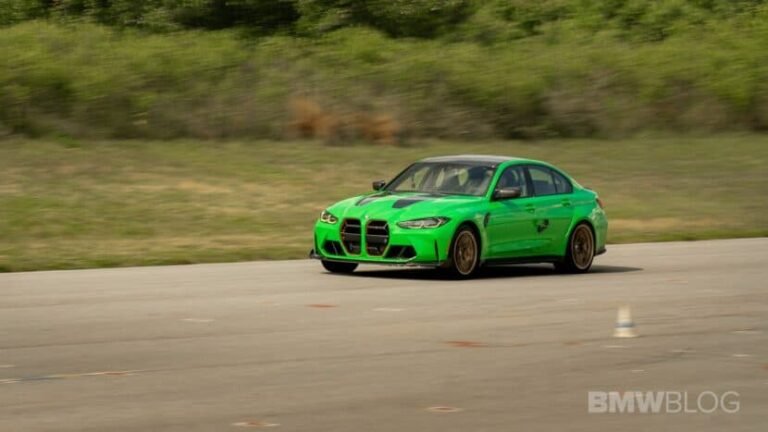
BMW built 1,727 G80 M3 CS sedans with the automatic gearbox, according to VIN-level production data compiled by MDataWorks, an independent tracker with no connection to BMW. That number isn’t the final count for the M3 CS. The manual version, the M3 CS Handschalter, is still in production, and its figures will be added once the run ends.
M3 CS Production By Color
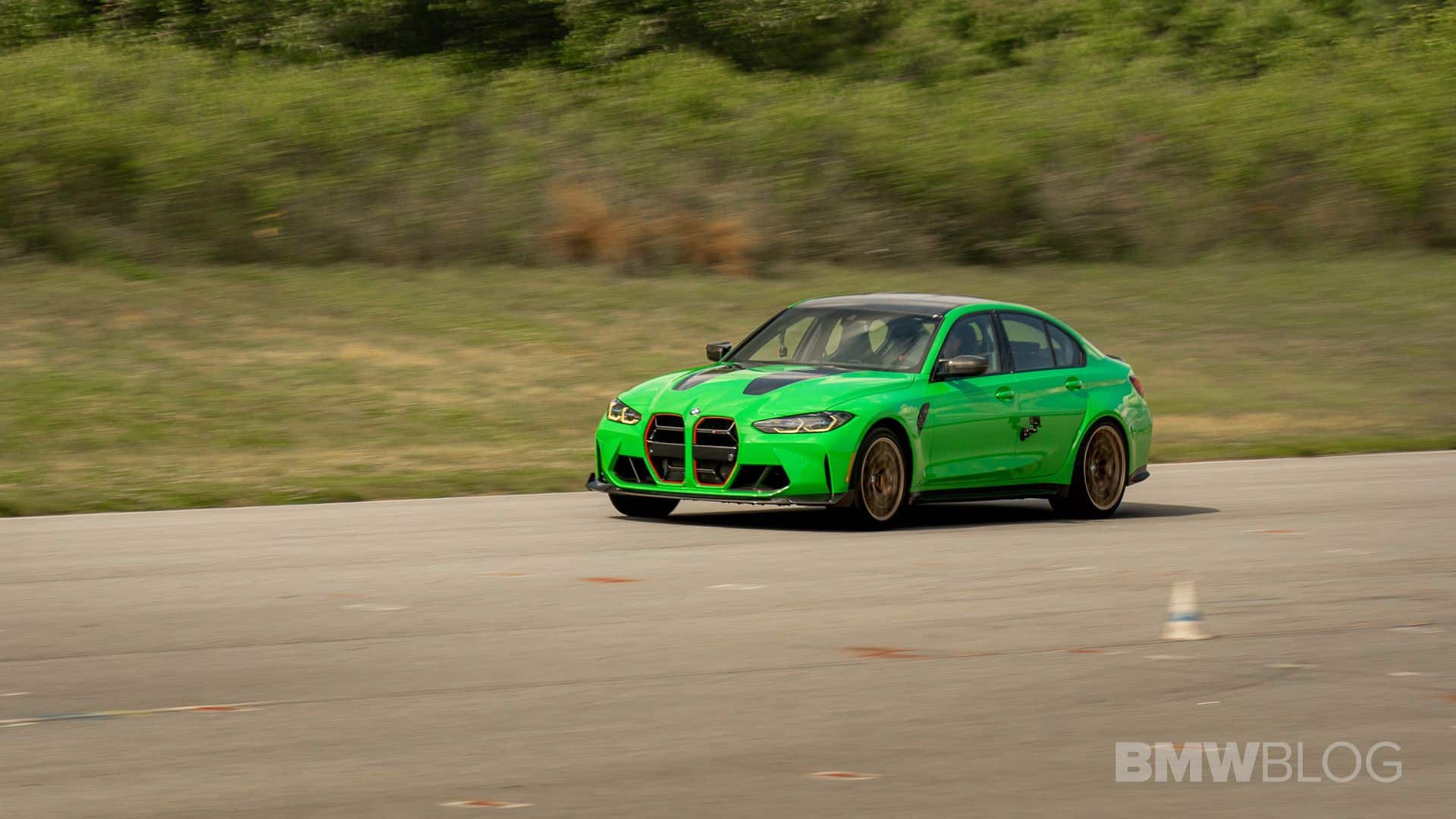
The M3 CS came in four colors, and its split is much more even than the M4 CSL’s, where one color took nearly two out of three cars.
- Frozen Solid White: 598 (34.6 percent)
- Black Sapphire: 490 (28.4 percent)
- Brooklyn Grey: 377 (21.8 percent)
- Signal Green: 262 (15.2 percent)
Frozen Solid White outsold Black Sapphire by 108 cars. On a car where most buyers pick black or grey, that’s a surprise, and it suggests the matte finish carried a lot of the M3 CS’s appeal. Signal Green finished last, but at 262 cars it’s not rare in the way the single Frozen Tampa Bay Green M4 CSL is.
Signal Green Did Better In America
Filtered to American cars, the color ranking changes. Frozen Solid White still leads, but Signal Green jumps from last place to second.
- Frozen Solid White: 169 (41.0 percent)
- Signal Green: 108 (26.2 percent)
- Black Sapphire: 84 (20.4 percent)
- Brooklyn Grey: 51 (12.4 percent)
The US took just under a quarter of all M3 CS production, but 108 of the 262 Signal Green cars, or 41 percent, went to American buyers. Brooklyn Grey went the other way: only 51 of the 377 grey cars were delivered in the US. American buyers also leaned harder toward matte white than the rest of the world, with 41 percent of US cars in Frozen Solid White against 35 percent globally.
How American Buyers Specced Their M3 CS

The US data also shows how those 412 cars were optioned.
- Carbon-ceramic brakes: 122 (29.6 percent)
- Standard brakes: 290 (70.4 percent)
- Gold wheels: 240 (58.3 percent)
- Black wheels: 172 (41.7 percent)
- Track tires: 214 (51.9 percent)
- Sport tires: 198 (48.1 percent)
Fewer than a third of US buyers paid for the carbon-ceramics, but just over half took the track tires. American owners, it seems, were more willing to commit to grip than to the brake upgrade. Gold wheels won over black by 68 cars, which fits a car whose launch photos leaned heavily on the gold-and-green combination.
Where The M3 CSs Went
The US was the largest market by a wide margin, with 412 cars, or about 24 percent of production.
- USA: 412
- Germany: 242
- Australia: 94
- UK: 74
- Canada: 70
- Poland: 70
Two figures stand out. Australia took 94 cars, 20 more than the UK. That’s unusual for an M car, since the UK is normally BMW’s biggest right-hand-drive market. Poland matched Canada at 70 cars, which says a lot about how strong the Polish market for fast BMWs has become. These six markets account for 962 cars. The remaining 765 were spread across other countries, and the VIN list includes cars delivered to Spain, Hungary, Romania, and Indonesia.
Left-Hand Drive Vs. Right-Hand Drive
By region, 959 cars went to left-hand-drive markets outside North America. North America took 482, which is exactly the US and Canadian totals combined. The other 286 were right-hand drive. Australia and the UK together account for 168 of those, and the remaining 118 went to other right-hand-drive markets.
How It Compares To The M4 CS
The US took almost exactly as many M3 CSs as M4 CSs: 412 sedans and 415 coupes. North America’s overall share was slightly lower for the M3 CS, at about 28 percent versus 32 percent for the M4 CS. The M3 CS total will grow once the Handschalter run is complete, and we’ll update these numbers when it is.
First published by https://www.bmwblog.com