The “Cheapest” McLaren
Supercars, like most items you can purchase, have been the casualties of inflation. Take the Lamborghini Temerario as an example; it starts at $387,649, a huge increase over the outgoing Huracán’s $212,090 starting MSRP. If you put any options on the Temerario, it will likely balloon the price to over half a million dollars. Supercars were never meant to be affordable objects for the masses, but even dreaming of owning one now seems unobtainable.
2026 McLaren GTS
Jared Levenson/Autoblog
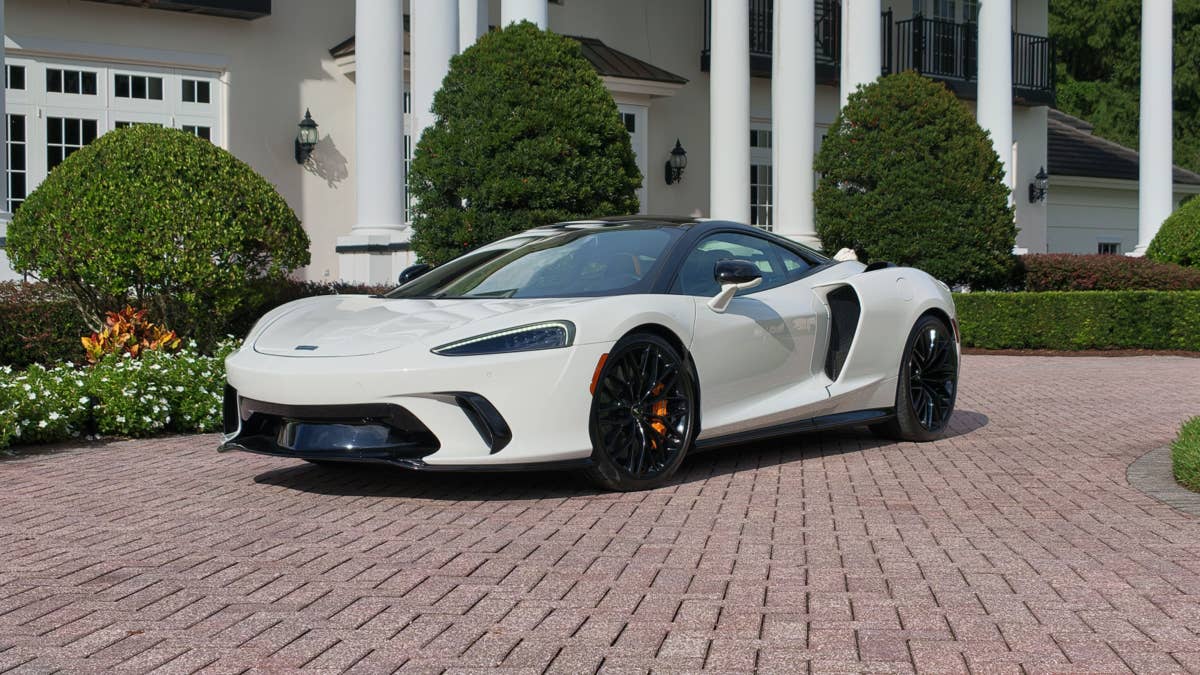
This brings us to one of the most forgotten supercars on the market, the 2026 McLaren GTS. The GTS arrived in 2024 as a replacement to the GT and it’s now McLaren’s least expensive model starting at $229,900 (including destination). Even with options, the GTS Autoblog tested only rang in at $246,100, a relative “bargain” in the supercar segment. Despite only having a hybrid V6 powertrain, the McLaren Artura is more expensive, starting at $260,400.
The Most Practical Supercar
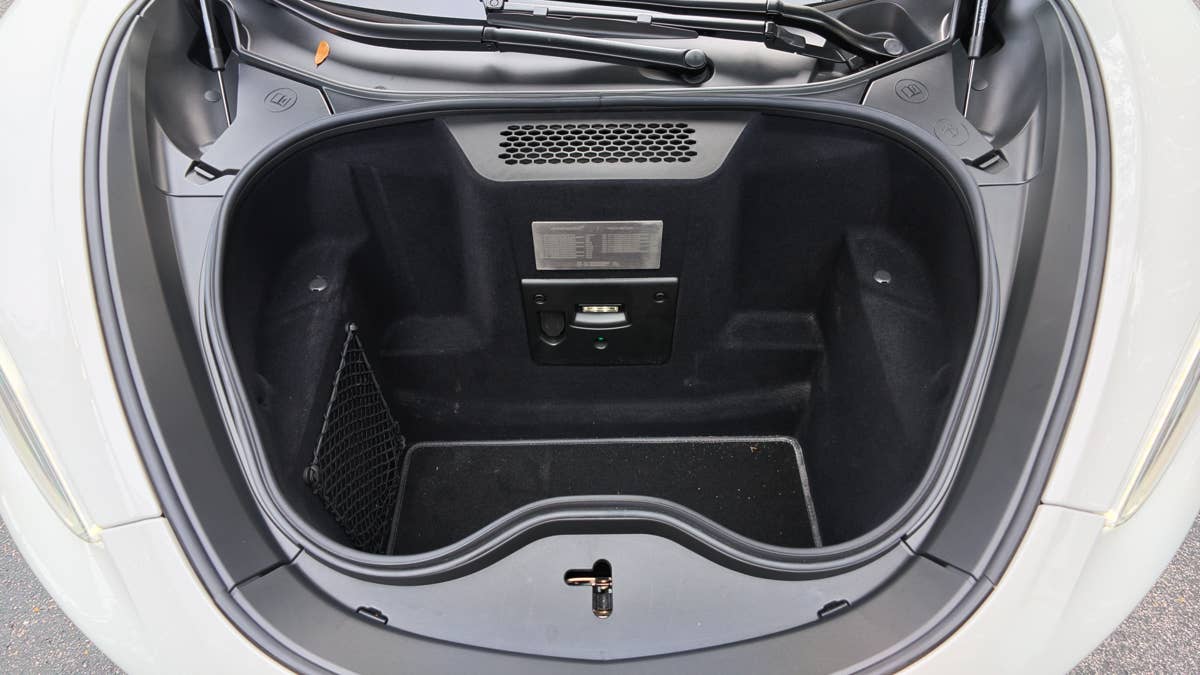
Not only is the GTS the cheapest McLaren model, it’s also the company’s most practical car and one of the most usable supercars of all time. There’s a front trunk with a decent five cubic of space, like most mid-engine cars, but the GTS also packs a large trunk in the back that can hold another 15 cubic feet (enough for golf clubs). Here’s a list of cars that have less combined cargo space than the McLaren GTS:
- BMW 8 Series Gran Coupe: 15.5 cubic feet
- Chevrolet Corvette Stingray: 12.6 cubic feet (trunk plus frunk)
- Mercedes-AMG GT: 11.3 cubic feet (23.8 with seats folded)
- Porsche 718 Cayman: 15.0 cubic feet (trunk plus frunk)
2026 McLaren GTS
Jared Levenson/Autoblog
It might be a stretch to call the GTS a “comfortable” car, but it has plenty of amenities inside to keep it livable. The available 12-speaker Bowers & Wilkins audio system sounds great, but the seven-inch touchscreen it’s connected to could be improved. Manual seats come standard, but our tester included the optional power seats with memory that are perfectly comfortable on long drives.
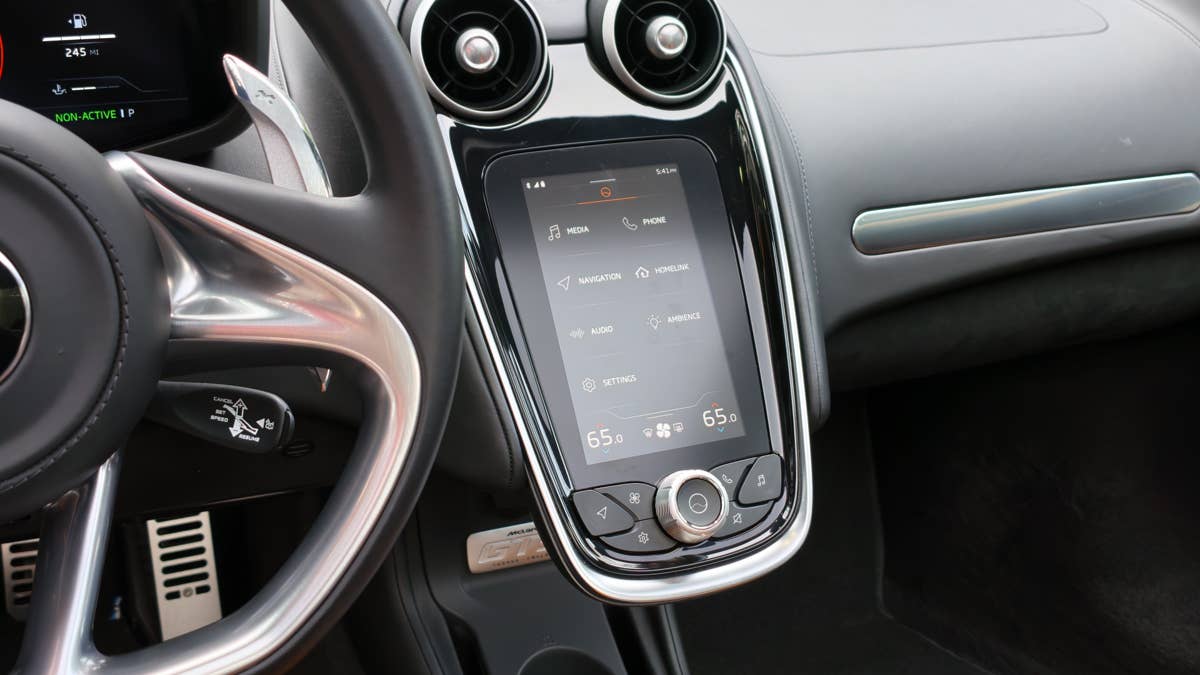
2026 McLaren GTS
Jared Levenson/Autoblog
Still Supercar Fast
The GTS may tread the line between a GT car and a supercar, but its performance squarely lives in the latter category. A 4.0-liter twin-turbocharged V8 sits midship, producing 626 horsepower (a 14 hp increase over the GT) and 465 lb-ft of torque. The razor-quick seven-speed dual clutch transmission sends power to the rear wheels only, rocketing the GTS to 60 mph in just 2.85 seconds in our testing.
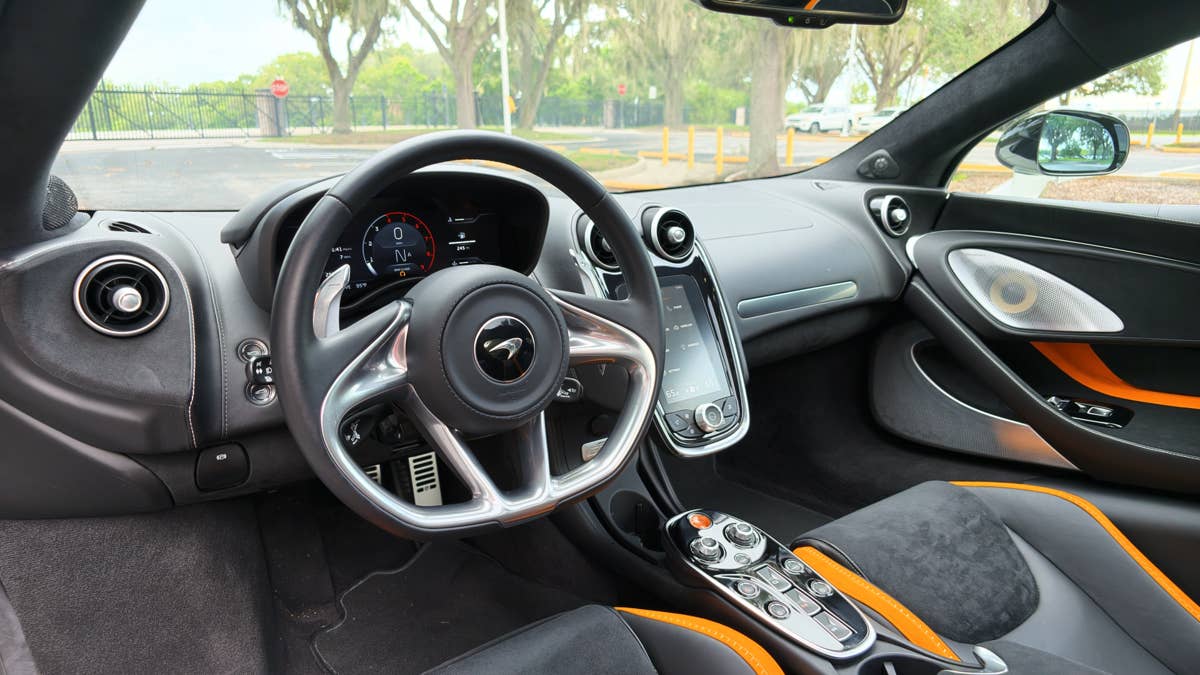
2026 McLaren GTS
Jared Levenson/Autoblog
Not only did the GTS beat McLaren’s 3.1-second estimate, it also bested the more powerful 750S Spider (2.98 seconds) and Artura Spider (3.06 seconds) in the real world. Perhaps McLaren underrates the GTS’s engine, and it’s actually closer to the 740-hp rating from the 750S. More likely, the GTS has an easier time putting its power to the ground than its more potent siblings.
Best Supercar Value
Next to the Artura or 750S, the GTS looks a bit mundane, but it’s still perfectly exciting in a vacuum. It has mid-engine proportions and dihedral doors that lift up; what more do you need? The GTS is stellar to drive thanks to McLaren’s communicative electro-hydraulic steering, comfortable hydraulic suspension, and bonkers powertrain. It’s less visceral than the 750S, but that makes it more relaxing to drive everyday.
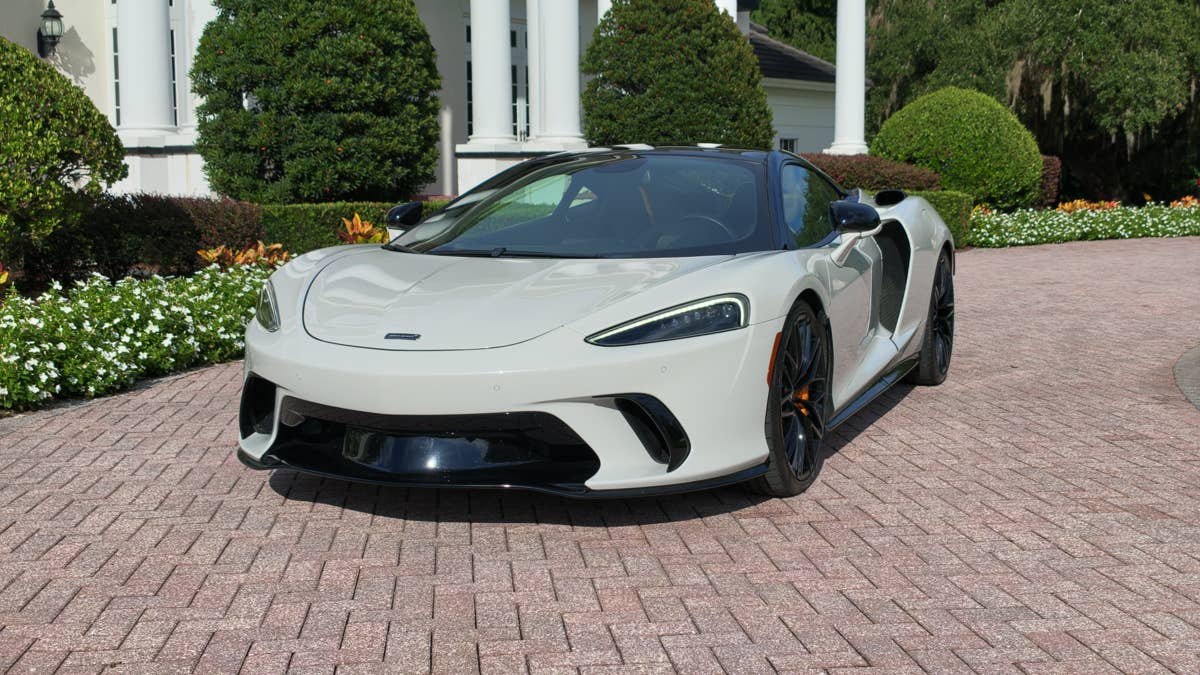
2026 McLaren GTS
Jared Levenson/Autoblog
Crucially, the GTS makes its more expensive supercar contemporaries feel overpriced. Even McLaren’s own 750S costs $365,100 (over $400,000 with a few options), and barely delivers a faster experience unless you have access to a race track. There is no such thing as a “bargain supercar,” as that term is an oxymoron on par with “dry water,” but compared to everything else on the market, the GTS is the best value if you want a usable supercar.