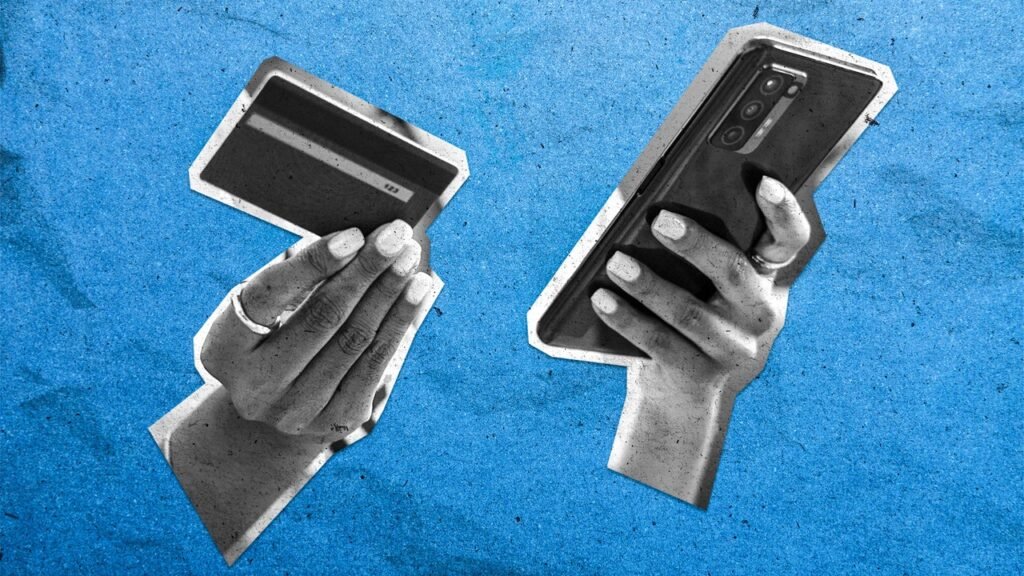
Consumers are seriously worried about online pricing, and not just because prices seem to be rising all around. It’s because, according to recent reports and an investigative new book, algorithms are now setting prices. And they aren’t doing it based on product quality or market value, but on individuals.
The practice of charging different customers different prices might be tough to wrap your head around. But author Lindsay Owens, president and CEO of the Washington think tank Groundwork Collaborative, offers a behind-the-scenes look at how price-setting happens, and how rampant it is, in Gouged: The End of a Fair Price — And What That Means For Your Wallet.
The newly released exposé reveals a worrisome shifting dynamic where surveillance-based price discrimination, AI shopping assistants, and algorithms lead to consumers paying higher prices on everything from airline tickets to groceries. It happens with the help of corporations digging deep into your data to understand your shopping habits all too well.
Earlier this year, a Senate Judiciary Subcommittee on Crime and Counterterrorism held a hearing to explore how companies were able to use AI and data collection to manipulate pricing. Owens, who was previously an economic policy advisor to Sen. Elizabeth Warren, was one of five witnesses who testified before the Senate Judiciary Committee on the matter. In her testimony, she explained how huge corporations like Walmart, Kroger, Instacart, and major airlines are able to harvest customer data to fuel modern pricing tactics.
“Surveillance pricing isn’t just unfair. It erodes transparency and predictability and makes it harder for families to budget, let alone comparison shop. As we do more of our shopping online and on our phones, we have no idea if we’re being charged a different price than our neighbor,” she said.
Owens continued, explaining that companies have tools to track your purchases, location, even loyalty and reward programs, to thoroughly predict how much they can get away with charging you. They are even able to predict whether shoppers are likely to partake in comparison shopping.
While four of the five witnesses who spoke at the hearing were critical of such practices, Z. John Zhang, a Professor of Marketing at the University of Pennsylvania’s Wharton School, offered the opposite view. Zhang told the subcommittee, “Firms don’t always gain from personalized pricing.”
Zhang continued, “Research shows that it can intensify competition and reduce profits. The firms that are most likely to benefit from personalized pricing are those with higher quality products, stronger brands, and more loyal customers.”
In August, the Federal Trade Commission (FTC) weighed in on the issue as well, warning that corporations that use such tactics may be breaking the law. “When consumers walk into a retail store, for example, they reasonably expect the price on the shelf to be the same price offered to any other consumer shopping at the same store at the same time,” the FTC said.
The agency added, “Likewise, when they browse to a product listing on a retailer’s website, they reasonably expect the price to be the same price that anyone else browsing to that listing would see, not a price set based on the retailer’s analysis of their personal data and conclusion as to how much they would be willing to pay for that product as compared to some other consumer.”
While the practices certainly seem unfair, Owens suggests change won’t come without government intervention, like banning companies from using manipulative price-setting practices. Around two dozen states have already introduced bills addressing surveillance pricing. Many aim to ban or regulate pricing based on personal data collection, while others require merchants to disclose whether they set personalized prices.
Owens also proposes a Shopper’s Bill of Rights, which she says lawmakers and shoppers alike should rally around. In it, she lays out what she believes consumers should be able to reasonably expect from retailers, like: “pricing products, not people”; the ability to “cancel with a click”; and no junk fees because “the price you see is the price you pay.” According to a newly released poll conducted by Blue Rose Research, about two-thirds of the 3,250 Americans surveyed were supportive of its policies.
Either way, Owens believes that modern consumers will likely need to fight for their right to fair pricing. “Shoppers turned picket lines into policy before, and they can do it again,” Owens says.