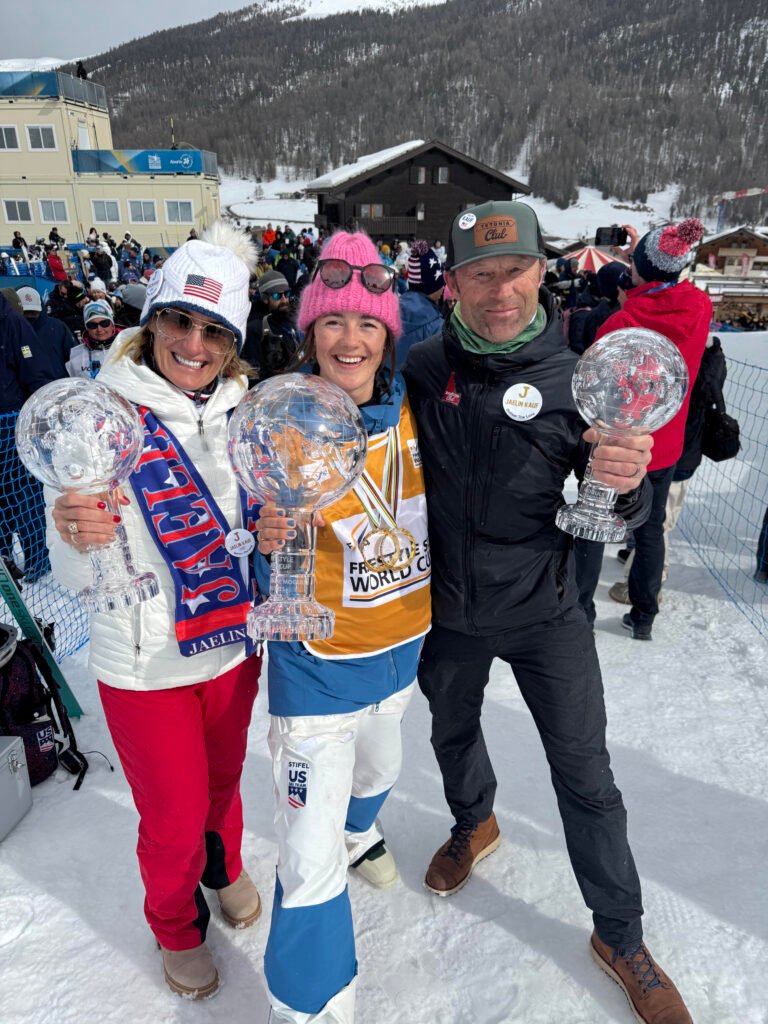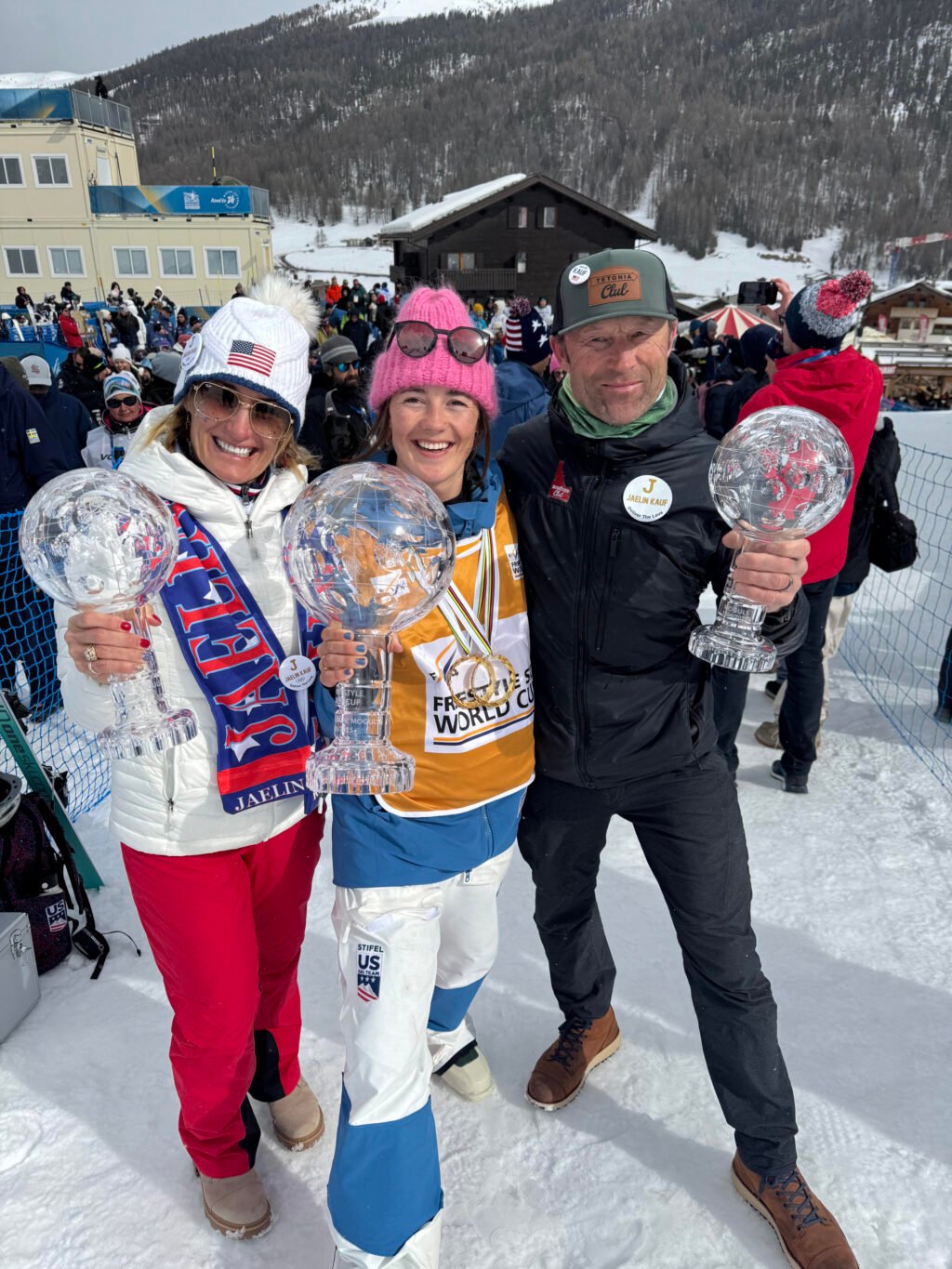
Three-time Olympic silver medalist Jaelin Kauf shares how she fell in love with mogul skiing, the mindset that keeps her grounded, and why she wants more girls to find confidence and joy through sports.

For Olympic mogul skier Jaelin Kauf, a love of skiing started long before medals, podiums and international competition entered the picture.
Growing up in Alta, Wyoming, Kauf spent her childhood chasing her older brother around Grand Targhee, skiing powder and even building makeshift moguls with pine boughs. Skiing was fun first—and that playful beginning helped create the foundation for one of America’s fastest mogul skiers.
On this episode of the Momtrends podcast, Jaelin joins Nicole and Sarah for a conversation about Olympic mogul skiing, raising confident young athletes, keeping girls engaged in sports and finding motivation beyond results.
Listen to the Podcast
=
How Jaelin Kauf Got Her Start in Mogul Skiing
Kauf’s path to elite skiing didn’t begin with an intense training schedule. It began outside.
Growing up near Grand Targhee gave her plenty of opportunities to explore the mountain, and following her older brother helped introduce her to moguls. Powder days, soccer, all-mountain skiing and plenty of unstructured play were all part of her athletic development.
As her skiing became more competitive, Kauf eventually moved to Steamboat Springs, Colorado, where she could attend high school while pursuing a more demanding training schedule. Importantly, the setup allowed her to continue having a more traditional student experience alongside her athletic goals.
Her story offers parents an important reminder: developing an elite athlete doesn’t necessarily mean specializing as early as possible. A broad foundation of movement, play and genuine enjoyment can be incredibly valuable.
How Is Mogul Skiing Scored?
Watching Olympic moguls can make the sport look deceptively simple: get down the mountain as quickly—and stylishly—as possible.
There’s much more happening behind the scenes.
A moguls score combines turns, jumps (also called air) and speed. Skiers must navigate a steep course filled with bumps while maintaining precise technique, execute two aerial maneuvers and race against the clock.
That combination requires an unusual mix of technical skill, strength, creativity and speed. Kauf walks Nicole and Sarah through what judges are watching for and what separates a great run from the rest of the field.
Understanding the scoring makes watching moguls even more fun—especially when you appreciate just how much athletes are doing in a matter of seconds.
The Advice From Jaelin Kauf’s Mom That Changed Her Mindset
One of the most meaningful parts of Kauf’s story comes from her mom.
As results and expectations became a bigger part of competitive skiing, her mom encouraged her to reconnect with her own reasons for competing rather than allowing medals or outside expectations to define the experience.
That idea eventually became “Deliver the Love,” a phrase Kauf uses as a reminder to compete from a place of joy and love for the sport.
It’s a lesson that extends far beyond skiing.
For young athletes in particular, it can be easy for something they love to become tied to scores, rankings, playing time or other people’s approval. Kauf’s approach offers another way to think about success: ambition and joy don’t have to be opposites.
“Your sport is something that you do and it’s not who you are.”
“You’re already enough as is exactly where you are.”
“We just want to know that our parents are proud of us and love us and support us regardless of how things went.”
Helping Girls Build Confidence Through Sports
Kauf has taken that philosophy beyond her own athletic career through the Deliver the Love foundation, which focuses on helping girls and women develop confidence through movement and sport.
A key part of the mission is creating more opportunities for girls to participate without feeling like they have to become elite athletes.
Because sport has value even when there isn’t a podium at the end.
Movement can create confidence, community, resilience and a stronger relationship with your body. Kauf wants more girls to have access to those benefits—and more reasons to stay active as they grow up.
The foundation offers free resources for athletes, parents and coaches, including movement activities, reflection exercises and goal-setting tools.
Kauf also envisions expanding the community through field days, mentorship opportunities, scholarships and other programs designed to give girls positive experiences with movement.
What Parents Should Say After a Game or Competition
For parents of young athletes, one part of the conversation is especially worth hearing: the ride home.
What parents say immediately after a competition can have an outsized impact on how kids process their performance and how safe they feel talking about sports.
Kauf encourages parents and coaches to think carefully about the language they use around performance. Instead of immediately analyzing mistakes or focusing on results, the goal is to create space for young athletes to process the experience themselves.
It’s a small shift that can help kids separate their performance from their self-worth.
For parents navigating youth sports, it’s also a useful reminder that our role isn’t always to coach. Sometimes the most valuable thing we can provide is a supportive place to land.

Keeping the Joy in Youth Sports
Kauf’s experience offers a refreshing perspective for families navigating an increasingly competitive youth sports culture.
Yes, she became an Olympic athlete. But her story starts with something much simpler: skiing around a mountain because it was fun.
That joy remains central to the way she thinks about competition today.
For parents, coaches and young athletes, the takeaway is powerful: kids can work hard, set ambitious goals and pursue excellence without making results the sole measure of success.
Creating room for play, friendships, movement and personal motivation can help young athletes build something even more valuable than a résumé—a lasting relationship with sport.
Want to Try Mogul Skiing?
For young skiers inspired by Kauf, moguls don’t have to be reserved for Olympians.
In the episode, she shares ways kids can get introduced to the sport, from finding mogul programs to trying water ramps, which allow freestyle skiers to practice aerial skills before taking them to snow.
And if competitive moguls aren’t the goal? That’s fine, too. Exploring different terrain, skiing bumps and simply becoming comfortable moving around the mountain can all be part of the fun.
A Few Speed Lounge Favorites
The conversation wraps with some lighter rapid-fire favorites, including powder skiing, Grand Targhee fries, good-luck trinkets and an Italy-inspired après order.
But the idea that sticks with us is much bigger: deliver the love.
Whether you’re an Olympian standing at the top of a mogul course or a parent driving home from Saturday’s soccer game, remembering why you started can be one of the best ways to keep sport meaningful.

The post Jaelin Kauf on Mogul Skiing, Raising Confident Athletes and Delivering the Love appeared first on Mom Trends.