Philip Dulian/picture alliance via Getty Images
- OpenAI is making a high-stakes push on health advice and now relies on a global network of doctors.
- The doctors push OpenAI’s research team to fill gaps in how ChatGPT gives health advice.
- Rebecca Soskin Hicks, the team’s leader and a physician, leads this network of doctors.
If you’ve noticed ChatGPT giving better advice about your aching back, it’s likely thanks to a doctor thousands of miles away.
Each week, more than 300 million people use ChatGPT for health-related advice. To steer its AI development in health, OpenAI has conscripted hundreds of practicing physicians from around the world.
Speaking 49 languages, these contracted physicians evaluate examples of conversations that users or doctors might have with the chatbot, looking for places where it could confuse its users or put someone in physical danger.
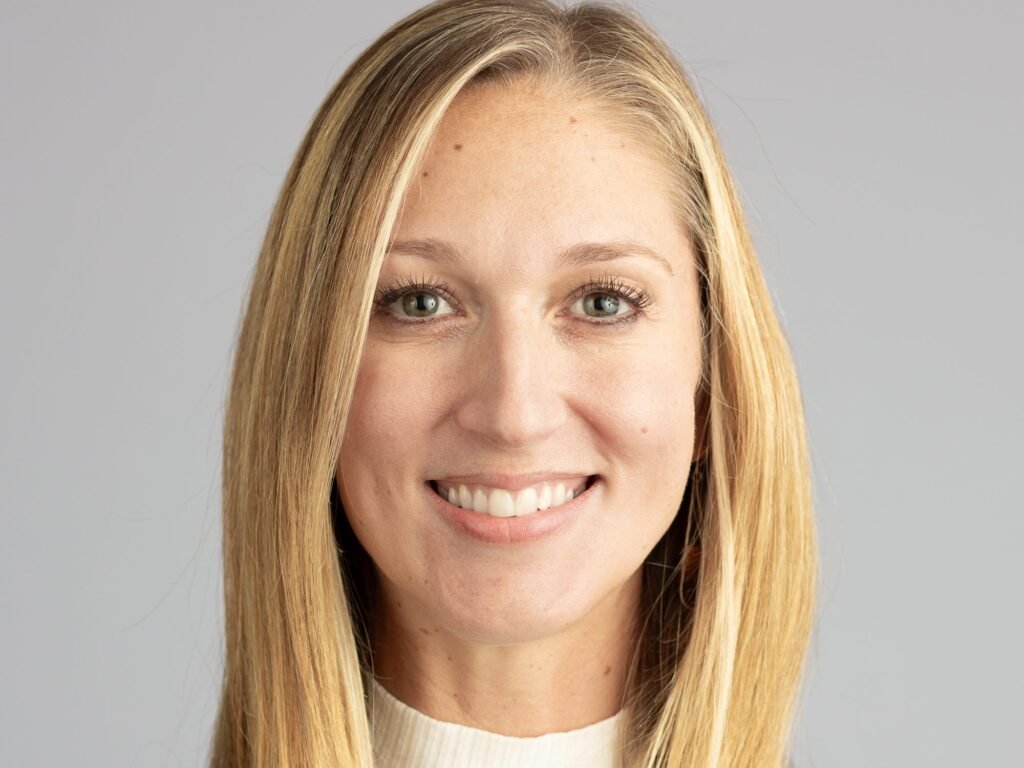
The physician leading these efforts, Rebecca Soskin Hicks, joined OpenAI in 2024 and has since become something of a “doctor-whisperer,” working between doctors and the company to improve AI in healthcare.
“This is a high-stakes area,” Soskin Hicks said. “There’s no finish line for what is good enough. We are going to continue to march on towards improvement, as far as I am aware, indefinitely. Continuously.”
OpenAI
The stakes can indeed be high. In July, a pastor sued OpenAI over ChatGPT’s responses to details about a health crisis with his lungs. He alleged that the GPT-4o model had misdiagnosed and underplayed his symptoms; the lawsuit sought to get OpenAI to pause the operation of healthcare-related products.
With hopes that the network of doctors will help improve its AI for health, OpenAI has chosen to steam ahead despite the untested legal landscape around chatbots, medical advice, and product liability. Ashley Alexander, OpenAI’s head of health products, said AI improves upon the internet searching that millions of people already do.
Treating chatbots as the whole story behind a medical decision “oversimplifies” the situation, she said, and “risks actually getting in the way of us getting the beneficial impact of this in the hands of as many people as possible.”
“We’re very clear that Chat is not to be used for diagnosis and treatment,” Alexander said. The company’s service terms say this. If asked, the chatbot does offer to help assess illnesses and injuries.
Doctors look for ‘gaps’ in ChatGPT’s health advice
The task falls to researchers and doctors to improve ChatGPT’s health advice. Soskin Hicks built her team of physicians with Karan Singhal, who leads the company’s health research and told Business Insider earlier this year that he wants patients to see ChatGPT as a “protector in their care journey.”
Soskin Hicks said the physicians’ network aims to bring in both geographic diversity and a range of specialties.
These doctors work for OpenAI as part-time contractors, from as far away as Kenya, Nepal, and Brazil. As of July, they had reviewed over 700,000 responses from ChatGPT to evaluate how the models could improve. They aren’t directly providing data for AI training, though OpenAI and other model developers have increasingly used data from white-collar professionals to improve their tech.
“To do this in a way that makes sense, we have to test situations that are ambiguous and messy and noisy and under-specified,” Soskin Hicks said.
After the doctors evaluate the models, they tell the research team “where the gaps are, where performance could be better,” she said. The research team then looks for helpful new data and training methods to help ChatGPT accurately triage emergencies, solicit missing information, communicate uncertainty, and respond with the right level of detail.
A ‘ladder of evidence’ grows on AI for health
Already, OpenAI has made it easy to connect Apple Health and some medical records to ChatGPT, and Singhal touted the latest GPT-6 Astra model as the “state of the art” on a health benchmark test. The company also released a benchmark for testing a model’s mental health responses last month.
The physicians’ feedback and the models’ performance in benchmark tests should be looked at as first steps in evidence, Soskin Hicks said. She hopes that, over time, studies will show that the use of chatbots for health advice actually improves outcomes for both individuals and populations.
“There’s this ladder of evidence, where we are climbing up it, and we haven’t gotten to the top,” she said.
Have a tip? Contact this reporter via email at scouncil@businessinsider.com, or over text, Signal, Telegram, or WhatsApp at 415-757-8198. Use a personal email address, a nonwork WiFi network, and a nonwork device; here’s our guide to sharing information securely.