Abdullah Durmaz/Getty Images
- Social Security benefits will increase by 3.6% in 2027, following the latest inflation adjustments.
- The SSA’s annual cost-of-living raise means the average monthly check will be $75 larger.
- Over half of retirees rely on Social Security as their primary income, according to an AARP survey.
Older Americans just learned how much to expect in monthly Social Security checks next year.
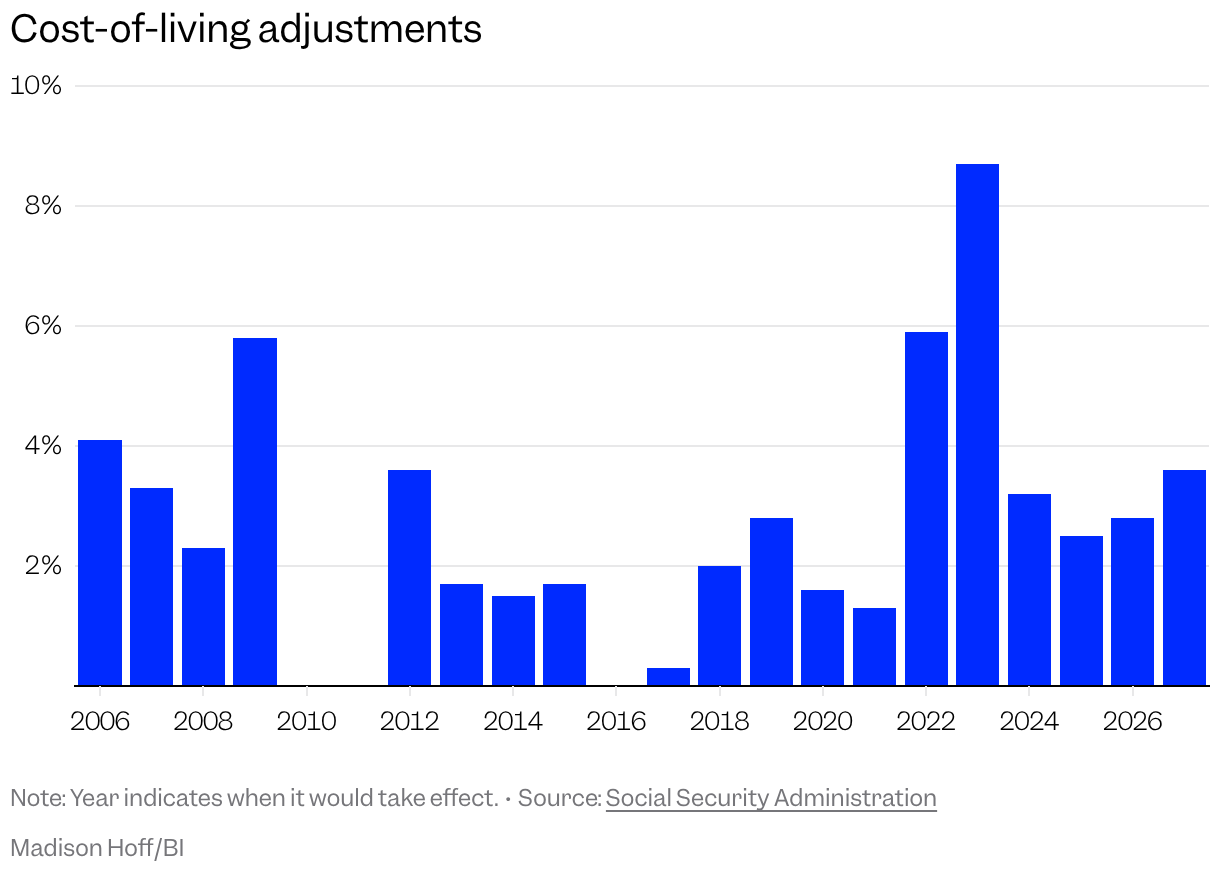
The Social Security Administration announced its latest cost-of-living adjustment on the heels of Wednesday’s September inflation report. SSA beneficiaries, who are mostly 65 and older, are now set to receive a 3.6% raise in their benefits in 2027.
That’s higher than the 2026 increase of 2.8% and will amount to a $900 annual boost for recipients, according to AARP calculations — an average monthly check increase of $75.
The consumer price index, which tracks how much prices have changed, is key in determining just how much Social Security checks should go up. The adjustment is calculated based on the increase in prices during the third quarter of this year compared to a year ago for urban wage earners and clerical workers.
The Social Security Administration said it will start notifying people about their amount in November via its online portal.
While a check bump will likely be a welcome development for many older Americans, it might still amount to a drop in the financial bucket. Over the past few years, Americans 65 and older have increasingly been slipping into poverty after adjusting for transfers like taxes and government programs.
Social Security alone is a formidable anti-poverty program, keeping nearly 21 million of those older Americans from poverty, per the Census Bureau. And for many older Americans, Social Security goes beyond a poverty lifter; it’s a key financial lifeline. An August AARP survey of 1,085 Americans ages 50 and up found just over half of recipients say Social Security is their main source of income; among those who said they were highly reliant on it, 82% said it helps them cover basic expenses like housing, food, and healthcare.
Looming over all of that is the concern that Social Security won’t be able to pay out full benefits in just a few years; the latest accounting from the fund’s trustees found that, unless funding is replenished, the Old-Age and Survivors Insurance Fund will stop being able to pay out full benefits at the end of 2032.
Are you an older American living on Social Security? How will the new cost-of-living adjustment affect your finances? Reach out to these reporters at jkaplan@businessinsider.com and mhoff@businessinsider.com.