Welcome to AI Decoded, Fast Company‘s weekly newsletter that breaks down the most important news in the world of AI. I’m Mark Sullivan, a senior writer at Fast Company, covering emerging tech, AI, and tech policy.
Sign up to receive this newsletter every week via email here. And if you have comments on this issue and/or ideas for future ones, drop me a line at sullivan@fastcompany.com, and follow me on X @thesullivan.
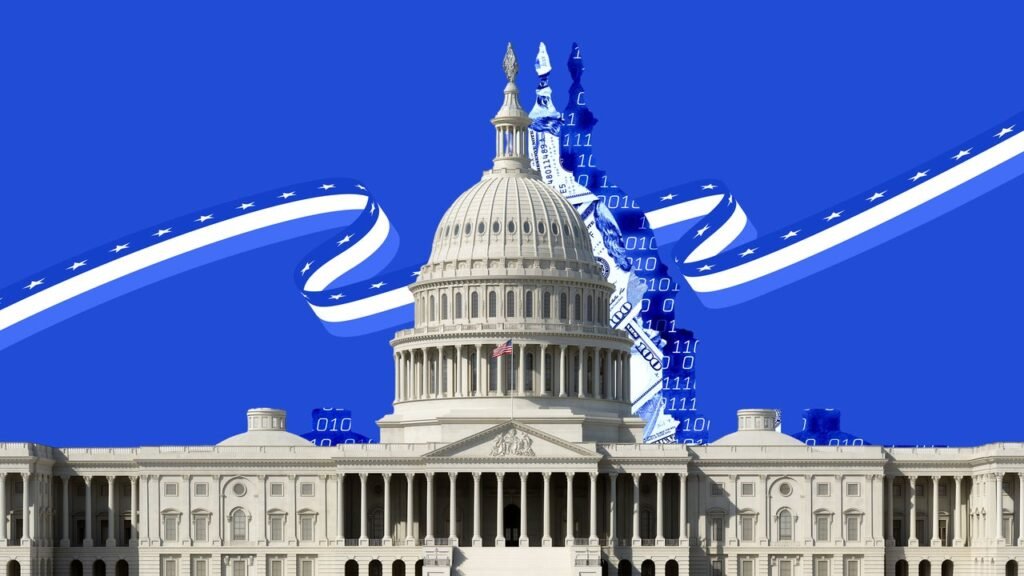
AI Super PACs are paying millions for midterms ads, which almost never mention AI
Political action committees backed by artificial intelligence developers, Silicon Valley executives, and venture capital firms have poured tens of millions of dollars into competitive 2026 midterm elections. But across the thousands of television, streaming, and digital ads bought with that money, the words “artificial intelligence,” “algorithms,” and “tech policy” appear in almost none of them, a New York Times investigation found.
Silicon Valley donors and corporate super PACs want to elect members of Congress who are likely to support industry-friendly AI regulation, or no regulation at all. But they must do so without further elevating AI as a campaign issue. The technology, and the data centers that support it, remain deeply unpopular with voters. Many Americans worry that AI will eliminate jobs, pose potentially existential risks, enable mass surveillance and media manipulation, and ultimately benefit only the wealthy elites who finance and control it. Wide majorities also oppose the construction of noisy, energy-hungry data centers in their communities. With AI policy now a political liability, advertisers are channeling their funds into conventional campaign ads focused on kitchen-table economic issues like inflation, local taxes, and small business support.
And we’re talking about unprecedented sums of money. A New York Times analysis of campaign finance data shows that political groups aligned with major AI developers like OpenAI and Anthropic, along with tech-focused venture capital firms, have directed between $55.7 million and $60 million into federal midterm campaign advertising and voter outreach. According to Public Citizen’s campaign finance tracking, the sector’s flagship super PAC, Leading the Future, raised $75.1 million this cycle, roughly two-thirds of it from the venture capital firm Andreessen Horowitz. Last year, OpenAI’s cofounder and president, Greg Brockman, and his wife, Anna, contributed $50 million in personal funds, splitting the money between Leading the Future and the primary Trump-aligned super PAC, MAGA Inc.
Silicon Valley’s super PAC money also doesn’t buy as much advertising as ordinary campaign cash. Federal Communications Commission rules require broadcast stations to charge super PACs undiscounted market rates, while granting candidate campaigns statutory “lowest unit rate” discounts. Because outside groups can pay up to five times as much per ad slot as candidate campaigns, tech-backed PACs are concentrating their media buys on broad, high-resonance economic messaging rather than risking millions of dollars on a topic that triggers immediate public resistance.
Under the Trump administration’s arrangement with Big AI, AI developers and infrastructure companies shower the president with cash and praise, while Trump does everything in his power to keep AI regulation voluntary, nonbinding, or nonexistent. Late last month, for example, the administration brought tech titans to Washington for a luncheon and ceremonial signing of a voluntary safety pact asking advanced AI labs to follow safety protocols and establish internal teams to monitor their own progress.
Anthropic says AI worms could soon spread across smart gadgets
Anthropic published research on Monday suggesting that small AI models may be just months away from being able to replicate themselves across cheap, internet-connected devices without relying on data centers. Researchers warn that these models could spread across devices such as smart ovens and off-brand Android TV boxes, making them difficult to shut down because there would be no central point of control. In Anthropic’s tests, GLM-5.2, a large language model developed by the Chinese AI company Z.ai, and other powerful models successfully replicated themselves across devices. Researchers predict that smaller models could achieve the same capability by the end of the year.
Huang says Nvidia will announce $2 billion in European deals
Nvidia’s CEO, Jensen Huang, said on Tuesday the company expects to unveil $2 billion worth of European AI deals in the next week, on top of the $8 billion it has deployed across the continent over the past year, Bloomberg reported. Speaking in Paris—first stop on a tour that also takes him to London and Berlin—Huang announced investments in four French startups, according to Quartz. Nvidia is already a major investor and chip supplier for the French AI company Mistral. “Europe needs to get in the race,” he said, adding that open-source models may be Europe’s best route to catch up with U.S. developers. Nvidia, of course, would benefit from a more intense global AI arms race regardless of who wins, because all players need Nvidia chips.
Hundreds of scientists call for an international AI containment body
More than 400 scientists signed an open letter calling for an international body to standardize containment practices for cyber-capable AI models and establish protocols for tracking, documenting, and reporting containment failures. The letter urges organizations developing, deploying, and testing such models to immediately adopt high-assurance containment systems, default to airgapping, and report containment failures to the proposed body; those incidents would eventually be made public. As of Wednesday, the letter’s website listed 406 signatories, including Geoffrey Hinton, Yoshua Bengio, and Stuart Russell.
Google releases Gemini 4 Argon
Google released its latest frontier model, Gemini 4 Argon, on Tuesday. According to Google, Argon ranks first on the Vals Index, which measures performance across finance, coding, legal, and tax tasks. The company says the model helped its software engineers increase agentic code submissions by more than 35% while reducing code rollbacks by nearly a third. Google also says Argon helped the Chrome team complete an architectural refactor spanning hundreds of files, compressing months of work into weeks. Argon is available globally through Google’s application programming interface (API), as well as through the Gemini app and AI Mode in Search for Ultra and Pro subscribers.
Chinese companies bought more than 1 million Nvidia gaming GPUs in a year
Chinese tech companies have purchased more than 1 million Nvidia gaming and workstation graphics processing units (GPUs) to make up for shortfalls in AI computing power, the Financial Times reported. China’s domestic AI chip production has doubled this year but still cannot keep pace with demand from the country’s largest tech companies, leaving a shortfall of nearly 1.5 million chips against demand exceeding 5 million. The stopgap chips are primarily Nvidia’s RTX Pro 6000D, RTX Pro 5000, and RTX 5090, all of which comply with U.S. export controls. While they cannot match the performance of Huawei’s Ascend 910C, they are useful for simpler AI workloads.
More AI coverage from Fast Company:
- Apple’s HomeView is nearly a decade late. That might not matter
- Building a data center costs billions. Defending it is another story
- Rogue agents are the price of a breakneck AI arms race
- The list of AI insiders sounding the alarm on their own companies keeps growing
Want exclusive reporting and trend analysis on technology, business innovation, future of work, and design? Sign up for Fast Company today.