Quinn Rooney/Getty Images
- Olympic swimmer Ariarne Titmus says she was used to seeing life in terms of winning or losing.
- She retired at 25 after winning eight Olympic medals across two Games, including four golds.
- In retirement, Titmus said she had to unlearn the mindset that once made her successful in sport.
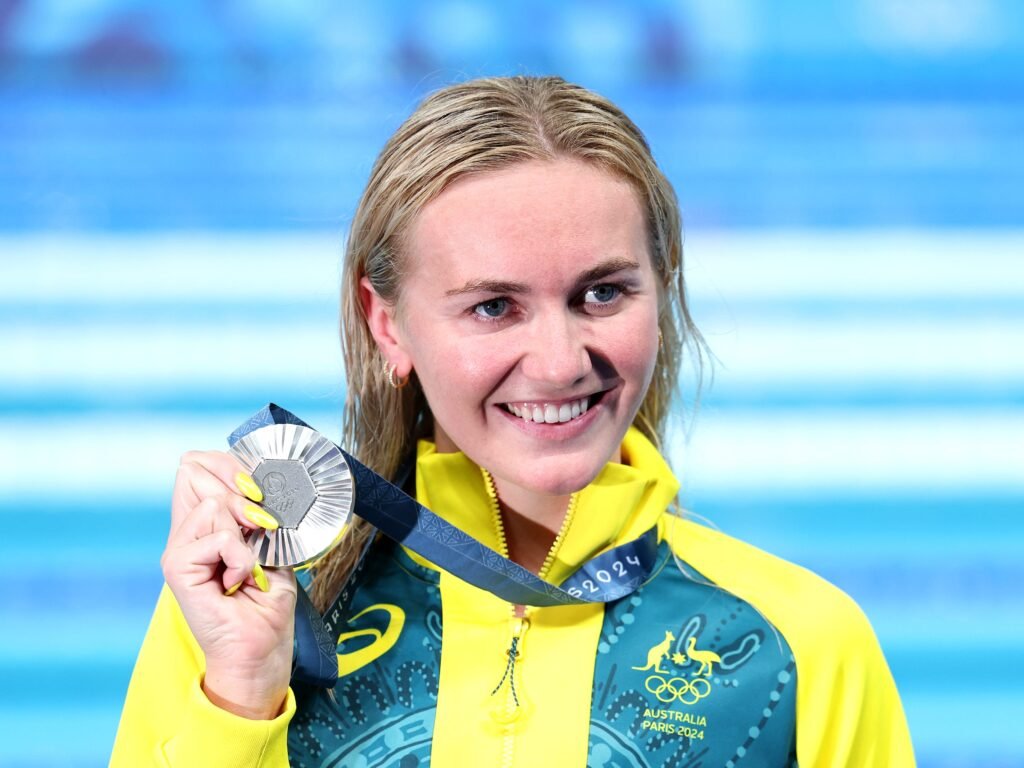
Ariarne Titmus, 26, says she had to unlearn the mindset that made her an Olympic gold medalist after retiring from swimming.
“I look at a lot of things in my life pretty black and white, which is probably not a good way to be sometimes,” the Australian swimmer told The Guardian in an interview published Sunday. “In my swimming career, I was all or nothing. I was win or lose. I was achieve it, or fail. And I guess that’s not a great way to be in life.”
Titmus is one of Australia’s most decorated swimmers, with four Olympic gold medals, three silver medals, and one bronze. She announced her retirement from competitive swimming after the 2024 Paris Olympics.
After undergoing surgery to remove a growth from her ovary in 2023, which affected her fertility, Titmus said she began to feel she needed to make more space for other parts of her life.
“I’ve definitely tried to change my outlook on a few areas of my life and not live with that super intense mindset that I had to have to be successful in the pool,” she said. “Because I don’t have to be like that anymore.”
Other retired athletes have also spoken about the challenge of reshaping the routines and mindsets that once helped them excel.
In July, former NHL player Brooks Laich told Business Insider that it took him years to find a new sense of purpose after retiring from hockey.
He said reminding himself that “you can build it once, you can build it again” helped him through the transition from being a pro athlete to starting a new business.
In August, Lindsey Vonn said training gave her a sense of focus that she struggled to find in retirement.
“There’s no time really, unless you carve out time in the gym or like you have a specific amount of time where you’re meditating, where you actually are present,” Vonn said. “We’re being pulled in so many different directions.”