In the South Bronx, residents can now look up to their heritage—literally.
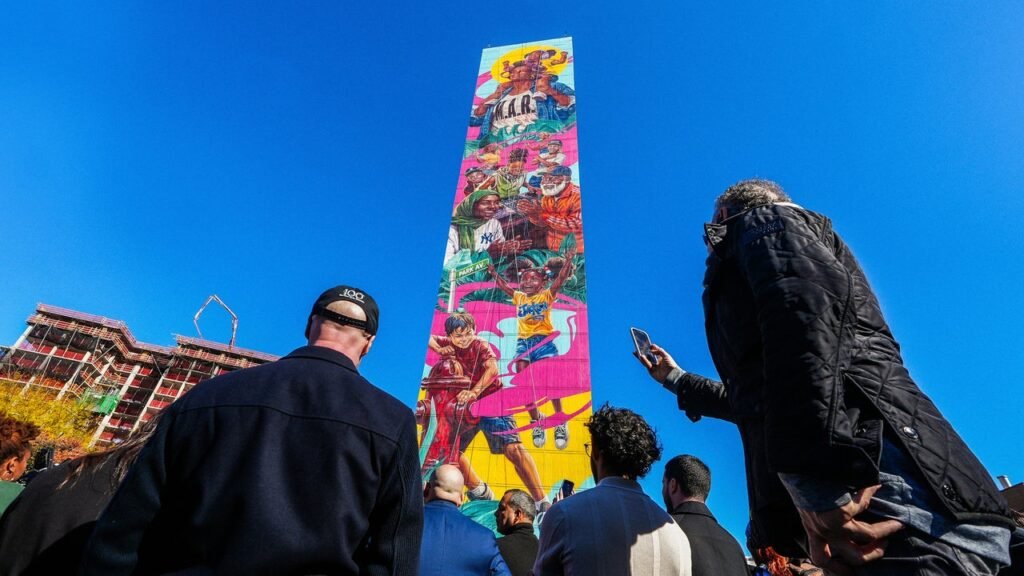
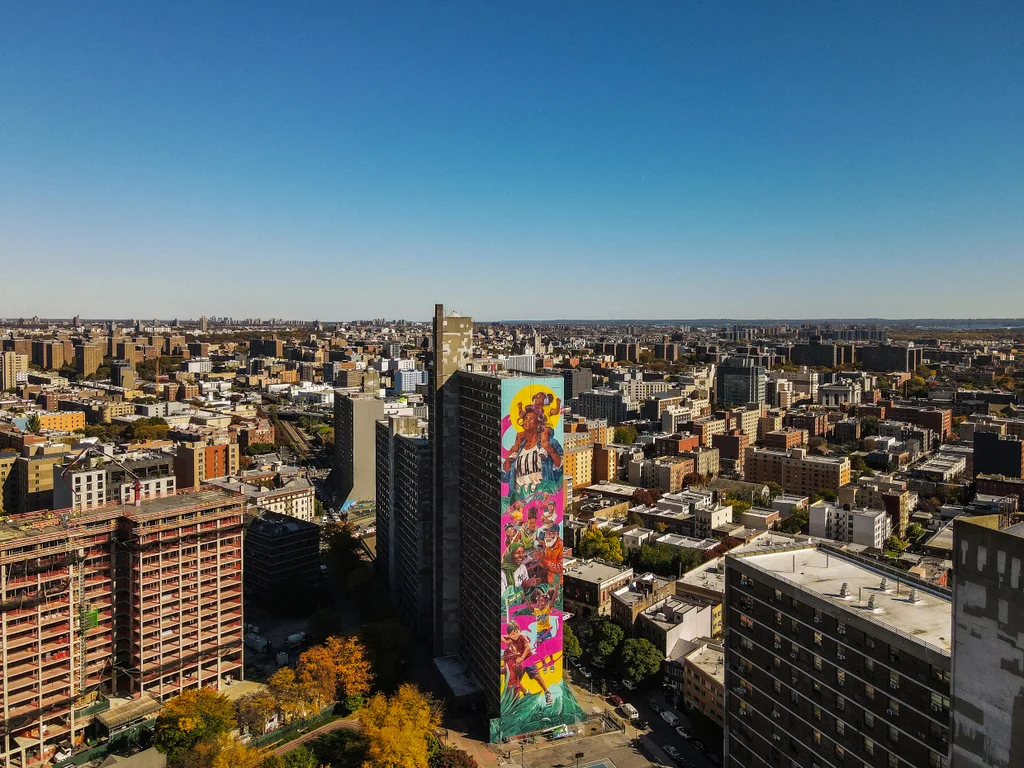
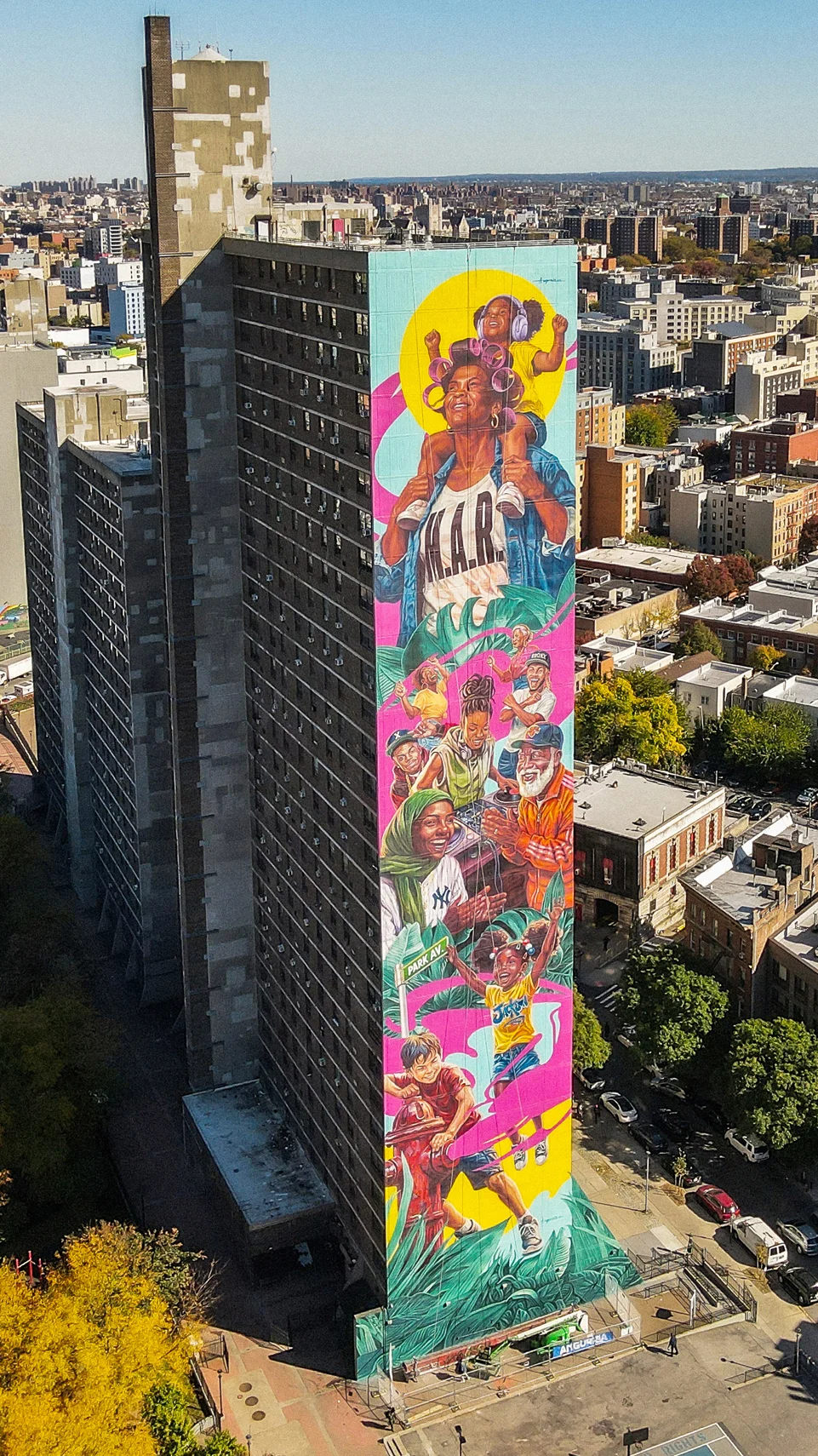
A new mural by the Dominican artist Néstor Omar García, who also goes by the name Angurria, climbs 29 stories high on one tower in the Morrisania Air Rights public housing campus. It fills the skyline with a colorful take on a neighborhood block party crowded with children, elders, and, yes, even a DJ.
Titled Un MAR de Gente / From Every Shore, the artwork is said to be the tallest mural in the U.S., transforming an otherwise dull concrete facade of the brutalist New York City Housing Authority building into a public artwork.
The project was spearheaded by the New York City-based nonprofit ArtBridge and the strategic consulting firm FOGA. Support came in the form of grants from Public Housing Community Fund and MAC Viva Glam, the line of lipsticks that helps fund community causes. For a little over a year, the organizers worked alongside the artist and the community to complete the artwork.
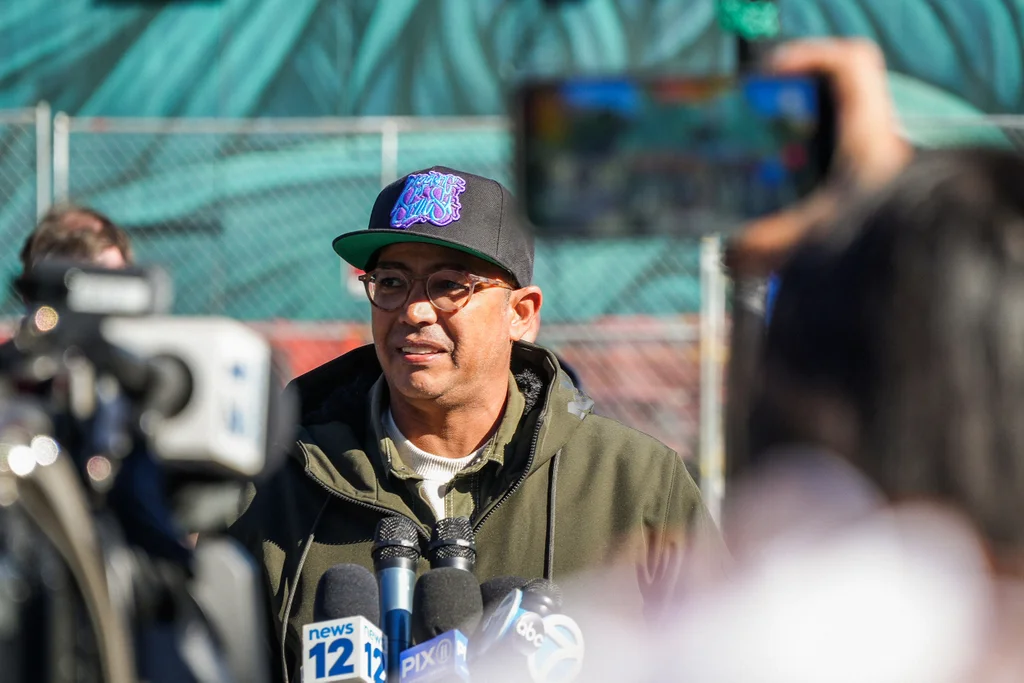
“Hundreds of windows face this wall—neighbors, schools, offices—so everyone can enjoy this mural from their windows,” says FOGA’s founder, Fernando Ortiz.
Stacked into three sections that blend into one another, the mural collages three interconnected stories into a single scene. The top section symbolizes how older generations pass down knowledge to younger ones. To depict this, Angurria painted his “Doña Patria” character—a woman wearing hair rollers that he based on his mother and frequently returns to in his work—carrying a child on her shoulders.
The middle section features a party scene, with seven people wearing common emblems and fashion from the neighborhood. One dons the borough’s “X” symbol on a hat while an elder with a beard sports a Knicks cap and an orange tracksuit. In the corner, a young woman wears a hijab and Yankees jersey.
The bottom section shows two children playing around an open fire hydrant, which represents the past and the innocence of childhood.
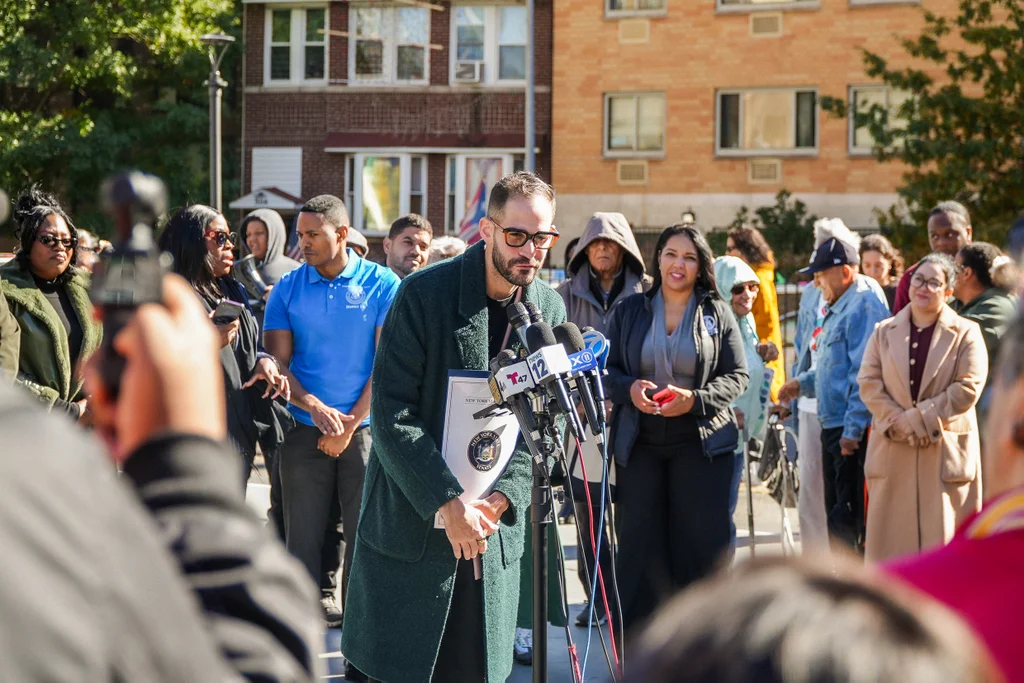
The entire artwork was conceived of collaboratively with the community. FOGA organized six workshops with South Bronx residents to gain their input. Together they voted on artist they wanted to make the mural, the bright color palette, and the symbols and motifs that would be depicted, like hip-hop and sports teams.
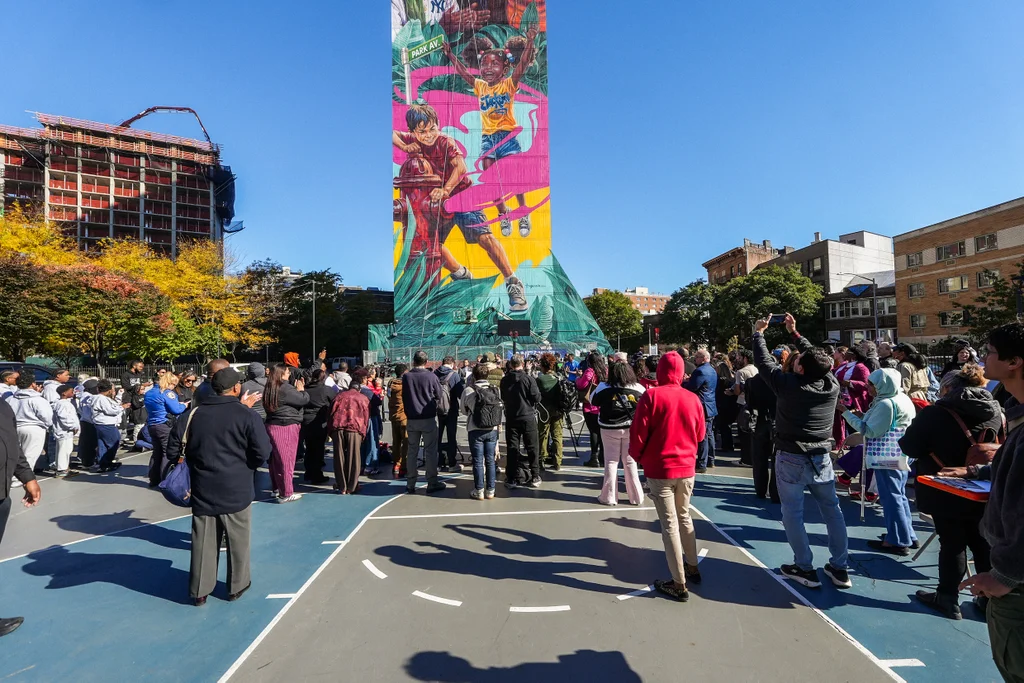
After deciding on the mural’s nonnegotiables, the group passed the list to Angurria, who would then return with design concepts. They traded ideas and feedback until they were all happy with the result.
The mural is 307 feet tall, and the scale serves a purpose. “We look down at our phones so much and public art forces you to look up,” Jon Souza, program director at ArtBridge, tells Fast Company. Like the mural’s main figure who is looking upward, Doña Patria, passersby need to look up from their phones and up to the sky to view the whole work.
“You can’t experience the mural without doing the same,” Souza said.
Installing a mural at the scale of a 29-story building involved careful logistical planning. Just three artists painted it.
Many murals are first traced using a projection, but due to the size of the wall, that was not possible here. So Angurria turned to virtual reality (VR) instead. Using measurements from the building’s blueprints, he mapped out the final design to scale and divided it into sections, assigning a corresponding pattern to each floor.
Angurria and an additional artist then jumped on a swing scaffolding lift—the kind window washers use—and traced the virtual pattern, visible through the VR headset, onto the facade. Just laying down the figures’ black outline took around one full day. Next, they applied acrylic paint, then latex; they finished the details with spray paint. The entire process took 22 days.
The mural has become a conversation piece. Community members who contributed to the project proudly point out how their ideas are now part of the cityscape. That, more than the mural’s monumental size, is the greatest outcome as far as the organizers are concerned.
“We set out to create the mural without knowing the record-breaking scale it would ultimately reach,” Souza says. “But the scale, attention, and recognition it received have only amplified the sense of pride and ownership around the project.”
Angurria, though not part of the Bronx by birth, was embraced by the community as a result of the mural. On the artist’s birthday, which landed on one of the 22 days spent painting the piece, neighbors brought him cake and coffee.
“He is the artist who did the mural, but now he is also family,” said Ortiz, the FOGA consultant.