Going the Extra 1,000 Miles
Electric vehicles have improved over the years, with the EPA reporting that the average range of new EVs reached 292 miles in 2024, nearly four times the average in 2011. Still, range anxiety remains a concern among prospective buyers, especially in states where charging infrastructure isn’t as well-developed as in states like California.
As such, CATL’s exploration of lithium-air batteries sounds like a compelling prospect. CarNewsChina reported that this battery technology could allow EVs to travel up to 2,000 km (1,243 miles) on a single charge. On paper, that’s like driving from Los Angeles well into Texas without stopping to recharge. However, several challenges remain before the technology can make it into production.

Breathing Room for Batteries
The aforementioned range figure is only theoretical, not a demonstrated or officially confirmed range. It is based on a theoretical specific energy of around 3,505 Wh/kg, potentially several times higher than that of solid-state batteries, which are being developed as an alternative to conventional lithium-ion batteries found in most EVs today. However, high theoretical energy density does not necessarily translate into better performance or longer driving range in real-world conditions.
Lithium-air batteries work by using oxygen from the air, eliminating the need to store all the positive-electrode reactants inside the battery. On the flip side, chemical reactions can cause battery degradation, limiting charge-discharge cycles. Recharging can also require substantial energy, while air-management and cooling systems add complexity and weight.
Given CATL’s position as the world’s leading EV battery supplier, which even has a technology-licensing partnership with Ford to manufacture LFP batteries in the U.S., its exploratory research is significant, even if the technology is years away from potential commercialization. However, CATL’s broader battery roadmap places sodium-ion and all-solid-state technologies closer to mass production, while lithium-air remains a longer-term research prospect.

Paying for Every Extra Mile
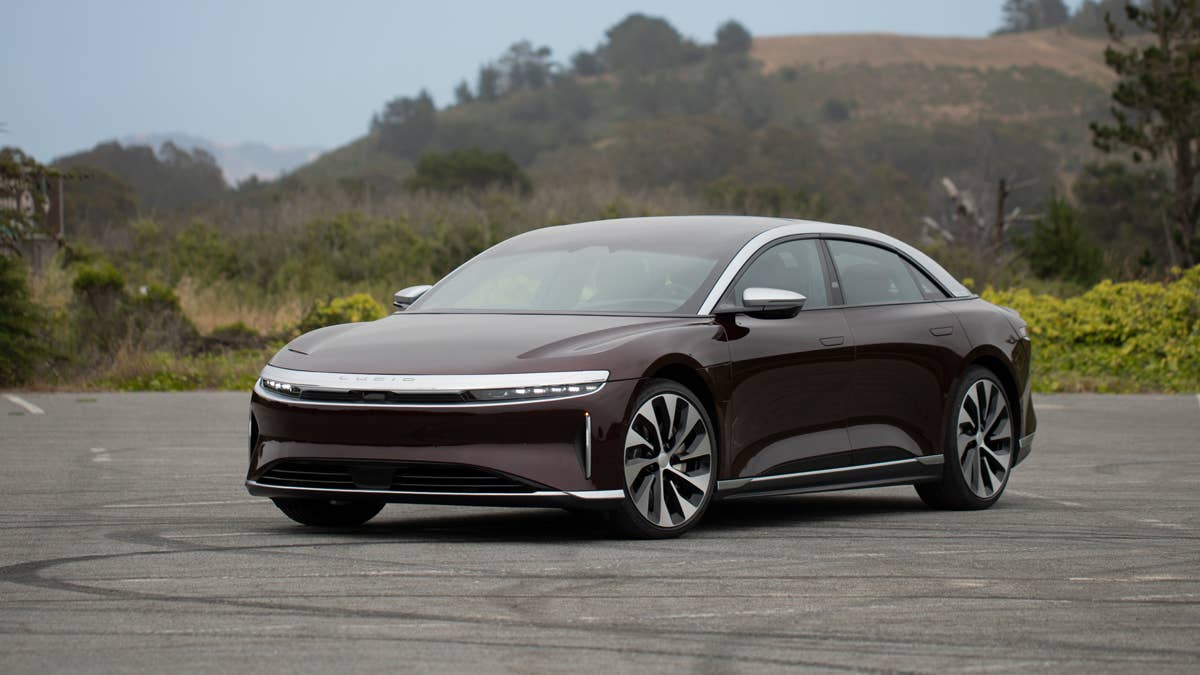
Right now, the longest-range EV in the U.S. is the Lucid Air Grand Touring, which can travel up to 512 miles on a single charge, according to the EPA. However, the model starts at $114,900, making it inaccessible to many buyers looking to overcome range anxiety. The Chevrolet Silverado EV also offers more than 400 miles of range, but the 2027 LT Extended Range already starts at $72,695.
That’s not to say lithium-air batteries will be the ultimate solution to range anxiety, or even make it into production EVs. However, research like this could push the boundaries of battery technology and encourage further innovation across the industry. Combined with improvements in charging speeds and infrastructure, these advancements could eventually make range anxiety a thing of the past.
Lucid