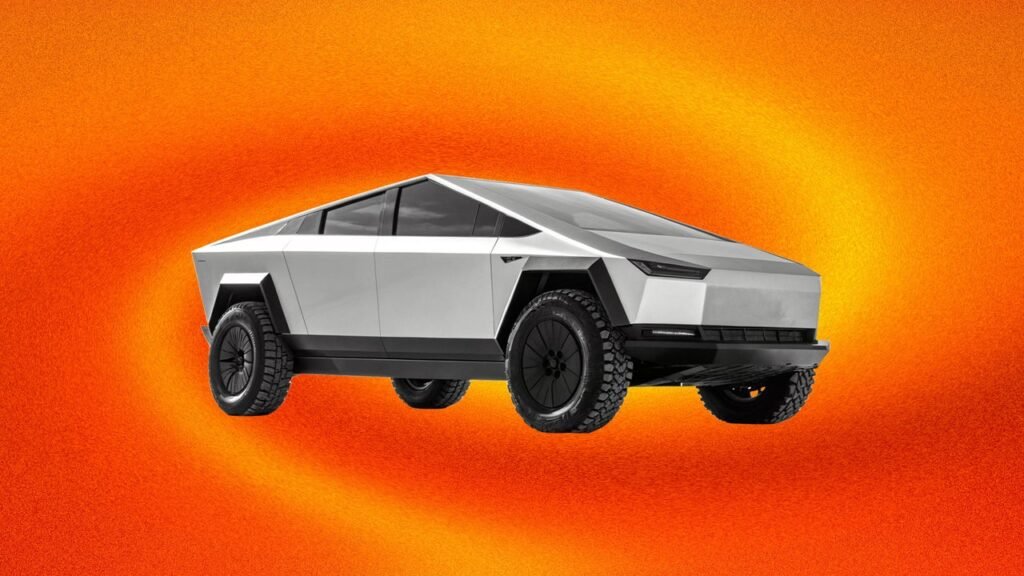
Elon Musk has had a rough week. His nearly half a billion dollars in midterm spending on Republican candidates went to waste as a blue tsunami swept the nation. Stocks for his companies Tesla and SpaceX fell in the wake of the election. And to top it off, Musk announced that Tesla would be “winding down” production of its infamous Cybertrucks by the middle of 2027.
Now, Musk announced another layer to Cybertruck’s discontinuation: It will require Tesla to issue refunds to “a lot of people” who’ve ordered the vehicle and won’t receive one.
In a post on X, Musk wrote that shutting down Cybertruck production has little to do with the sci-fi-inspired truck’s profits (or lack thereof). Rather, it’s a shift to prioritize the brand’s newest vehicle, the autonomous Cybercab, he claimed.
“The Cybertruck order rate far exceeds our production rate,” Musk wrote. “We will try to make as many as possible before shutting down the line in about 8 months, but will have to return deposits for a lot of people.”
“This is not a case of Cybertruck being unprofitable, as has been misreported by legacy media, but rather that the opportunity cost of the complexity of Cybertruck is vastly outweighed by the value of incremental Cybercab production,” he added.
Though Musk alleged that the Cybertruck’s profits have been misrepresented in the media, its sales numbers tell a different story. According to data from Kelley Blue Book, Cybertruck’s sales numbers have declined every year since 2024. Only 16,000 of the vehicles have been shipped so far in 2026, a far cry from Musk’s pre-launch estimate that he’d make 250,000 Cybertrucks every year.
The announcement continues a trend for Tesla, which also discontinued its Model S and X electric vehicles at the beginning of 2026. At the time, Musk said the decision was to free up Tesla’s resources to focus on other products—in that case, its bipedal Optimus robot, which has yet to hit the market.
On Tesla’s Q4 2025 earnings call, Musk said it was time to give the EVs “an honorable discharge” as Tesla entered a new era. “We’re really moving into a future that is based on autonomy,” he added.