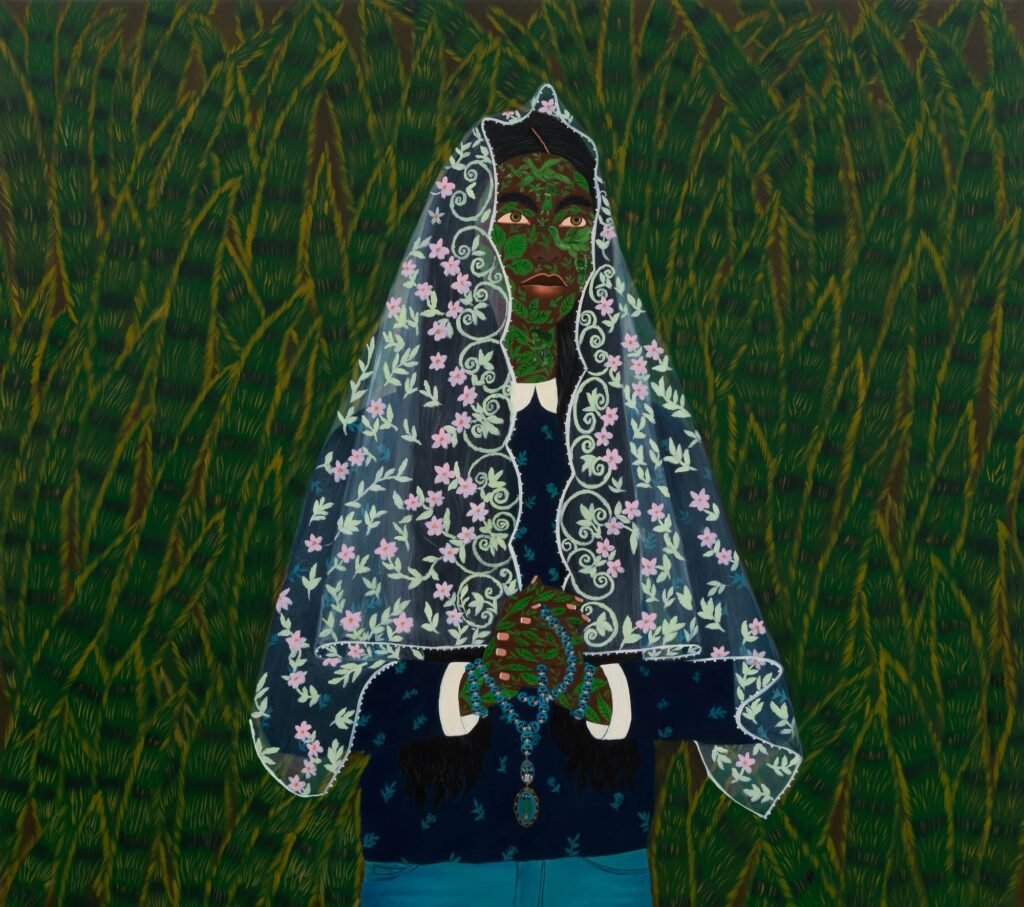
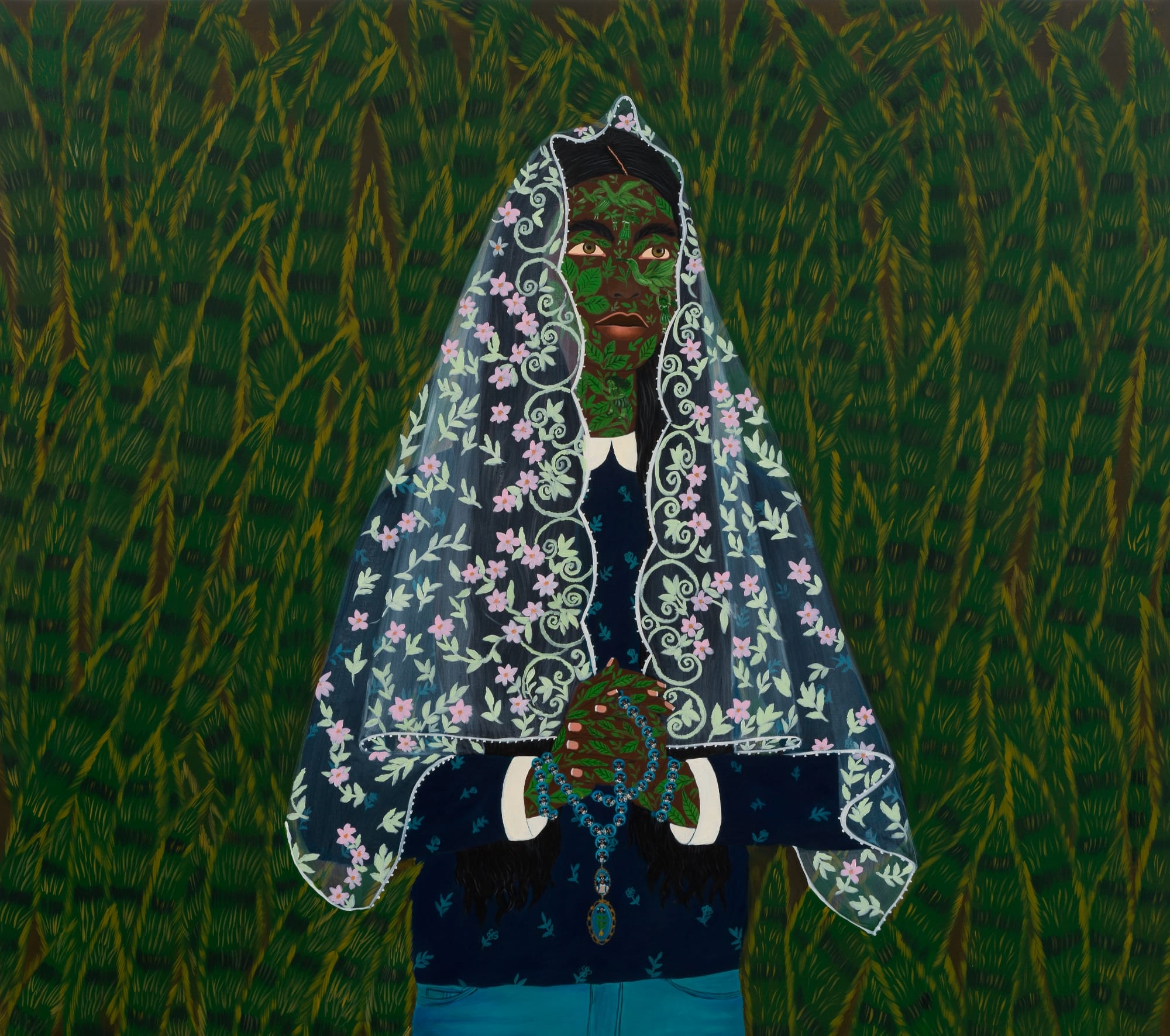
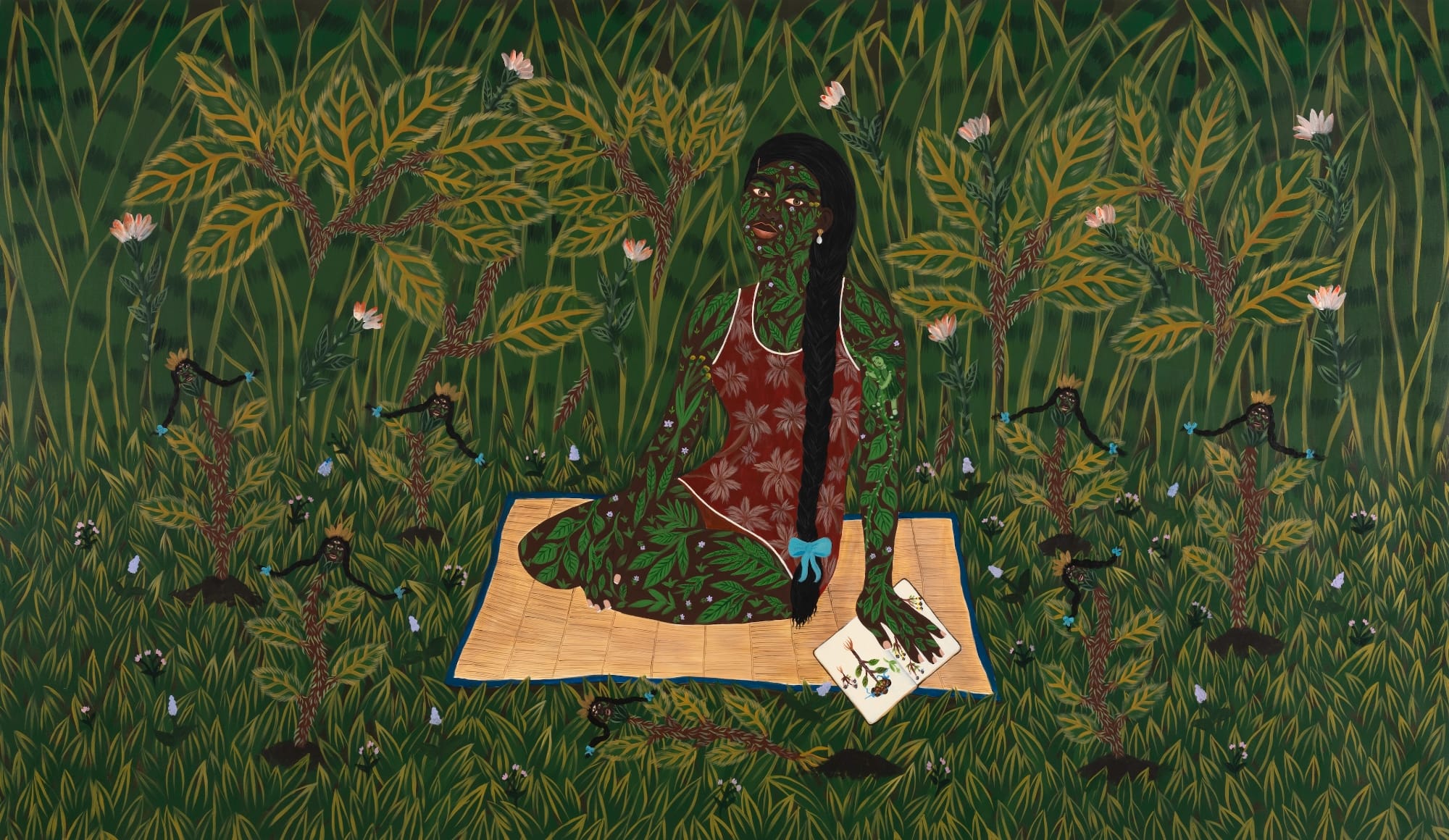
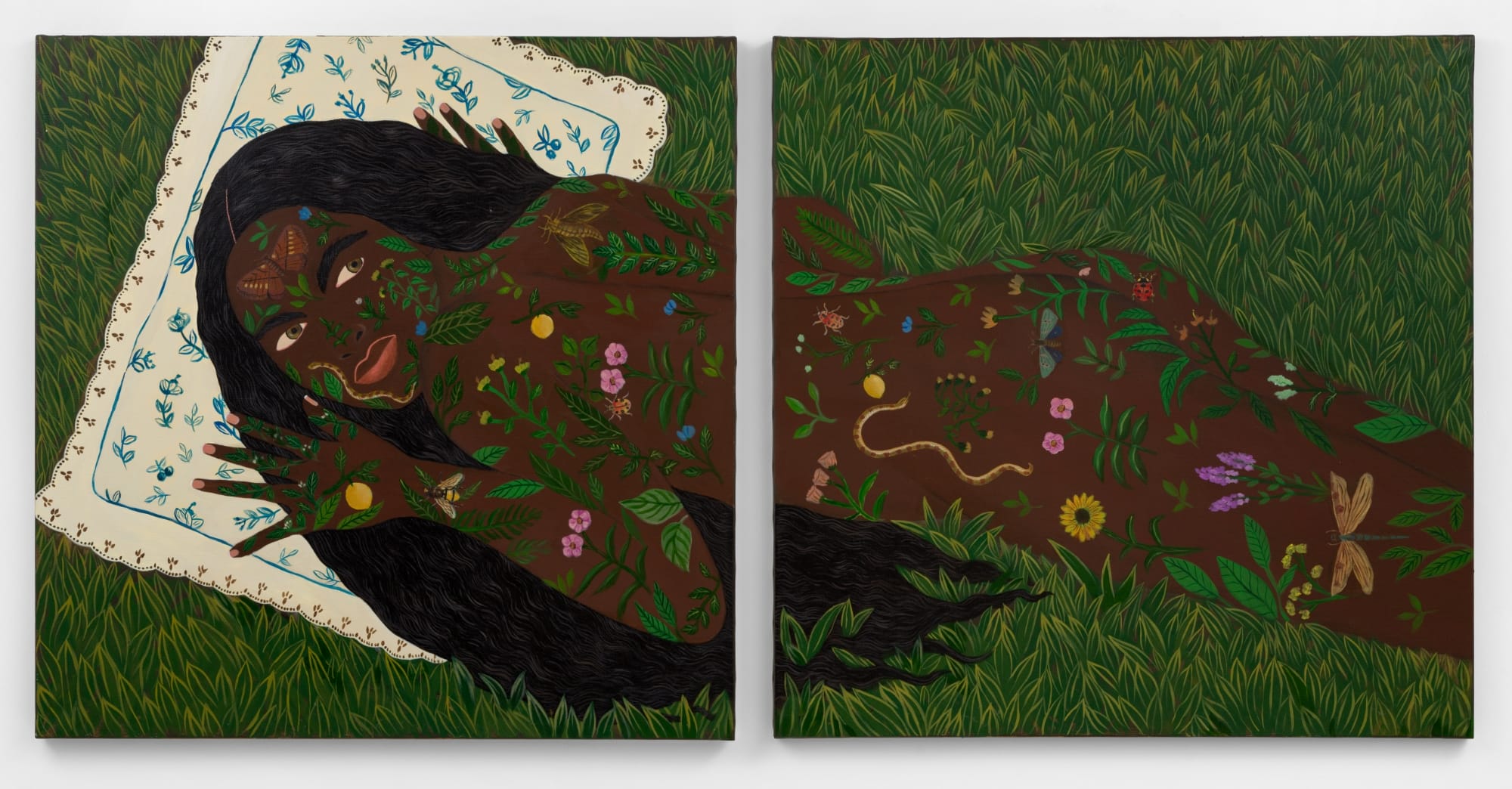
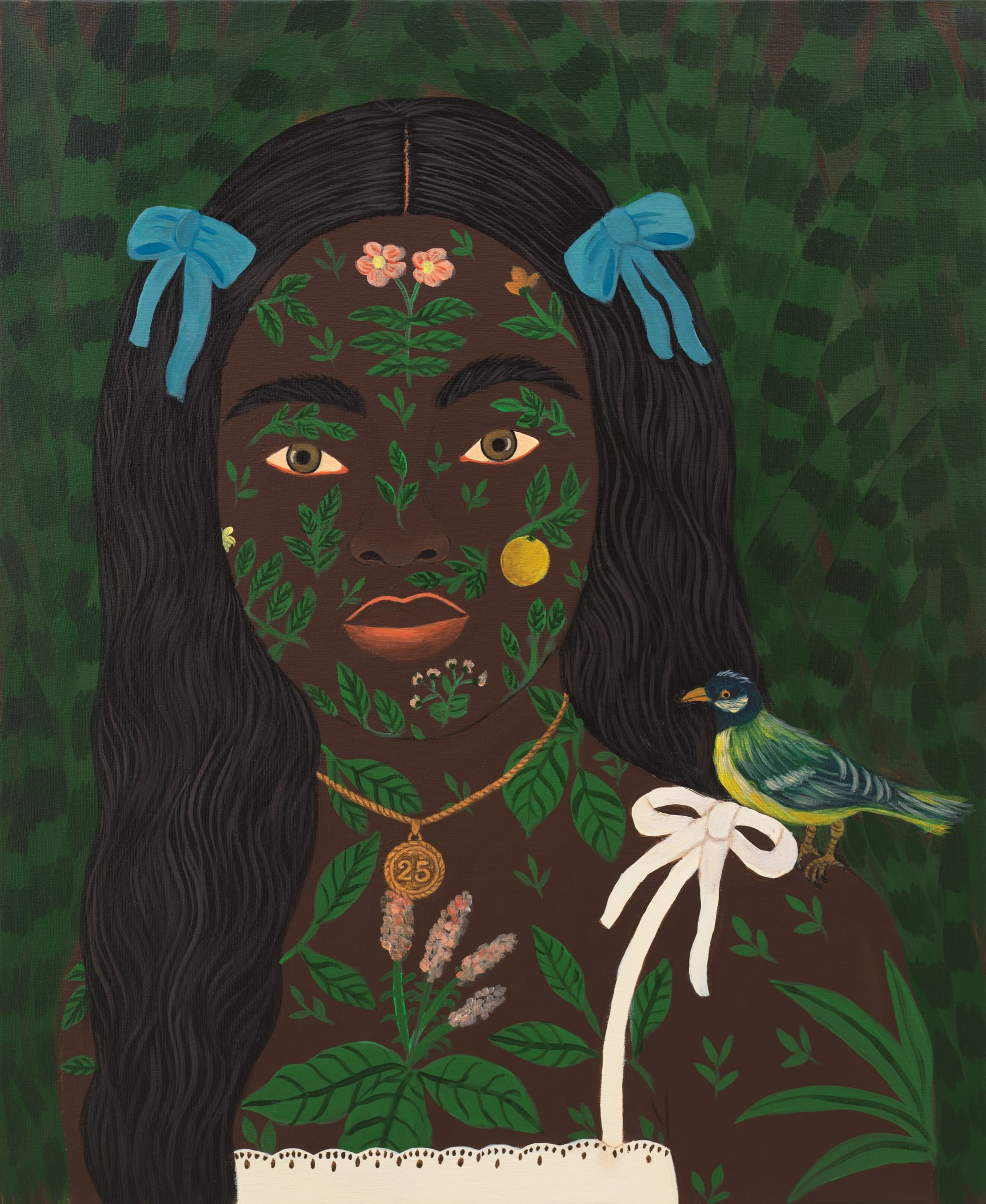
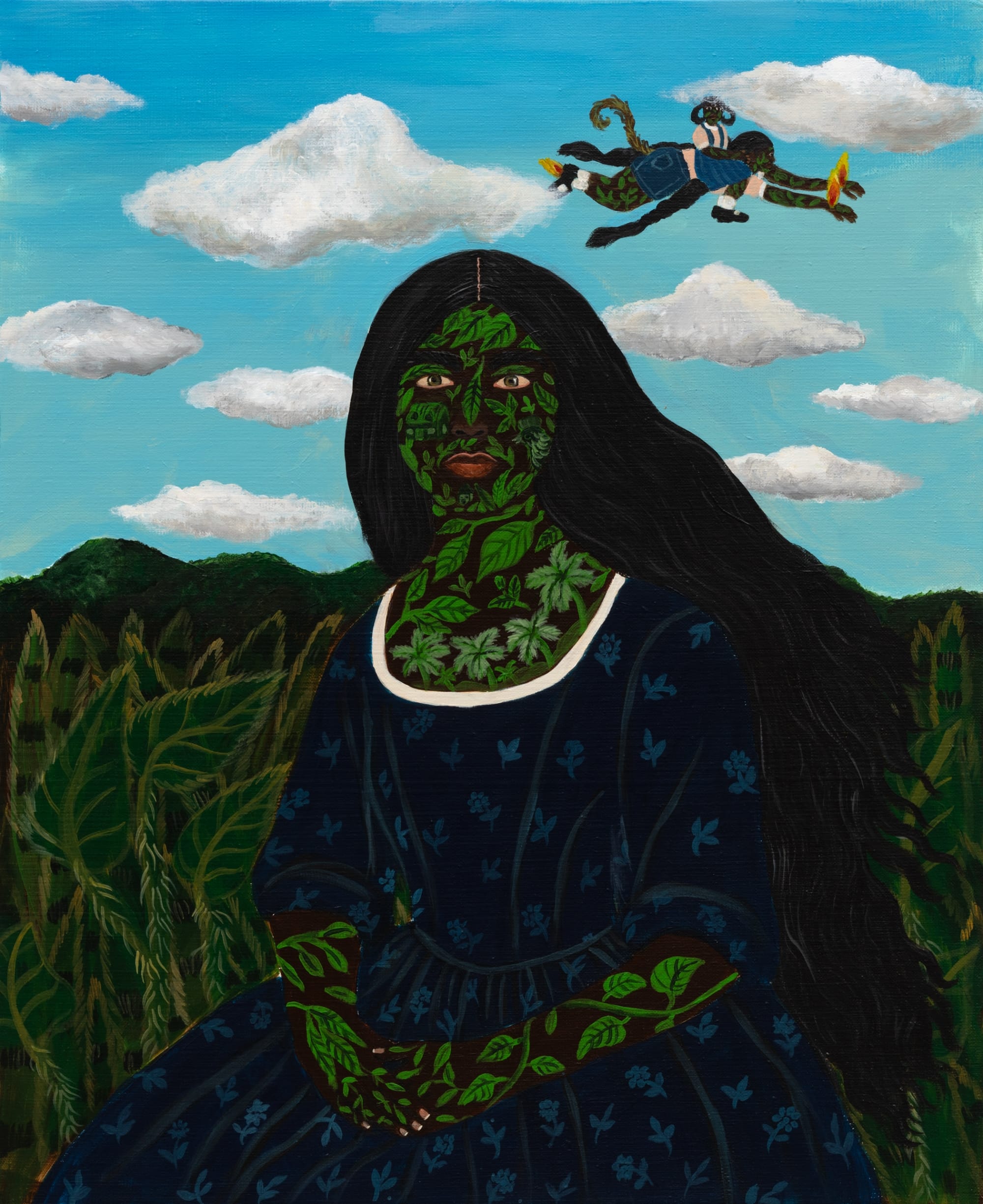
Tattooed with verdant foliage, the central figure in Kelly Sinnapah Mary’s portraits is both a product of and subsumed by the plant life that surrounds her. Born in the French Caribbean territory of Guadeloupe, the artist conjures the mythic stories of her home through surreal scenes in which humans, flora, and fauna find a sort of hybrid harmony.
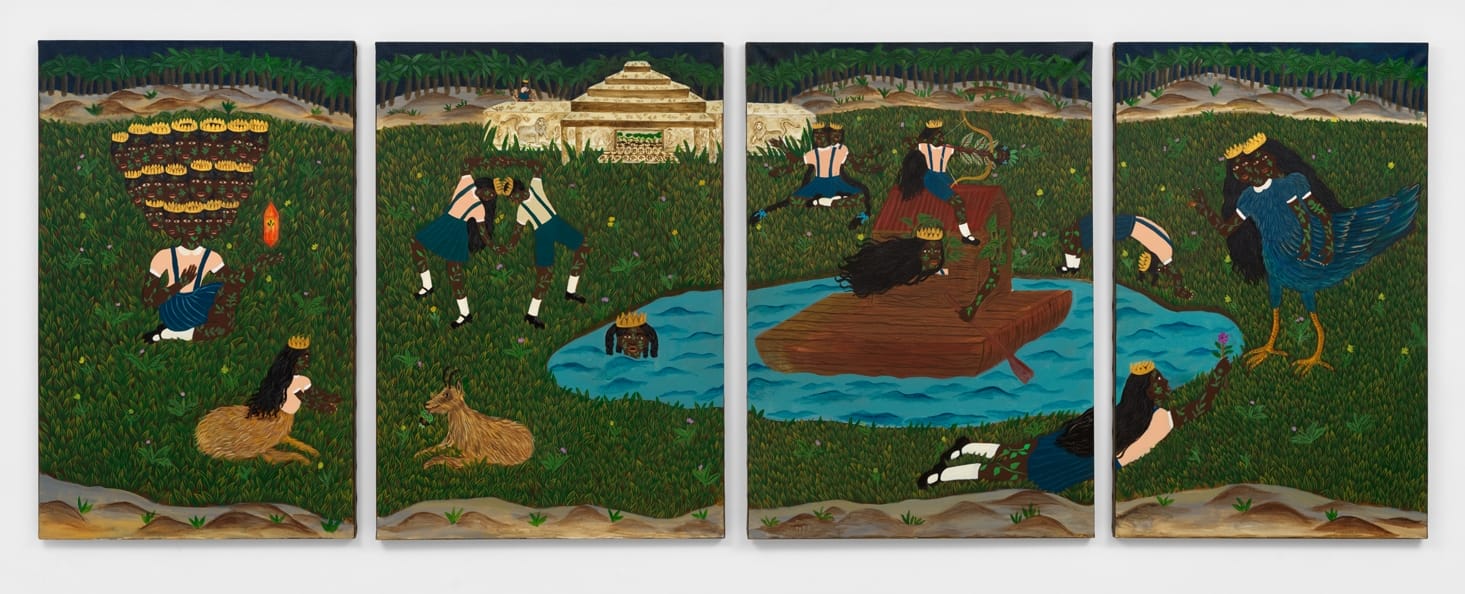
Sinnapah Mary’s recurring figure is named Sanbras, which the artist derived from a derogatory children’s book popular in the 19th and 20th centuries. Through uncanny compositions that rely heavily on saturated color and delicate, organic textures, Sanbras appears as a subversive figure who morphs across various bodies of work and nods to the artist’s enduring questions: how relationships between all living beings manifest and the ways political forces—European colonialism and anthropocentrism, in particular—shape such connections.
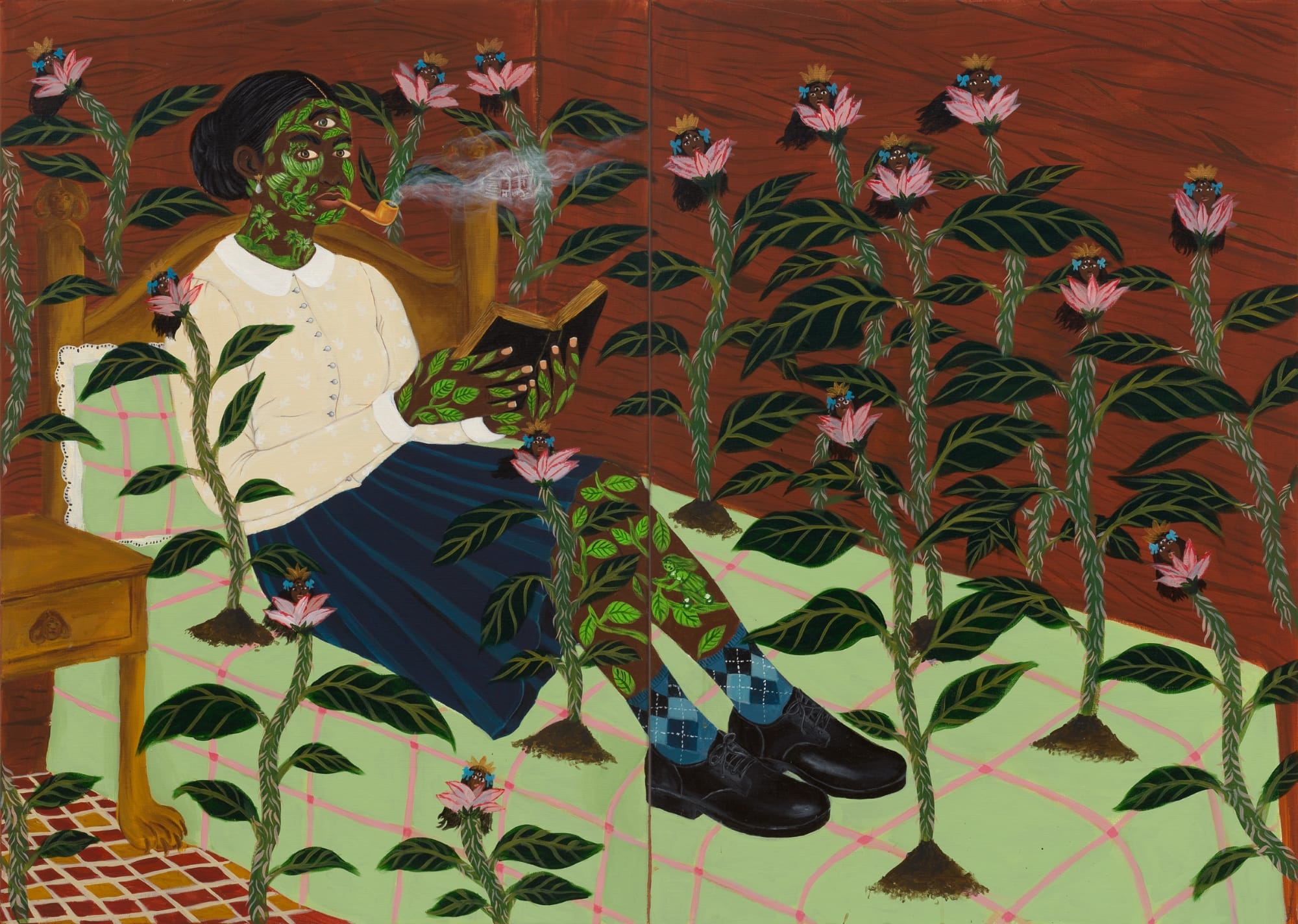
Melding various forms of knowledge and cultural symbols is a central part of Sinnapah Mary’s work, which emerges from her own evolving understanding of her family history. “As a child, the artist identified as Afro-Caribbean but later discovered that she is a descendant of indentured workers from the South Indian state Tamil Nadu, who were brought to the Caribbean following the abolition of slavery to replace enslaved labor,” her gallery, Noor Cohan, writes in a statement.
How a familial history informs one’s understanding of place and identity appears in the tender portraits of The Book of Violette, which is named after artist’s grandmother. Often centering on lone protagonists, this series unfolds through folklore and references to the ways ancestral memory is passed through generations.
Sinnapah Mary has described her grandmother’s magical garden of medicinal plants, for example, which appears as luscious flowers with human heads sprout from a plaid coverlet in “Violette’s Garden: My Father’s Shoes.” Holding a book with gilded pages and smoking a pipe, the schoolgirl stares at the viewer with a third eye, a symbol of wisdom and spiritual connection in Hinduism. “When I paint, I am channeling both my family mythology—the stories that have been told to me, the memories I have—and broader histories and cosmologies to imagine a new world,” the artist says.
Save the date for Sinnapah Mary’s Between earth and sea opening in February at The Aldrich Contemporary Art Museum in Ridgefield, Connecticut. Until then, find more on Instagram.
Do stories and artists like this matter to you? Become a Colossal Member today and support independent arts publishing for as little as $7 per month. The article Caribbean Surrealism and Ancestral Memory Merge in Kelly Sinnapah Mary’s Lush Portraits appeared first on Colossal.