Sometimes, the best lessons are taught outside the classroom. Though still embedded on a college campus, a new artwork in San Diego brings a wealth of pre-Columbian history to the public commons, imparting ancient customs and knowledge that resisted colonial extinction efforts to the next generation.
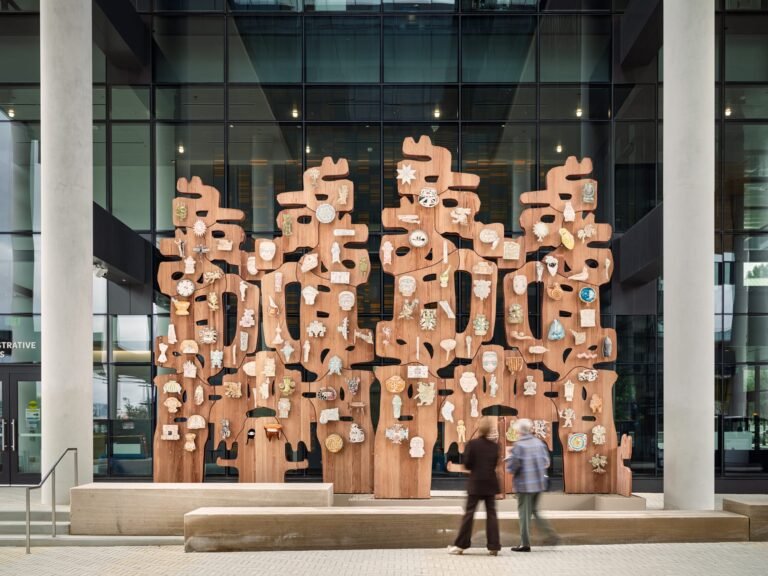
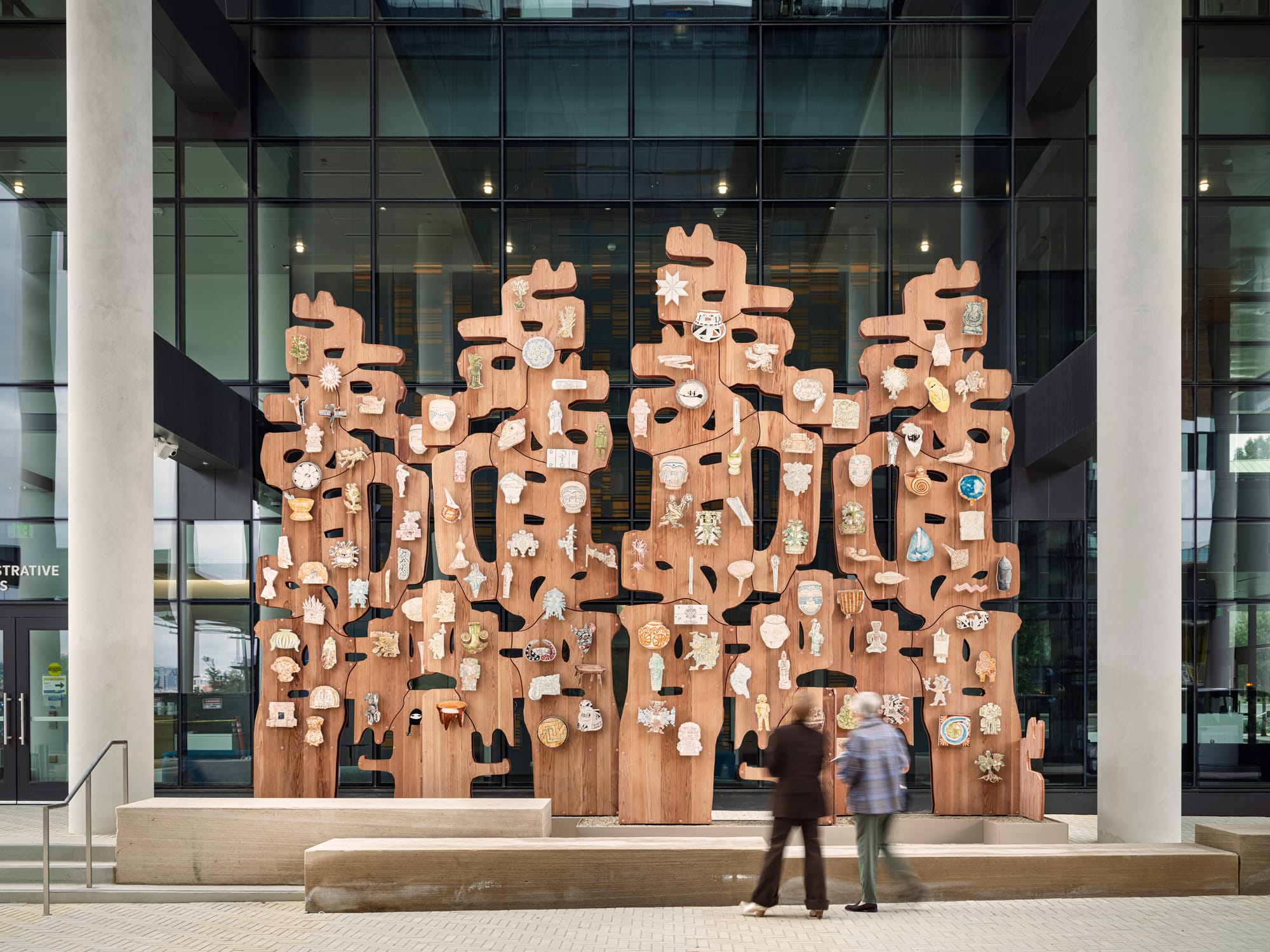
A permanent outdoor artwork by RojoNegro, the duo representing Mexico at the 61st Venice Biennale, was recently unveiled on the University of California, San Diego (UCSD) campus. Comprising 260 unique, hand-painted ceramic tiles mounted on four tree-like panels, “La asamblea del barro” (2026) probes the transmission of cultural memory across generations by drawing on the relationship between Mesoamerican and Western knowledge that is inextricably connected through colonialism.
Hailing from Michoacán and based in Mexico City, RojoNegro artists and life partners María Sosa, who has Purépecha roots, and Noé Martínez, whose family origins trace back to Mexico’s Huasteca region, use their multidisciplinary practice to bring Indigenous ways of being to the foreground. Together, they disrupt dominant colonial narratives and legacies by invoking the ancestral knowledge imbued in materials and practices that have endured four centuries of violent erasure.
“In ‘La asamblea del barro,’ we include the four cosmic trees that sustain the universe in Mesoamerican thought, an idea that lives on among our Indigenous peoples and bears witness to a cultural and ideological resistance that reveals the profound relationship between the body, its surroundings, and the forces of nature,” RojoNegro explained in a statement on the artwork.