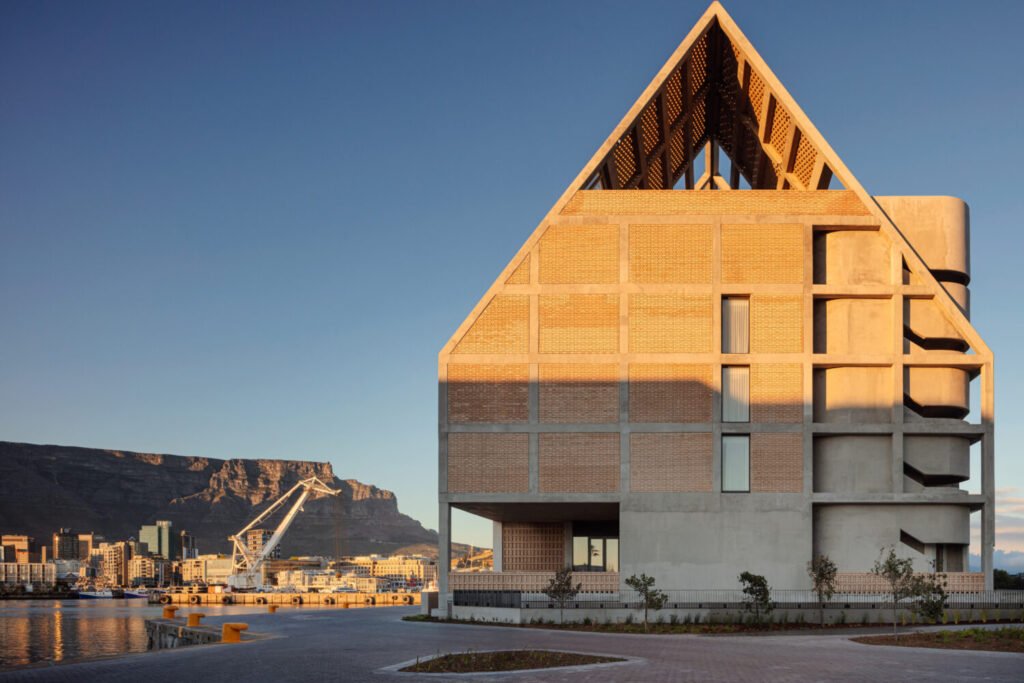

Located on Quay 7 at the V&A Waterfront in Cape Town, South Africa, the Cape Town Edition Hotel turns heritage into a destination that feels contemporary yet unmistakably local. Designed by Neri&Hu in partnership with local architects and professional firms, the hotel draws inspiration from the site’s industrial maritime character while embracing the city’s evolving cultural landscape. Although the original warehouse was too unstable to preserve, its footprint and construction logic informed the new building, which references the long, narrow forms and pitched roofs of the surrounding industrial structures.

Photography by Jiri Lizler
Part of a global portfolio of hotels, The Cape Town Edition revolves around The Drum—a soaring cylindrical space open to the elements. The harbor, Table Mountain, the Atlantic, and the waterfront below are all visible from the 360-degree outdoor viewing platform. Guests, visitors, and locals alike can ascend the spiral staircase to discover Cape Town from a bird’s-eye view.

Photography by Jiri Lizler
For Lyndon Neri, co-founder of Neri&Hu, The Drum began with a conversation about how to connect and distinguish the hotel’s hospitality and residential spaces. “The route is both architectural and civic,” he says. “It turns circulation into an experience of the landscape and gives the project a public dimension beyond accommodation.”

Photography by Jiri Lizler
Grounded in its landscape, the Cape Town Edition is crafted with a deep appreciation for materiality. Local sourcing was central to the hotel’s sustainability strategy, informing not only the selection of building materials but also the curation of the furniture, art, and objects throughout the space.

Photography by Jiri Lizler
Metalwork and joinery were supplied by local manufacturers, while the joinery draws inspiration from 19th-century travel trunks. Custom furnishings manufactured locally and rugs woven by KwaZulu-Natal-based Shuttleworth Weaving layer exceptional craftsmanship into the interiors, where warm finishes are complemented by expansive window frames that capture sweeping views.

Photography by Jiri Lizler
More than 6 million bricks, supplied by a family-owned Western Cape manufacturer and laid by hand, create shifting patterns across the façade, giving the building texture and rhythm. Their warm sand tones complement the natural hues of the surrounding landscape, providing a striking backdrop against the cooler blues of the sea beyond.

Photography by Jiri Lizler
“Our interest was never in an architecture that competes with this landscape, nor one that simply defers to it,” Neri says. “Instead, we asked how the building might register those forces: how brick, light, and the deliberate framing of views could create a sequence of spaces at once bound to the Waterfront and unmistakably of Cape Town.”

Photography by Jiri Lizler
Throughout the hotel, art serves a purpose beyond decoration, reflecting Africa’s creative landscape and connecting guests to the people and traditions that shape the destination. Design Network Africa sourced objects from makers across the continent, including Zulu ukhamba vessels and mouth-blown recycled glass from Eswatini. Cape Town gallery Southern Guild curated the art collection, which includes black-and-white portraits by Zanele Muholi, Usha Seejarim’s artwork Fading Dish Cloth, and smoke-fired ceramics by Chuma Maweni, which lend a sculptural presence to the lobby and dining spaces.

Photography by Jiri Lizler
A 240-square-meter Penthouse and a 112-square-meter Harbor Suite crown the hotel, each offering ample living spaces and panoramic views. The Cape Town Edition comprises 142 guestrooms and suites that balance elevated comfort with residential appeal. Below sea level, the spa features a sauna, steam room, infrared beds, and aromatherapy. A daily program of sound baths, yoga classes, and movement sessions enhances the experience, with additional opportunities to unwind beside the heated rooftop pool and sundeck.

Photography by Jiri Lizler
The Punch Room draws on the centuries-old tradition of communal punch drinking, a ritual carried along trade routes that once passed through the Cape. Velvet banquettes, wood paneling, and atmospheric lighting create an opulent retreat that offers a modern interpretation of the region’s rich cultural and culinary heritage.

Photography by Jiri Lizler
The end goal? For guests and visitors to leave with a lasting sense of Cape Town, shaped by the connections between the hotel’s interiors and the surrounding landscape. For Neri, the intention was “for the building to reflect not only the visual character of Cape Town, but also its material culture and craftsmanship.”