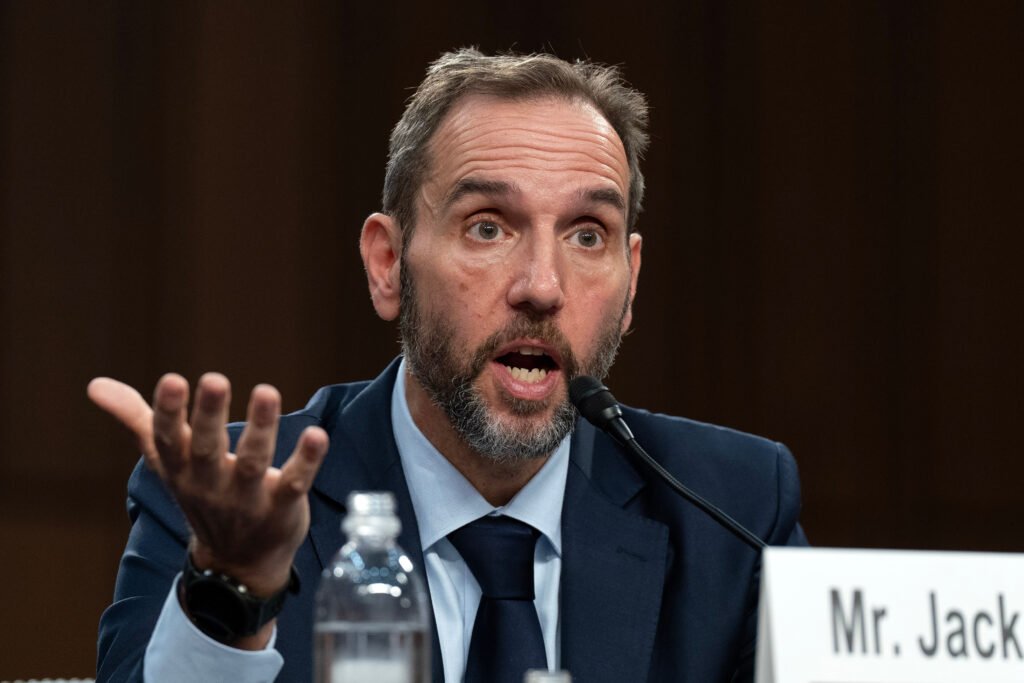
Jack Smith, the former special counsel who prosecuted President Donald Trump, is calling a GOP senator’s bid to seek his disbarment a “retaliatory political stunt” that misstates the scope of Congress’ immunity from prosecutorial scrutiny and relies on selectively leaked documents.
In a Nov. 3 letter to Tennessee bar discipline officials, reviewed by POLITICO, Smith said a complaint by Tennessee Republican Sen. Bill Hagerty was meant to punish Smith a day after his September testimony before the Senate Judiciary Committee.
That public hearing largely backfired for Republicans and gave Smith a forum to rebut their claims that he acted inappropriately in his investigation of Trump for seeking to subvert the 2020 election. The next day, Hagerty wrote to the Board of Professional Responsibility of the Supreme Court of Tennessee asking for the body to revoke Smith’s law license, citing Smith’s moves to access the phone records of Hagerty and other GOP lawmakers in the days surrounding Trump’s effort to prevent Congress from certifying his loss to Joe Biden on Jan. 6, 2021.
Republican senators have been particularly incensed that Smith obtained a court order that prohibited their phone service providers from informing them they had had their call logs subpoenaed; those logs did not include the content of the messages but did reveal who the lawmakers called or texted around the time of the Jan. 6 attack on the Capitol.
They have argued that those “nondisclosure orders” violate the constitution’s Speech or Debate clause, which prohibits legal or criminal action against members of Congress for their official work. Senators have also complained that Smith never informed the judge who issued the orders that he was seeking the records of members.
In their letter, Smith’s lawyers called the bar complaint “meritless” and an effort that “retaliates against Mr. Smith’s exercise of his right to free speech.” They also contend that the Speech or Debate clause only protects members from being compelled to testify or face criminal consequences for their legislative work. A secret subpoena for phone records does not trigger those limitations, they said.
In addition, Smith’s team emphasized that the secrecy order was intended to prevent Trump — who was criminally charged with obstruction and had issued menacing statements about witnesses in the case — from potentially interfering in the investigation.
Notably, Tennessee’s other U.S. senator, Marsha Blackburn, has sued Smith and the Justice Department in federal court, seeking an order that would require the government to destroy any remaining copies of her phone records. She is now the state’s Republican governor-elect.
The Board of Professional Responsibility of the Supreme Court of Tennessee and Hagerty did not immediately respond to a request for comment.