
Once relegated to backyards and home gyms, cold plunges are finding a new place in residential design. As the wellness practice grows in popularity, homeowners are increasingly looking to incorporate cold therapy directly into their bathrooms, transforming what was once a standalone piece of fitness equipment into an integrated feature of the home.
The interest goes beyond athletic recovery. Cold-water immersion has been associated with potential benefits ranging from reduced muscle soreness to improved sleep and stress management, although research into its broader health effects remains limited. Still, the appeal is evident. According to Houzz’s 2024 Summer Trends Report, searches for “cold plunge” increased 74% year over year, while searches for “indoor sauna” rose 69%.

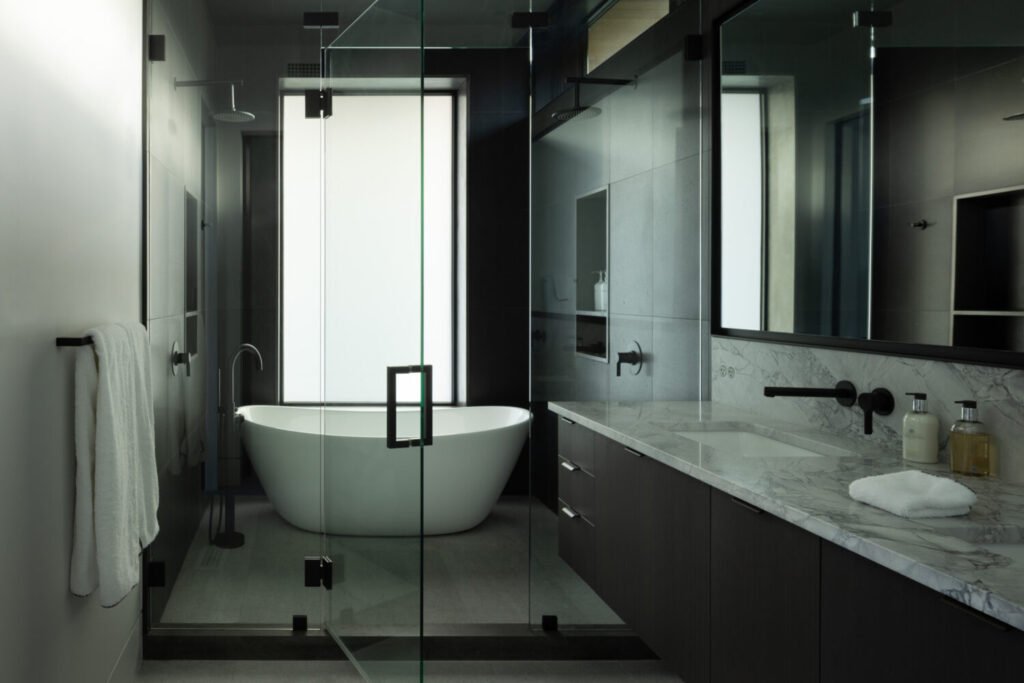
In the Heber, Utah, residence by Berg Design Studio, Hydro Systems’ Marquis bathtub demonstrates how traditional freestanding tubs can accommodate emerging wellness technologies, including cold plunging. Photography by Steve C. Wilson.
That interest reflects a larger shift toward wellness-focused residential spaces. The company’s 2026 report found that searches for “wellness room” had increased 164%, suggesting that homeowners are thinking more intentionally about how their environments can support relaxation and well-being.
For interior designers, these changing priorities are introducing new considerations into residential projects. Arizona-based designer Stephanie Larsen, who incorporates cold plunges, infrared saunas, and integrated aromatherapy systems into her work, has seen clients place greater emphasis on these features. “Today’s clients are craving homes that heal and inspire,” she told Luxe Interiors + Design. “They want spaces infused with wellness technology.”
Accommodating those requests means thinking beyond individual fixtures to how different wellness experiences function together. Cold plunges, for instance, are often paired with saunas for contrast therapy, which alternates between hot and cold exposure. Bringing both into a residential setting requires careful consideration of available space, plumbing, and the relationship between the different elements. Manufacturers, meanwhile, are developing more integrated systems that offer greater flexibility.
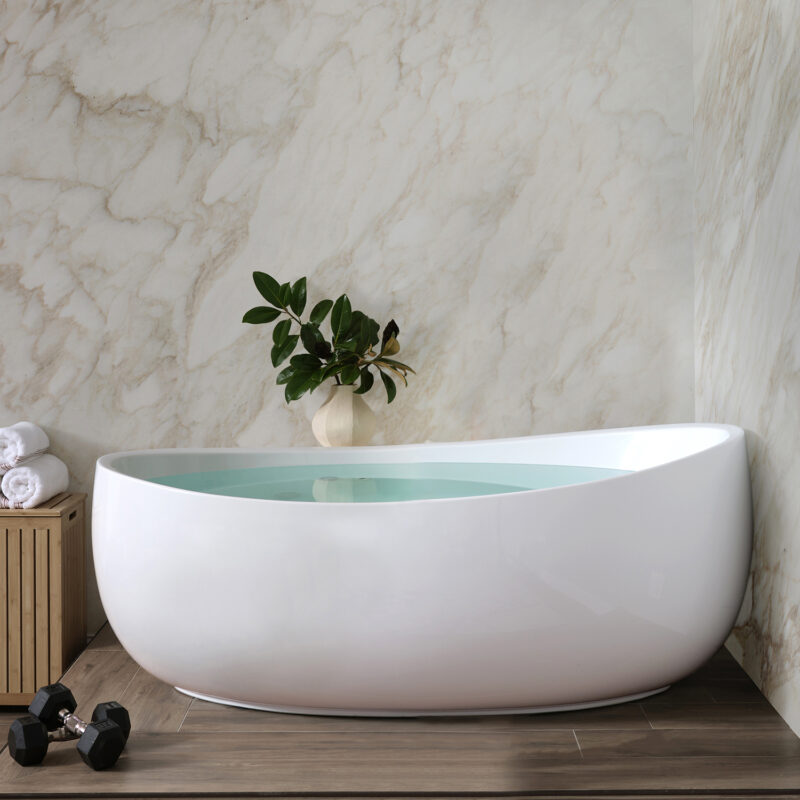
Hydro Systems integrates cold-plunge technology into freestanding bathtubs, bringing cold therapy into residential bathrooms without the need for separate equipment. Photography courtesy of Hydro Systems.
“We’re seeing wellness become a more intentional part of residential design, with dedicated spaces that bring together multiple hydrotherapy experiences in a single tub, from cold plunging and whirlpool to oxygenated microbubble therapy,” says Ashley Steinhardt, VP of Sales at Hydro Systems.
The California-based bath manufacturer has developed its Hydro Chill technology to incorporate cold plunging into customizable bathtubs, eliminating the need for a separate fixture. Its latest iteration also introduces smart-home functionality, allowing users to adjust water temperatures and schedule plunges remotely.
Hydro Systems is also exploring how multiple hydrotherapy experiences can share the same footprint. Its new Hydro Chill Ultra delivers both hot and cold water through a self-contained system that generates its own hot water. Because it doesn’t require a traditional hot-water connection, the technology offers additional flexibility for installations in pool houses and dedicated wellness rooms.
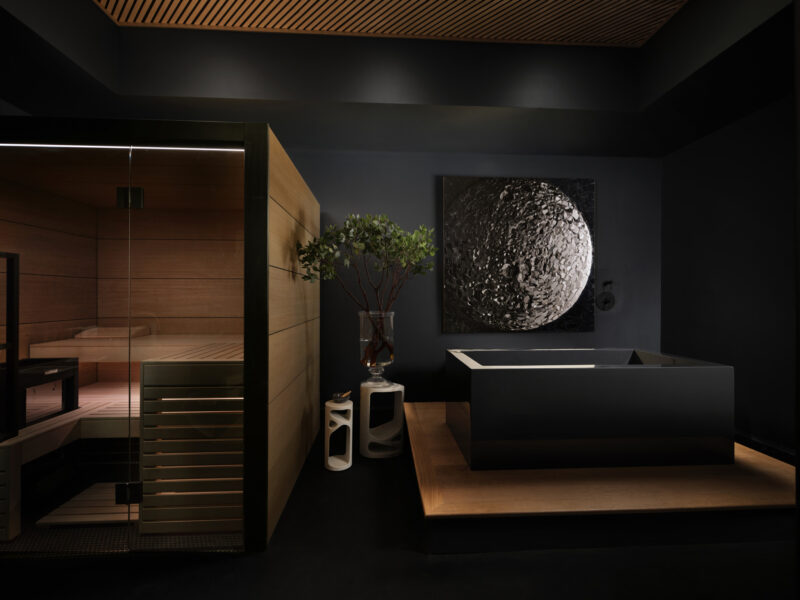
Featured in an Atlanta Homes Showhouse, Hydro Systems’ Slate bathtub features a custom color and polished finish, with integrated Hydro Chill cold-plunge technology. Paired with a wood-paneled sauna, the tub demonstrates how cold therapy can become part of a thoughtfully designed residential wellness space. Photography courtesy of Hydro Systems.
While expansive home spas provide room for separate saunas, plunge tubs, and other amenities, integrating hydrotherapy into an existing bathroom requires a different approach. Multifunctional fixtures can help reduce the space needed for these experiences, making them easier to accommodate within conventional residential layouts.
“Wellness doesn’t have to be confined to a dedicated room,” Steinhardt says. “Hydrotherapy can also be incorporated into smaller bathroom footprints, bringing wellness into everyday routines.”

Hydro Systems’ Hydro Chill cold-plunge system is incorporated into a home gym alongside weight-training equipment, bringing cold-water immersion into a dedicated fitness and recovery space. Photography courtesy of Hydro Systems.
Cold plunges may still be a relatively niche residential amenity, but their growing visibility is prompting designers to reconsider what a bathroom can accommodate. As more wellness features make their way into the home, the challenge will be integrating them without compromising the functionality, comfort, and aesthetics of the spaces around them.
Editorial Transparency: This article was developed with the assistance of AI tools, which may have been used for research, outlining, editing, or copy refinement. Reporting, fact-checking, and editorial decisions were made by the Design Milk editorial team.