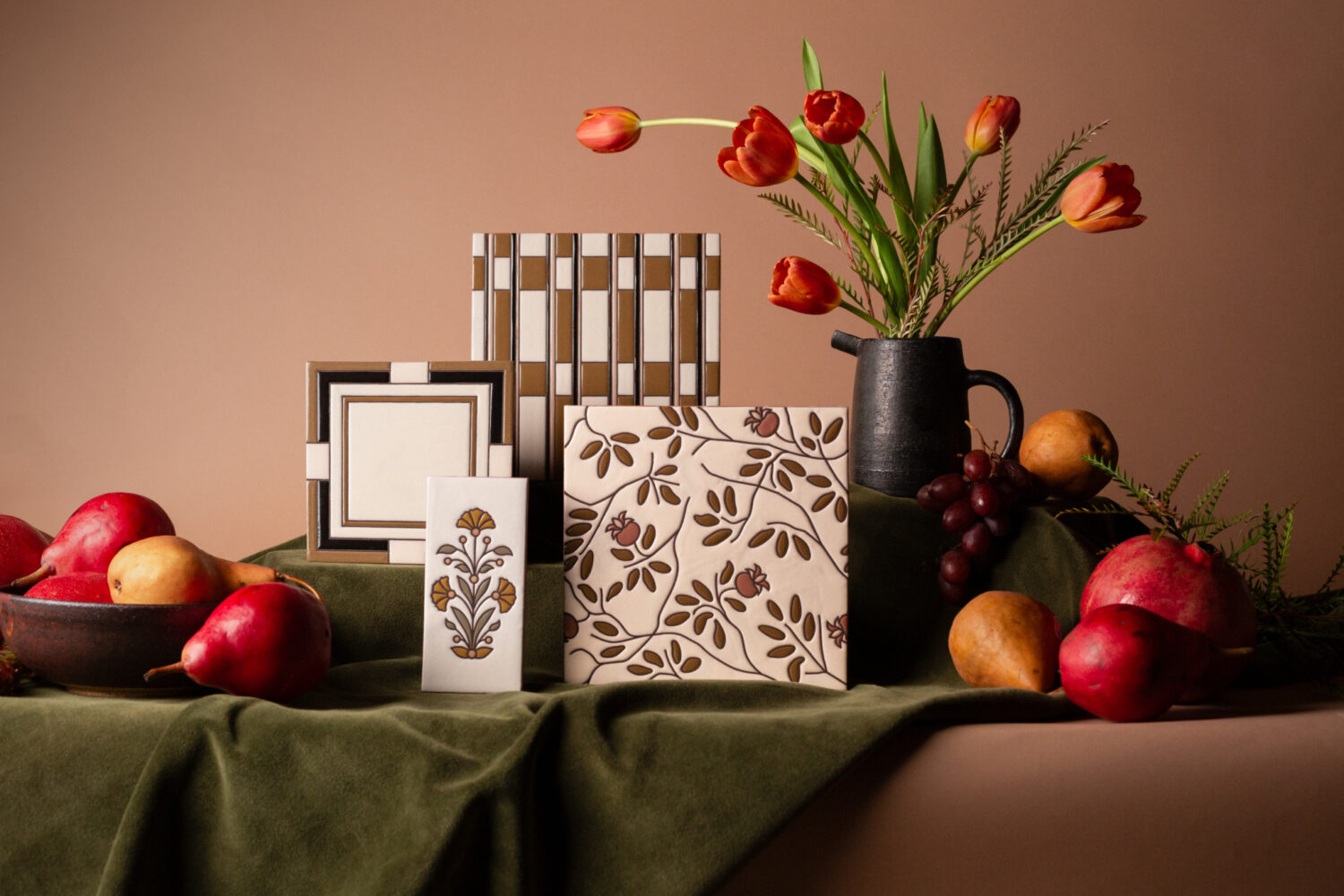
Plaids and florals might seem more at home on upholstery or wallpaper than ceramic tile, but Fireclay Tile’s latest collection makes a compelling case for bringing those familiar patterns to harder surfaces. Called Idyllwild, the new hand-painted collection takes inspiration from traditional textiles, translating everything from delicate botanical illustrations to richly layered plaids into ceramic designs that feel both nostalgic and contemporary.
Interestingly, the collection didn’t begin with flowers at all. “We were seeing designers use a lot of intricate textiles, colors, and patterns together,” explains Jamie Chappell, VP of Brand and Product at Fireclay Tile, adding that early explorations focused on plaids and stripes. “As a true lover of ’90s alt-rock, I actually went down a rabbit hole early on, wondering if it should be a ‘grunge’ collection.”
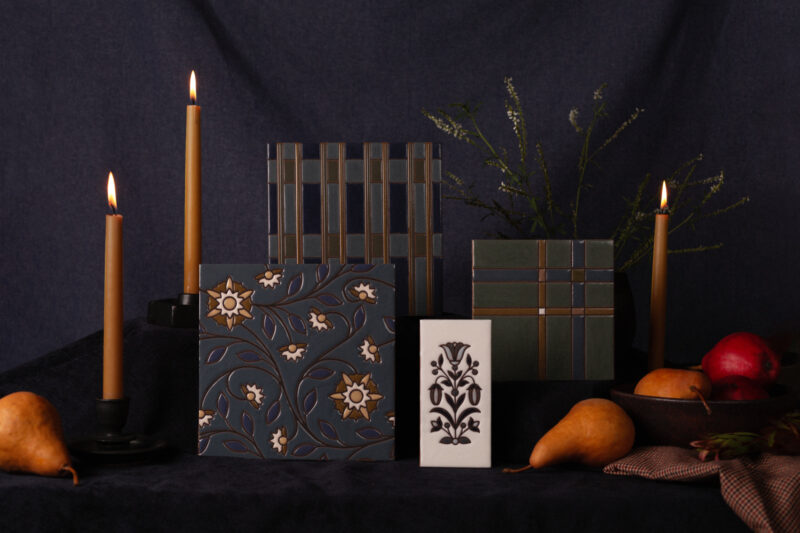
Fireclay Tile’s Idyllwild collection in its Winter palette, featuring deep blues, earthy greens, and warm neutrals across floral, striped, and plaid patterns.
That direction eventually gave way to something softer. Recognizing the longstanding relationship between florals and plaids in interiors, the team introduced botanical patterns to balance the collection’s more structured designs. The name Idyllwild followed, referencing the California mountain town.
The resulting collection includes 16 patterns organized into four categories: Specimen Flowers, Idyllwild Florals, Idyllwild Stripes, and Idyllwild Plaids.
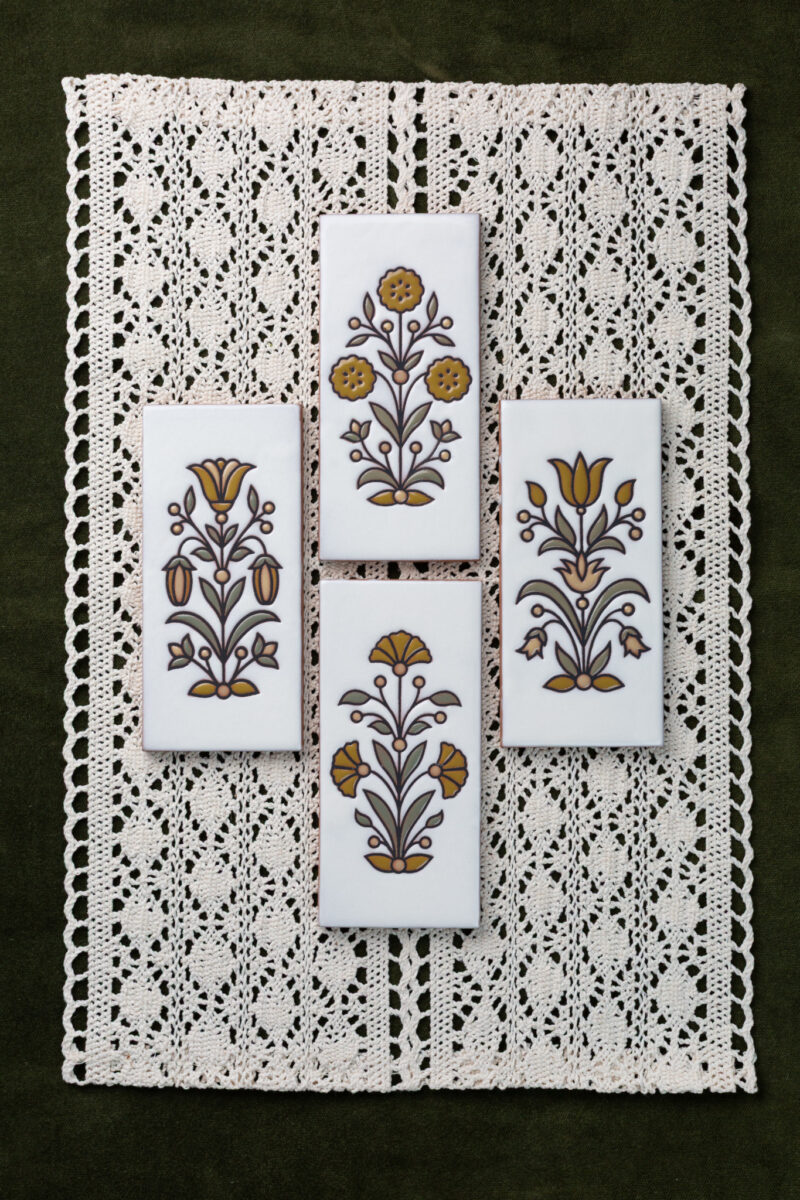
The Specimen Flowers series features four individual botanical motifs—Allium, Carnation, Lily, and Bluebell—hand-painted on ceramic tile. Photography courtesy of Fireclay Tile.
Specimen Flowers features four individual botanical designs—Allium, Carnation, Lily, and Bluebell—that can be arranged across backsplashes, niches, and accent walls. The Idyllwild Florals take a more expansive approach, with repeating patterns named Pomegranate, Tulip, Morning Glory, and Meadow. Their overlapping stems, leaves, and blossoms create the dense, layered effect of a garden growing beyond its boundaries.
The Stripes and Plaids explore a different kind of ornamentation. Four striped patterns—Stuga, Mokki, Blockhaus, and Thatch—introduce rhythm through repeated lines and geometric details. The Plaids, meanwhile, borrow the visual language of woven fabrics, with Chalet, Highlands, Minka, and Torp creating intersecting grids that can read as anything from understated texture to a bold, room-enveloping pattern.
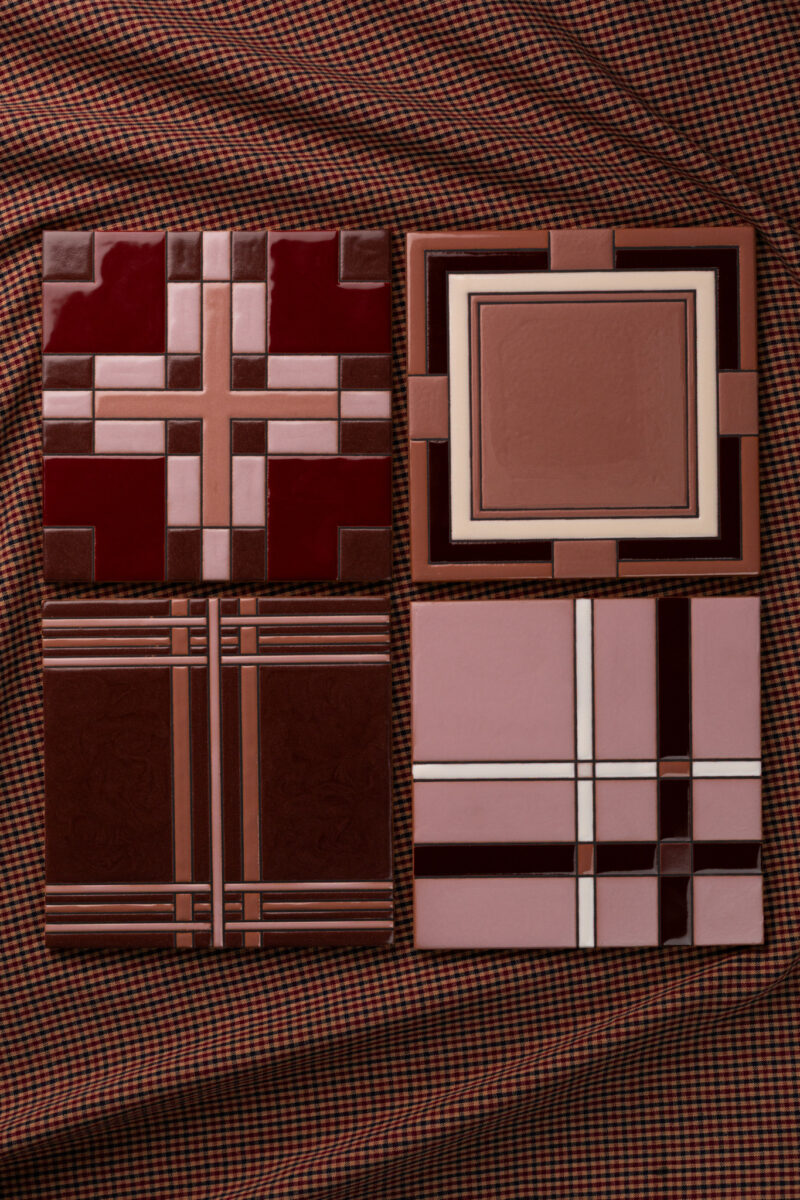
The Idyllwild Plaids series features four geometric patterns inspired by traditional woven textiles, shown here in warm shades of burgundy, pink, and brown. Photography courtesy of Fireclay Tile.
While the designs reference traditional textiles, translating them into hand-painted ceramic required a different way of thinking about pattern. “We had to simplify and edit the artwork so our painting team could actually execute it by hand,” Jamie says.
The process uses resist lines to define individual areas of color, making the scale and spacing of each detail particularly important. “When we translate intricate woven textiles into screen art, we have to pay very close attention to the thickness of the lines, how small the fields are to fill in, and making sure the painters have enough natural ‘starts and stops’ so they can work efficiently,” Jamie says.
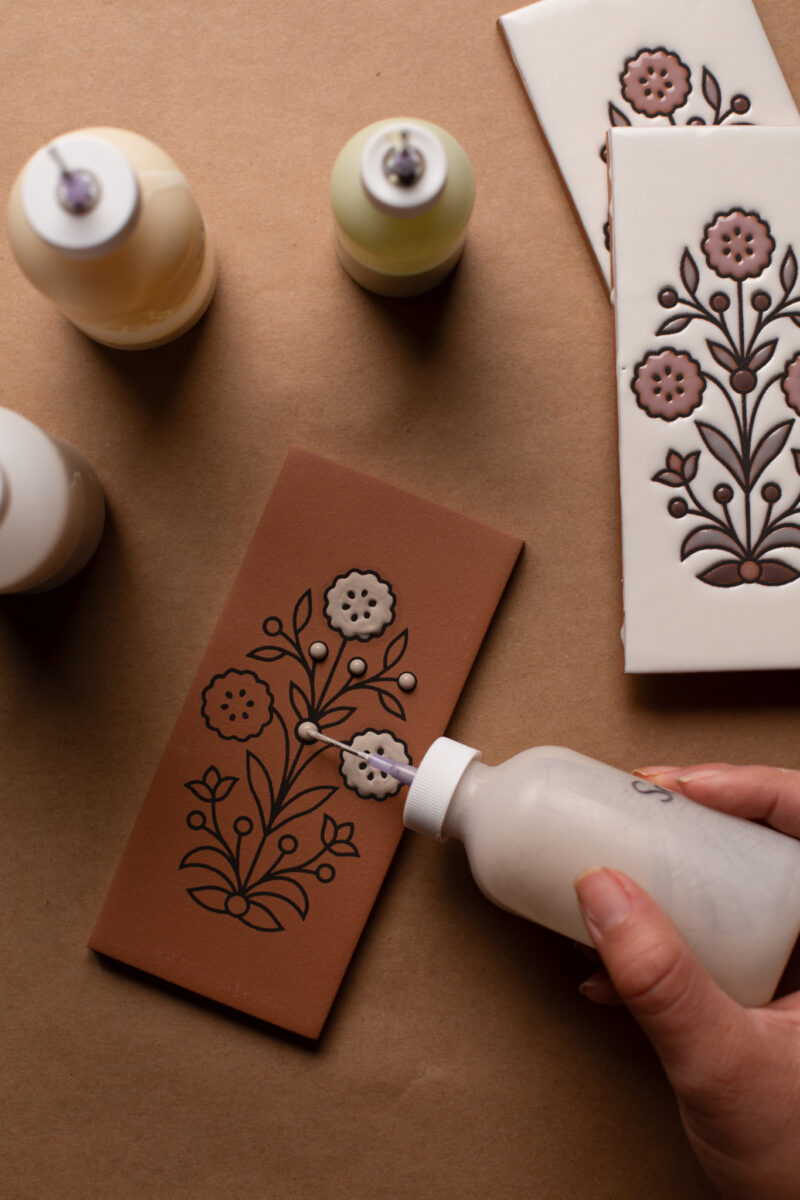
A closer look at Fireclay Tile’s hand-painting process, with glaze applied to the Allium motif from the Idyllwild Specimen Flowers series. Photography courtesy of Fireclay Tile.
Fireclay’s painting team was closely involved in prototyping, providing feedback on details that were too small or areas where the glaze couldn’t be applied smoothly. The company also developed a new glaze base specifically for the hand-application process.
The relationship between design and production extends to color. Each of the 16 patterns is available in four curated palettes inspired by the seasons, but developing those options required another significant undertaking.
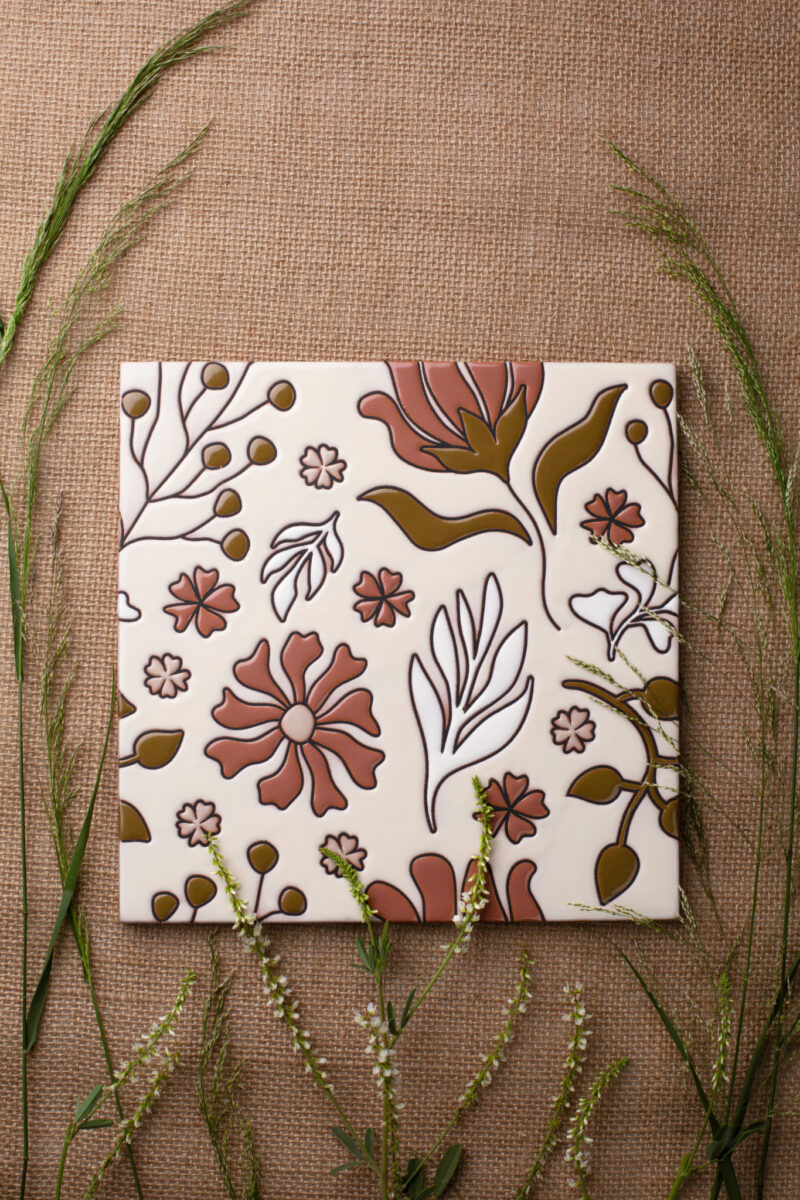
The Meadow pattern from Fireclay Tile’s Idyllwild Florals series features an assortment of botanical motifs in the Spring color palette. Photography courtesy of Fireclay Tile.
Fireclay’s previous hand-painted palette had become disconnected from its broader ceramic offering, limiting customization opportunities. To address that, the production team spent months matching the company’s 50 core ceramic colors in both gloss and matte finishes. The resulting 100 finishes can be combined across the collection.
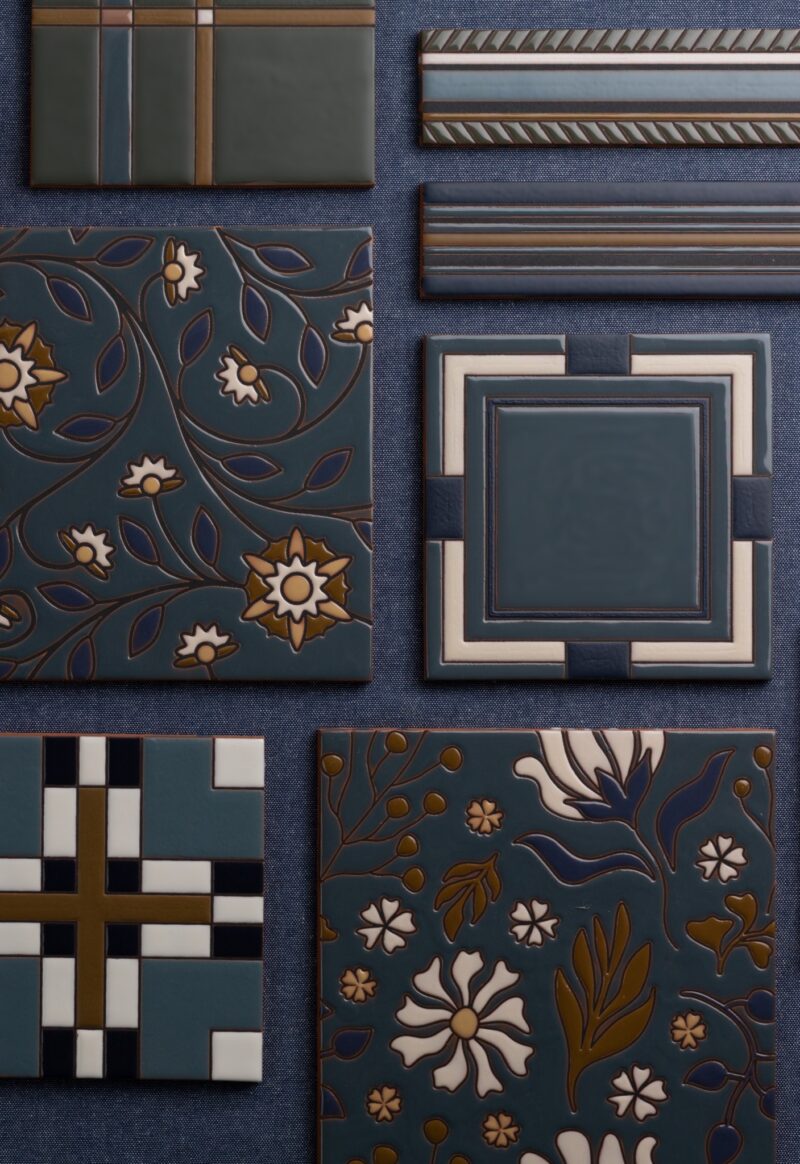
A selection of floral, plaid, and striped patterns from Fireclay Tile’s Idyllwild collection, shown in the Winter palette of deep blues, muted greens, and warm neutrals. Photography courtesy of Fireclay Tile.
To develop Idyllwild’s seasonal palettes, the team worked with physical tile samples alongside 4K renderings, testing combinations before translating them into paint sheets for production. The color stories also reflect shifts the company has been observing in interiors, including an interest in deeper reds and earthy blues.
RELATED READING
“Organizing the collection into four seasonal motifs really shows how much color shifts the personality of a design: a plaid in soft pastels feels light and cottage-like, whereas that same pattern in deep, moody tones reads like a cozy wool blanket,” Jamie explains.
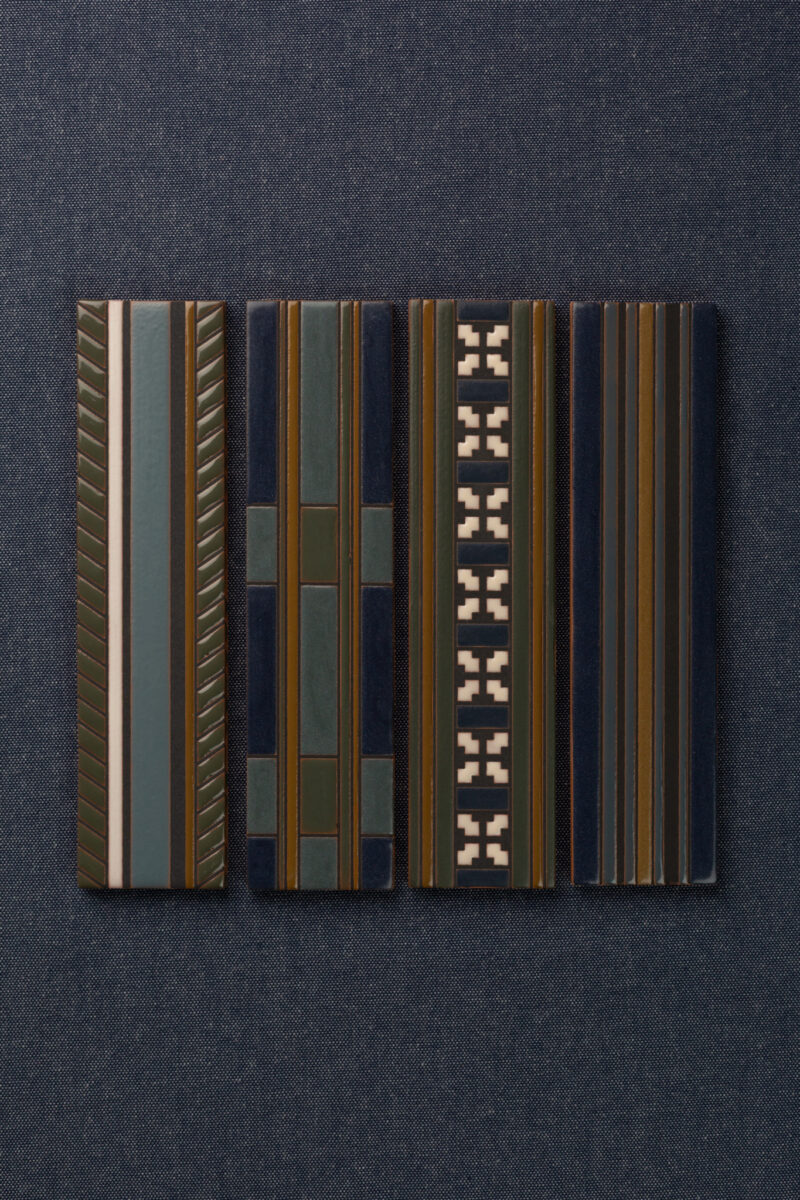
The Idyllwild Stripes series features four hand-painted patterns—Stuga, Mokki, Blockhaus, and Thatch—combining linear details and geometric motifs in shades of blue, green, and brown. Photography courtesy of Fireclay Tile.
The collection also introduces new sizes, including 2-by-8-inch and 3-by-6-inch tiles, designed to work alongside standard field tiles. This allows patterns to be introduced selectively or carried across larger surfaces, with stripes used as borders or accents and more intricate designs covering entire walls.
Although Idyllwild draws from traditional patterns, the finished designs are shaped as much by the practical demands of hand-painting as by their textile references.
Editorial Transparency: This article was developed with the assistance of AI tools, which may have been used for research, outlining, editing, or copy refinement. Reporting, fact-checking, and editorial decisions were made by the Design Milk editorial team.