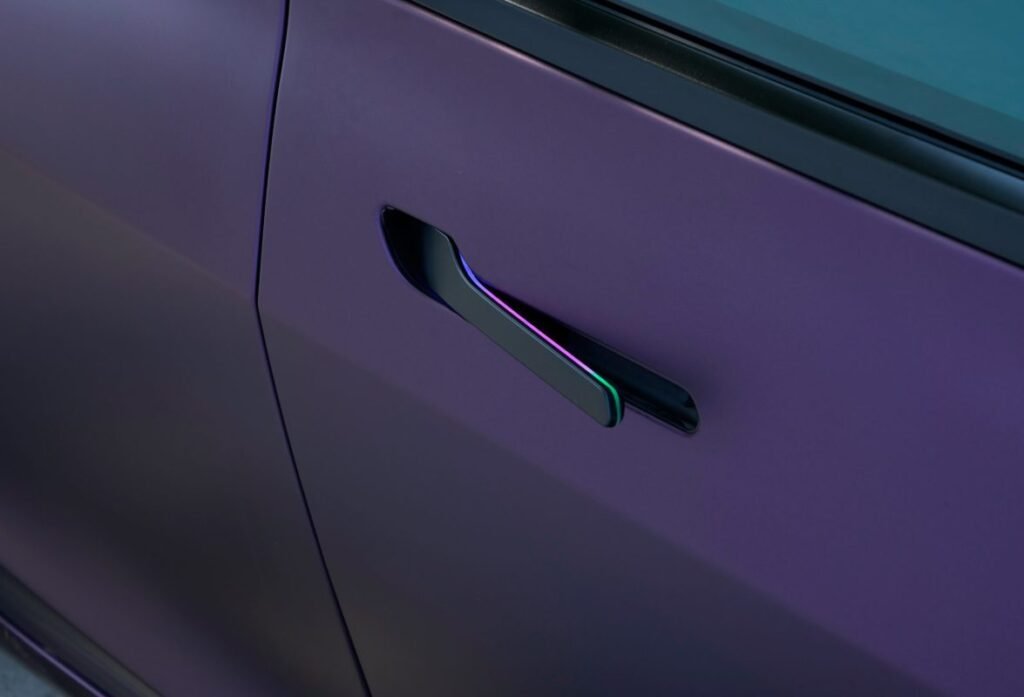
Tesla’s flush, retractable door handles, a key part of the brand’s minimalist design, could soon face major changes. Regulators in the U.S. and abroad are examining whether these electronically operated handles meet emerging safety standards, following a series of complaints that they can fail during power loss or crash scenarios.
The National Highway Traffic Safety Administration (NHTSA) is investigating roughly 174,000 Model Y vehicles after more than 140 reports of door handle malfunctions. Some owners claimed they were unable to exit their cars when the battery died, forcing them to break windows to escape. The issue is particularly serious for children or passengers unfamiliar with Tesla’s hidden manual release.
China’s regulators are also considering new safety rules that could ban or restrict fully flush handles unless they include accessible mechanical backups. Because Tesla sells heavily in China, any such regulation could effectively require a global redesign of its vehicles.
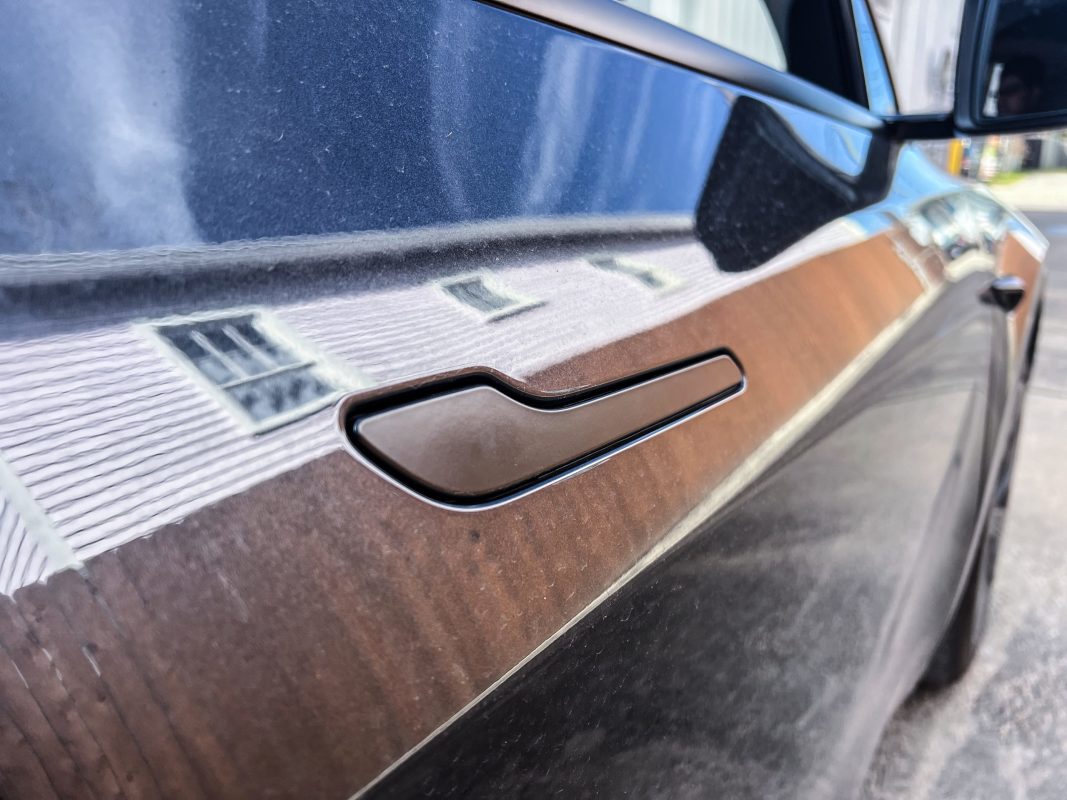
Why Redesigning Handles Isn’t Easy
Replacing the handles might sound simple, but Tesla’s entire door system is designed around electronics, sensors, and aerodynamics. Adding mechanical redundancies means reshaping internal door structures, rewiring control systems, and retesting crash safety protocols.
The challenge highlights the company’s ongoing tension between tech innovation and real-world practicality. It’s a familiar theme: Tesla has recently faced similar scrutiny elsewhere, from the recent FSD Investigation to safety recalls that suggest even small design choices can create big regulatory headaches.
Tesla design chief Franz von Holzhausen has reportedly acknowledged that the company is exploring an integrated system that combines both mechanical and electronic releases, keeping the flush look while ensuring emergency accessibility. That redesign could debut on future models or be rolled out gradually across the lineup.
Related: Tesla Tells Texas Court It Has No Duty to Warn Owners of Defects
Tesla’s Broader Quality Challenge
The door-handle issue comes on top of a series of smaller hardware controversies that have chipped away at Tesla’s reputation for flawless minimalism. Most recently, the automaker announced a recall to fix a simple lighting fault, this shows that even basic systems can suffer from overlooked testing or software integration.
At the same time, Tesla’s decision to remove traditional controls has sparked debate among owners. When drivers complained about gesture-based turn signals, Tesla responded with a paid fix, sparking outrage.
Together, these examples show that design purity can collide with usability, and regulators are increasingly stepping in when tech outpaces safety.

Why It Matters
Tesla’s clean design philosophy has influenced the entire auto industry, but safety rules are catching up. If new global standards require mechanical releases for every door, Tesla may need to re-engineer not just door handles but entire body panels and internal wiring layouts.
For a company built on sleek innovation, the challenge now is to prove that elegance and accessibility can coexist. In other words, Tesla’s next design breakthrough might not be a faster EV, it could be a smarter door handle.
Related: Rivian May Redesign Its Doors After Tesla’s Cybertruck Lawsuit Fallout