Around 1,200 years ago, a series of severe droughts struck Belize, Guatemala, and southern Mexico. Crops failed, major cities were abandoned, and political strife spread like disease. Yet amid the calamity, some communities thrived.
In new research published in the Proceedings of the National Academy of Sciences of the United States of America, researchers detail a once-flourishing ancient Maya settlement in northern Belize that appears to have outlasted these historic droughts by a keen reliance on local wetlands.
The study shows the ancient Maya “were savvy consumers of local resources” and turned “unusable” lands into highly productive farms, said Shanti Morell-Hart, an archaeologist and ancient Maya expert at Brown University who was not involved with the research. Rather than just being used during “times of desperation,” she added, the study underscores how wetlands were “a regular part of ancient Maya life.”
A Wetlands Paradise
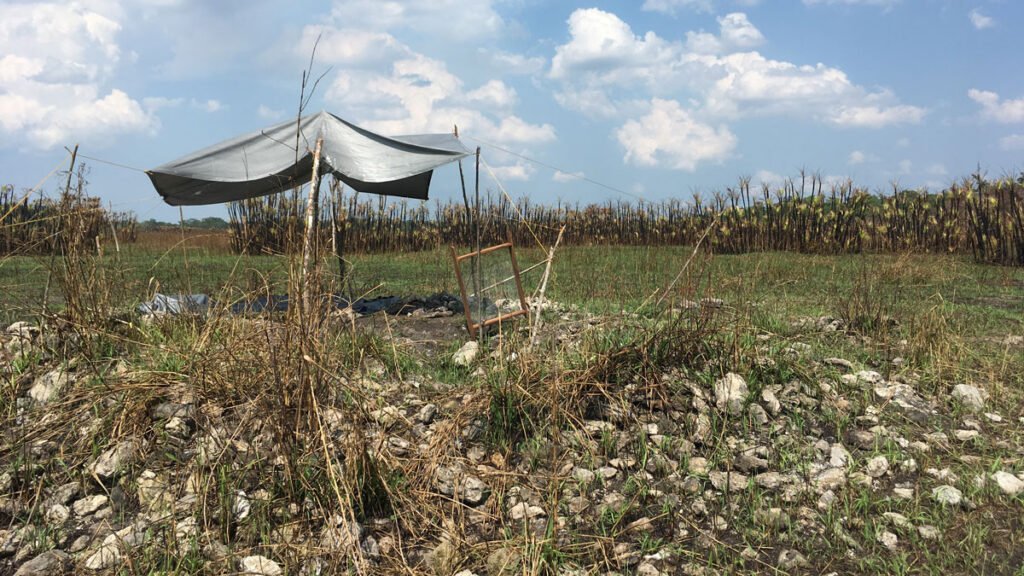
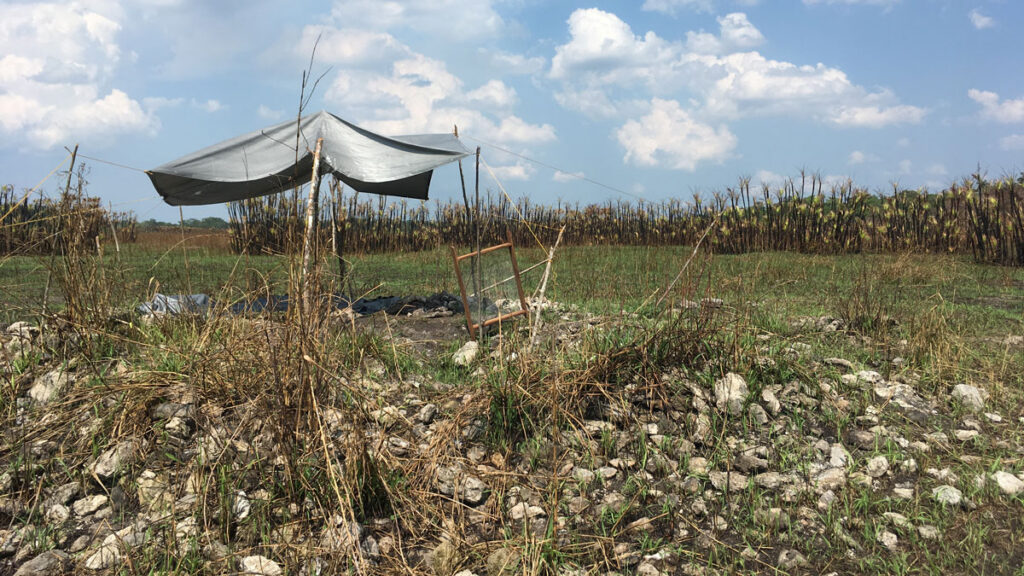
The new settlement is located within the Birds of Paradise wetlands complex, which was first identified in the early 2000s and more fully investigated with airborne lidar surveys in 2019. Lidar revealed numerous artificially constructed canals, and the complex has since undergone steady and careful excavation.
“This means hacking through the jungle,” said Tim Beach, a geoarchaeologist at the University of Texas at Austin and a coauthor of the new study. The complex is embedded in dense tropical foliage. To reach it, he explained, researchers have to wade through swamps, ford the Rio Bravo, and bring a machete-wielding crew to clear branches. “It takes a long time to get out there.”
Using lidar, trench excavations, and sediment cores, Beach and his colleagues determined the complex spans more than 13 square kilometers and was occupied during the Late Preclassic period around 2,000 years ago—and possibly much earlier.
Early settlers constructed a large, elevated road system along the northern reaches of the complex, and further excavations uncovered evidence of an intricately structured agricultural system. This infrastructure allowed Maya farmers to harvest a diverse array of domesticated plants, from maize and guava to beans, squash, avocado, and figs.
“The production of these specific crops has been happening in this area for thousands and thousands of years,” said Lara Sánchez-Morales, an archaeologist at New York University and lead author of the new study. The Maya flourished “by drawing on the resources provided by this wetland environment.”
“The Preservation Is Truly Incredible”
In the new work, Sánchez-Morales, Beach, and their colleagues focused on a recently discovered settlement within the Birds of Paradise complex that stretches about 1 square kilometer. The settlement yielded a glut of archaeological findings, including animal bones, weights for fishing nets, a chert ax likely used to fell trees, and a ceramic potsherd emblazoned with a jaguar face. Excavations also uncovered hundreds of obsidian blades, dwarfing the number found at nearby sites. The obsidian likely came from hundreds of kilometers away in what is now Guatemala or Mexico.
“We’d found maybe five pieces of obsidian in 20 years of research” at the Birds of Paradise complex, said Beach. “Then we found hundreds of pieces in this one site,” he continued, a finding that suggests “a kind of a global trade network.”
The team also unearthed several exceptionally rare ironwood logs that were sculpted and likely positioned to build rooms or support elevated mound structures. The enclosed area contained ample amounts of plant refuse, hinting that it may have been used for food storage or processing or possibly even a kitchen.
“In tropical contexts, most of this architecture rots away and disappears,” said Morell-Hart. “The bulk of our research relies on identifying and mapping stone and earthen architecture,” so “this [discovery] is a big deal.”
The site burgeoned with activity when other areas were suffering from environmental catastrophe, showing the wetlands likely acted as a refuge during times of drought and political unrest.
“The preservation is truly incredible,” she said.
Carbon dating of charcoal and wood samples indicates the new settlement took shape around 900 CE, right around the time of the so-called Classic Maya collapse, and endured for more than 3 centuries. Together with previously collected data from pollen and carbon isotopes, the new research indicates the Birds of Paradise complex saw an increase in population while the nearby Maya cities of Blue Creek and Gran Cacao were being abandoned. It likely acted as a refuge during times of drought and political unrest, Beach said.
The new paper is “the first to show the persistence of this village through Maya collapse and drought,” he added.
“All of this illustrates the Maya’s ability to respond to shifting environmental conditions through ecological knowledge,” said Sánchez-Morales. This knowledge included a skillful use of fire to form fields, water for irrigation and drainage systems, and wood to fortify structures like canals and shelters.
“Wetland landscapes—especially in the Americas—have often been misunderstood or written off as ‘marginal’ environments,” said Sánchez-Morales. “But in this case, it is very clear that this habitat was, and remains, anything but trivial.”
—Taylor Mitchell Brown (@tmitchellbrown.bsky.social), Science Writer
Citation: Brown, T. M. (2026), Ancient Maya wetlands reveal settlement that thrived amid “collapse,” Eos, 107, https://doi.org/10.1029/2026EO260104. Published on 30 March 2026.
Text © 2026. The authors. CC BY-NC-ND 3.0
Except where otherwise noted, images are subject to copyright. Any reuse without express permission from the copyright owner is prohibited.