KINGSTON, N.Y. – I have written extensively about East and South Asian artists who make art in the diaspora, such as Jiha Moon and Sangram Majumdar. In their work, one sees traces of their bifurcated life. But this marks the first time I am writing about a Scandinavian artist working in the diaspora because it is evident that the color, light, landscape, and stories of her childhood have made an impact on her work.
Anki King, whose work is on view at the Lace Mill in Kingston (through March 29), was born on a farm in Norway, attended Oslo Drawing and Painting School, which did not grant a degree at the time, and emigrated to America in 1995, when she was 25. Since then, she has lived in New York, becoming familiar with the art shown here. Her work suggests an intimate engagement with New Image painting, particularly the later work of Susan Rothenberg, but she took it in a direction that is recognizably hers. In contrast to Rothenberg, who often referred to scenes she saw while living in New Mexico, King’s comes from memory and imagination, the mind’s eye.
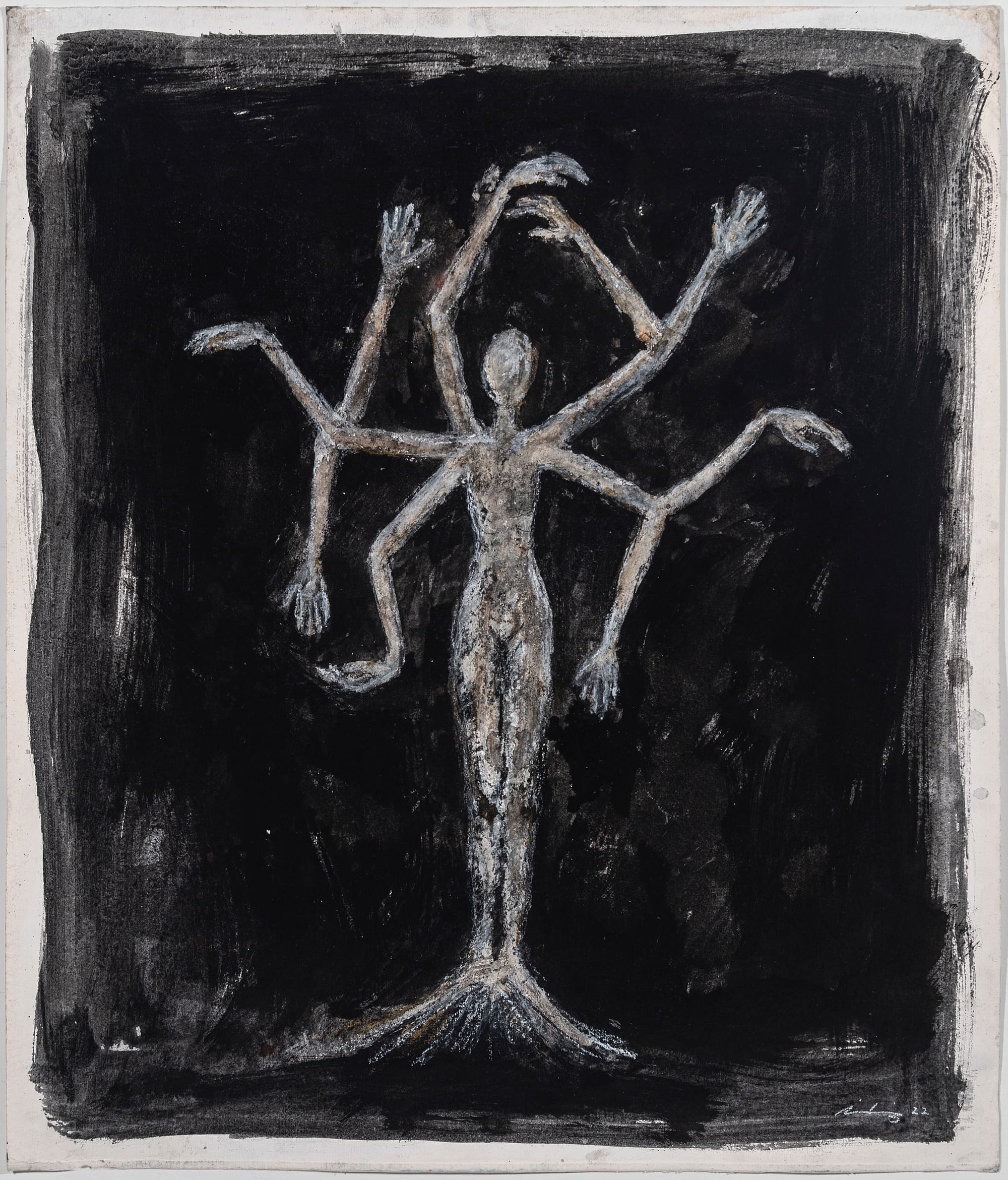
There are 40 works done in different mediums (oil paint, ceramic, thread, mixed media on paper, thin branches), dated between 2015 and 2026, in the exhibition. Consisting of dark blues, blacks, grays, whites, and occasional yellow and green, King’s moody palette underscores Norway’s polar night, when the sun does not rise above the horizon for six weeks to over two months, and there is often a “blue hour” twilight rather than pitch blackness. Working tonally, she renders her featureless, long-limbed figures against painterly abstract grounds. The flatness of these individuals against a monochromatic ground creates a painted world, rather than a spatial one. By separating it from this one, she evokes an interior space.
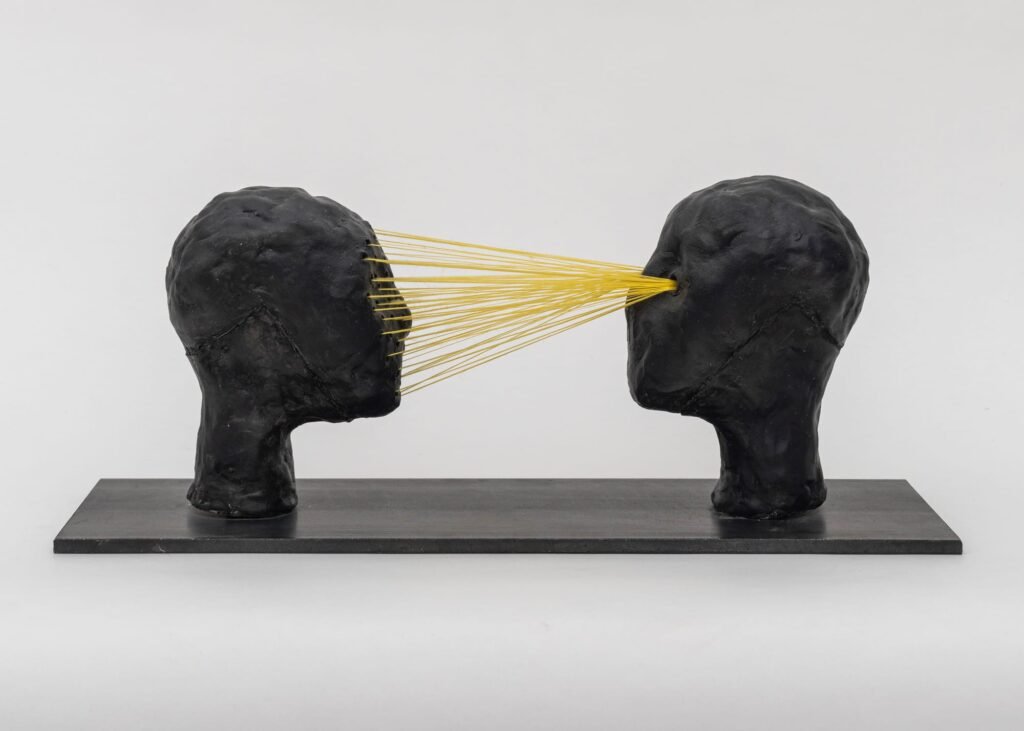
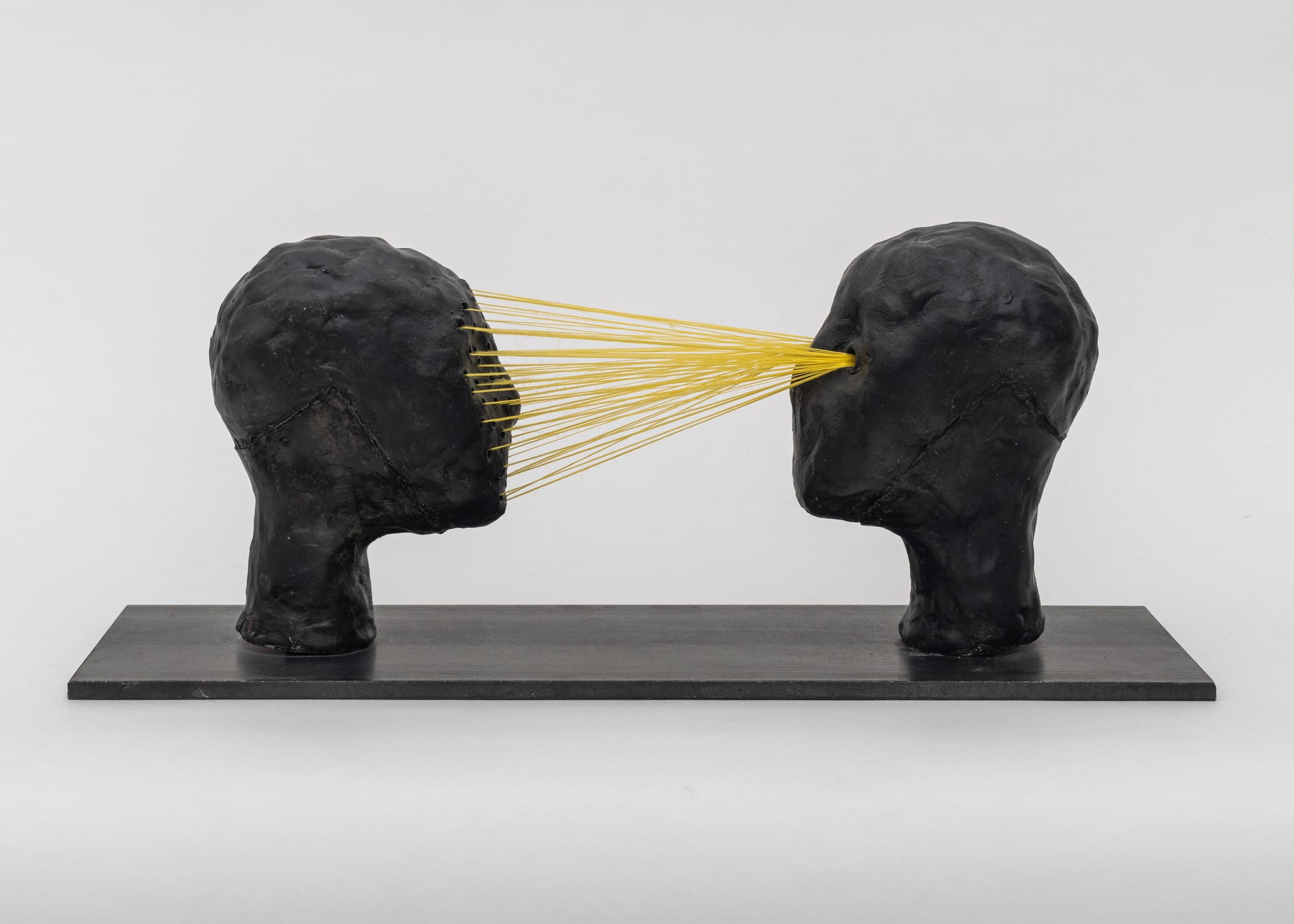
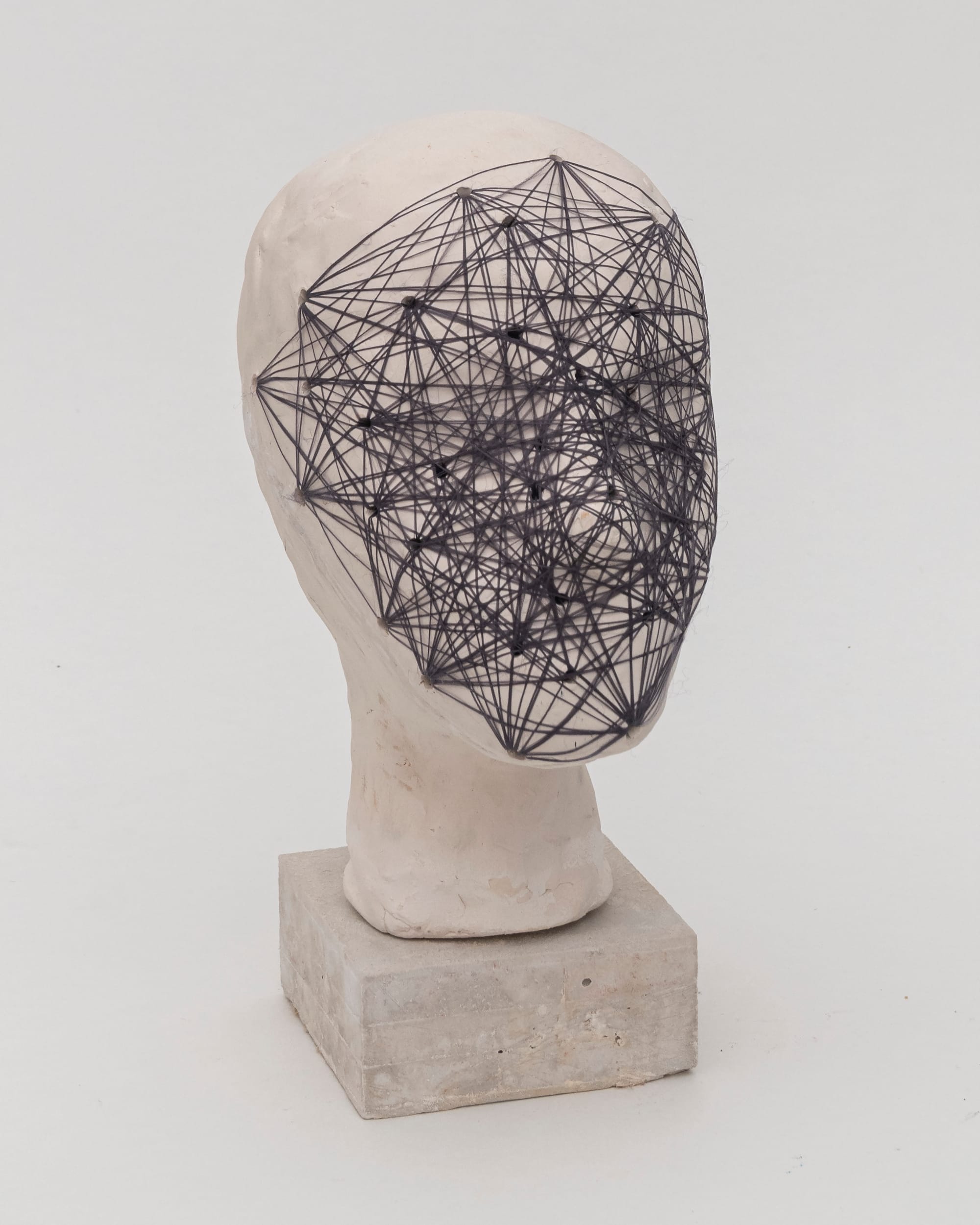
Working with a slowly expanding lexicon of motifs, King explores states of isolation whose circumstances and origins we cannot name. This ambiguity infuses the work with a commanding visual power. She pierces her featureless black or blue ceramic heads with holes through which she threads yellow lines, creating nets over individual faces or connecting heads that face each other with a dense yellow cone of crisscrossing threads. Is one drawing energy from the other, seeing beneath the other’s façade?
Are they communicating, accusing, or draining each other of strength? Their resistance to any reductive reading is what makes them resonant and memorable.
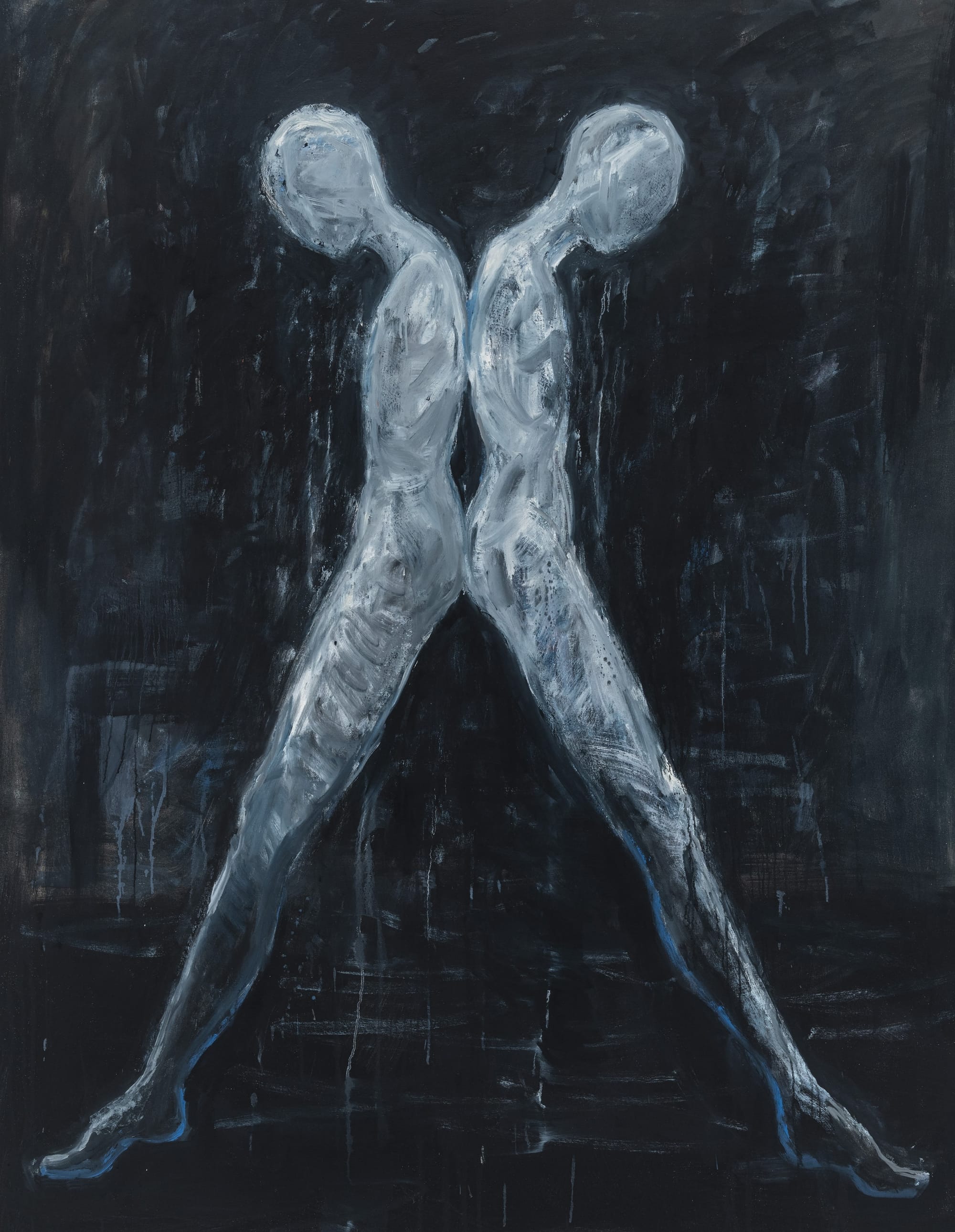
In several of the paintings, two identical figures either face each other or look in opposite directions. Again, the question arises: Are they wordlessly communicating, especially if they are leaning against each other for support? Does one surrender one’s identity to gain that support? A pervasive sense of self-containment, isolation, and miscommunication flows through the work. The stillness of the figures conveys a state of calm and acceptance, adding another layer of meaning. Is isolation an inescapable condition? Have the two figures, at least, agreed on a common language by which they can communicate?
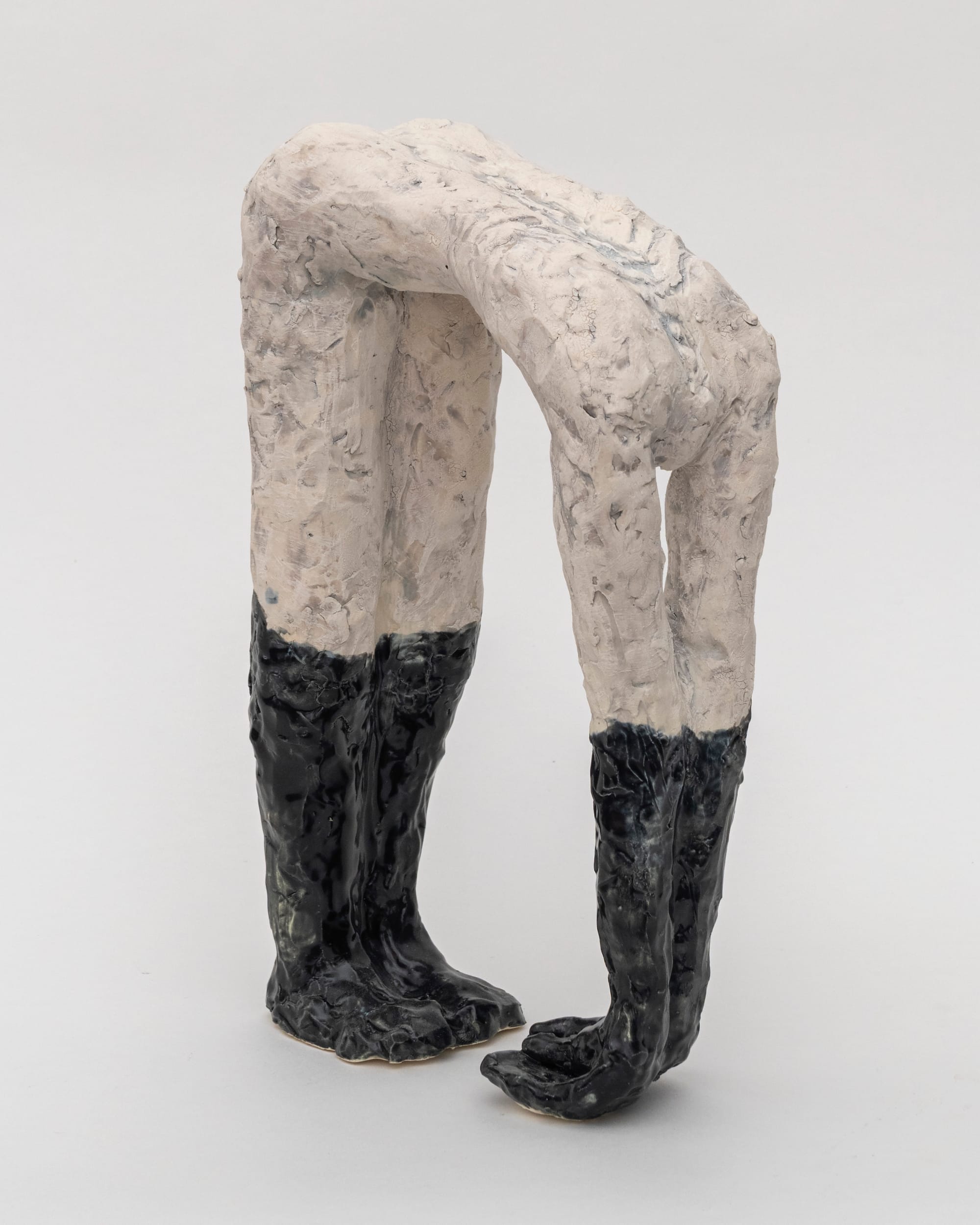
Another common motif across these works is the figure of a woman with leafless branches growing out of her body. Is she a powerful being evoking rebirth, our inescapable return to earth, or both? As pared down as these works can be, there are many ways into them, all of them inflected by King’s chthonic palette and gift for mysterious detail. What is the viewer to make of the foot, ankle, and hands of a figure that is black and distinct from the gray body and limbs? Is it outerwear, oil, or blood from the earth that coats the anonymous being?
This exhibition takes place on the first floor of a former mill, where two large coal-powered boilers are located. As I walked around the interior of the building, its brick walls showing signs of use, I connected King’s figures to the structure’s former life as a textile factory operated by hundreds of workers, mostly women. Their palette echoes both the grime of the building’s former life and the history of grueling, repetitive labor. The tenderness and stoicism of the figures make them feel even more powerful. They do not try to elicit our sympathy or even understanding. This endows them with dignity, a trait we have seen little of in our current world.
Anki King: Then and Now continues at the Lace Mill (165 Cornell Street #214, Kingston, New York) through March 29. The exhibition was organized by the gallery.