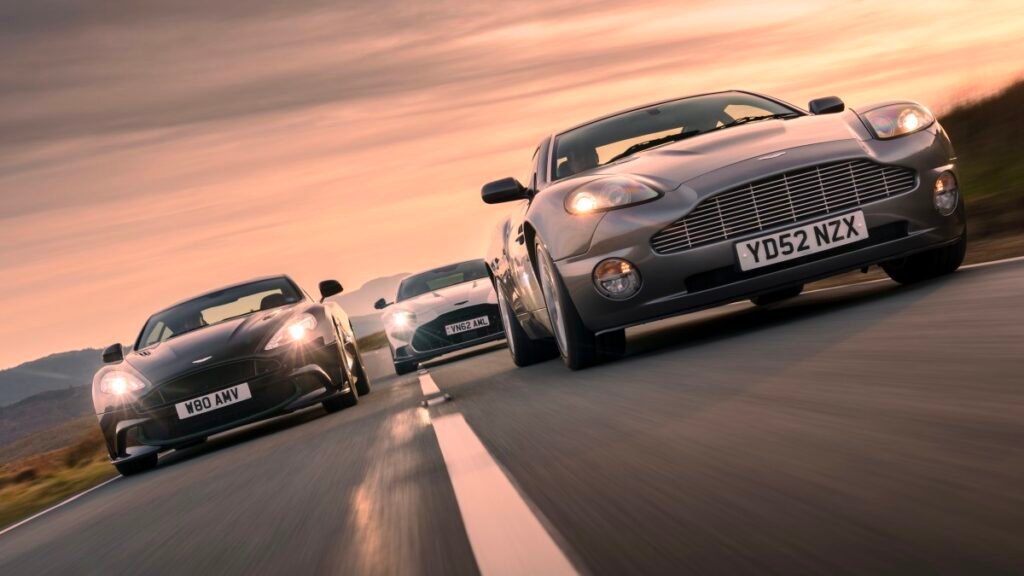
The current Aston Martin Vanquish is one of a tiny handful of cars left on sale with a V12 under the hood, but it’s far from the first car bearing that name to feature such an engine. In fact, the Vanquish name dates back three distinct generations to 2001 – specifically, March 2001, or 25 years ago this month.
To celebrate that major milestone, Aston has gathered together all three generations of its flagship grand tourer and taken them off to some gorgeous British countryside for a photoshoot, which seems as good a reason as any to take a look back at its story so far.
The First Generation
Aston Martin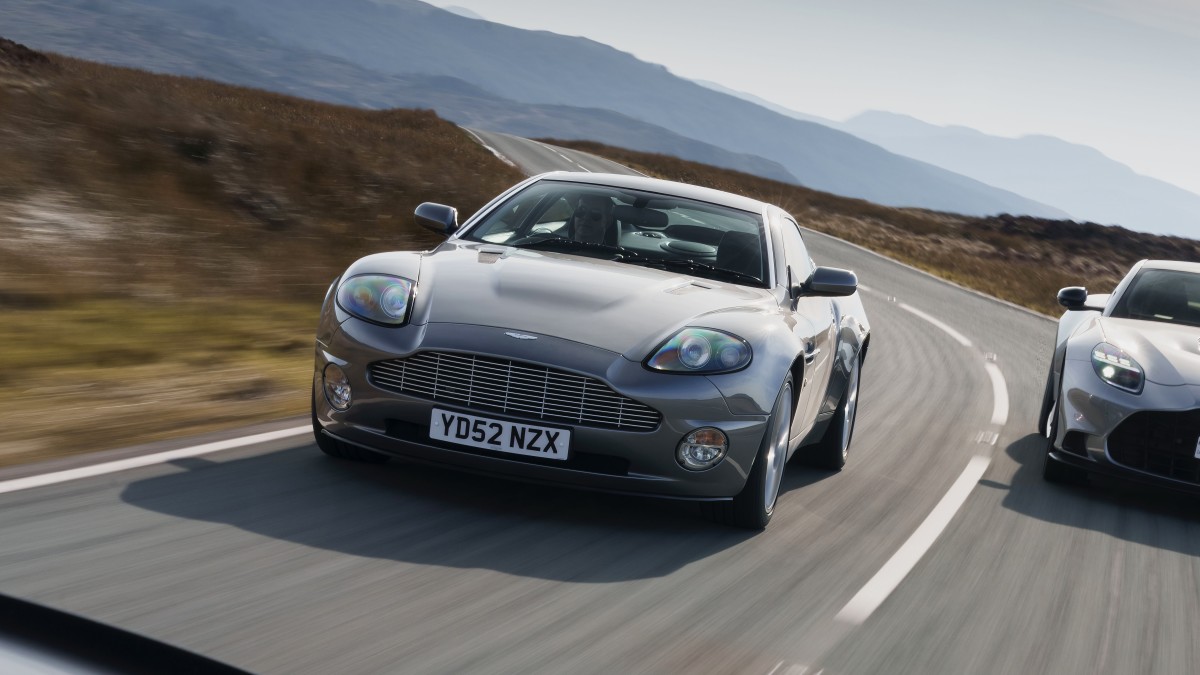
The original Vanquish, officially called the V12 Vanquish, arrived at a pivotal moment for Aston. In some ways, it was the last of the company’s old-school cars, as the final model to be produced at its long-time home in the town of Newport Pagnell, ahead of it moving over to its current premises in Gaydon.
In other ways, though, it marked a new era for the company. The chassis was a brand new bonded aluminum unit that laid the groundwork for the VH platform cars that would follow, and the styling, led by Ian Callum, was something of a prototype of the look that would carry Aston through much of the 2000s and 2010s.
Aston Martin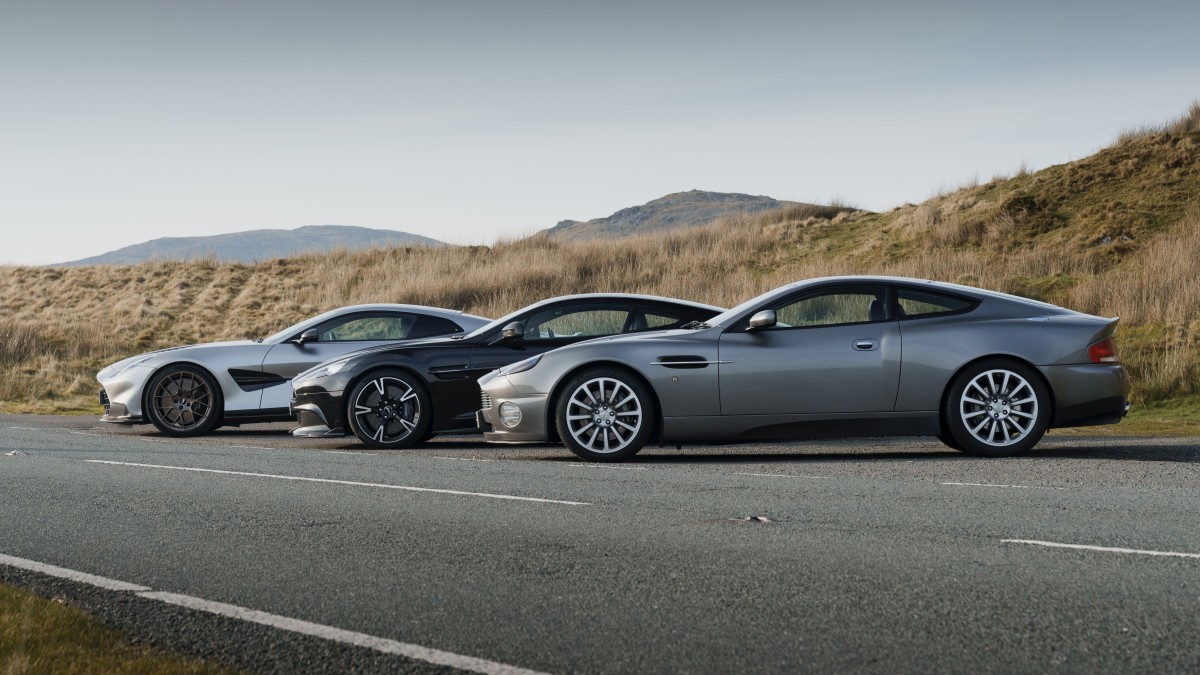
Its engine, a 5.9-liter V12, had been introduced to the DB7 Vantage a few years earlier. In the base car, it was making 420 hp, upped to 460 hp in the uprated Vanquish S in 2004. Perhaps a less welcome part of this strive for modernity was the transmission, a clunky six-speed automated manual paddleshift. Responding to criticism around this gearbox, Aston would later develop a factory manual conversion through its in-house Works division. The original Vanquish stayed in production until 2007, when its spot at the top of Aston’s range would be taken by the DBS.
The Second Generation
Aston Martin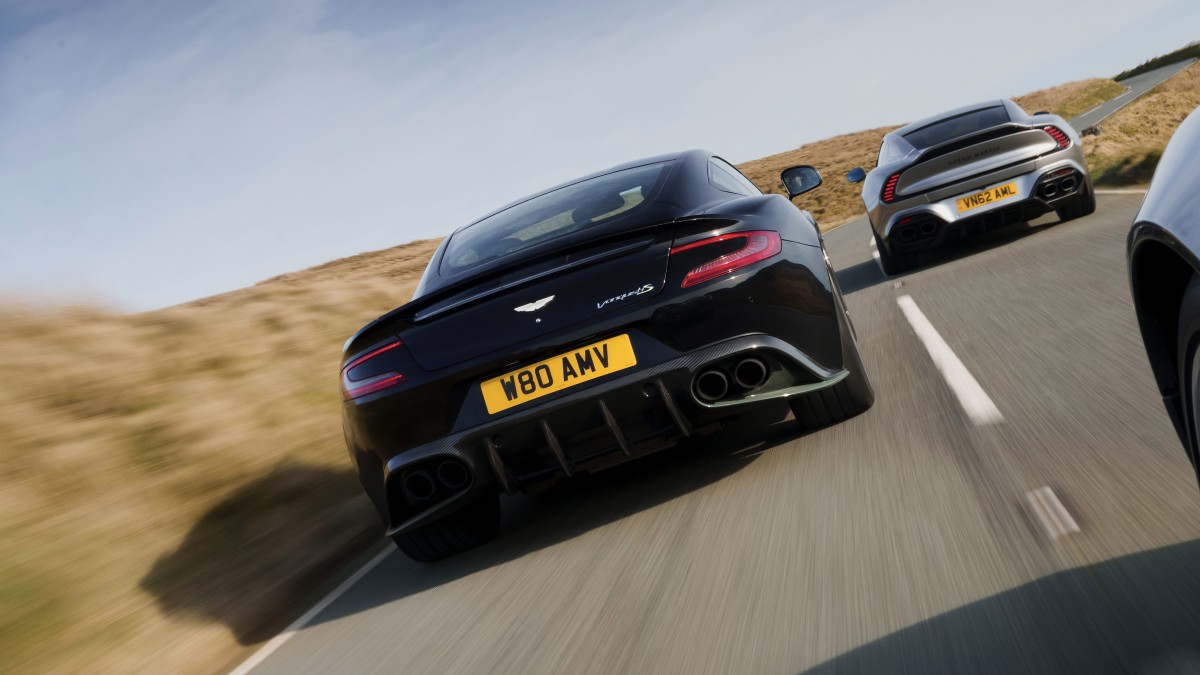
The Vanquish name wasn’t away for too long, reappearing in 2012 as Aston’s new range-topping GT. This was one of numerous vehicles sitting on the VH platform that had replaced the original Vanquish’s underpinnings, and its relationship to cars like the DB9 and DBS was clear to see, although styling inspiration was drawn from the rare One-77 hypercar too.
The engine was the same 5.9-liter V12 that had powered the original Vanquish, with power now sitting at 565 hp and boosted to 595 hp with the arrival of the S version in 2016. Once again, no manual was offered, but this time the two-pedal versions at least had proper automatics, first a six-speed, then an eight. Unlike the original car, it came in drop-top Volante guise too, and served as the basis for several limited-run Zagato-bodied spinoffs.
Aston Martin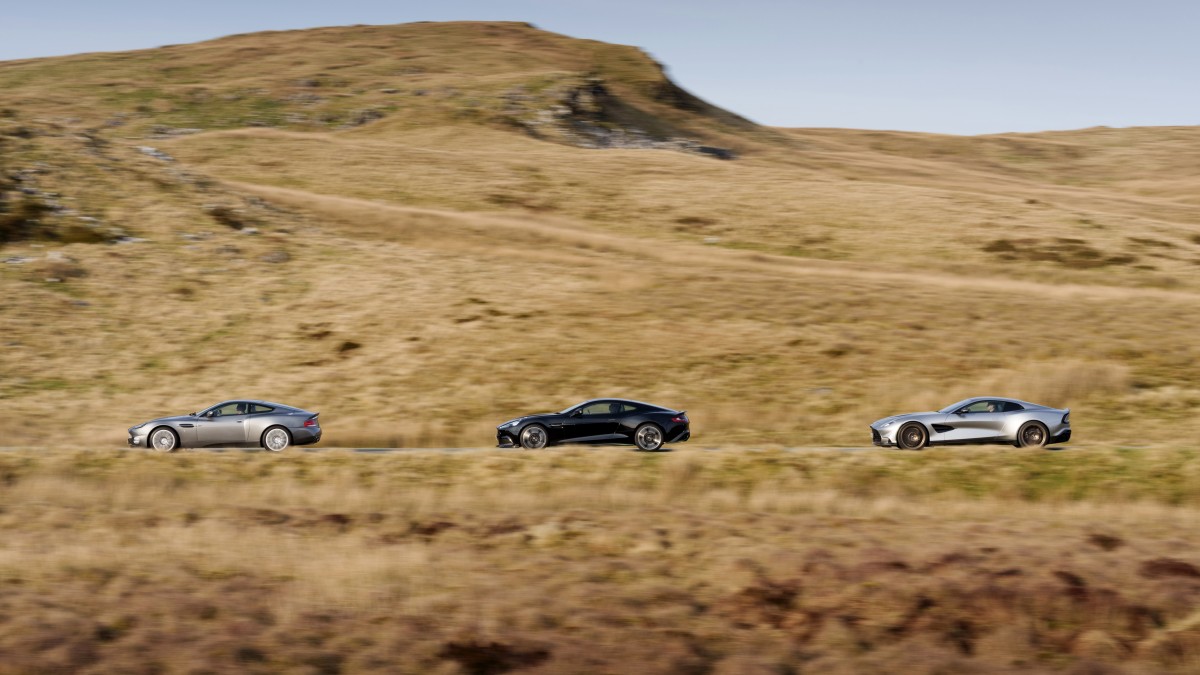
Production wound up in 2018, with the Vanquish name falling silent again and the car replaced by the DBS Superleggera, sitting on Aston’s then-new VH-II platform and featuring a 5.2-litre twin-turbo V12.
The Third Generation
Aston Martin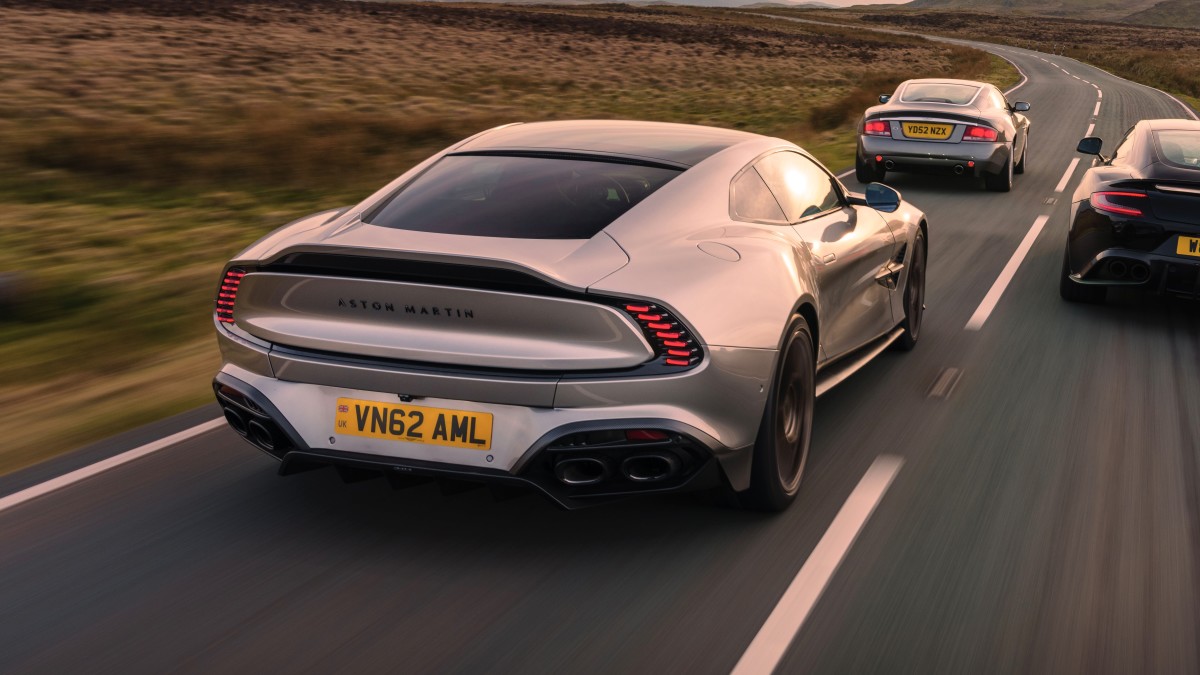
Having spent over 20 years flip-flopping between the Vanquish and DBS names for its range-toppers, the Vanquish once again returned in 2024 to replace the DBS Superleggera. With 824 hp on tap from a heavily reworked version of the 5.2-liter V12 that powered its predecessor, it’s by some margin the most powerful front-engined car ever made by Aston, reflected in a 3.3-second 0-60 mph time and a 214 mph top speed.
Once again available as a coupe or a Volante, on last year’s drive of the latter, we described the new Vanquish as ‘violently, explosively powerful’ but still more than capable of relaxing and playing the laid-back grand-tourer.
Aston Martin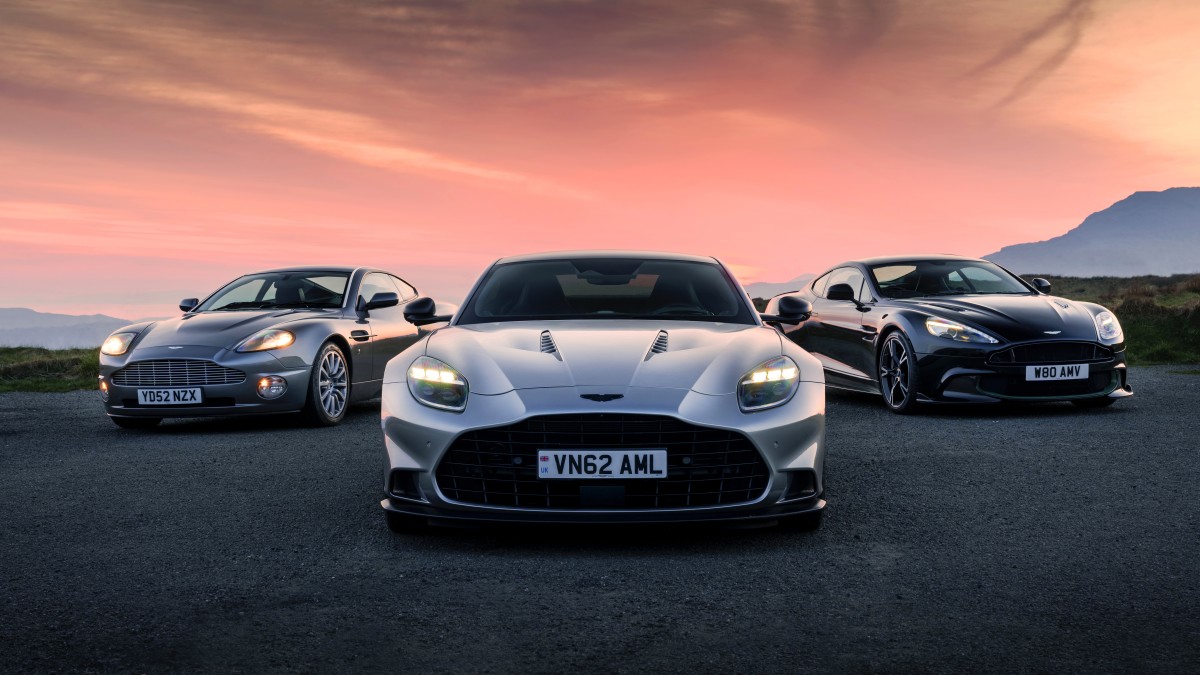
Happily, we likely still have a good few years of the current car left, but with a base price of around $430,000 and production limited to under 1,000 units a year, seeing one will be a rare experience (although not as rare as the original Vanquish, of which just over 2,500 were made over seven years). What’ll come after it? It’s hard to say when it’s only been around for a little over a year, so for now, we should just savor the fact that a big, brutish V12 GT like this still exists, and tip our hats to the cars that came before it.