Recently, BlackRock made a move that should have broken the internet. The world’s largest asset manager, with $11 trillion under management, listed its $2.2 billion tokenised Treasury fund on Uniswap and bought UNI governance tokens.
Think about that. BlackRock just integrated with DeFi infrastructure and purchased governance rights in a decentralised protocol. UNI surged 25%, but the bigger story isn’t the price action. It’s what this signals about where finance is actually heading.
The revolution everyone predicted in 2021? It’s happening. Just not the way anyone expected.
The Real Numbers Behind Tokenization
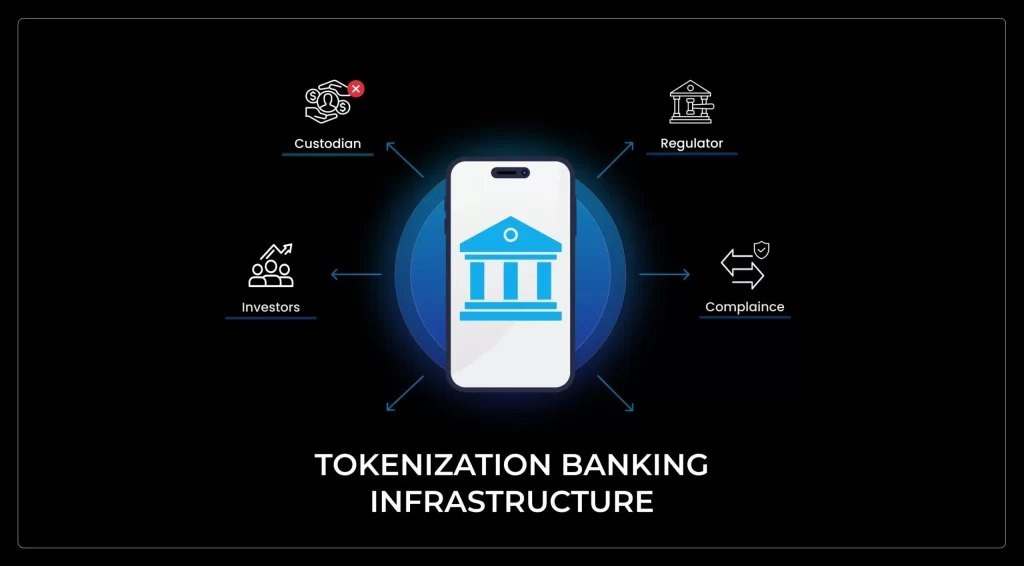
Tokenised real-world assets hit $36 billion in late 2025, backed by $365 billion in underlying capital. Tokenised U.S. Treasuries alone command nearly $9 billion. These aren’t speculative DeFi protocols. These are government bonds and money market funds settling on public blockchains.
BlackRock’s BUIDL fund sits at $2.2 billion across nine blockchains: Ethereum, Solana, Arbitrum, Avalanche, Aptos, BNB Chain, Optimism, and Polygon. In December, JPMorgan launched the My OnChain Net Yield Fund (MONY), a $100 million tokenised money market fund on Ethereum with USDC redemptions.
JPMorgan, the bank that once called Bitcoin a fraud, now lets institutional clients redeem fund shares using crypto.
Goldman Sachs and BNY Mellon announced tokenised money market funds in July 2025, targeting the $7.1 trillion money market industry. Russia’s Sberbank, under Western sanctions and cut off from SWIFT, is piloting DeFi integration and issued Bitcoin-backed loans in January. When sanctioned banks use permissionless protocols to route around the global financial system, the old order is cracking in real-time.

The Trillion-Dollar Trajectory
The current $36 billion market is just the beginning. McKinsey forecasts tokenised financial assets reaching $2 trillion by 2030. Boston Consulting Group predicts $16 trillion. Standard Chartered whispers $30 trillion. For context, the entire global ETF market is around $7 trillion. We’re talking about potentially rebuilding half the world’s financial infrastructure on blockchain rails, and this market has already grown 308% in three years.
The driver isn’t ideology. It’s maths. Tokenised Treasuries offer 3.4% yields with instant settlement. Private credit RWAs deliver 8-12% returns on senior secured loans backed by actual companies. Traditional settlement takes days. Blockchain settlement takes minutes. Traditional markets close on weekends. Blockchain markets never sleep.
How Regulation Became the Catalyst
July 2025 marked a turning point when the U.S. GENIUS Act established federal stablecoin frameworks with mandatory reserves and monthly audits, followed by Europe’s MiCA regulations becoming fully enforceable by July 2026. While crypto purists saw an apocalypse, institutions saw permission to deploy capital.
Clear regulatory frameworks don’t kill innovation so much as regulatory uncertainty does. The moment compliance departments could check boxes and sign off on blockchain projects, the floodgates opened.
Goldman Sachs CEO David Solomon personally met with prediction market platforms in early 2026. Deutsche Bank, UBS, and HSBC are tokenising deposits and gold by year-end. Nasdaq filed to tokenise stocks, and even the SEC shifted tone when new chairman Paul Atkins tweeted in February that tokenisation could transform financial markets by increasing transparency and predictability.

The Permissioned Reality
Here’s what’s actually being built: Goldman’s blockchain platform is permissioned. Fidelity’s tokenised fund requires a $5 million minimum for qualified purchasers only. JPMorgan’s MONY has a $1 million minimum, and even BlackRock’s BUIDL requires pre-qualification and whitelisting through Securitize.
This isn’t DeFi’s permissionless vision but rather DeFi’s technology wrapped in a compliance framework. You get 24/7 settlement, instant collateral movement, and transparent on-chain records without regulatory chaos. Smart contracts automate operations while KYC gates access.
The crypto idealists’ dream of “be your own bank” evolved into “be your own bank’s back-office infrastructure.” Ethereum isn’t becoming the world computer for permissionless commerce. It’s becoming the settlement layer for regulated institutions.
The Two-Tier System Taking Shape
By 2030, we’re looking at two parallel markets: DeFi Native (permissionless, privacy-focused, experimental, and used by crypto natives with perhaps $500 billion in value) and Institutional DeFi (permissioned, compliant, KYC-gated, used by banks and pension funds with over $10+ trillion).
They’ll run on the same blockchains and use the same smart contract primitives. But only one gets the institutional capital and Wall Street Journal headlines celebrating it as “the future of finance.”

The Geopolitical Implications
Sberbank isn’t just experimenting but fully committed, as Deputy Chairman Anatoly Popov stated in January: “We are confident that traditional banking and DeFi will soon converge.” Russia’s largest bank, serving 109 million clients while sanctioned and banned from SWIFT, is building alternative financial rails using public blockchains and Bitcoin.
If geopolitical adversaries can use Ethereum or Solana to move value globally without Western approval, the entire sanctions architecture breaks down. The U.S. cares about crypto regulation not because of retail speculation but because they’re facing the prospect of losing control of the global financial system to code that can’t be sanctioned.
The Paradox of Success
February 2026 presents a fascinating picture: BlackRock on Uniswap, JPMorgan on Ethereum, $36 billion in tokenised assets heading towards trillions. Every major bank launching tokenised products while over 630,000 RWA token holders grow at 10% monthly.
Blockchain is eating traditional finance, but when the entire financial system migrates to blockchain infrastructure yet remains permissioned, KYC’d, and controlled by the same institutions that ran the old system, the question of what actually changed becomes pressing.
The technology won as blockchains proved superior for settlement, custody, and compliance. But the original vision of an open financial system controlled by code rather than gatekeepers was quietly repackaged into something far more acceptable to existing power structures.
Wall Street didn’t fight the blockchain revolution but instead hired it as infrastructure, gave it a compliance makeover, and put it to work optimising their existing business model. The revolution arrived wearing a suit nobody predicted.
Written by – Aman Madan
The post Beyond Banks: How Wall Street Learned to Love the Blockchain appeared first on The Economic Transcript.