The U.S. Treasury will soon be forced to start writing checks – a lot of checks – following the Supreme Court’s ruling that the Trump administration had no Constitutional power to collect an estimated $175 billion in tariffs under the International Emergency Economic Powers Act, or IEEPA. That’s now been backed by two other rulings, including one by Judge Richard Eaton of the U.S. Court of International Trade in New York, who declared importers were “entitled to benefit” from those decisions without further delay.
Clearly, major importers are hoping to get paid back as soon as possible. So are consumers who shelled out more on everything from imported groceries to foreign-made electronics. The auto industry is, of course, a major importer and, by various estimates, manufacturers collectively paid out about $25 billion in higher duties last year. So, the Supreme Court ruling might seem like a potential windfall for automakers – and auto buyers – alike. But, if you bought a vehicle since last April, don’t start anticipating one of those refund checks winding up in your mailbox.
Related: Trump’s Latest Tariffs Spell Trouble for Hyundai and Kia
Trump Loves Tariffs
Going back to his first term in the White House, Donald Trump pitched import tariffs as a way to bring manufacturing jobs back to the U.S. He got serious following his return to Washington in January 2025, launching a series of new duties covering virtually all foreign goods.
Michael Nagle/Bloomberg via Getty Images
The president has enacted a number of different types of tariffs using different rules and regulations – even calling for new, short-term duties in response to last month’s Supreme Court ruling. The February 20 decision specifically focused on tariffs put in place under the IEEPA. Six of the nine justices ruled Trump overstepped his bounds enacting what were, effectively, new taxes. The U.S. Constitution specifically assigned the power to levy taxes to Congress. As a result, the tariffs were retroactively declared null and void.
Refunds May Soon Be On The Way
Since then, there have been two other rulings covering the illegal IEEPA tariffs, notably with the Court of International Trade effectively telling the White House to start the refund process without further delays. “This is a victory for small businesses who have paid billions in unlawful tariffs and deserve their money back,” Dan Anthony, executive director of We Pay the Tariffs, said in a statement. “The court acted swiftly and correctly. Now the ball is in the government’s court, and small businesses are concerned they will drag this out further.” The Trump administration is also facing pressure from a number of major firms, including Bausch & Lomb, Dyson, FedEx and L’Oreal, who have filed suit to get the process rolling.
Precisely how much needs to be repaid is uncertain. Estimates are that $133 billion was collected through the end of 2025, though CBS News reported a final figure could reach as high as $175 billion. Trump has routinely claimed tariffs are paid for by our foreign trade partners, in one post on Truth Social proclaiming, “BILLIONS OF DOLLARS, LARGELY FROM COUNTRIES THAT HAVE TAKEN ADVANTAGE OF THE UNITED STATES FOR MANY YEARS, LAUGHING ALL THE WAY, WILL START FLOWING INTO THE USA.”
Who Pays?
In fact, the results of a Federal Reserve study released last month found around 90% of the tariffs collected last year were paid for by Americans, based on U.S. Census Bureau and Foreign Trade Statistics. “Our results show that the bulk of the tariff incidence continues to fall on U.S. firms and consumers,” the Fed’s economists wrote. Americans “continue to bear the bulk of the economic burden of the high tariffs imposed in 2025.”
Getty Images
Clearly, the companies that paid tariffs directly into the U.S. Treasury will be getting refunds. But the question is then what happens with money they collected from their own customers? There’s another question: How much of the tariffs paid by the auto industry – and, indirectly, by its buyers – are covered by the Supreme Court ruling?
Related: Tariffs Just Killed the Kia EV6 GT in America
What’s in it for the auto industry?
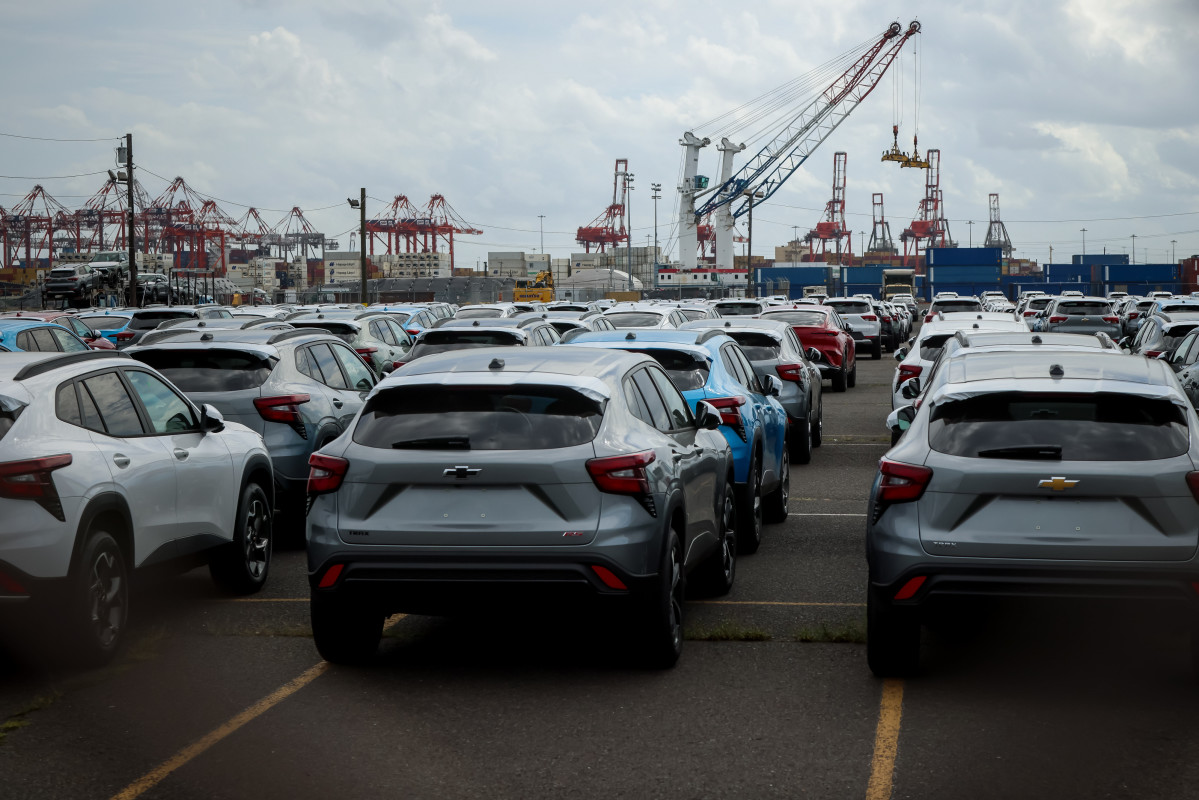
That’s where things get complicated. Automakers paid plenty of tariffs under the IEEPA, covering everything from maintenance supplies to machinery. But, it turns out, the vast majority of the $25 billion in tariffs were covered by separate regulations. And, at least for now, the courts have not addressed the duties put in place on foreign-made autos and auto parts, as well as imported steel and aluminum.
That means the vast majority of the tariffs paid by the auto industry are still considered legal, noted Sam Abuelsamid, lead analyst with Telemetry Research. There could still be some money coming back and, as one former Speaker of the House liked to say, “a billion here, a billion there begins to add up to real money.” But unlike many other businesses, automaker such as General Motors, Ford and Toyota kept as much of (the tariffs) as they could out of MSRPs,” said Abulesamid – though he said some of the higher costs have been buried in destination fees that have risen by hundreds of dollars, on average, over the past year.
As a result, “I expect the automakers to pass on absolutely zero,” even when they get any tariff refunds, he said. Such a decision might trigger class action lawsuits said Abuelsamid, but,. “Even if lawsuits do succeed it will take years for consumers to get any money back.”