The year’s gotten off to a bad start for the U.S. auto industry, sales tumbling by 6.3% during the first quarter, with only a handful of brands in the black. Buick definitely wasn’t one of them, demand down by nearly a third year-over-year.
There are plenty of headwinds facing manufacturers, including record high prices, rising fuel costs and high interest rates. But Buick faces its own unique set of challenges crippling a brand that has faced a long, on-and-off struggle survival. Point your finger at the Trump administration and the auto tariffs that have sharply driven up the cost of three of Buick’s four product lines.
Tariffs Weigh Buick Down
Double-digit declines were far from out of the ordinary during the January-March quarter and Buick’s parent General Motors just barely stayed in single digits, with a dip of 9.7%. But the 126-year-old brand had a sales decline nearly three times as great as sibling brands Chevrolet and Cadillac and nearly 10-fold the dip at GMC.
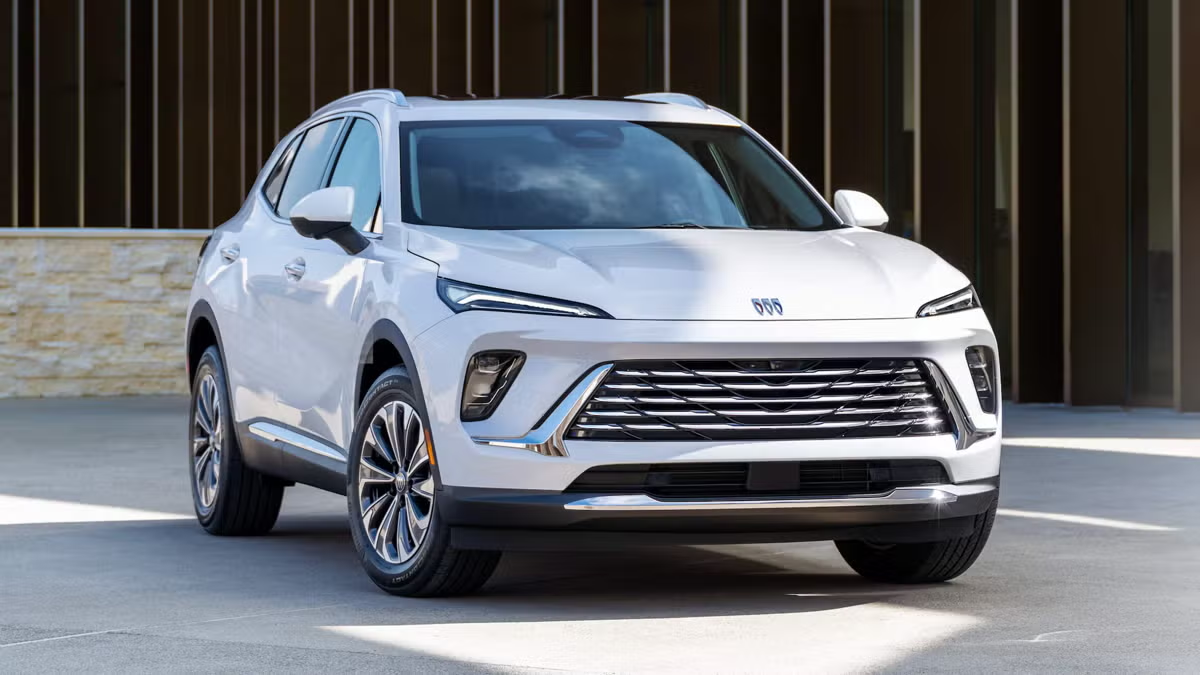
Its 32.6% sales slump was largely the result of the Trump tariffs, especially when it came to the Buick Envision, normally one of its most important models. A year earlier, the mid-range crossover generated 15,485 sales for the brand. This year? Just 4,485. It didn’t help that Buick had raised Envision’s sticker price, on average, around $3,000 – and close to $5,000 on the highline Avenir package.
From the consumer perspective, it could have been worse. That actually reflects only a fraction of the hit from a 45% tariff on Chinese-made vehicles under the tariffs the president put in place a year ago this month. GM has chosen to largely absorb such duties to minimize the hit to buyers. Instead, Buick has slashed back on the number of Envisions it’s importing from China. In many cases, even if someone was willing to cough up the extra cash they had a problem finding one of the crossovers on U.S. dealer lots.
Related: Buick’s Envision Is Finally Coming Home After Years of Heavy Tariffs
Three Out of Four
While not quite as big a hit, Buick was saddled with still hefty tariffs on two of its three other U.S. models, the Korean-made Encore GX and Envista crossovers. The consolation prize? Those duties dropped from 25% once South Korea and the U.S. came to terms on a trade agreement last November. Still, that lower number still amounts to a sizable penalty on even a base Encore GX starting at $27,295, including delivery fees.
Buick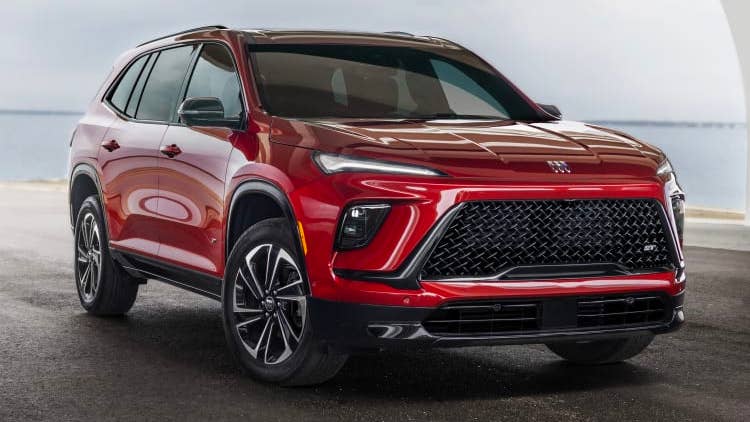
Even the one remaining Buick model, the Enclave, hasn’t entirely escaped the hit from Trump tariffs. It’s assembled at GM’s Lansing-Delta Assembly Plant in Lansing, Michigan – but, like virtually all U.S.-made models it’s still paying duties on imported auto parts and components, as well as foreign-made steel and aluminum. GM hasn’t broken out the added costs but industry analysts have estimated that, for the typical SUV that can add up to $1,000 or more. Manufacturers like GM have a choice of passing costs onto buyers or taking the hit. As with Envision, Buick has chosen the middle ground.
Related: This Buick SUV’s Interior Looks Nothing Like the Ones in America
What Is Buick These Days?
All this doesn’t help when you’re a brand struggling to build a clear identity in a crowded market. “Part of the problem is that people just don’t know what Buick is anymore,” said Sam Abuelsamid, chief analyst with Telemetry Research. “It doesn’t have much of a presence, even though its products are pretty good looking.”
That’s further complicated by a lack of product leaving large gaps between them – a challenged worsened by the virtual disappearance of its mid-range offering, Envision. The Encore GX and Envista both start under $30,000. You jump all the way up to $48,395 for the Enclave’s base preferred trim.
Changes Coming
It doesn’t help that “Buick has pigeonholed itself as a crossover brand,” added Sam Fiorani, vice president of global vehicle forecasting at AutoForecast Solutions. But Buick is planning some big changes.
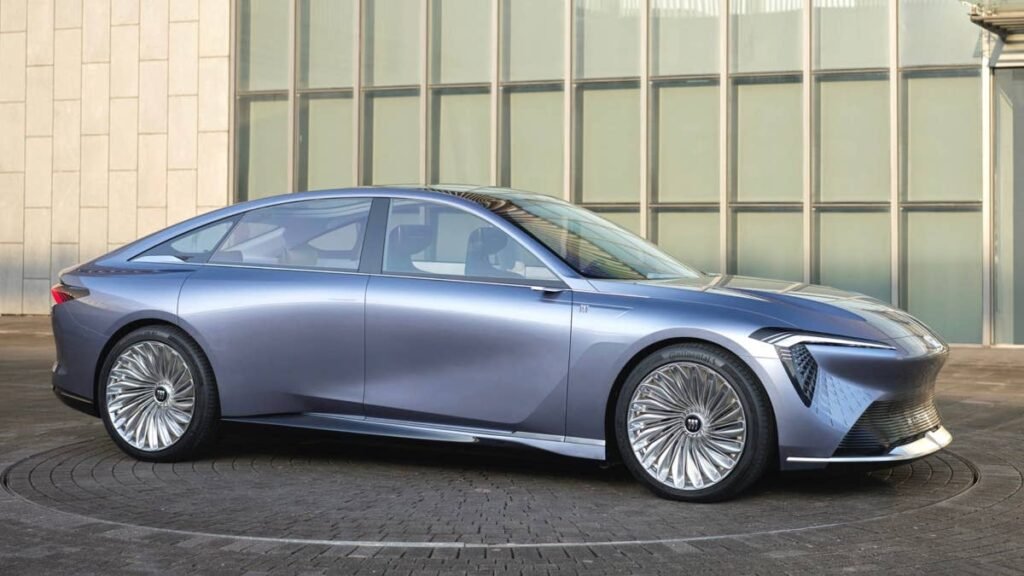
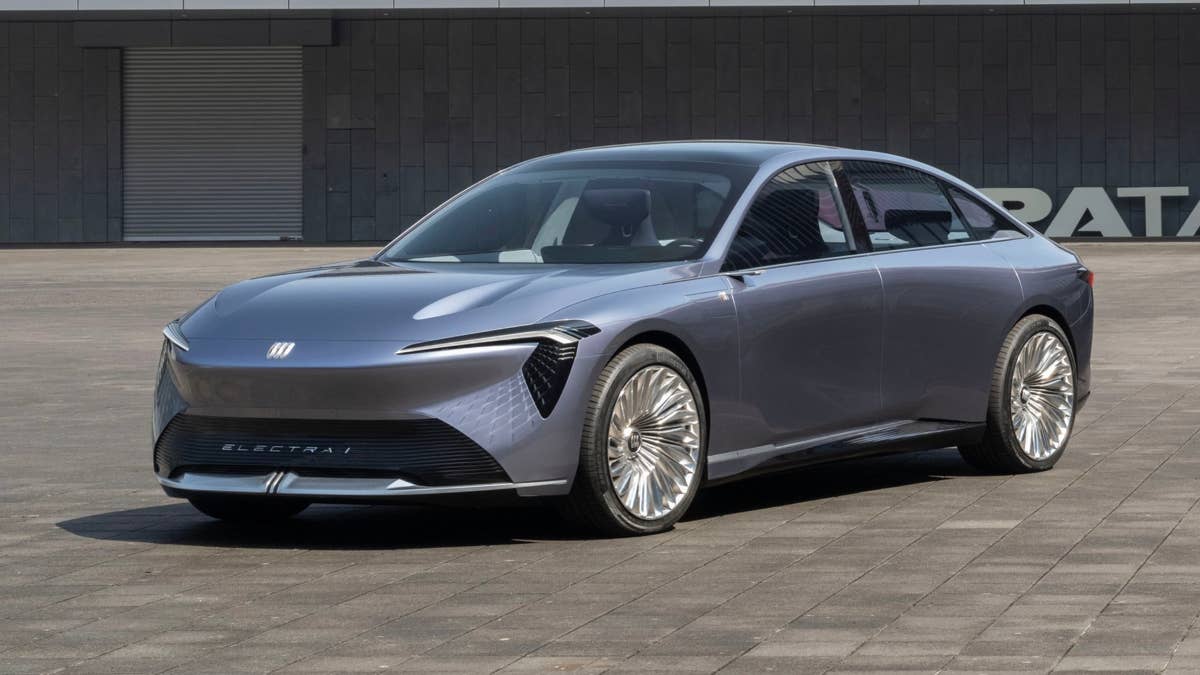
For one thing, General Motors appears to be reinvigorating the sedan line-up its largely neglected in recent years – the automaker dropping once familiar four-door models such as the Buick LeSabre and Chevrolet Malibu. According to Fiorani, suppliers are tooling up for a new passenger car platform that will underpin the replacement for the current Cadillac CT5 while also help bring back the Chevy Camaro dropped in 2023 – though it will return as a sedan, the internal documents indicate. While it hasn’t been locked in stone, insiders indicate a Buick sedan also is part of the plan.
Buick
Buick also plans to shift production of the Envision out of China where it has been assembled since 2017. It recently confirmed the next-generation CUV will be assembled at the GM plant in Fairfax, Kansas starting in 2028, alongside the compact Chevrolet Equinox which, in turn, is being relocated from GM’s plant in Ramos Arizpe, Mexico.
For now, there are no plans to move either Encore GX or Envista out of South Korea, GM deciding the advantages of building there outweigh the tariff cost of importing them.