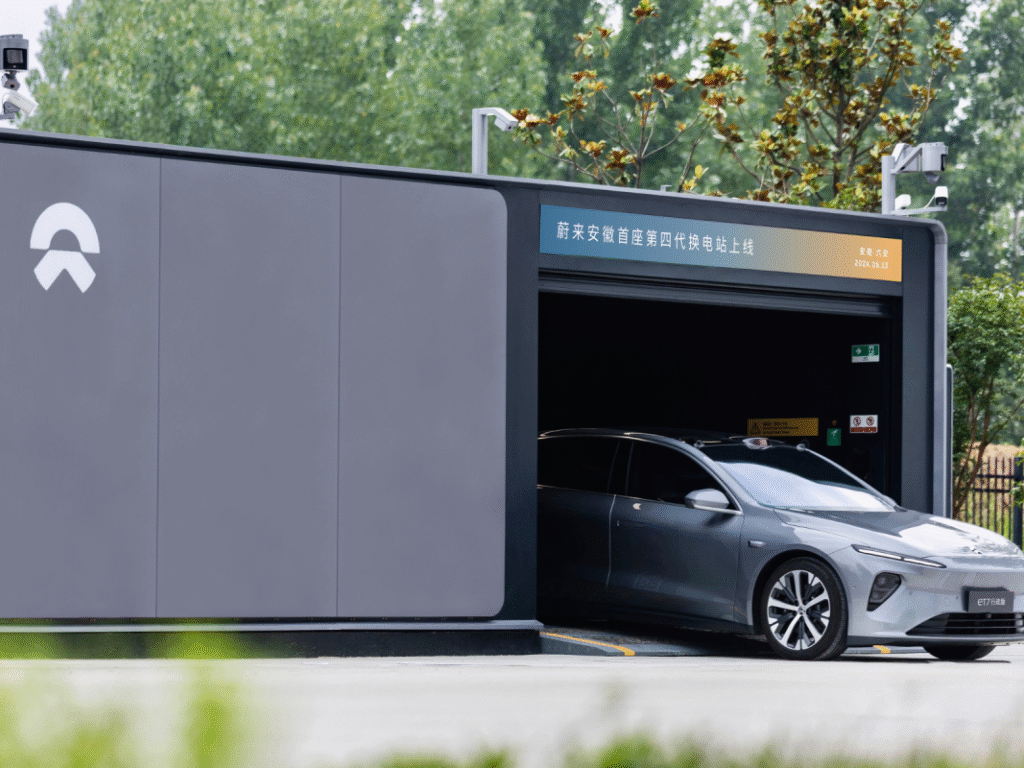
The Swap Economy
The U.S. continues to trail China in certain EV technologies, and a new benchmark from Chinese EV maker Nio underscores that gap. China’s Autohome said that on February 15, Nio logged a record 146,649 battery swaps in a single day, the most the company has ever processed.
For the uninitiated, a battery swap station allows EVs to pull in and have their depleted batteries replaced with fully charged ones. This allows owners to skip the extended wait typically associated with conventional station charging. According to Nio, the swap process takes about three minutes – roughly 15 to 25 minutes quicker than fast-charging a Tesla Model 3 from around 10 to 80 percent under optimal conditions.
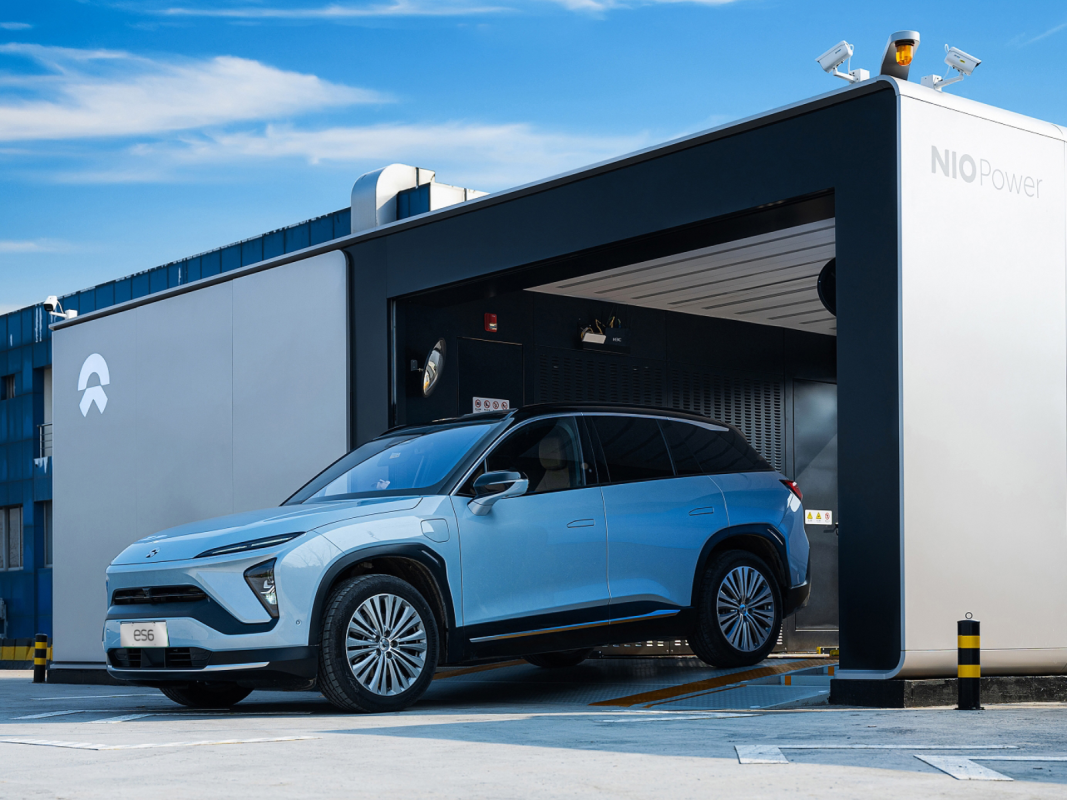
The 100 Million Mark
The report noted that Nio surpassed 100 million cumulative battery swaps earlier this month, suggesting the system may be a sustainable solution to EV charging challenges. Swapped-out batteries undergo inspection, and if no defects are detected, they are recharged and returned to service. As of this writing, Nio operates more than 8,600 charging and battery-swapping stations across China.
Nio also produces EV models, from crossovers to sedans such as the ET9. The EV maker also produced a limited, track-only electric sports car called the EP9, which uses a quad-motor setup capable of generating 1,341 horsepower. The EP9 also registered a 6:45.90-second lap time at the Nürburgring, about in the same territory as supercars like the Lamborghini Aventador SVJ.

The Plug-In Approach
In the U.S., efforts to expand EV infrastructure are focused primarily on building more fast-charging stations. Companies like Electrify America, ChargePoint, and EVgo continue to grow their networks nationwide – a key step in addressing so-called range anxiety and giving interstate travelers greater confidence in choosing an all-electric vehicle.
EV battery swap stations in the U.S. remain largely limited to startup projects, unlike the expansive network Nio has built in China. Tesla experimented with a small battery-swap pilot program, but later abandoned the effort to focus on expanding its Supercharger network. San Francisco-based Ample Inc. also sought to champion the technology, but filed for bankruptcy in December 2025.
Nio’s 100 million swap milestone shows the model can work at scale. Limited adoption elsewhere appears driven by policy, market structure, and economic factors rather than purely technical barriers.