A Familiar V6 With a Mixed Reputation
Chrysler’s 3.6-liter Pentastar V6 has been one of the most common engines on North American roads since its debut in 2010. It powers everything from Dodge Chargers and Jeep Wranglers to Chrysler minivans, a sign of how widely it has been adopted, with FCA even trying to shove the power plant in surprising nameplates.
Curiously, owners tend to be split on the engine’s reputation. Some describe it as a strong, dependable workhorse when maintained properly, while others see it as a ticking time bomb plagued by head gasket leaks, rocker failures, and cooling issues.
Our favorite engine CSI, YouTube’s I Do Cars, got its hands on a 2018 Chrysler Pacifica’s Pentastar for a recent engine teardown. With 120,000 miles on the clock, this Pentastar has reached places (but not far enough). However, the minivan’s engine came in with catastrophic block damage, offering a case study of how problems can spiral when poor workmanship is added to known weak points.
A Closer Look at the Pacifica’s Pentastar V6
The engine in question still turned over with compression despite large holes in the block. Early inspection revealed an intact timing chain, replaced spark plugs, and the expected amount of carbon build-up for its mileage. However, metal flakes in the oil filter pointed to deeper issues. Removing the valve covers showed camshaft wear and rust, while timing chain guides were cracked and at risk of failure.
Pulling the heads revealed evidence of a prior head gasket replacement. Instead of proper machining, the sealing surface had been “cleaned” with a grinder. RTV sealant had been applied to bolt holes, another shortcut suggesting the repair was not done to specification. The result was a bent connecting rod, piston damage, and eventually a hole through the block. While bearings and journals looked surprisingly intact in places, the overall block and rotating assembly were reduced to scrap.
The teardown reinforced a pattern some Pacifica owners report: rear-bank head gasket failures leading to coolant intrusion, hydrolock, and bent rods.
I Do Cars/YouTube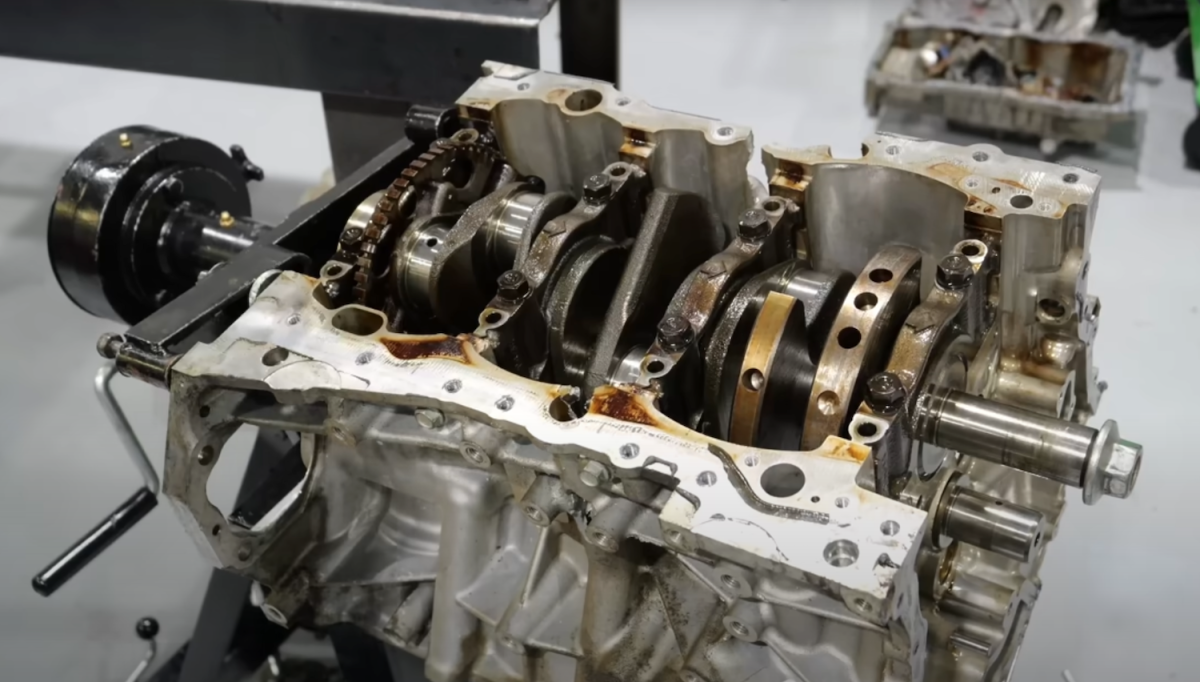
Keeping a Pentastar Healthy
The Pentastar’s longevity largely depends on maintenance and proper repair work. Regular oil changes, careful monitoring of coolant levels, and attention to early signs like misfires or disappearing heat from the vents can help owners avoid costly failures.
In vehicles like the Pacifica, any recurring misfire combined with coolant loss should be treated as a potential head gasket issue before more serious damage develops.
This engine teardown also highlighted the risk of cutting corners. Using abrasive tools instead of machine resurfacing or relying on RTV to mask sealing problems may save money in the short term, but can condemn an engine in the long run. For a power plant as widespread as the Pentastar, avoiding hack jobs may be the difference between another hundred thousand miles of service and a block full of holes.
Chrysler