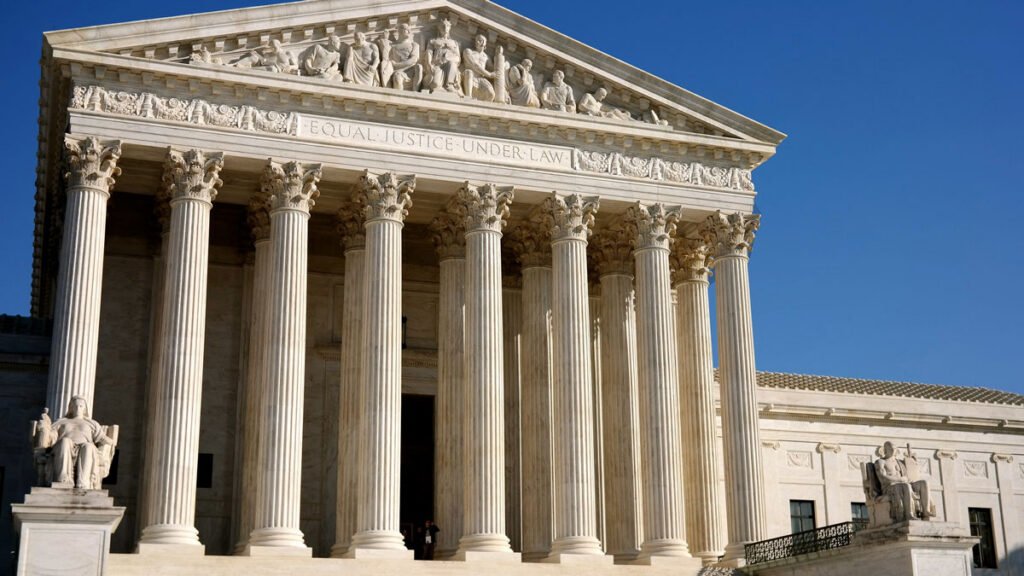
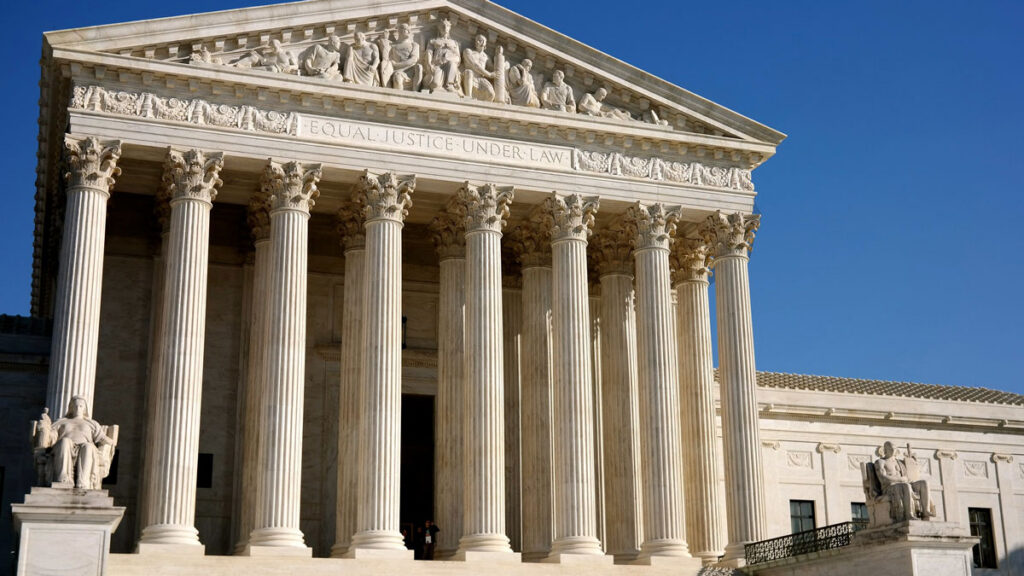
Judges aren’t always scientific experts, but they are responsible for determining whether scientific evidence is admissible and for making rulings in scientific cases. That’s why the Reference Manual on Scientific Evidence, jointly produced by the Federal Judicial Center (FJC) and the National Academies of Sciences, Engineering, and Medicine (NASEM), was introduced more than 30 years ago: to inform judges about fundamental truths of various areas of science.
“Lawyers and judges typically don’t have extensive scientific backgrounds,” explained David Faigman, chancellor and dean of the University of California College of the Law, San Francisco. “Having an independent, neutral resource is just invaluable.”
In December 2025, the manual was updated for the first time in 15 years to include new chapters on computer science, artificial intelligence, and climate science.
The chapter on climate science met with backlash almost immediately. In late January, 27 Republican state attorneys general wrote a letter to the FJC asking that the 90-page chapter on climate science be removed, calling it “inappropriate” and “advocacy-based.”
FJC director Robin Rosenberg responded 6 February, stating that the climate science chapter had been removed.
“I think it’s outrageous that it was removed. The manual should not be buffeted by political forces, should not be affected by the politics of the time.”
Scientists and legal experts have spoken out against this decision, arguing that its removal “deprives judges of a resource needed to do their jobs.” The authors of the chapter published a defense of the excised material, and dozens of other contributors to the manual decried the decision as well. Marcia McNutt, president of the National Academy of Sciences, defended the chapter in a letter to the Wall Street Journal: “The draft chapter was reviewed by an oversight committee that included judges and scientists and was further evaluated by a different group of judges and scientists serving as anonymous, expert peer reviewers.” AGU published a statement urging the FJC to reinstate the chapter, as did the American Meteorological Society.
“I think it’s outrageous that it was removed,” said Nancy Gertner, a retired judge from the federal bench of the U.S. District Court for the District of Massachusetts and now a senior lecturer at Harvard Law School. “The manual should not be buffeted by political forces, should not be affected by the politics of the time. The whole idea was the manual was supposed to be independent of that. And since judges are going to deal with climate science issues, it should be in the manual.”
A Rise in Climate Litigation
The reference manual has been updated periodically since it was first published in 1994. In 2000, for instance, it added guides on medical testimony and engineering, and in 2011 it included chapters on neuroscience and mental health. Faigman said that the addition of the climate science chapter was likely attributable to a rise in climate litigation and policy work, particularly over the past decade.
“I think that it was probably added—as other chapters have been added—as the subject got particular resonance and importance,” he said. “There’s a lot of litigation surrounding climate change. And so, to understand the basic science of climate is, I think, essential for judges. It’s really just background information so that judges understand what the issues are that transcend the case and not necessarily that the issues are being presented in the individual case.”
Gertner said that in her time as a judge, that was indeed how she used the manual. “I would use it to understand the context, because the manual went through the broader issues much better than a lawyer sometimes did,” she said. “Oftentimes, I was reading up on scientific evidence to supplement, and sometimes to supplant, what the lawyers were telling me.”
Equal Space for Opposing Views?
One criticism opponents of the chapter have leveled against it is that the chapter’s authors, environmental law expert Jessica Wentz and climate scientist Radley Horton, are both affiliated with Columbia’s Sabin Center for Climate Change Law.
“As best we can tell,” the complaint issued by the attorneys general reads, “Wentz and Horton did not consult any experts who might take a view inconsistent with Wentz and Horton’s conception of ‘consensus.’ They do not cite, for instance, any of the leading experts from the Department of Energy’s recent report on climate change.”
The Department of Energy’s (DOE) report on climate change, which was authored by five climate contrarians and downplays the dangers of climate change, has been extensively criticized by the scientific community. In January, a federal judge ruled that the DOE violated the law in issuing the report.
Gertner supports the practice of recognized experts authoring individual chapters of the manual. She said there is “no difference” between Wentz and Horton authoring the climate chapter and, for example, an author of the chapter on medical testimony being affiliated with the O’Neill Institute for National and Global Health Law at Georgetown University Law Center.
“It’s like we’re at a time that somehow we think we have to give equal time to the people who believe that the Earth is flat. I mean, you don’t.”
“It’s like we’re at a time that somehow we think we have to give equal time to the people who believe that the Earth is flat,” she said. “I mean, you don’t. There are certain issues that are simply beyond the pale.”
Faigman explained that the manual’s chapters are authored by people who are experts in their fields but that the content of any chapter is also subject to extensive peer review and editing from related subject matter experts. He added that in his opinion, it makes sense to choose chapter authors who are highly trained in their respective scientific areas and will present the material in a balanced way, not necessarily in a way that presents every viewpoint.
“To take maybe another controversial example, if you’re asking about the effectiveness of the measles vaccine, you would ask people who basically understand the clinical research underlying the measles vaccine,” he said. “You don’t have an obligation to include anti-vaxxers.”
The Road Ahead
NASEM has opted to retain the chapter in the version of the manual published on its website, at least for the time being. However, Gertner said that most judges refer to the FJC version, which means they may not see the chapter.
“The whole purpose of the FJC manual is to be readily available to judges so that judges are not digging through other authoritative sources,” she said.
Faigman said he was heartened by the fact that NASEM has retained the chapter because the association has a role as a scientific authority that the FJC does not. It’s possible, he said, that removing the chapter will bring more attention to it than it otherwise would have had.
He also said he could foresee the manual becoming a legal issue in and of itself. For instance, one judge might cite its authority while another doubts it, and the validity of the chapter itself could be appealed in court.
“Ultimately, truth and science are not debatable,” Faigman said. “Denying climate change doesn’t change the fact that the climate is changing. It may serve the immediate political moment, but it doesn’t serve American society or the judiciary very well to try to ignore the effects of climate.”
—Emily Gardner (@emfurd.bsky.social), Associate Editor
Citation: Gardner, E. (2026), Climate science has no place in scientific reference manual for judges, attorneys general say, Eos, 107, https://doi.org/10.1029/2026EO260105. Published on 31 March 2026.
Text © 2026. AGU. CC BY-NC-ND 3.0
Except where otherwise noted, images are subject to copyright. Any reuse without express permission from the copyright owner is prohibited.