Among other things, time domain astronomy scans the cosmos for “blink-and-you-miss-it” events. Given galactic timescales, a blink can last for less than a second (a rapidly rotating, pulsating star), or it can last for several years (a comet shedding ices and gases as it orbits).
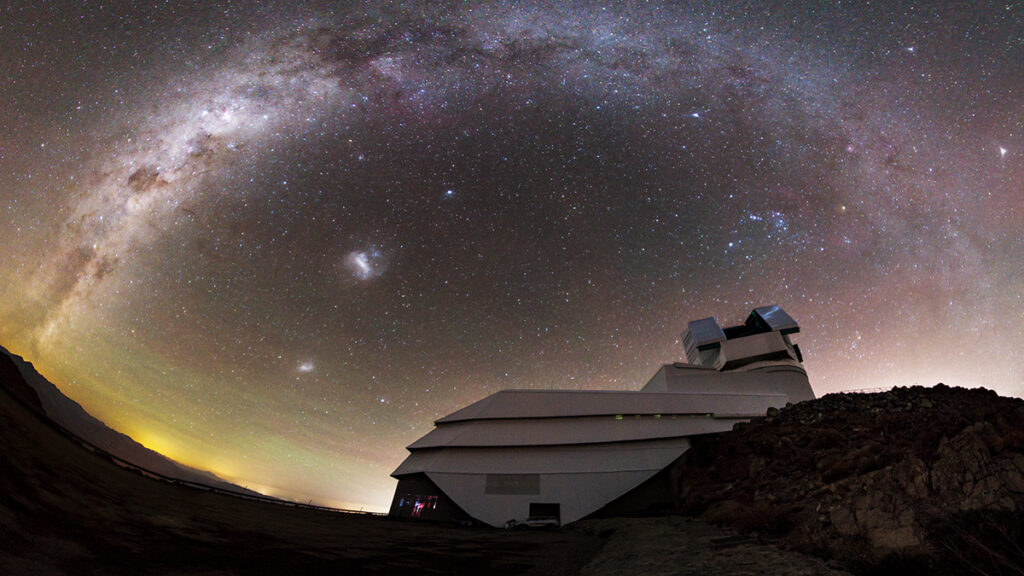
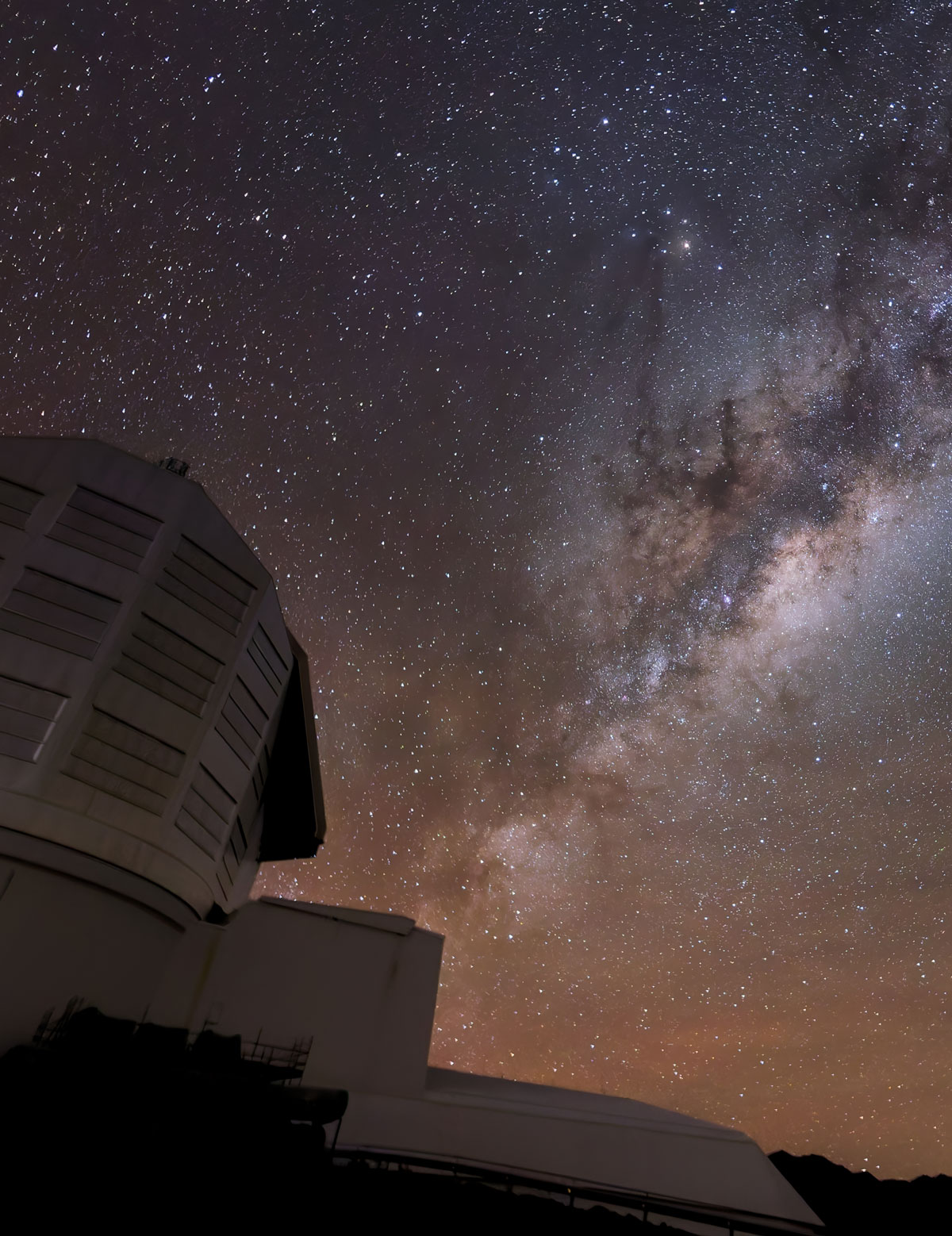
The awe-inducing Vera C. Rubin Observatory does not blink. From its sky-high altitude in the Chilean Andes, Rubin will image every point in the skies over the Southern Hemisphere 800 times over a 10-year period. The observatory is already issuing astronomers 800,000 alerts a night and eventually might send 10 million a night.
“The whole field of astronomy is about to be completely revolutionized by this dataset,” says astronomer Sarah Greenstreet in Kimberly Cartier’s beautiful, breathless introduction to the observatory, “Small, Faint, or Fast, Rubin Will Find It.”
So what is Rubin going to find?
Asteroids. There are about 1.5 million identified asteroids in our solar system, but astronomers think Rubin might find 4 million more.
Comets. Rubin’s unblinking eye will help astronomers trace comets and other trans-Neptunian objects in the icy reaches of the outer solar system.
Planet 9. Well, maybe. “This is the survey that will determine whether Planet 9 is real or not,” says astronomer Meghan Schwamb in Cartier’s feature.
Rubin is far from the only instrument astronomers use to study asteroids, comets, and other small bodies in our solar system, of course. The Atacama Large Millimeter/submillimeter Array is offering scientists nothing less than a “New View of the Solar System,” for instance.
And astronomers have long realized the value of cataloging temporal variations in celestial objects. Transits, rotations, and orbital dynamics have helped astronomers identify hot Jupiters, cold Earths, and planets that just shouldn’t be there.
But right now, astronomers have their eyes on Rubin, and Rubin has its eye on the sky.
—Caryl-Sue Micalizio, Editor in Chief
Citation: Micalizio, C.-S. (2026), Don’t blink: The Vera C. Rubin Observatory is revolutionizing astronomy, Eos, 107, https://doi.org/10.1029/2026EO260091. Published on 1 April 2026.
Text © 2026. The authors. CC BY-NC-ND 3.0
Except where otherwise noted, images are subject to copyright. Any reuse without express permission from the copyright owner is prohibited.