Nearly 18% of American women 18 and older take an antidepressant medication, according to the latest federal data available, though more recent studies suggest that number has risen to 23%. That means roughly a quarter of women in the U.S. have weighed the risks and benefits of treating their depression and chosen to do so — but that choice could soon be thrown into question, especially when it comes to taking the drugs during pregnancy.
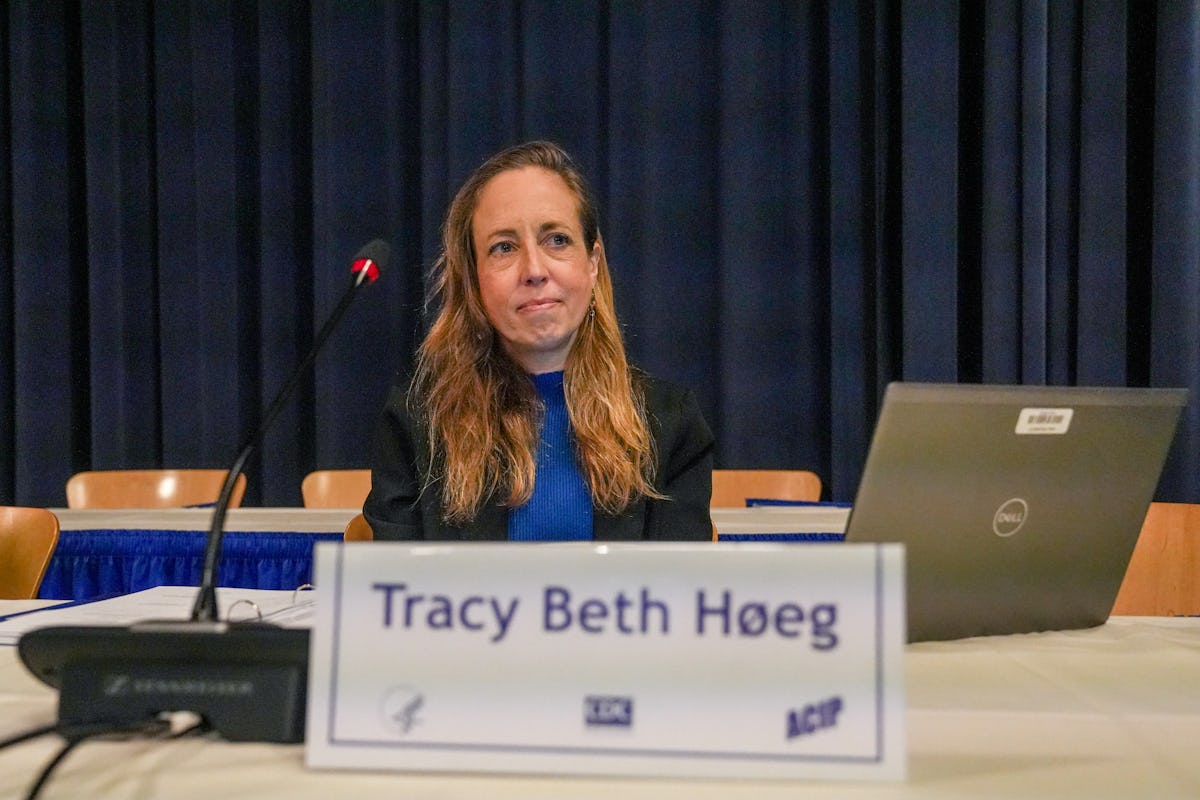
The acting director of the FDA’s Center for Drug Evaluation and Research, Dr. Tracy Beth Hoeg, is currently working to hire a researcher and long-time friend who wants the agency to add warnings about unproven pregnancy risks to antidepressant labels, The Associated Press reports.
The AP heard from sources within the FDA that Hoeg is attempting to hire Dr. Adam Urato, a practicing maternal-fetal medicine specialist in Massachusetts, into the agency as a full-time employee. Urato is actively petitioning the FDA to add boxed warnings to antidepressants declaring that taking them during pregnancy can cause complications, from miscarriages to fetal brain abnormalities that later manifest as autism and other disorders in children.
Medical experts have decried Urato’s efforts, saying the data he’s citing is “flimsy” — it’s based on animal studies and too-small human ones. The importance of continuing to take SSRIs shown to be safe in pregnancy is clearly borne out by the data. Large studies have shown women diagnosed with depression prior to becoming pregnant have a 20-times higher risk of developing postpartum depression.
In a tweet listing the research he says backs up his claims, Urato cites 12 studies, all of which state more research is needed before acting on their findings. Here are a few examples:
- A study that found SSRI-exposed children were more likely to be diagnosed with Chiari malformation than children with no history of maternal depression and no SSRI exposure. However, the study authors clearly state that women with depression who didn’t take medication had the same rate of CIM in their children. The study could not tease apart whether SSRIs or depression itself caused the condition, and discouraged doctors from changing their prescribing practices.
- Research that found taking SSRIs along with cocaine during pregnancy can cause issues with fetal development.
- A study that determined prenatal SSRI use was associated with children having less gray matter in their brains, but which clearly states that “well-designed replication studies in diverse settings are needed before evidence-based recommendations can be derived.” This is because depression itself is known to cause a reduction in gray matter even in adults. The study’s findings had many confounding factors, including participants who experienced other medical problems during pregnancy — including just being stressed — that could have caused the reduction.
After an FDA panel on SSRI use in pregnancy last summer, during which Urato gave remarks, the American College of Obstetrics and Gynecology released this statement:
“Robust evidence has shown that SSRIs are safe in pregnancy and that most do not increase the risk of birth defects. However, untreated depression in pregnancy can put our patients at risk for substance use, preterm birth, preeclampsia, limited engagement in medical care and self-care, low birth weight, impaired attachment with their infant, and even suicide. Data also show that discontinuing SSRIs due to pregnancy or lactation can carry risks. Patients need access to evidence-based, compassionate treatment options so that they can continue their paths to parenthood in sound physical and mental health.”
Violence during pregnancy — meaning homicide and suicide — are the leading causes of maternal death in the United States, according to the Society for Maternal-Fetal Medicine. Perinatal depression is one of the most common medical complications of pregnancy, affecting up to 1 in 7 women (about 15 percent), per March of Dimes. So, while roughly a quarter of women may enter pregnancy already dealing with depression, even more may develop it along the way.
The bulk of the scientific evidence seems to land squarely on one side of this argument, but that AP report says Hoeg consults Urato often and is attempting to fast track review of his petition. Sources close to the situation view this as unusual and “a conflict of interest.” In the fall of 2025, Hoeg presented Urato’s SSRI petition to fellow FDA drug officials but represented the work as her own, STAT News reported. Staffers later reviewed the slides and discovered they were created by Urato.
Whether boxed warnings will be added to SSRI labels remains to be seen. What we know right now is that women considering getting pregnant should talk to their OB-GYN and psychiatrist before stopping any SSRIs or other antidepressants.