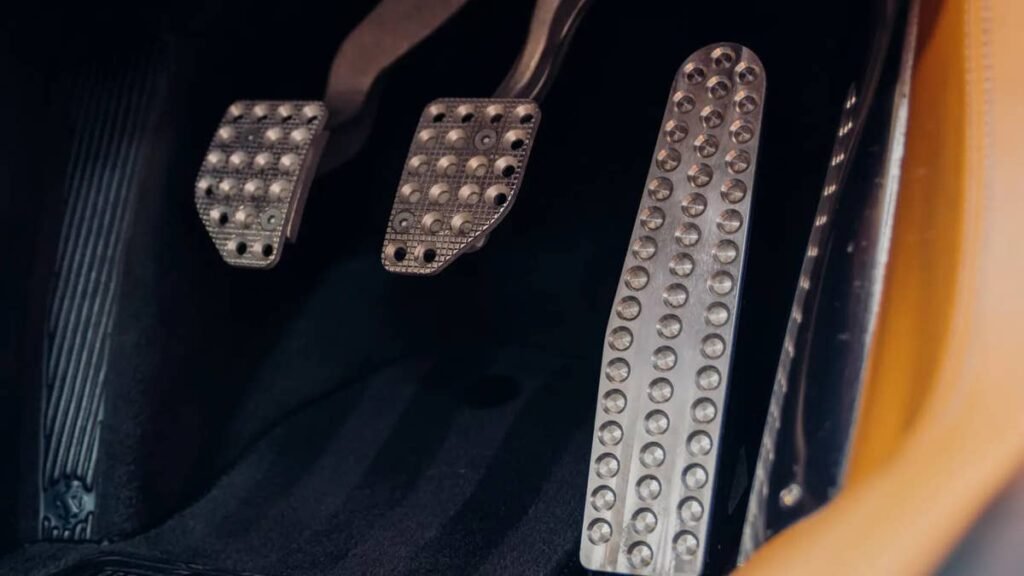
Maranello hasn’t offered a manual transmission since the 2012 Ferrari California ended production, and it hasn’t seemed particularly willing to change that. However, a new patent filed with the United States Patent and Trademark Office, first noted by CarBuzz, suggests the drought could come to an end as we head deeper into the digital realm. The documentation describes designs for an electronic clutch, one that could provide a customized pedal feel for every driver. With manual-equipped classics always rising in price because of their scarce analog feel, it seems that Ferrari is looking for a way to provide a similar experience without the sacrifice of contemporary luxuries and amenities.
Ferrari e-Clutch Would Be Physically Disconnected
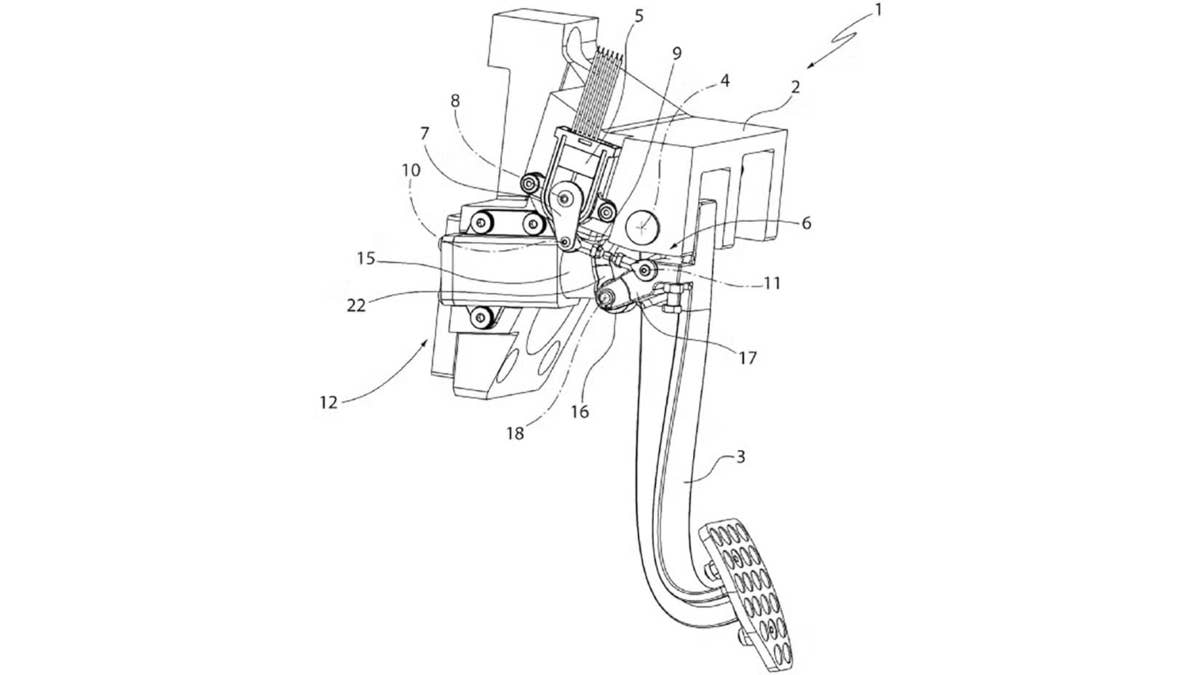
The patent shows that the digital clutch system would use sensors to detect when the left pedal is depressed and use a separate system to activate the clutch. Without a physical connection to the transmission, the feedback that makes driving a manual so enjoyable – the sensation of using that pedal to compress hydraulic fluid from the master cylinder against the slave cylinder, move the clutch release fork or throw-out bearing, and disengage the clutch plates from the flywheel and, by extension, the crankshaft – becomes considerably more sanitized – so Ferrari’s patent intends to address this by adding a mechanical element back to the equation. Specifically, it suggests using a piston and spring with a “carefully calculated” cam profile where the pedal meets the piston. The deeper the clutch pedal is pushed, the more aggressive the cam profile becomes, increasing the effort. Existing e-clutch systems usually only use complex springs, so they feel, well, springy. This should feel more like the build-up of hydraulic pressure. When you raise your foot, the process is reversed, maintaining that realistic sensation of progression. At least in theory. Ferrari also notes that the system is “relatively simple and economical,” but why go to the effort at all? Several reasons, and not just EVs.
Multiple Potential Applications for Ferrari’s e-Clutch Patent
Remi Dargegen / RM Sotheby's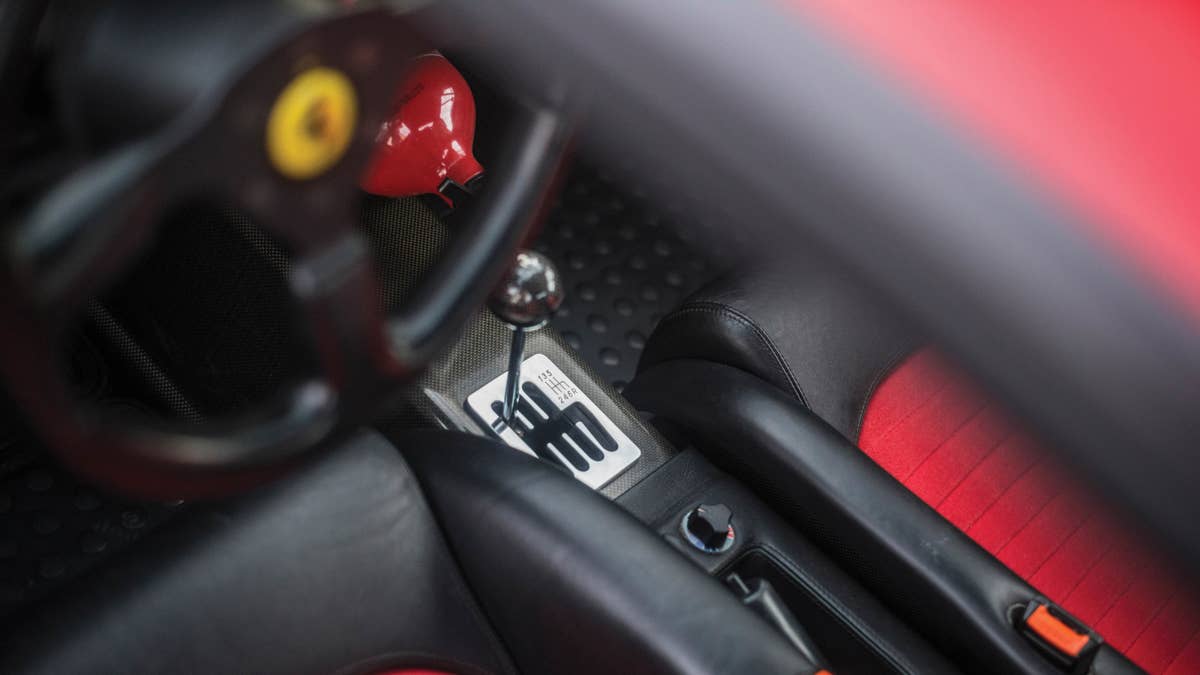
The obvious potential application is high-performance electric cars, like the imminent Ferrari Luce, Maranello’s first all-electric product. Ferrari has already shown us the interior of that vehicle, which is clearly designed around two pedals, so another EV somewhere down the line could benefit. But we could see this system in combustion cars, too, using the automaker’s dual-clutch automatic to offer the best of both worlds, just as the Koenigsegg CC850 does. The system could save weight and minimize the complexity of running a car’s transmission and lines up or down a tunnel, using one transmission on the back of an engine for both front-mid and rear-mid-engine cars with minimal adaptation. And since the patent notes that existing e-clutches are not only complex but also cannot be adjusted, perhaps Ferrari is thinking of offering a means of personalizing the process.
Related: Ferrari HC25 Is A One-Off V8 Roadster Built From The F8 Spider
For the sort of customer who could afford a new, manual Ferrari, regardless of powertrain, the clutch pedal’s resistance and engagement point could be specially tailored with just a revision of the cam lobe profile, or multiple lobes on one cam could likely be fitted to allow for a change of feel at the press of a button. Ferrari has already suggested that its most exclusive products may someday be specced with a manual again, and this could be how Ferrari maintains its high-tech image. Another potential win is that the system could feature a means of avoiding (or at least warning against) excess clutch slippage, potentially saving on service costs.
Autoblog’s Take on Ferrari’s Electronic Clutch Patent
Mathieu Heurtault / Gooding and Company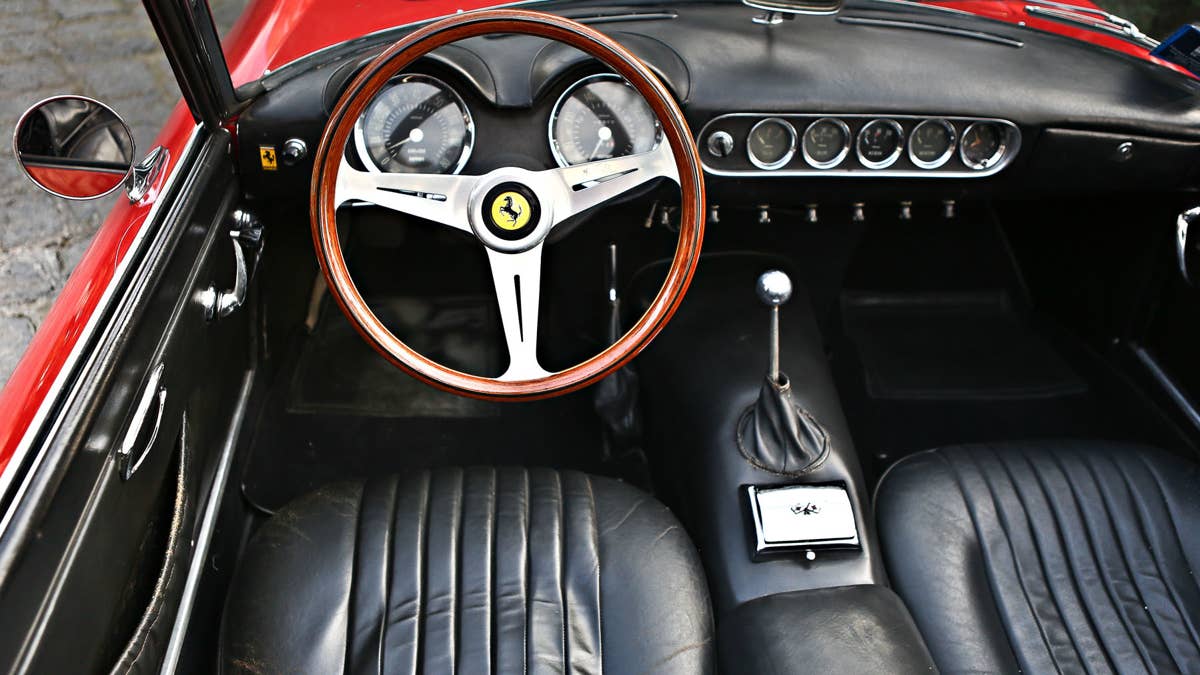
Of course, the mere idea that a fake transmission be put in a Ferrari will have some purists reaching for a Zippo and a pitchfork, but this sort of thing could provide just the sort of efficiency gain and dopamine spike that is impossible to ignore in a six-, seven-, or eight-figure high-performance product, and if someone finds themelf shifting gears in a new car with a Prancing Horse shield on it, how that experience came to be matters little. Another point worth making is that Porsche is working along similar lines to Koenigsegg, and Hyundai is seeking to further improve its trend-setting simulated gearbox with the addition of a stick. Ferrari likes to pride itself on being at the cutting edge of performance technology, but as EVs have made four-figure horsepower outputs seem almost normal, something more than sheer numbers must be part of the emotional experience, even if some Ferrari execs turn up their noses at the thought of reviving the primitive practice of pushing three pedals.