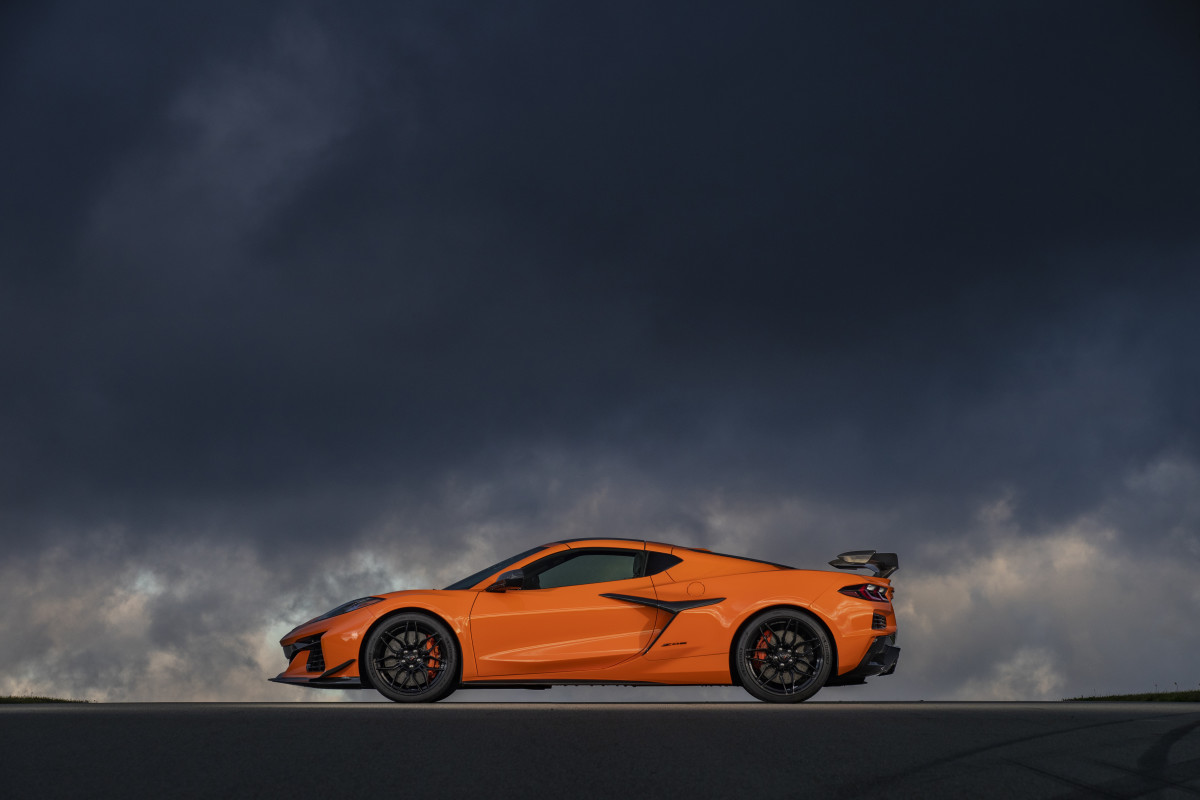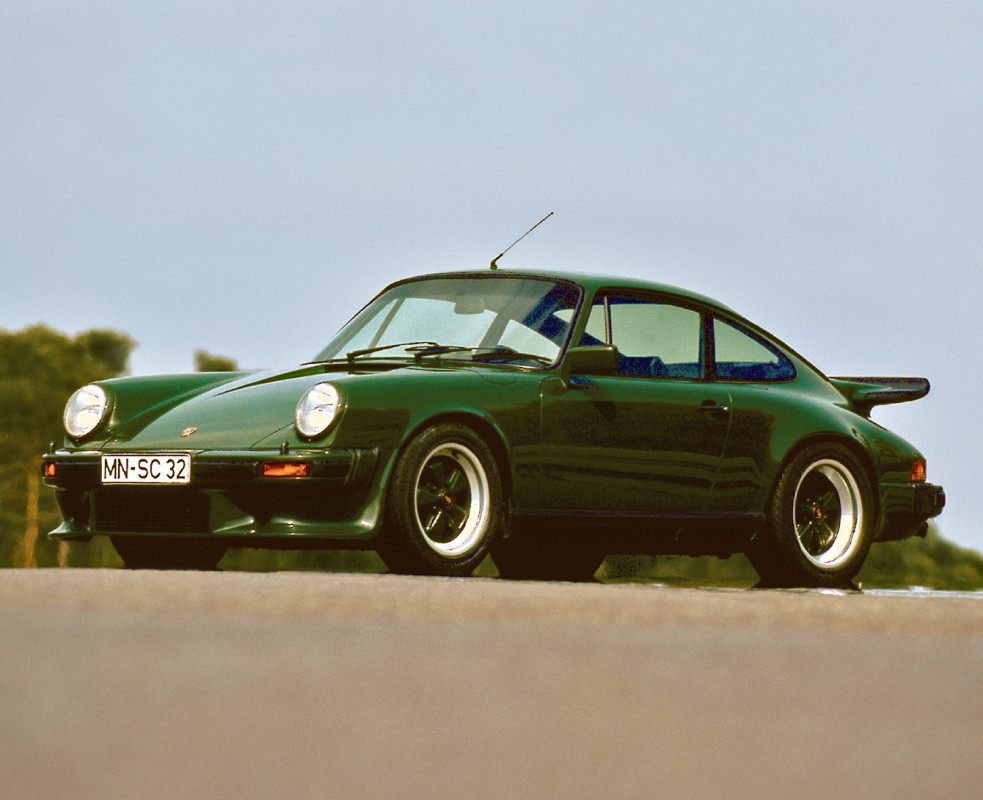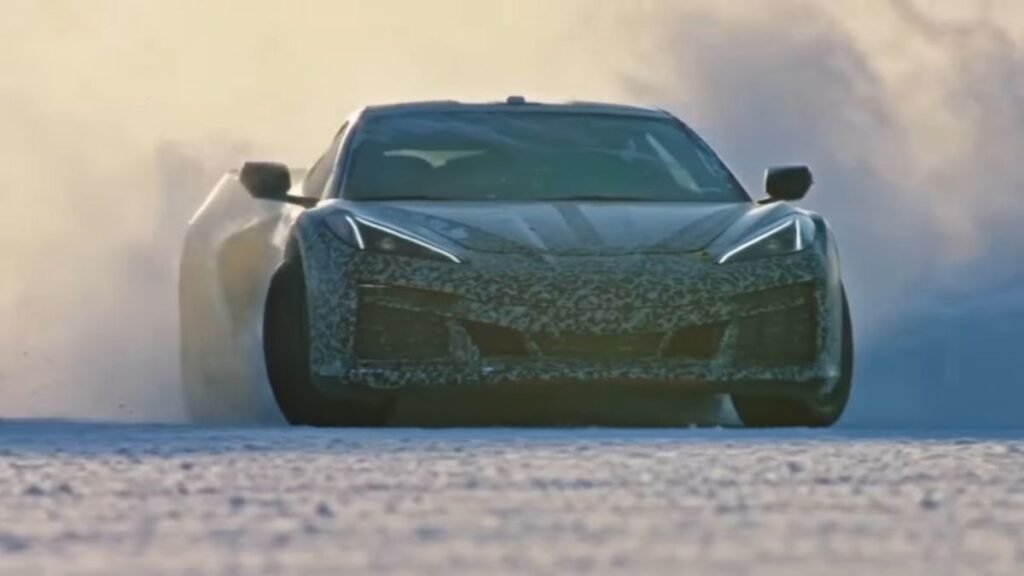
Active aerodynamic systems, in which various flaps and/or wings are automatically adjusted based on the requirements of the car to which they are fitted, as and when necessary, are typically created with the goal of improving outright performance. The Porsche 911 GT3 RS, for example, can open or close its rear wing to reduce drag or increase downforce, respectively, but General Motors is looking at active aero from a whole new angle: easier drifting. A new patent filed with the United States Patent and Trademark Office describing “active downforce control for drifting maneuvers,” first reported on by CarBuzz, details how the idea might be implemented in a future Corvette.
GM Puts a New Spin on Active Aero
Chevrolet 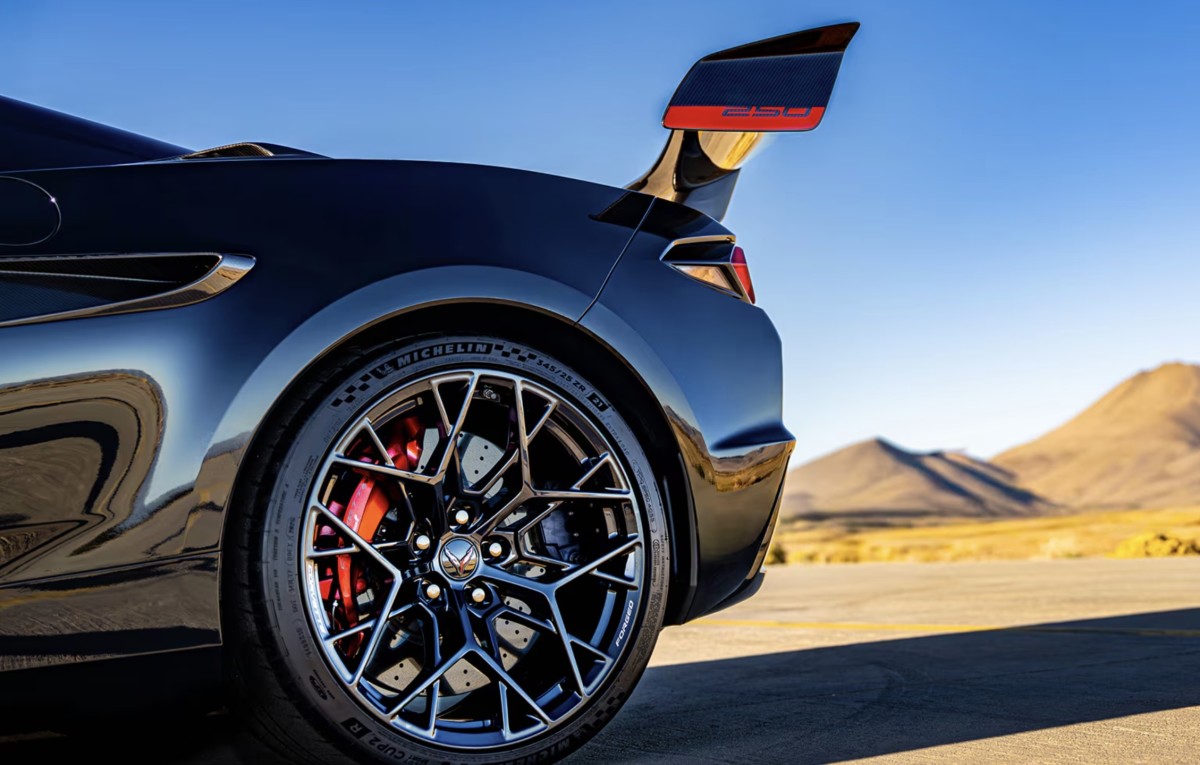
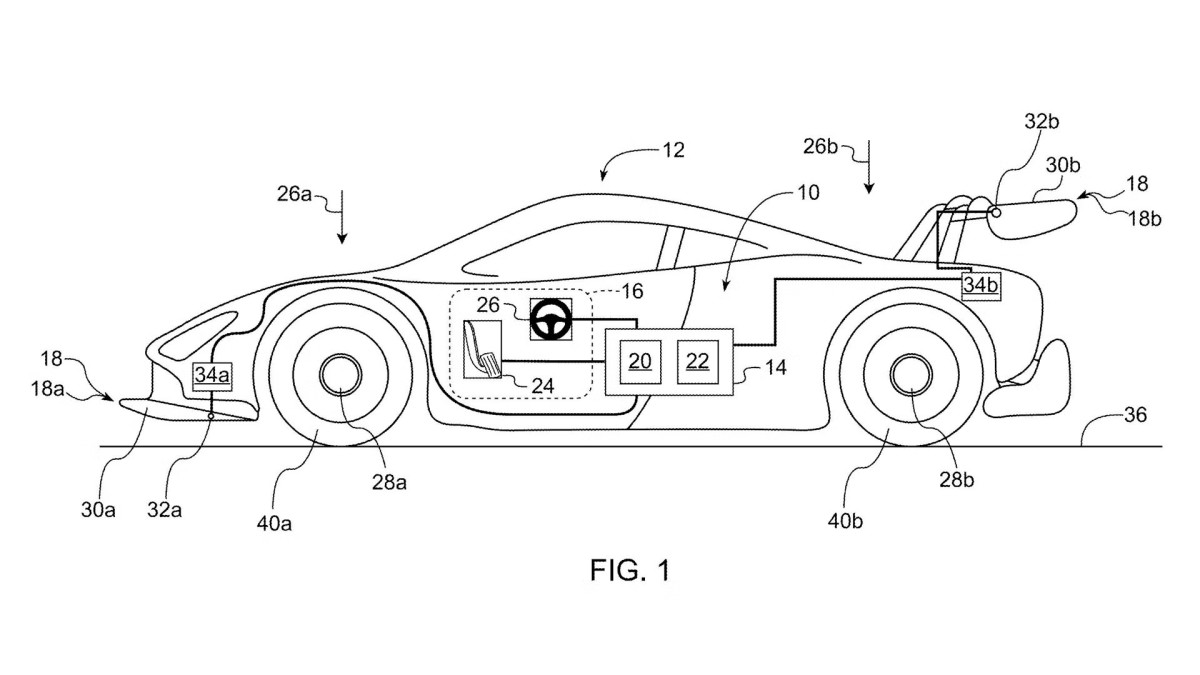
The patent says a vehicle equipped with the technology would have a controller, or onboard computer, capable of connecting to the steering wheel and pedals with sensors to determine how much steering angle is being applied and how far the brake or accelerator pedals are being depressed. The same controller would also communicate with the front and rear movable aero devices. When a drift mode is activated, the vehicle would use the information from the pedals and steering system to determine how much the front and rear splitter and spoiler should be adjusted to maximize accuracy of the slide. Tip the car into a corner, and the controller would not use its stability control system to correct the angle. Instead, when the controller detects aggressive throttle and steering inputs (and minor braking inputs), the splitters and spoilers would move to reduce downforce.
Presumably, these would be adjusted several times per second for fine control, and it goes without saying that such a system would be most effective at triple-digit speeds, so a user would need to be pretty experienced to take full advantage of the idea. But it could also be used in reverse to prevent a slide.
Active Aero for Safer Sideways Fun
Related: Insider Reveals 2027 Corvette Grand Sport V8 Engine Will Be Even Bigger Than 6.6 Liters
As we allude to above, the system appears to be operated independently of the traction control system, but if the vehicle is not in its drift mode, the same aerodynamic control would surely be operable in reverse, using variations in spoiler and splitter angle to rein in an unwanted slide. Moreover, the patent indicates that further evolutions of the concept could use the onboard navigation system and and/or parking cameras to optimize control depending on a specific environment (hotter air is thinner and therefore more difficult to generate downforce with). And although the patent image depicts a mid-engine vehicle like a Corvette ZR1, the document states that the tech could be applied to “any type of vehicle without departing from the scope of the present disclosure.” This is typical patent lingo that protects the innovation from being copied by rivals with other layouts, but it also means the innovation might be developed for something like a future Camaro revival, or an EV like the Lyriq-V. Whether this ever makes production is anyone’s guess, but as cars become more powerful, so must the systems responsible for controlling them.