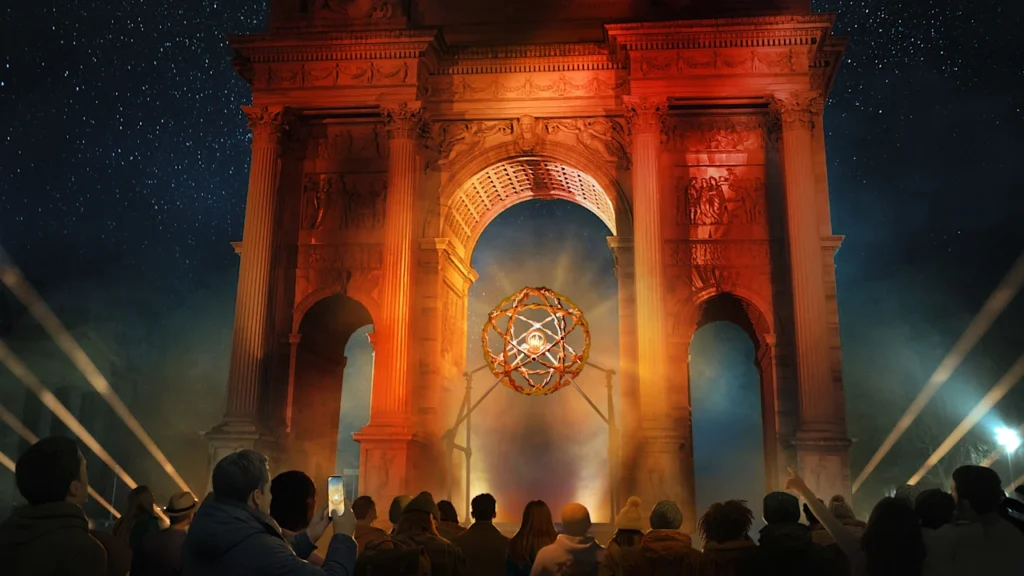
At the 2026 Milan Cortina Winter Olympics, the iconic cauldron of the Games is putting on a daily show just like its athletes.
This year, for the first time ever, there are two cauldrons lit simultaneously at different locations. Inspired by Leonardo da Vinci’s geometric drawings, both cauldrons expand and contract, respond to music, and emit their own light—and one will put on hourly performances for viewers throughout the Games.
The tradition of the Olympic flame and cauldron dates back 100 years or more. Historically, the Games are opened with a relay ceremony wherein torch bearers bring the flame to the cauldron, which remains lit until the closing ceremony. And while the cauldron’s design remained relatively consistent for the first decades of the Olympics, in recent years it has become a major design moment. This year’s approach is an encapsulation of the cauldron’s transition from a static object to a show in itself.
“In the last editions of the games, more and more of the main focus has been on who is going to light the cauldron, its design, and what it means,” says Marco Balich, the creative lead for the Winter Olympics opening ceremony who designed this year’s cauldrons. “To make a long story short, I think over the years you see the history of the cauldron goes from very simple ones to [beautiful statements].”
A brief history of Olympic cauldron design
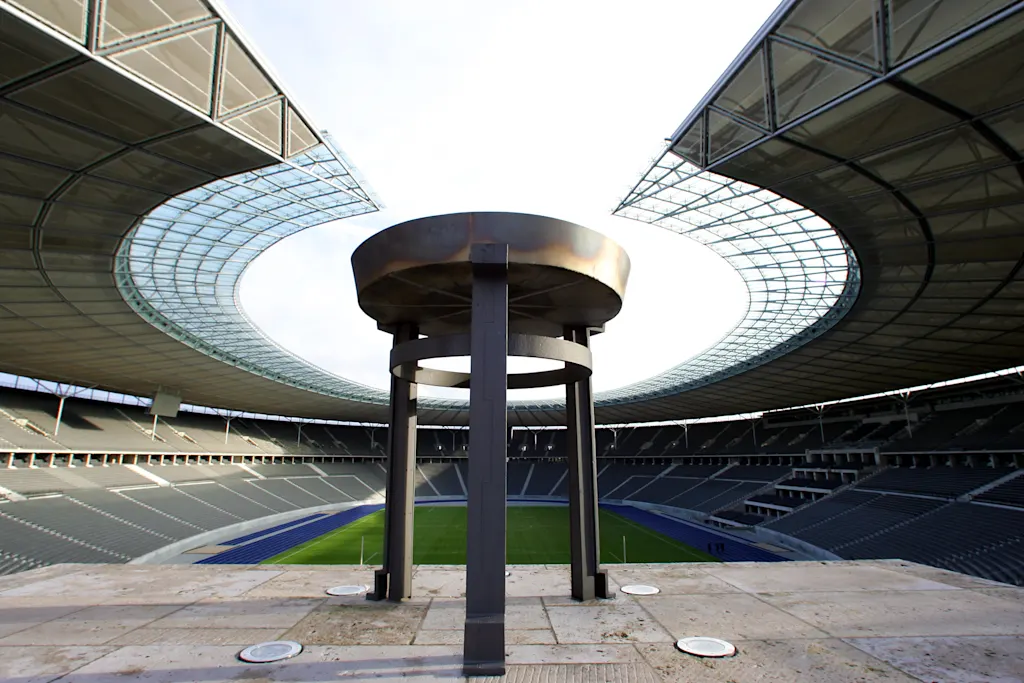
While symbolic fire at the Olympics traces back to at least 1928, the first Olympic torch relay took place in Berlin in 1936. The cauldron that year was a small, bowl-like vessel standing on three legs on a podium. In subsequent Games, like 1948 London, 1952 Helsinki, and 1960 Rome, the cauldron format remained largely the same.
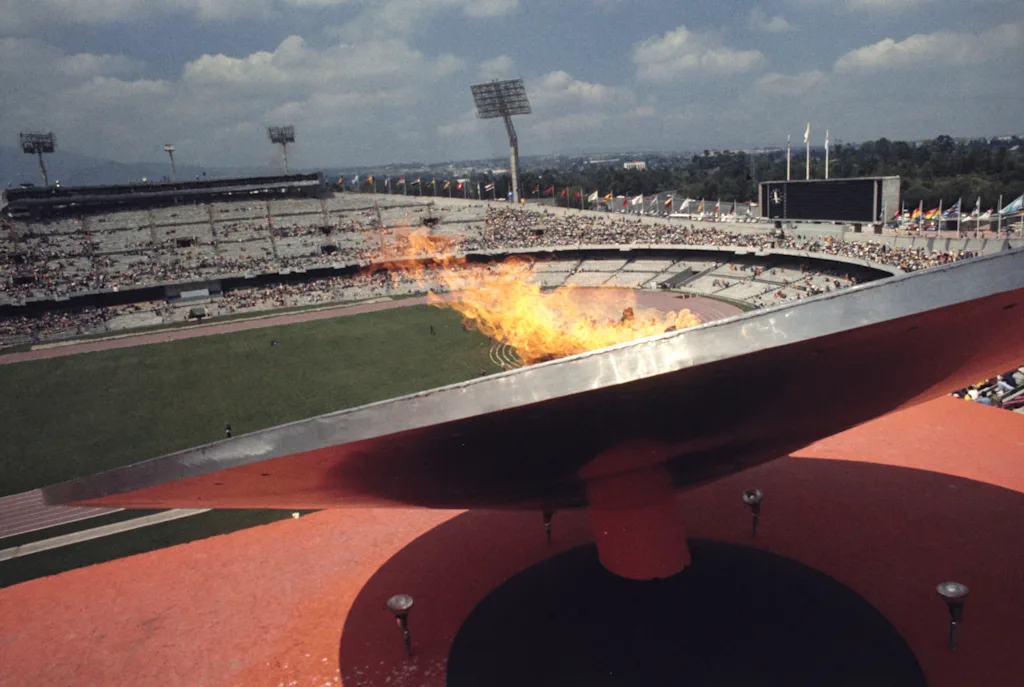
Starting around 1968, designers began to take a bit more creative liberty with the cauldron. That year’s Mexico City Games featured a cauldron made by a woman—a first—shaped like a giant circular chalice. Since then, the cauldron has continuously evolved in shape and scope, from a 6.4-meter-high scroll-shaped one for the 1996 Atlanta Olympics to a multi-shard monument for the 2010 Vancouver Games and a petal-inspired chorus of flames for the London Games in 2012.
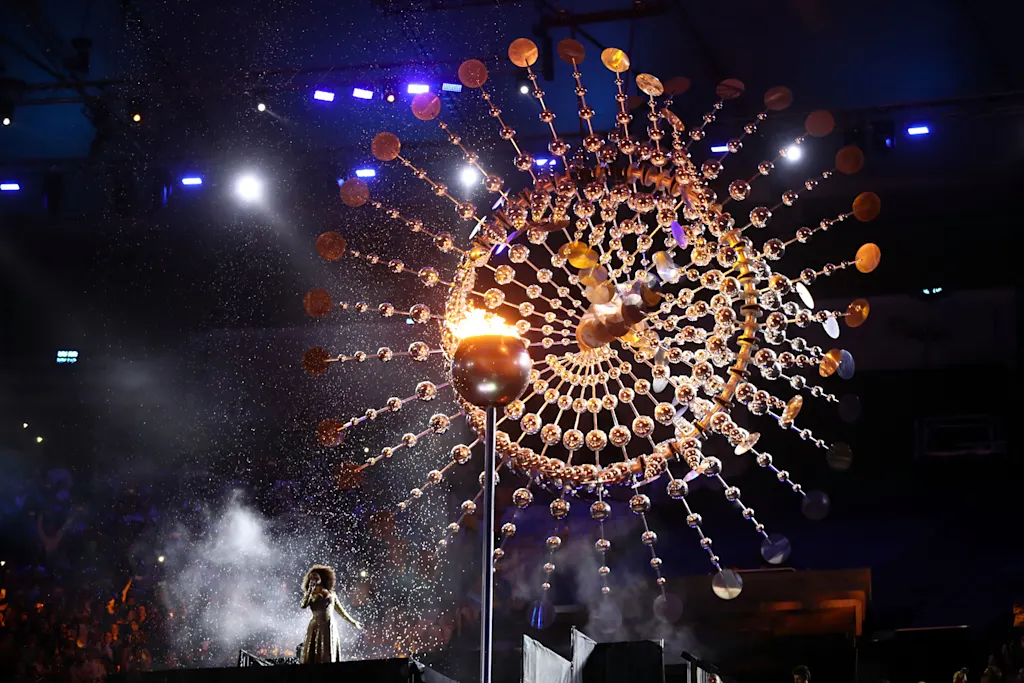
According to Balich, who holds a record 16 event credits for Olympic ceremonies, recent years have seen the cauldron transform from a stationary symbol into a kind of high-stakes performance art. Balich coordinated the opening ceremony for the 2016 Rio de Janeiro Games that featured a kinetic “sun” sculpture by artist Anthony Howe; powered by the wind, its tentacles fluttered and reflected the light of the cauldron’s flame to spectacular effect.
And in Paris 2024, designer Mathieu Lehanneur abandoned almost all of the cauldron’s recognizable design tradition in favor of a literal hot-air balloon, which took flight daily during the Games for a ticketed audience and remained in Paris’s Tuileries Garden for nightly performances after the Olympics concluded.
Balich says that expansion of the cauldron’s role during the Games and beyond inspired this year’s design. “I was very inspired because it confirmed to me that the experience of this object is so relevant, that it was worth it to add this dynamic session that would enlarge the experience and be even more emotionally touching, especially for the younger generation,” he says.
A new cauldron experience
This year, Balich iterated on the idea of the cauldron as an experience by turning it into an hourly show complete with lights, music, and movement.
His concept started with two cauldrons—one in Milan and one in Cortina—to represent harmony between man and nature. The designs are inspired by a series of geometrical drawings by Da Vinci (who lived in Milan for several years), which used mathematics to imagine various intricate three-dimensional shapes. Balich says he did a quick drawing of his original concept, then called on creative director Lida Castelli and set designer Paolo Fantin to develop the final products.
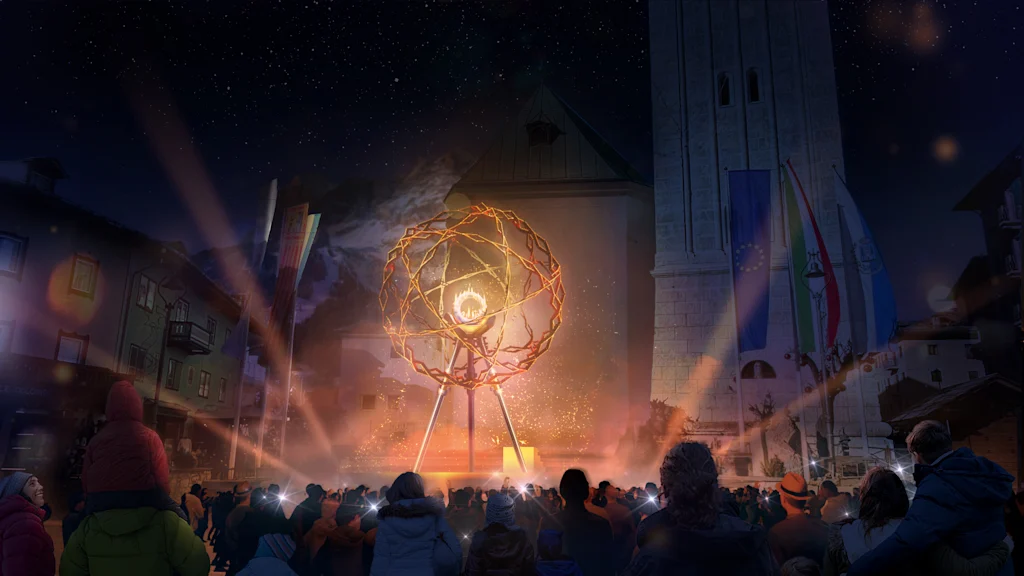
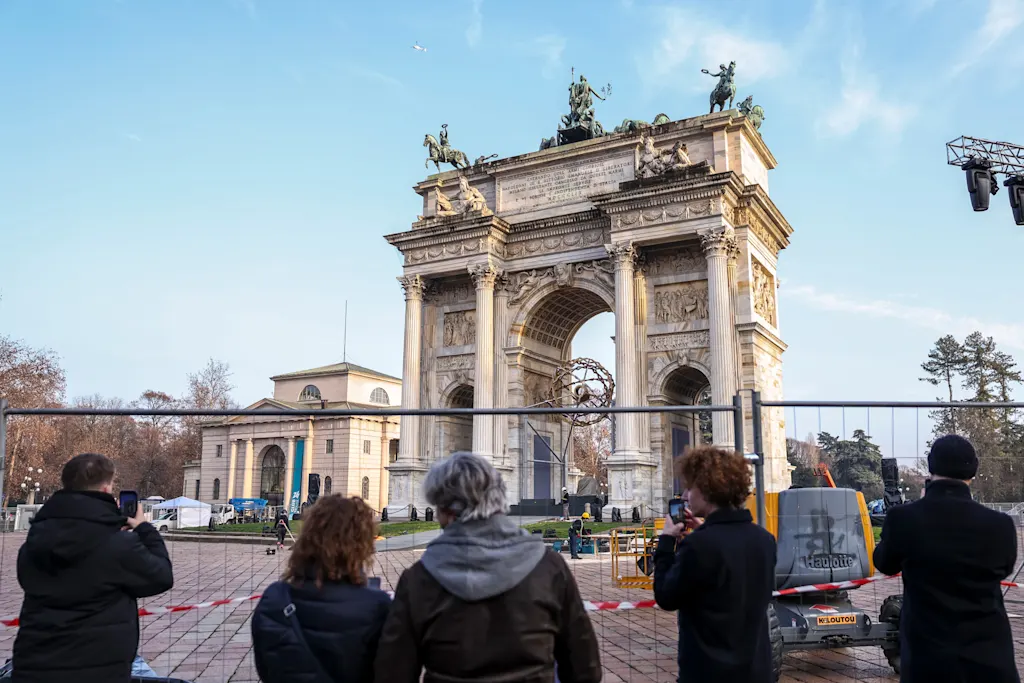
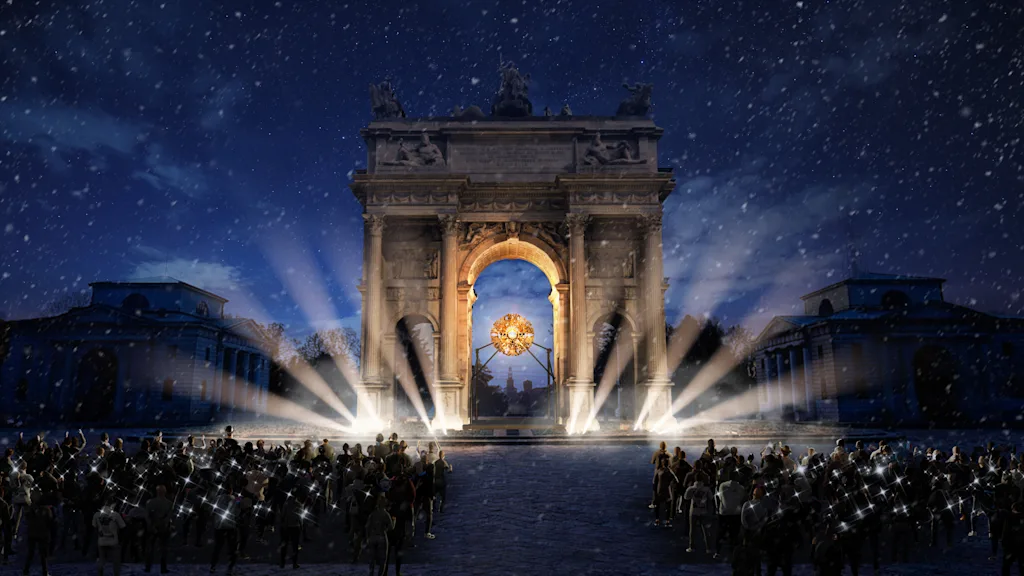
The cauldrons themselves are constructed out of aeronautical aluminum, with a whopping 1,440 components making up their intricate structure. A total of 244 pivot points allows them to smoothly expand and contract from a minimum diameter of 3.1 meters to a maximum of 4.5 meters. LED lights along the surface of these components give the cauldrons an otherworldly glow, while the actual Olympic flame is enclosed inside a glass-and-metal container at their centers. The final product looks like something you might expect to see descending from the heavens—or a much less foreboding Eye of Sauron.
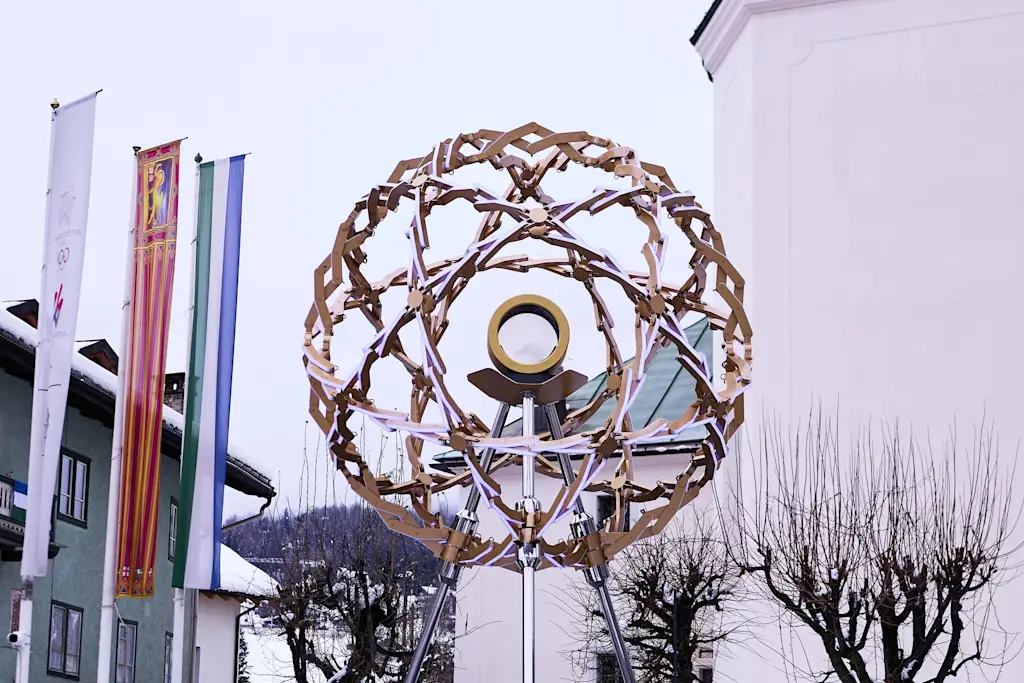
One cauldron is suspended in Milan’s Arco della Pace (Arch of Peace), where it will put on a three-to-five-minute show every hour during the Games from 5 to 11 p.m., accompanied by music from Italian composer Roberto Cacciapaglia. The second sits on a podium in Cortina d’Ampezzo’s Piazza Angelo Dibona. And, just as they were lit simultaneously, they’ll be extinguished simultaneously when the Games close.
“I hope that everybody will gather—families, friends, curious design lovers, design critics—to go there and be immersed in this music and this beautiful show around the arch,” Balich says. “My goal for that is to add an experience to watching the sacred fire from Olympia, which in a way is one of the most powerful symbols around the world of peace, fraternity, sports, and the values that the Games represent.”