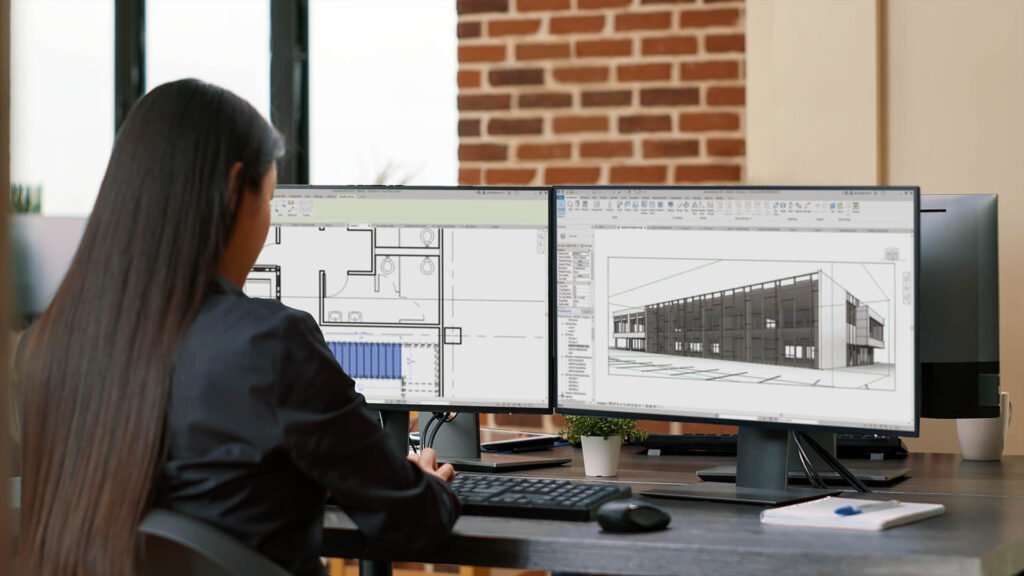

The architecture, engineering, and construction (AEC) industry has changed more in the past decade than in the last century. 2D and 3D modeling took over hand-drawn blueprints, project dashboards replaced weekly meetings, and automated design tools displaced manual drafting.
The trillion-dollar industry was slow to digitize, but now it’s changing faster than ever. Unfortunately, the workforce can’t keep up because of a massive talent shortage. A major reason for this being the skills gap.
There’s a difference between what is taught in students’ curriculum and what is expected of them in the field. Despite spending six figures and 3+ years on traditional programs, entry-level graduates lack the skills employers need.
Here’s where affordable, quick, and reliable institutes like VDCI (Virtual Design & Construction Institute) come in. VDCI is a nationally accredited, online, self-paced program platform born to advance AEC professionals and offer employment opportunities to them.

The institute is focused on offering a modern-day student experience that isn’t limited to an updated curriculum and world-class instructors. Each program molds students into hirable graduates with project-first learning and a robust placement support team.
By inculcating technical and soft skills in students, VDCI also helps AEC employers struggling to meet project demands due to a lack of skilled professionals.
Before we get to how VDCI solves the talent problem, we should understand the problem itself.
The Modern Skills Employers are Looking for (But Can’t Find)
The average age of an architecture professional is around 45. This might be a reason for the slow digitization (only 8% of the leaders integrate AI in their processes, and more than 50% are hesitant toward it).
The demand for digital skills, such as data analytics, cloud computing, and software development, combined with soft skills like people, business, and supplier management, is rising. In the next five years, 44% of the skills requirements will evolve, making them the norm in the industry.

To keep up with this change, firms need talent that can automate tasks and adapt to changing software like BIM (Building Information Modeling), Revit MEP (Mechanical, Electrical, and Plumbing), and more. Plus, it needs professionals who possess the soft skills that adapt to the transformation.
Today, the architecture field is growing by 8%. But the rate of college graduates will see a 15% dip over four years, which means the supply of entry-level AEC professionals will be limited. Add to that the early retirements and professionals close to retirement, and we have an industry that’s desperate for skilled talent.
Even if firms attract talent, they’re finding it difficult to retain it. The industry still sees thousands of job openings every month, and the further problem lies in how students are learning core industry skills.
Why Students are Finding it Tough to Fill the Skills Gap
Education, like we mentioned before, is one of the reasons for the talent gap. A four-year degree might teach AutoCAD in detail but lack projects and real-world experience. Even if a university offers practical software knowledge, it might lack the soft skills needed to thrive in the field.
Another challenge is the time taken to modify a curriculum in colleges. If they want to upgrade it to match current trends, it might take years to approve and integrate it.
“We are at a critical juncture… many of the engineers from the baby boomer generation are retiring and taking with them a lot of institutional knowledge that hasn’t been properly passed down because there weren’t enough staff to pass that knowledge to.”
There’s also a decrease in the interest of students in having a job in the industry. This could be due to the changing expectations of the working environment. The need for flexible or work-from-home schedules is rising. But firms usually prefer entry-level professionals to work in an office.
Students also have negative perceptions attached to the industry. They believe it involves long hours, intense workloads, inadequate compensation, and ethical challenges, which might stop them from pursuing it.
The bottom line is that traditional programs might lack core technical and soft skills required for the industry, but they also don’t offer clear guidance on how the industry functions.
VDCI tackles every issue that employers and students face, while pledging to advance learners and professionals in their careers.
What VDCI Students Say
VDCI trains students for jobs. Their certifications show graduates and employers that students are skilled and ready to work. Plus, it’s a testament to the intensive student experience.

The student testimonials are filled with learners praising a certification program or course that increased their proficiency in software like Revit, AutoCAD, and Civil 3D, and other AEC skills such as blueprint reading, construction estimating, and construction management. Many even shared how VDCI helped them advance in their careers.
“I had never touched AutoCAD before I started my class with VDCI. After passing this course and learning so much in a short amount of time, I was granted a promotion to the CAD department along with a raise. This course made me fall in love with my job.”
– VDCI alumni
The learners also mention how instructors create a supportive environment rooted in constructive feedback and industry insights.

Even Reddit users recommend it to learners who want to start or advance in the architecture, engineering, and design fields.

How VDCI is Enabling Modern AEC Education
VDCI has online, self-paced, and pre-recorded lessons for every course, making it easier for full-time employees or students to access them. The extensive curricula (minimum 70 hours for certifications) are designed to be application-based and rich in technical proficiency.
Industry-Aligned Training
“Some students might have a degree, but once they start working, they don’t know how to use the software. That’s when they come to VDCI.”
– VDCI Instructor
VDCI is built to cover the gap between theoretical education and industry skills. College students don’t always get to master software like Revit and BIM. But VDCI gives them free access to that software, to keep practicing and excelling.
VDCI’s curriculum lets you get hours of training within a year, a lot less than traditional degree programs. This doesn’t mean they compromise on their quality. Every course/program goes through a rigorous development process:
Choosing Experienced Instructors
VDCI’s expert instructors teach at the university level and are industry professionals, most with jobs or ventures. The first step is identifying the right person to teach the courses.

The instructors are trained in adult learning principles to help students learn architecture software and apply it. They introduce tools as students need them, during projects, so they can remember their applications and relevance, and retain information longer.
Integrating Relevant Technical and Soft Skills
The catalog encompasses trending skills, including CAD/BIM, Revit MEP, AutoCAD & Civil 3D, and office-specific courses like BIM Project Management. These courses are in-depth, researched, accredited, and, of course, practical.
For instance, here’s a glimpse of the 290-hour BIM certification:

But software knowledge isn’t enough. VDCI also has soft skills-based courses. For example, the Construction Soft Skills Course Online teaches communication, self-management, collaboration, and leadership skills.
Students can consult with their coordinator and choose such courses based on their needs and challenges.
Updating the Curricula Based on New Trends
The VDCI curriculum development team and the instructors are always on the lookout for new trends shaping the AEC industry. On average, they review and update their curricula every 2 years (less often if a major update is introduced).
Overall, VDCI makes sure its curriculum matches the National standards, and they aim to incorporate skills that make work faster and more efficient, i.e., help their students stand out from the competition.
Project-Based Learning
VDCI believes in teaching through practice and repetition. The instructors push students to work on end-to-end projects and eventually, build an impressive portfolio.
The final deliverable is to create a project called the ‘data set’. It’s proof of their work and their technical proficiency — something potential employers are looking for. It could be a house, a floor plan, a two-story commercial building, a playground, a community center — anything students want to build.

These projects are built from scratch and with the help of instructors at every step. The students submit it at a 30%, 60%, and 90% completion rate before the final submission. Feedback is crucial because the instructors ask them to revise it, just like their superiors at a job would.
If students come across a hurdle or a doubt, they reach out to chat support and get a response either instantly or within the next 1-2 days. These projects get them closer to real-world scenarios, increasing their confidence and efficiency.
Job Placement and Ongoing Support
VDCI offers resume workshops, cover letter workshops, mock interviews, portfolio creation, and job placement assistance. They don’t promise placement but offer support with it even after the program ends.
Here’s how the process goes:
The coordinator asks students what they’re looking for (a salary, company size, location, etc). Based on their expectations, they curate job listings. Since VDCI is accredited and offers globally recognized certifications, companies reach out to the institute to recruit candidates.
Based on the job description, the coordinator helps the student update their resume, LinkedIn, and portfolio, and prepares them for interviews.

What sets VDCI apart is this stellar, consistent job placement support. The coordinators are transparent about the industry needs and push learners to shape their applications to stand out among applicants.
They’re also transparent about the salary, especially for entry-level positions. The average entry-level salary ranges from $40,000 – $60,000, but factors like location matter too. For example, if it’s a bigger city like San Diego or LA, the range could start from $50,000 – $60,000, but in a smaller city, it would probably start from $40,000.
The job search typically takes 3-4 months, but in some cases, it can take six. The placement coordinator doesn’t leave the student’s side during such delays and checks in every week or two weeks to discuss updates.
“I would NEVER have been able to get such a great, fully remote job without the training I got at VDCI. Now, my daughter, who will graduate from High School next year, will also be taking courses at VDCI, AutoCAD, and Revit since my job offers internships and jobs for people with those skill sets.”
– VDCI Alumni
The Path Forward
VDCI is a student and industry-first institute that represents the future of architecture and design education.
While traditional universities take years to upgrade their curricula, VDCI adapts to industry demands in real-time. As AI and emerging technologies continue to transform the field, VDCI instructors continuously update their curricula and add more programs to help students master the latest software and become indispensable to firms.
This agile approach ensures that VDCI graduates don’t just adapt to the change; they create it too.
Browse their accredited programs and build your AEC career.
This article was produced by the Class Central Report team in partnership with the Virtual Design & Construction Institute.
The post How VDCI is Modernizing Architecture & Design Education To Create Industry-Ready Professionals appeared first on The Report by Class Central.


![[2025] 100 Top FREE Coursera Courses of All Time](https://365daily.net/wp-content/uploads/2025/08/coursera-top-courses-DTsU4Q-768x384.png)