“Six for 6 in 2026,” that’s Randy Parker’s shorthand for the automaker’s latest goal – a sixth consecutive year of record sales for Hyundai Motor America, where he serves as CEO. But that’s just the beginning of what the Korean carmaker has in mind.
Hyundai has come a long way since it launched operations in the U.S. Worldwide, it’s now the third-largest automaker, second in terms of profitability. And, in the States, it’s giving chase to giants like General Motors, Ford and Toyota.
Last year, the company committed to a $26 billion investment program that will cover everything from a new steel plant to a robotics factory. It will also see the automaker launch a total of 58 new or “significantly updated” vehicles by 2030 – 36 through the Hyundai brand and another 22 through its upscale sibling Genesis, said Parker’s boss, Hyundai Motor Co. CEO Jose Munoz.
Heavy Lifting
Hyundai gave a hint of what’s to come during a preview at the New York International Auto Show on Wednesday, the automaker pulling the wraps off the Boulder SUV. Officially, it’s just a concept vehicle, but the reality is that Boulder is a thinly disguised version of a new model the automaker is working up for launch later this decade, confirmed Sang-Yup Lee, Executive Vice President and Head of the Hyundai and Genesis Global Design Center, in an interview with Autoblog. “It’s pretty much” production-ready.
Related: Hyundai’s New Off-Road SUV Could Take on the Bronco and Wrangler
The size of a Ford Bronco Raptor, and designed to challenge not just Ford’s rugged off-roader but comparable products from Jeep and Toyota’s TRD line, the production version of Boulder will be based off an entirely new body-on-frame platform Hyundai is developing – it’s first ever. Significantly, that architecture will serve as the foundation of a “family” of extra-rugged light trucks going well beyond the current capabilities of Hyundai’s XRT and XRT Pro models.
“We know it’s a highly competitive space and we’re not taking it lightly,” said Parker, adding that a body-on-frame platform “opens the door to many possibilities.” What those possibilities are, company officials aren’t ready go into great detail about. But Parker did confirm that this truck family will include a new midsize pickup. It could, in fact, beat Boulder into production.
Adam Lynton/Autoblog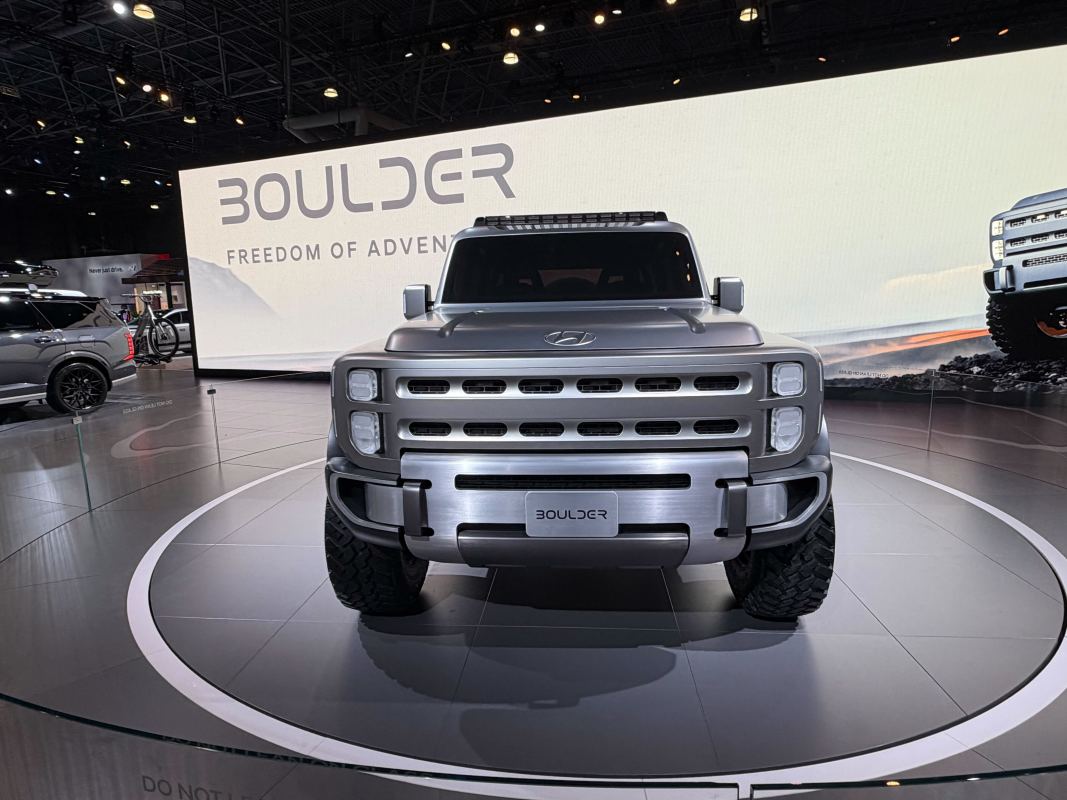
Expanded U.S. Presence
The auto industry has been coming under heavy pressure from the Trump administration to expand its manufacturing presence in the U.S. market. The results have so far been mixed – automotive employment actually lost nearly 21,000 jobs, according to the Bureau of Labor Statistics. Companies including BMW and General Motors have said they will boost manufacturing in the States over the next several years, but none match the dollar figures Hyundai has laid out, the automaker last year promising to invest $26 billion in the States.
Hyundai
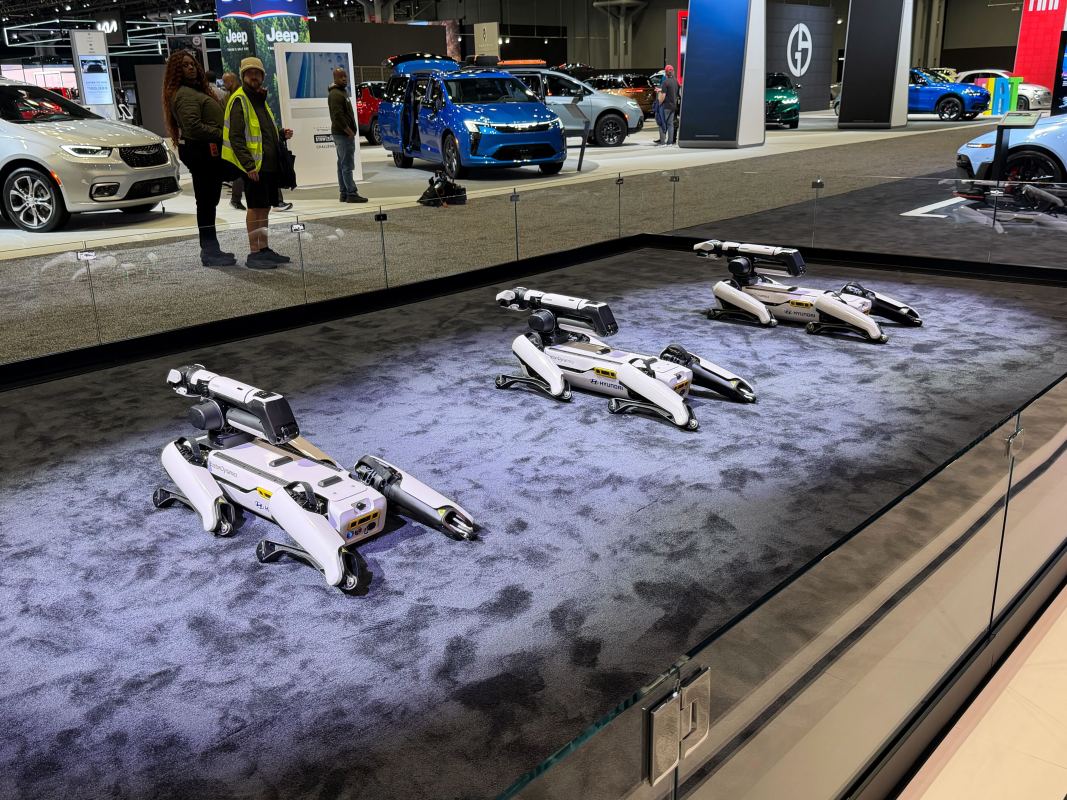
That figure covers a broad array of business lines, including a new steel mill it will begin constructing in Louisiana later this year, while Hyundai’s Boston Robotics subsidiary plans to set up operations capable of rolling out as many as 30,000 humanoid Atlas robots annually starting in 2028.
On the automotive side, meanwhile, the plans call for increasing vehicle production capacity from 800,000 to 1.2 million annually before the end of the decade, said Munoz. That would, in turn, account for 80% of the vehicles the Hyundai Motor Group plans to sell in the U.S. at that point. HMG delivered 984,000 vehicles to American motorists in 2025. Based on that 80% target would suggest a total sales goal of 1.5 million by 2030.
Expanded Powertrain Line-Up
Considering all the new bases Hyundai Motor Group plans to cover, and the growing demand for fuel-efficient technologies meeting various market demand, Hyundai is working up a range of new powertrains, noted Munoz. It already has a variety of internal combustion engines: from pint-sized inline-fours to the muscular V8s powertrain Genesis models like the G90.
Hybrids are becoming an important part of the line-up, as well, and could become even more critical if the current Iran War leads to long-term disruptions in global energy supply, Hyundai officials suggested. The plan now calls for the parent company to have 18 different models using hybrids in production by 2030 – though that could increase. “Hybrids were the number one technology in terms of growth for us last year, Munoz said Wednesday.
Adam Lynton/Autoblog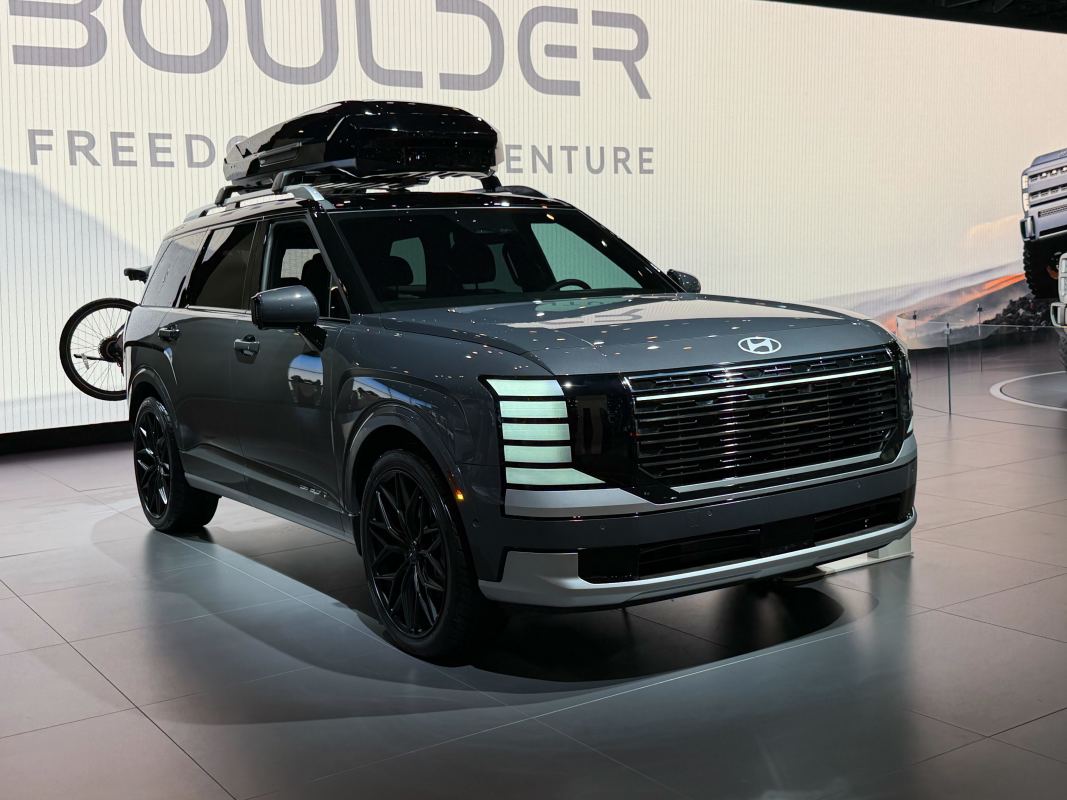
Meanwhile, Hyundai plans to have its first range-extender on the market by 2027, and despite the pullback by many of its key competitors, the Korean automaker remains committed to the EV market, he stressed. Indeed, U.S. dealers for both the Hyundai and Genesis brand have seen a surge in shopper interest in both hybrid and EV drivetrains since the Iran War began.
Flexibility is Key
One thing remains key to Hyundai’s long-term strategy, stressed Munoz: flexibility. That covers a lot of bases, including its powertrain line-up. With the exception of products based on the EV-only E-GMP platform, other architectures will have the capability of using a wide variety of powertrain technologies, including the new body-on-frame platform.
Related: Hyundai’s Hybrid Boom Signals a Direct Challenge to Toyota in the U.S.
That also goes for Hyundai’s manufacturing plants. They are being tooled up to permit assembly lines to roll out a wide mix of products and platforms. That’s proved especially important with the automaker’s Georgia Metaplant. It was originally intended to be EV-only. But, with the slowdown in battery-electric sales it’s now being set up to handle both hybrids and EVs and may even be able to produce both unibody and body-on-frame products in the coming years.
“Our solution to any situation we face in the world is flexibility,” said Munoz. By adjusting product plans to market needs, Hyundai can minimize the production disruptions that have often crippled its rivals.
Related: Hyundai Just Announced a $55 Billion Gamble—And America Wins Big