A Reputation That’s Hard to Shake
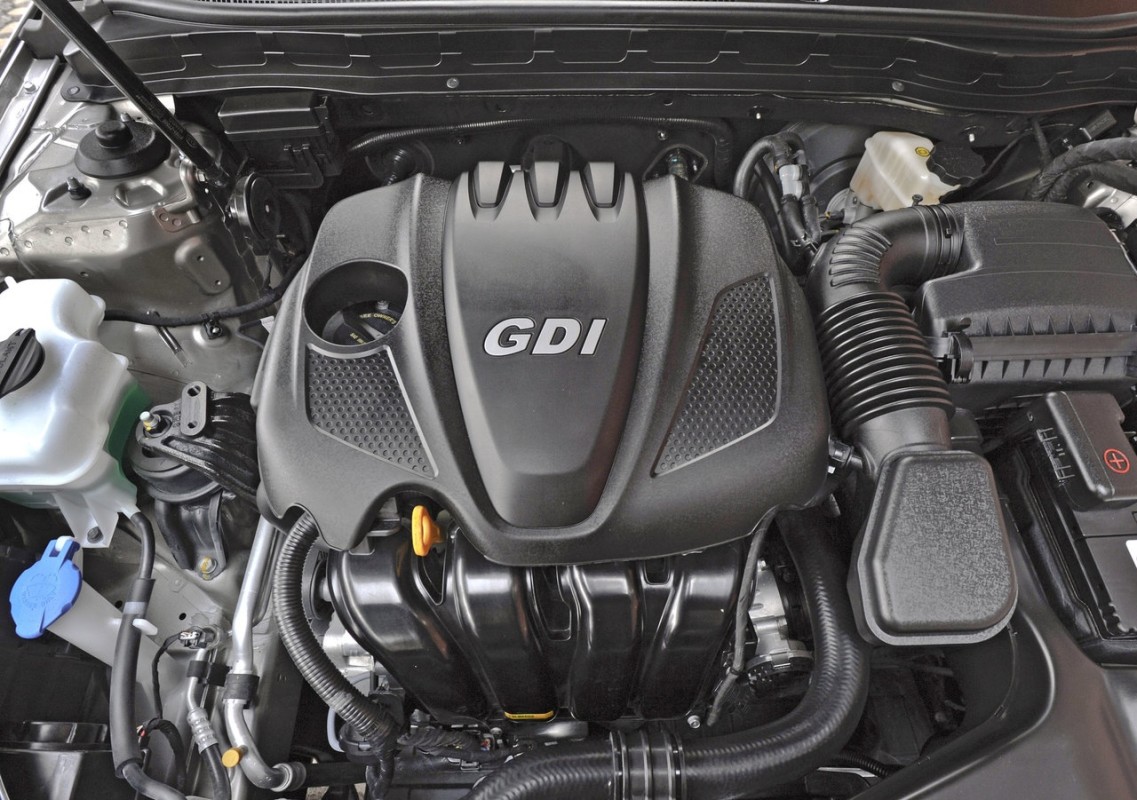
The Hyundai Theta II 2.4-liter engine has a reputation that’s hard to ignore. Recalls, lawsuits, and owner complaints have piled up, mostly due to engine failures caused by bearing wear and oil starvation. Manufacturing debris, lubrication issues, and questions about long-term durability have all contributed to making this one of the more troublesome modern four-cylinders.
This reputation was built up over the years. Across Hyundai and Kia models, the same pattern kept showing up: rod knock, seized internals, and sometimes full engine replacements. Still, there are a few engines that have gone much farther than most.
That’s why this teardown, courtesy of I Do Cars, stands out. Seeing a Theta II go past 180,000 miles suggests it either got lucky or just lasted longer before the usual problems set in.
A High-Mileage Example, Taken Apart
This engine came from a 2013 Kia Optima with about 181,000 miles. It was bought for parts, but it also gave a chance to see how a high-mileage Theta II looks inside.
It was clear from the start that this engine had issues. Turning it over produced a loud knock, a sign of internal damage. Basic checks showed neglect: spark plugs were badly worn, and the intake ports were thick with carbon. That’s common for direct-injected engines, but it stood out here.
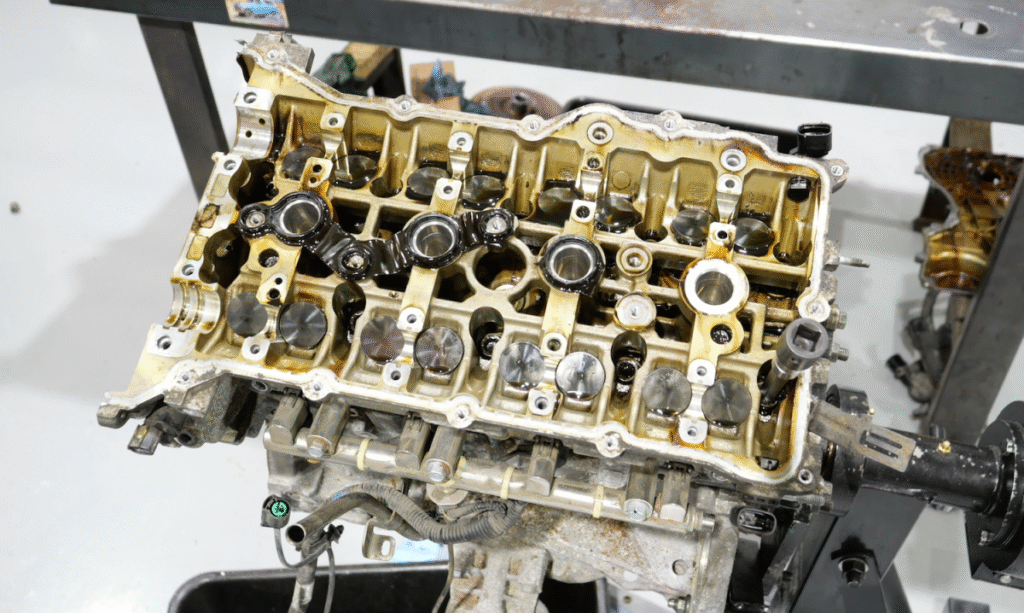
Opening up the top end told a different story. Under the valve cover, things looked cleaner than expected for this mileage. There was some sludge, but not a lot. The timing system didn’t show major damage at first, though metal particles in the guides suggested bigger problems below.
That “something” became obvious once the cylinder head came off.
I Do Cars/YouTube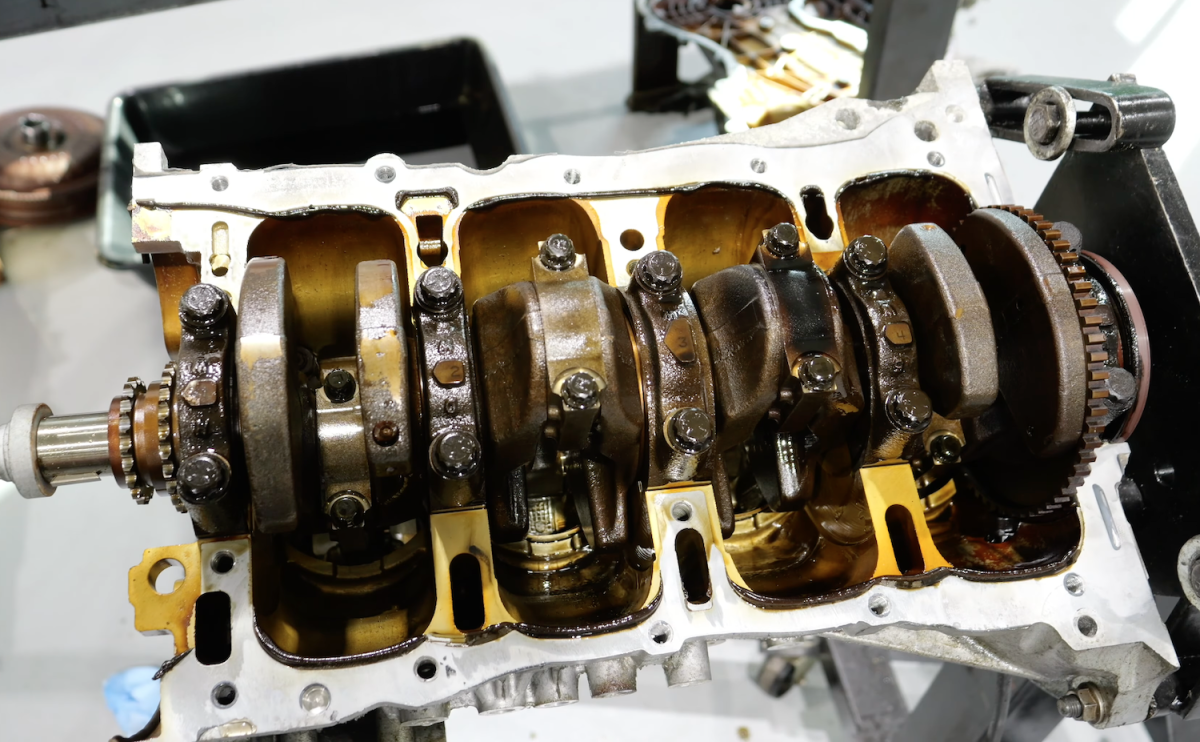
The Same Old Problem, Just Further Down the Road
Unlike in other Hyundai Motor Group engine teardowns, one of the cylinders in the Theta II proved problematic. The piston had hit the cylinder head, and the rod bearing was almost completely worn out. The nearby cylinder walls showed heavy wear, indicating long-term stress.
Looking at the bottom end confirmed the usual pattern. The oil pan was full of metallic debris – bearing glitter – meaning parts had been wearing down and spreading through the engine. The oil pump was heavily scored, a sign it had been moving dirty oil for a while.
The root problem is a familiar one – oil control rings clog with carbon and deposits, which lets oil burn off. If the oil level drops, the bearings don’t get enough lubrication. That doesn’t cause instant failure, but it does start a slow decline that ends with rod knock and major damage.
So this engine didn’t fail out of the blue. It just made it farther than most before reaching the same end. That’s a small win, but it doesn’t change the bigger story about the Theta II’s long-term issues.
Kia