The Santa Cruz is pretty much the only Hyundai that is unpopular, selling just over 32,000 units last year versus the Ford Maverick’s 155,000, but the Korean automaker’s next attempt at luring Ford and Toyota pickup buyers to its dealerships will have several differences. Unfortunately, we’ll have to wait a couple of years to see exactly how the new midsize pickup will differ, reports Australia’s CarExpert, but the good news is that we already have several clues. We’ll discuss those momentarily, but first, let’s see what the latest is. Speaking with local media Down Under, Hyundai Australia chief operating officer Gavin Donaldson said the Toyota Tacoma and Ford Ranger rival is scheduled to launch around 2028, but there’s still a lot to do between now and then.
“Strategically, it’s still a work in progress,” Donaldson said. “It’s leaning towards a couple of years from now… and it’s still [being developed] in collaboration with the U.S.”
Hyundai Pickup Won’t Be a Rebadged Tasman, May Share GM Bones
Hyundai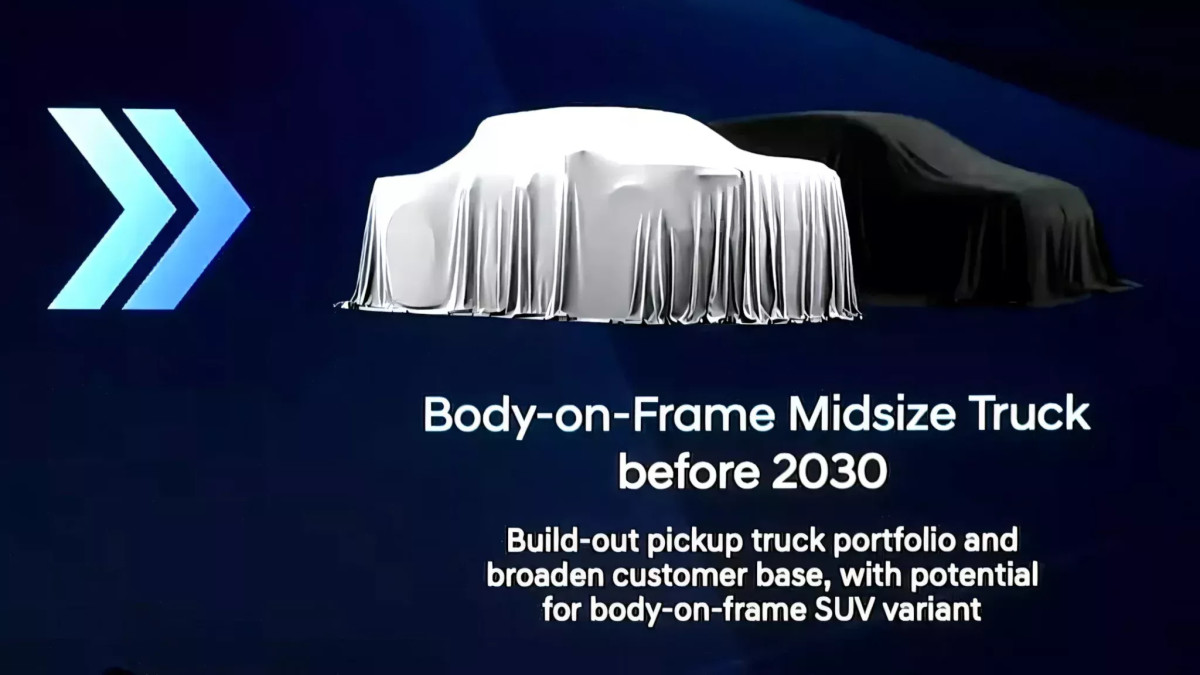
The same publication previously reported that Hyundai is considering both ladder-frame and unibody concepts, but Donaldson added that “body-on-frame is what [Hyundai has] got to look for to be competitive.” An SUV on the same platform is also planned for before the decade’s end. While Hyundai plans four pickups by 2030, local CEO Don Romano previously said the dual-cab pickup won’t be a rebadged Kia Tasman, and he’s said that the new pickup will be a “different type of hybrid” to a plug-in, hinting at an extended-range electric vehicle (EREV) setup. He’s also confirmed that Hyundai’s relationship with General Motors may bear fruit in the new pickup, though it would naturally need to be different from whatever GM offers. A recent patent previewing Jeep-style removal roof panels for future pickups could be just one way the next Hyundai pickup will set itself apart.
Hyundai Has a Mountain to Climb
Hyundai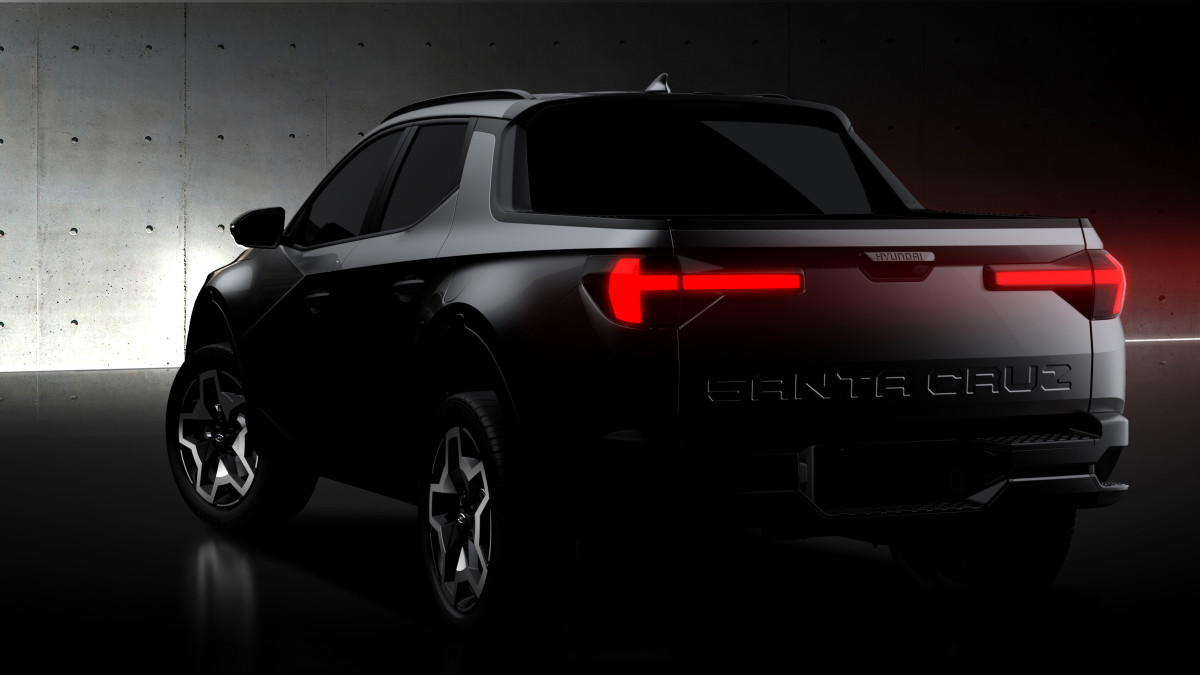
In a nutshell, Hyundai is exploring every possible option to make its next pickup(s) successful, and whatever it comes up with will be more rugged and more capable off-road than the Santa Cruz. But as Kia has learned with the Tasman, body-on-frame construction and aggressive styling may not necessarily be enough to convince buyers that they should abandon tried and trusted pickup brands like Toyota and Ford. Although Hyundai’s early 2000s reputation for cheap and nasty cars is long gone, the brand isn’t exactly a byword for rugged, off-road-capable workhorses. Convincing loyal buyers to move to a Hyundai truck may be the biggest challenge the brand faces, and it will take a long time to earn credibility in the market. As noted by Automotive News, “pickup truck buyers tend to be more loyal and demanding,” and with overall volume growth unlikely to be huge over the coming years, Hyundai’s challenge is especially large. Would you buy a midsize Hyundai pickup? What would it take? Let us know in the comments below.