For years, I was the keeper of the invisible things in my marriage.
I knew everything that my husband didn’t pay attention to, like why our daughter deliberately tucked one shoe under the car seat every morning, or the exact minute our son’s tantrums would ignite if breakfast ran late. My brain held all the pins, passwords, and secret codes. I remembered when we were running out of toilet paper or needed to swap our detergents, and that my mother-in-law only called on Tuesday evenings.
It felt empowering at first, being the superwoman who kept everything running. But slowly, it caught up to me. I knew I needed help from my partner.
Then one night, something in me broke.
My daughter was screaming murder in the next room — the high, panicked cry that shoots straight through your nervous system — while my son had the cartoons blaring so loudly I couldn’t think. At the same time, my husband stood in the kitchen asking, for the third time that week, what the WiFi password was.
“Everyone, leave me alone! I’m only one person!” I screamed.
The words shocked even me. My son turned off the TV. My daughter stopped crying. My husband just stared at me. The house came to a silent standstill, and for the rest of the night and into the next morning, no one said much.
For years, I had carried most things on my own. I felt appreciated because my family made a point of saying how incredible I was for always getting the job done, but I think I needed more than words of affirmation, especially as the default parent.
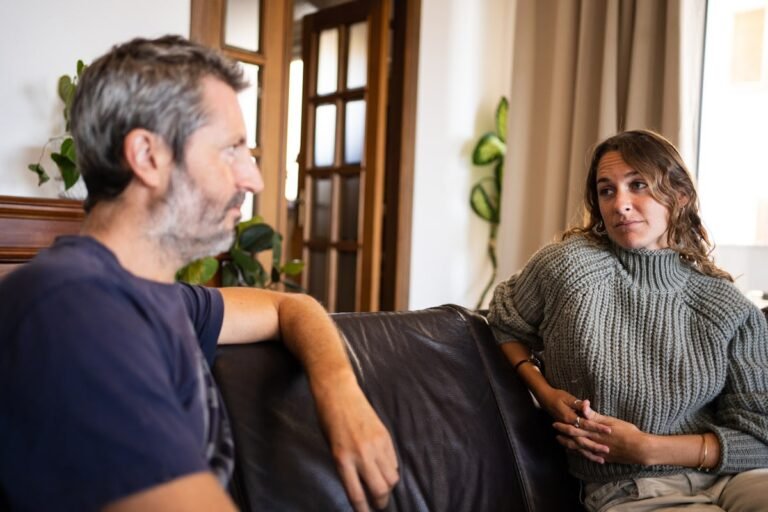
The next evening, my husband found me, overwhelmed, sitting on the cold kitchen floor. He sat next to me and said, “I see it. I see that you’re drowning. Please let me know what you need from me. Just tell me what to do, and I’ll do it.”
And that’s when the “Blue Screen of Death” happened.
I froze.
Years prior, I fantasized about that question, especially as a new wife and mom. I always dreamt of my partner swooping in and saying, “Tell me what you need, I’ve got you.” I had rehearsed all sorts of answers in my head while folding onesies at 3 a.m.: I need sleep. I need a sous chef. I need you to notice.
Somewhere along the line, needing things started to feel dangerous, and I learned to manage and adjust my expectations until they fit neatly inside disappointment.
That night, I had no answer for him.
What I really wanted wasn’t to tell him what to do; I wanted him to take over without being asked. In fact, his question felt more like a trap than a genuine desire to help. I wondered whether I would sound ungrateful if I answered honestly, or if I would break something that we couldn’t fix.
I sat there as he looked at me with anticipation. I felt like he expected a task list. Boxes to check off. He wanted me to delegate and tell him to help with the kids’ homework or make dinner a few nights, but I would still be left with the mental load.
“I finally ask, and you shut down!” he said, interrupting my thoughts.
There was truth there, and that stung. But it was only half the story. I wanted to scream that it wasn’t that simple. That the shutdown wasn’t about him. It was about the years before the question ever arrived. It was about the times I did ask, but was dismissed or misunderstood. Instead, I deflected: “I’m just tired.”
He wanted me to delegate … What I really wanted wasn’t to tell him what to do; I wanted him to take over without being asked.
It took a few months to unpack that conversation in my mind. It took the same amount of time to find my voice, and when I did, I sat my husband down for a heart-to-heart and said, “I need you to stop asking me what to do and start looking for what needs to be done.”
That became our turning point.
We looped the kids in, too, creating a little reward system for helping with a few things around the house. And my husband started noticing things. Not everything, not always, but he’s more proactive with school activities and things he never knew how to do, like replacing worn-out sneakers and clothes.
It wasn’t a magical fix — we still have days where I’m stomping around the kitchen, and he’s staring at his phone — but the “freeze” was a wake-up call for both of us. I’m learning to sit in the silence without feeling like I have to fill it with a task. It’s taught me to let go of the “my way or the highway” mentality, and him that being a partner isn’t about being a “helper.”
Because sometimes, the heaviest thing you can carry is the responsibility of having to ask for help in the first place.