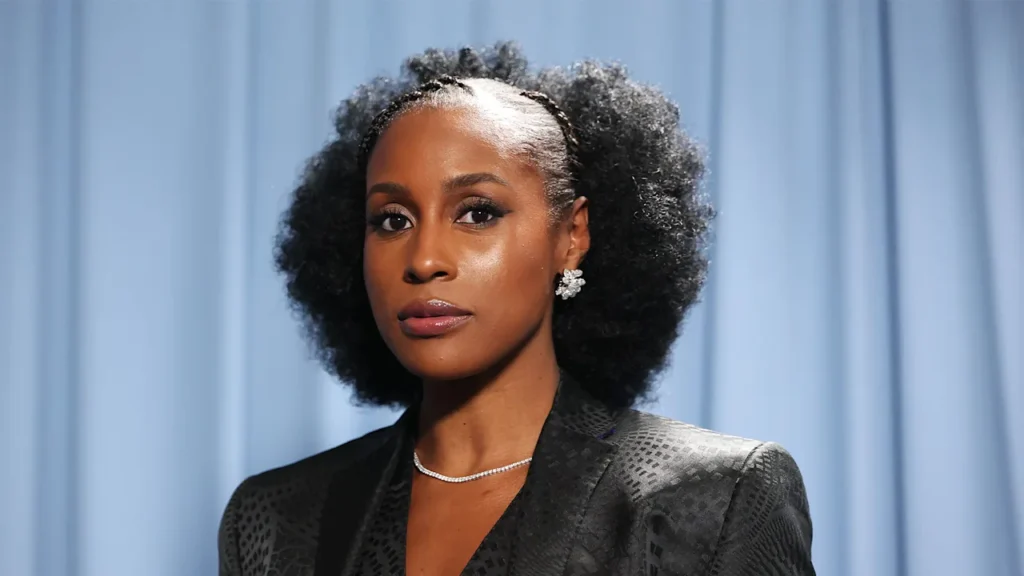
Issa Rae is a Hollywood success story. Her web series The Mis-Adventures of Awkward Black Girl launched her career in the early 2010s, leading to her HBO series Insecure and now her production company Hoorae Media.
Through all her projects, Rae has been praised for her authentic portrayal of Black women’s lives—but at a recent panel, Rae said that the entertainment industry is no longer interested in celebrating diversity.
Shifting tides in the film industry
While speaking at TheWrap’s Creators x Hollywood Summit last Wednesday, April 8, Rae pointed out a troubling trend she’s seeing on the production side of Hollywood.
“I’m seeing it. Just blatantly. People aren’t investing like they were before,” she said. “[DEI] has changed meanings and has become a bad word.”
Rae added that creators and executives are “tiptoeing” around the topic, with some executives of color even telling her they “can’t cosign you” for fear of losing their own positions.
“Even after so much progress, we’re kind of back to limited representation and having to stake claim of our stories,” she explained. “We’re back where we started, in a way, but wiser.”
How, then, can POC-centered projects—the kind that put Rae on the map—continue to get made? Rae said it’s all about framing.
“You have to be smarter about how you package and market [projects]. You tell them, ‘It’s not a show about a Black woman, it’s a show about class,’” she said. “As icky as that might feel, it gets the show sold.”
From Awkward Black Girl to Screen Time
From the beginning of her career, Rae has been dedicated to thoughtful representation, particularly for Black women.
“I started Awkward Black Girl because there was a dearth of representation in the industry, and it felt like this was my opportunity to put an archetype into the space that didn’t exist at the time,” Rae said at the panel.
Sometimes, that meant turning down career opportunities, like being approached to adapt Awkward Black Girl into a TV series. “They talked about recasting everyone, including me, with celebrities, so that was an easy no thank you,” Rae joked.
In making the transition from YouTube to HBO, Rae said she learned to approach executives with a clear vision, rather than let them dictate what they want from her.
“That—‘What can I do for you?’—was the wrong mindset to adopt,” she said. “I should have been like, ‘I have these things for you that I specifically want to do, and I know what I want to say.’ It took me a while to get there.”
Since Insecure concluded in 2021, Rae has appeared as an actor in films including Barbie and American Fiction and TV shows like Black Mirror. Her latest venture under Hoorae Media is a micro-drama called Screen Time, premiering for free on TikTok and its new Pine Drama app. It’s the first of several micro-series Rae is developing for TikTok as part of a new partnership, as she revealed last week in a statement.
At TheWrap’s panel, Rae emphasized that despite shifting industry standards, Hoorae Media hasn’t strayed from its mission of telling inclusive stories, “and it never will,” she said.
Rising pressure on Black-led projects
Rae’s comments went viral on social media, prompting the internet to take a closer look at the state of POC-centered productions in Hollywood.
Many users drew connections to the currently screening rom-com You, Me & Tuscany, starring Halle Bailey and Regé-Jean Page. Filmmaker Nina Lee went viral last month for encouraging audiences to support the Black-led film, saying multiple studio executives had told her they wouldn’t commit to her projects until seeing how You, Me & Tuscany performed at the box office.
Some posters argued that Rae simply said the quiet part out loud, and that America’s cultural shift to conservatism has already been bleeding into Hollywood for quite some time.
“This administration gave everybody the green light to do what they’ve been wanting to do,” one user posted in reply to Rae’s comments. “That’s the real reason we’re campaigning for folks to go support a romcom with two black leads.”
Rae also described another trend in the media industry: that executives are far more focused on social media following than on talent.
“I feel like Hollywood is in an identity crisis right now, and so they’ve turned to creators and social media in an attempt to try to bring them into the system,” she said. “I don’t think that that’s the right model.”
That said, Rae advised that any young creatives trying to break into the industry should focus on cultivating their own audiences, the way that she did with Awkward Black Girl more than a decade ago.
“Hollywood has gotten a bit lazier in their discovery, whereas they’re not reading as much,” Rae said. “It’s been disheartening to see Hollywood not make the extra effort to discover other voices outside of what’s already been risen to the top as popular.”