Photographer Joel Meyerowitz identifies as “an outside guy.” Known for his pioneering New York City street photography that advanced the belief that color film can indeed be artistically serious, Meyerowitz tended to never shoot still lifes, except for the occasional post-dinner-party tablescape.
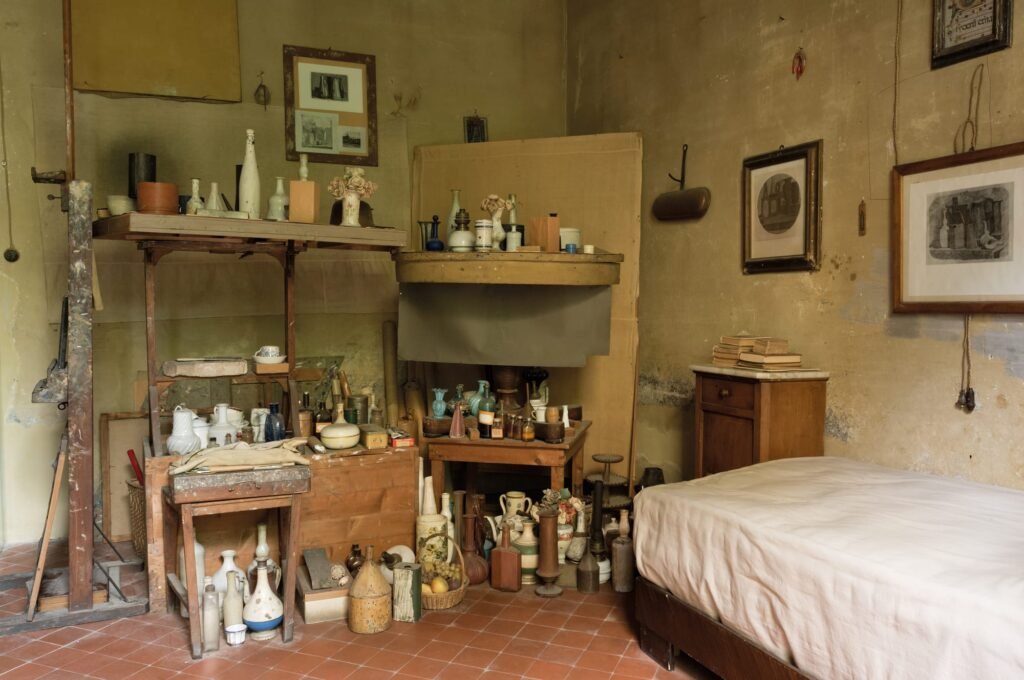
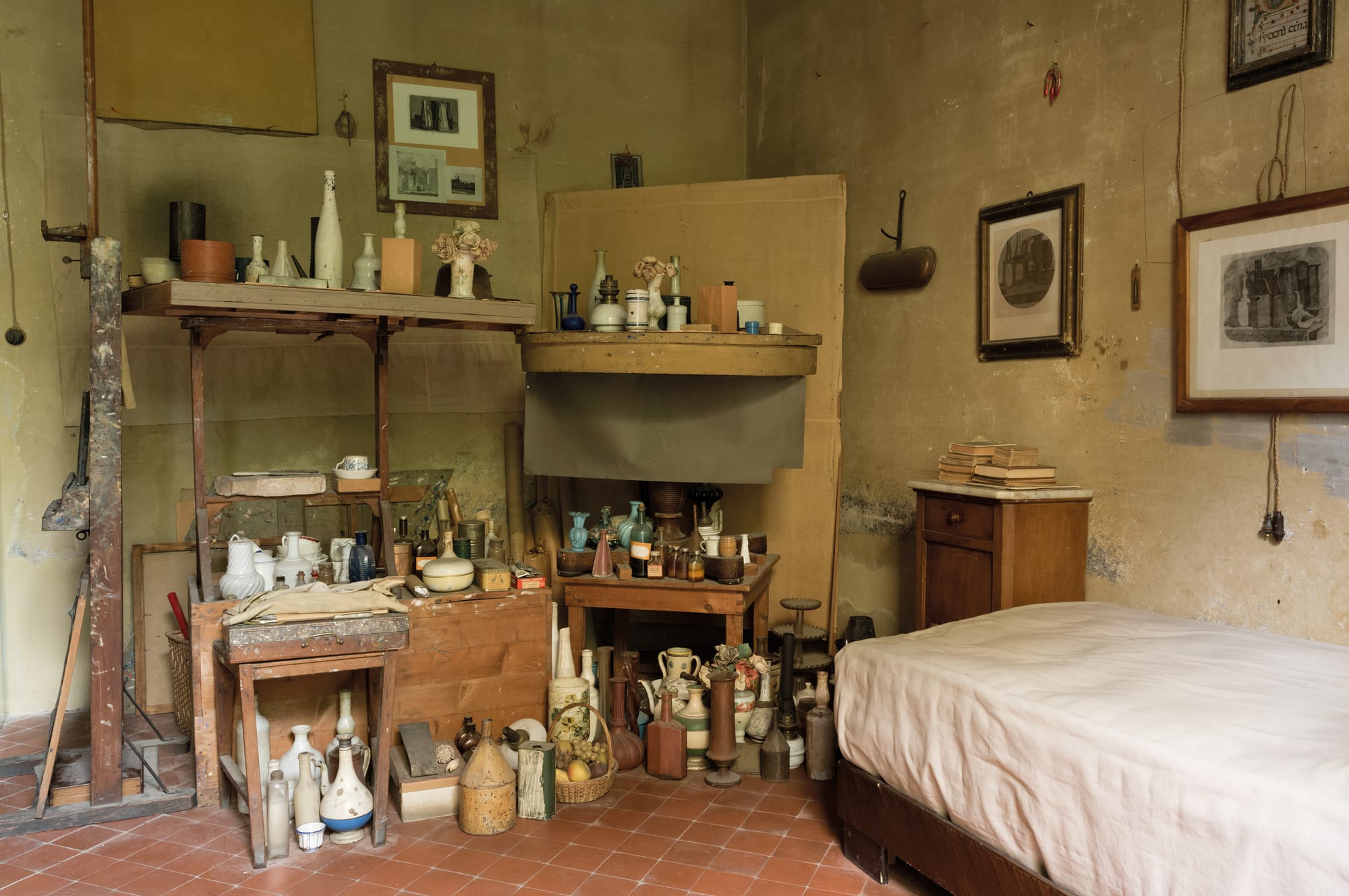
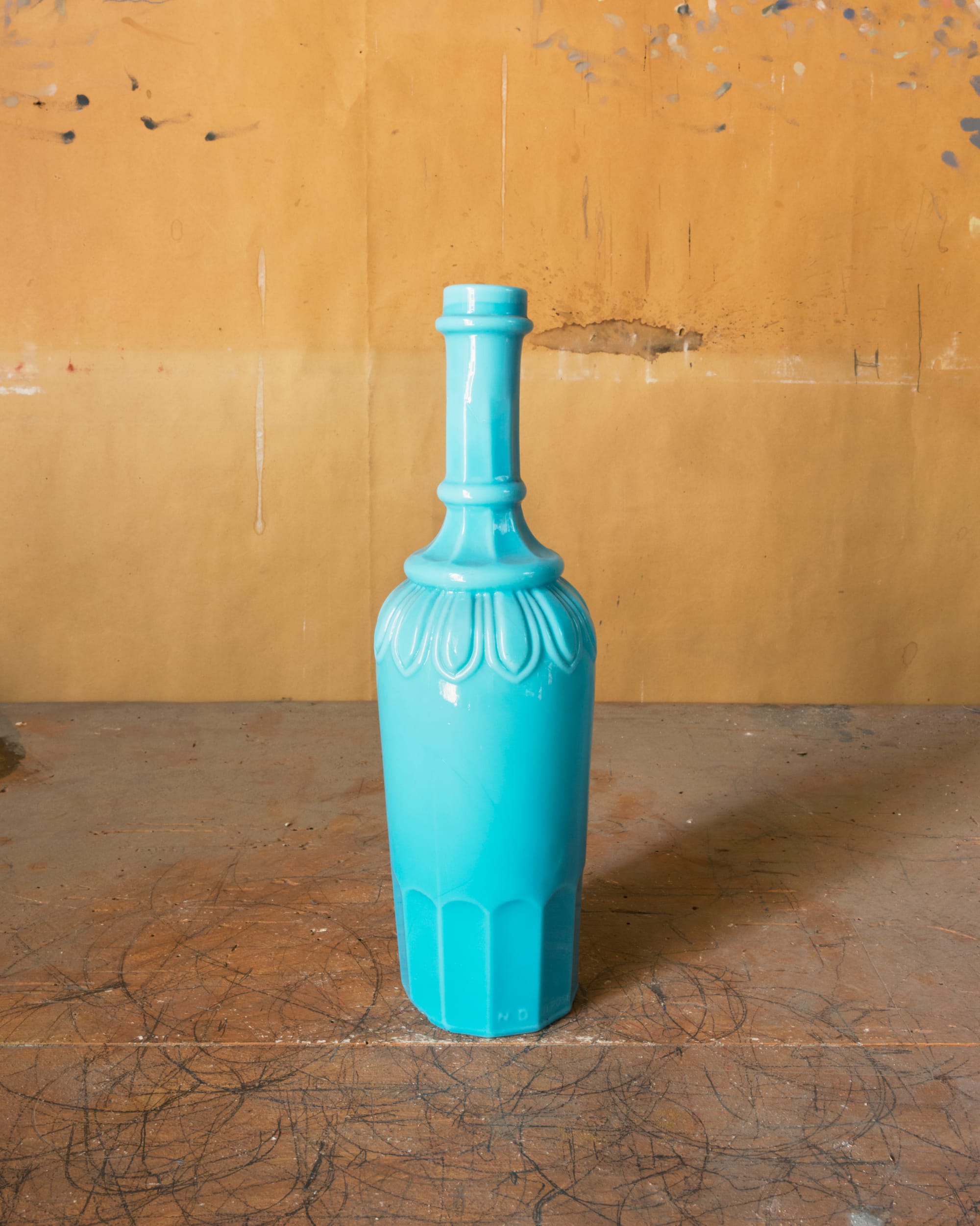
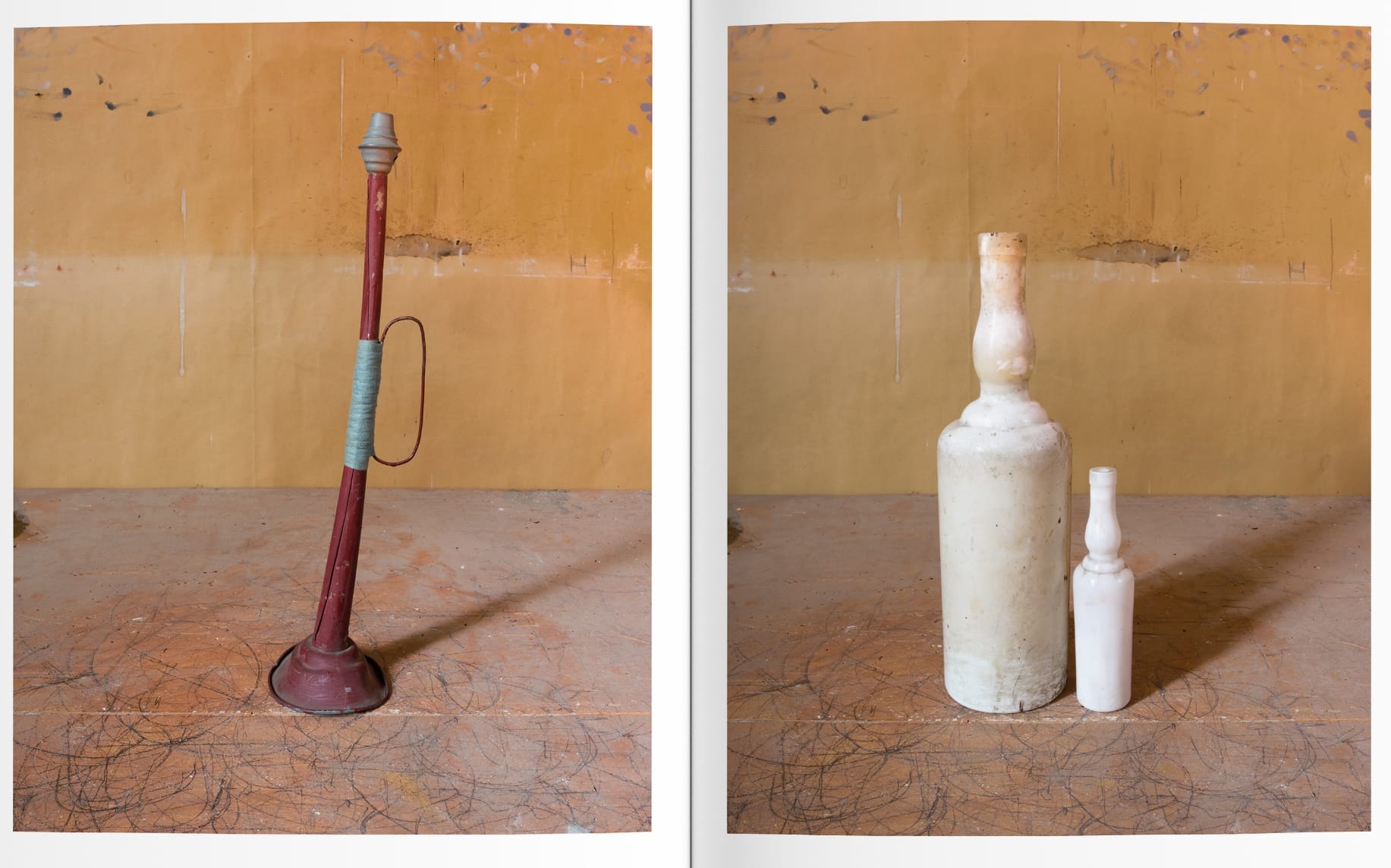
But with Morandi’s Objects: The Complete Archive of Casa Morandi (April 2026), we get a whole book documenting what happens when Meyerowitz sits still in a studio — the Bologna studio of the master of the still life, painter Giorgio Morandi, no less. Originally published in 2016 with essays by Meyerowitz and his wife, writer and artist Maggie Barrett, this month, Damiani Books updated the second edition with more than 130 additional photos. Against a backdrop of peeling paint, the color of a cortado, a parade of humble votives pose in their chipped, dusty, jewel-toned glory.
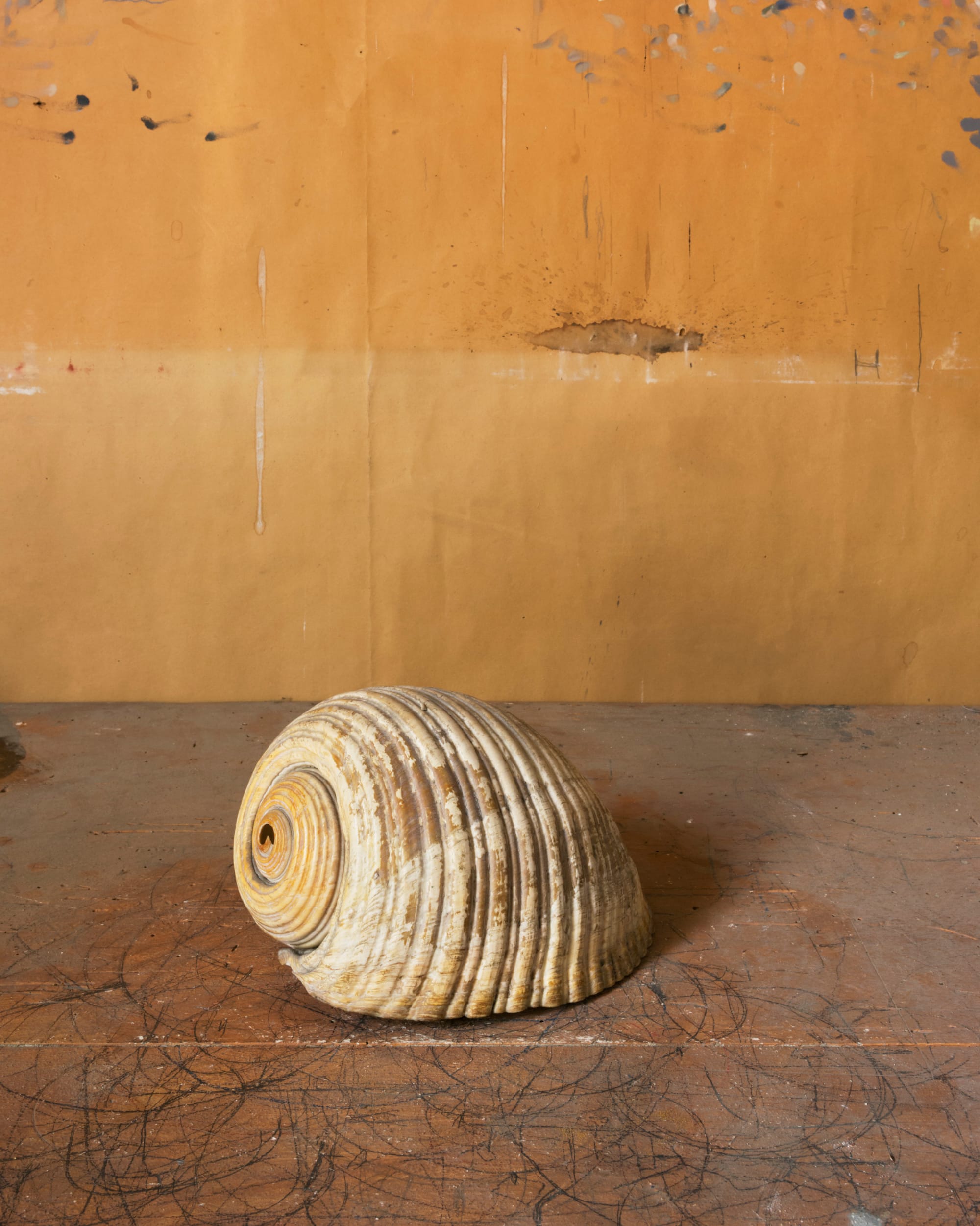
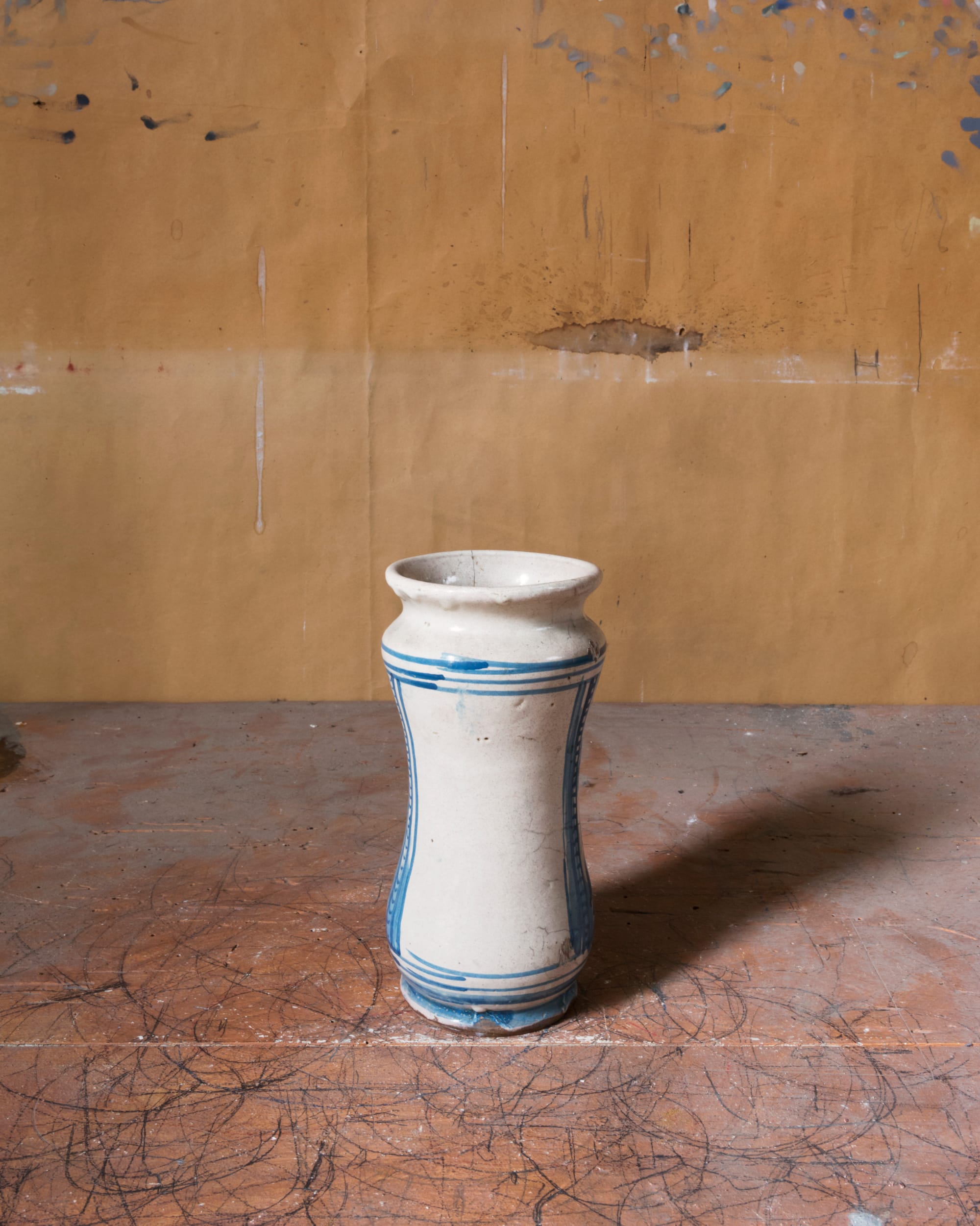
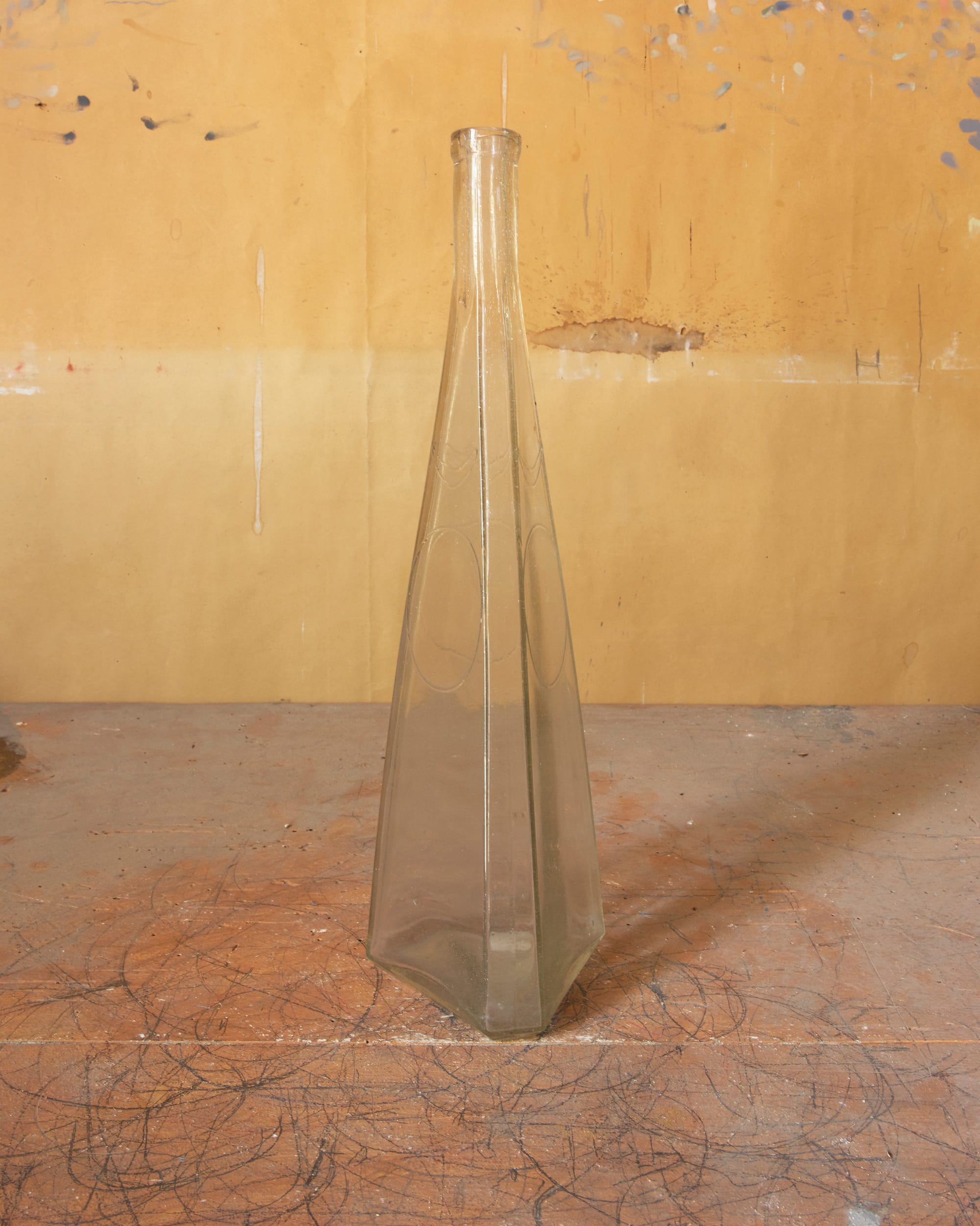
Joel Meyerowitz, “Shell,” “Blue and White Vase,” and “Clear Triangular Bottle” (all 2015) (©Joel Meyerowitz)
“He was assembling a force field of geometric objects: circles, cylinders, cubes, rectangles, boxes, ovals,” Meyerowitz said in a call with Hyperallergic. “I think he was really meditating on the way these objects were blended into each other, with some kind of indefinite relationship that he created or muted between the near and the far.”
When Meyerowitz and Barrett lived in Tuscany in the 2010s, they organized to spend time at Casa Morandi, where most rooms are not normally on public view. Meyerowitz had fallen in love with Morandi’s angles and shadows when he himself studied painting, and he fell all over again with the remnants of the man left behind in the space. He felt him when he sat at his tall desk — “He was six-foot-four, so really big guy” — and tried on the hat and the double-breasted suit jacket he painted in.
“He would wipe his brushes on his sleeves,” Meyerowitz continued. “So here was this beautiful, elegant, hand-tailored Italian suit, and it was as stiff as a board with tiny color patches, each one the size of your fingernail, hundreds of them. It was beautiful.”
Like Meyerowitz, Morandi arguably did not see beauty as the objective of his art practice. It’s more about understanding or unlocking the rules of how the world works, from physics to the unspoken laws of a crowd. “I like to think that there was a similar quality in these two men that attracted me to them; a quality of stillness imbued with the latent energy of time,” Barrett writes in an essay for the book.
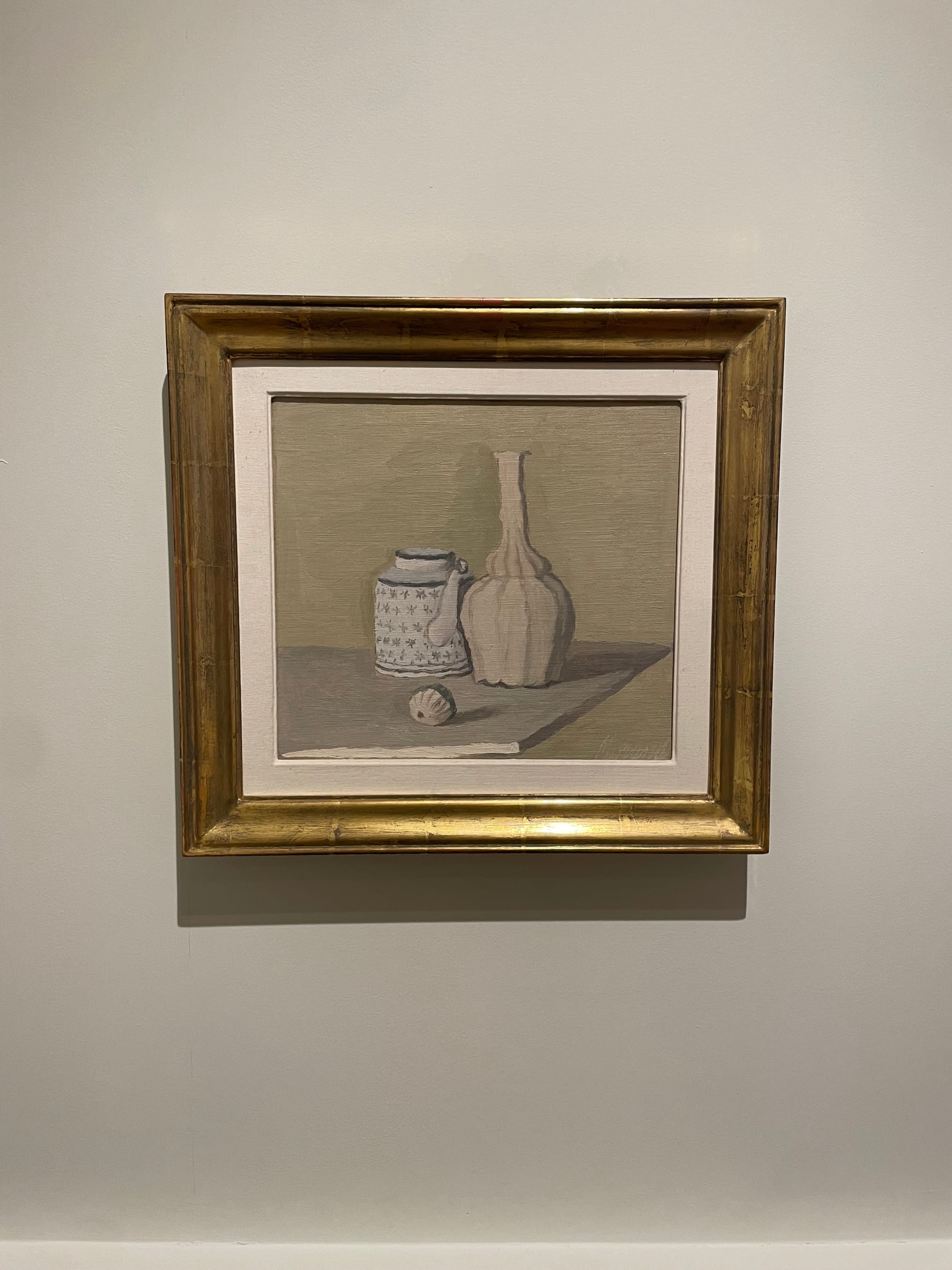
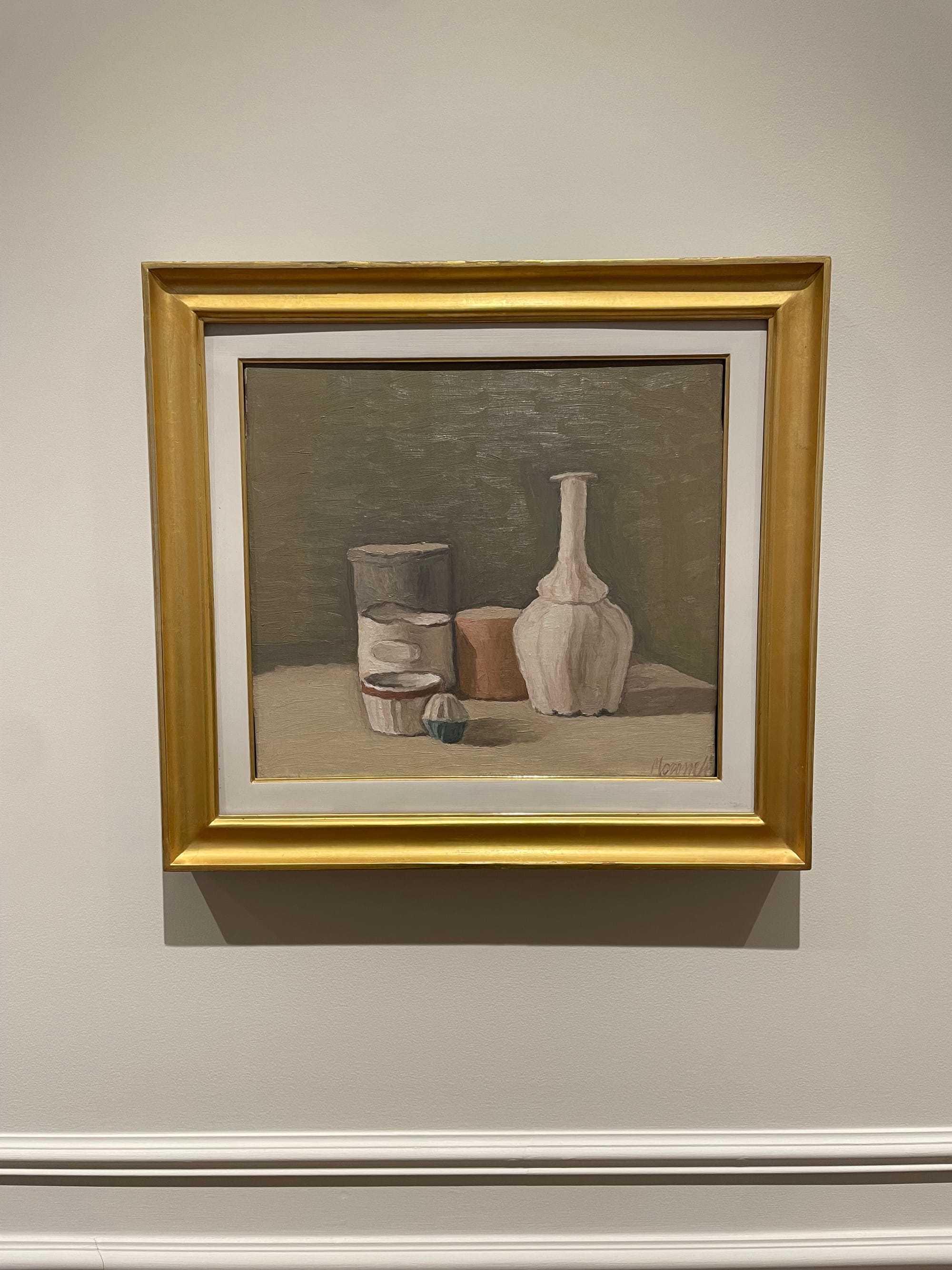
Giorgio Morandi’s signature still lifes exhibited at Galleria Mattia de Luca in 2024 (photos by and courtesy Hayley J. Clark)
She is frank about the fact that Morandi is dead and that her 88-year-old husband is “very much alive.” Still, the invocation of natura morta reminds everyone of the eventual. Morandi’s Objects is an attempt to capture the anima, or the soul, of Morandi’s inspiration. The book may live on as a document of Meyerowitz’s ability to find the punctum — the detail that pricks us in an image, revealing that we and it are real.
Meyerowitz may have “let go of painting” in the 1960s to pursue the athleticism and rhythm of photography, but he is happy to engage with his first medium in his preferred way.
“Sitting in Morandi’s studio and studying the objects was so satisfying with the camera, just to be searching,” Meyerowitz said. “I was trying to stay open in my response, so that if there was a flicker of recognition — that something in the object was animated — I would get it. That was enough. It was as if I closed in on his territory just a little bit. You could never be Morandi, let’s face it. He was the mystery, and that’s why we love him.”