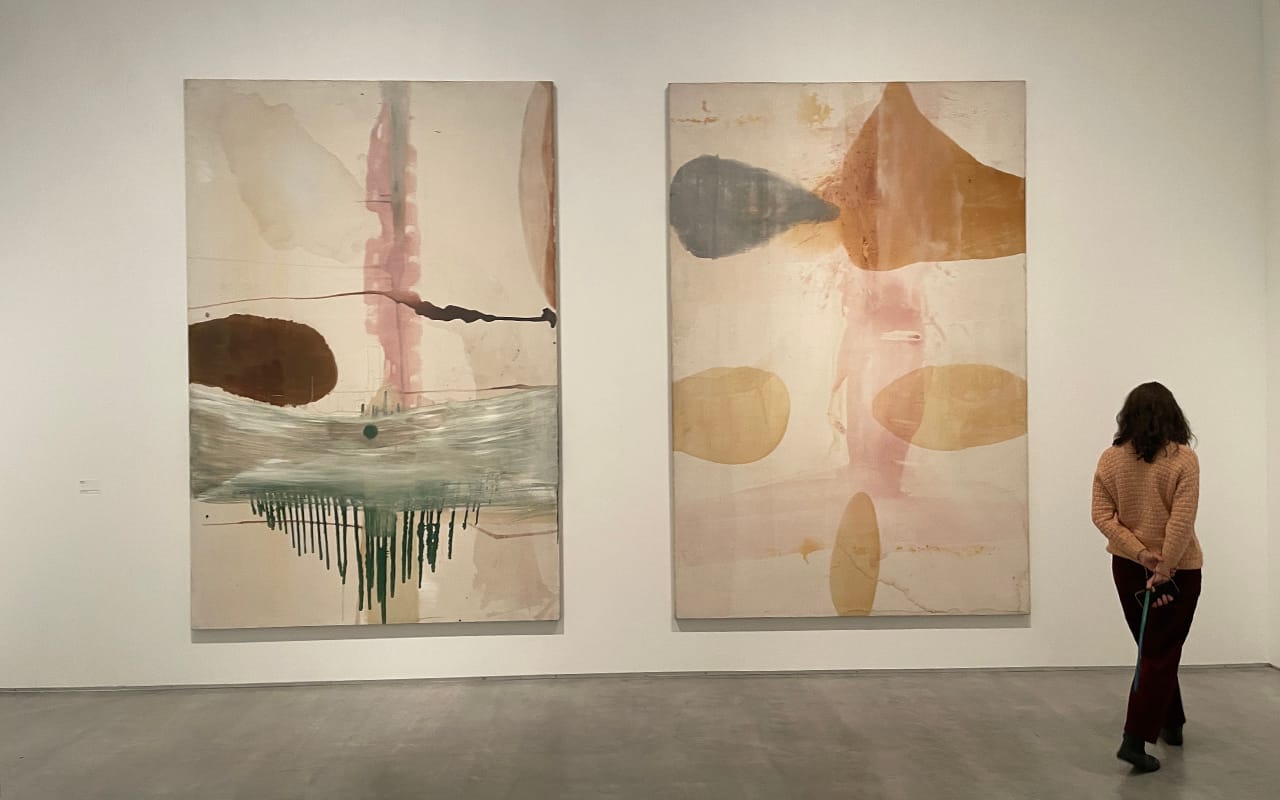
MADRID — Lively loops and lines tangle over drifting grids of color in Juan Uslé’s jewel-like canvases. Based in New York City since the late 1980s, the Cantabrian painter remains one of Spanish abstraction’s most renowned figures. With his retrospective at Madrid’s Museo Reina Sofía, Uslé is also now one of only a few living artists in Spain to have been honored with two solo shows at the institution. More than 20 years after his previous presentation, Ese barco en la montaña (That Ship on the Mountain) includes around 100 works spanning four decades of the artist’s career, offering a wide-ranging view of his singular, seductive approach to painting.
Uslé’s vigorous mark-making and tangy colors often give his work a buoyant feeling, but the current exhibition takes a tragic point of departure. Curator Ángel Calvo Ulloa has selected the shipwreck of the Elorrio off the Cantabrian coast in December 1960, a horrific and deadly event that the artist witnessed as a boy, as the starting point for the exhibition. The choice grounds Uslé’s practice in the expansive psychic reverberations that happen when childhood imagination and real-world tragedy collide. Accordingly, the exhibition’s opening gallery displays drawings and paintings from the 1980s that were inspired by this pivotal memory and other marine themes, revealing the deep emotional underpinnings of his working method. For example, a delicate, diary-sized untitled drawing from 1987 appears to represent a ship marooned over sea rocks, but its worked surface, hazy pencil marks, and torn edges give the piece a ghostly gravitas, as if it’s more artifact than artwork.
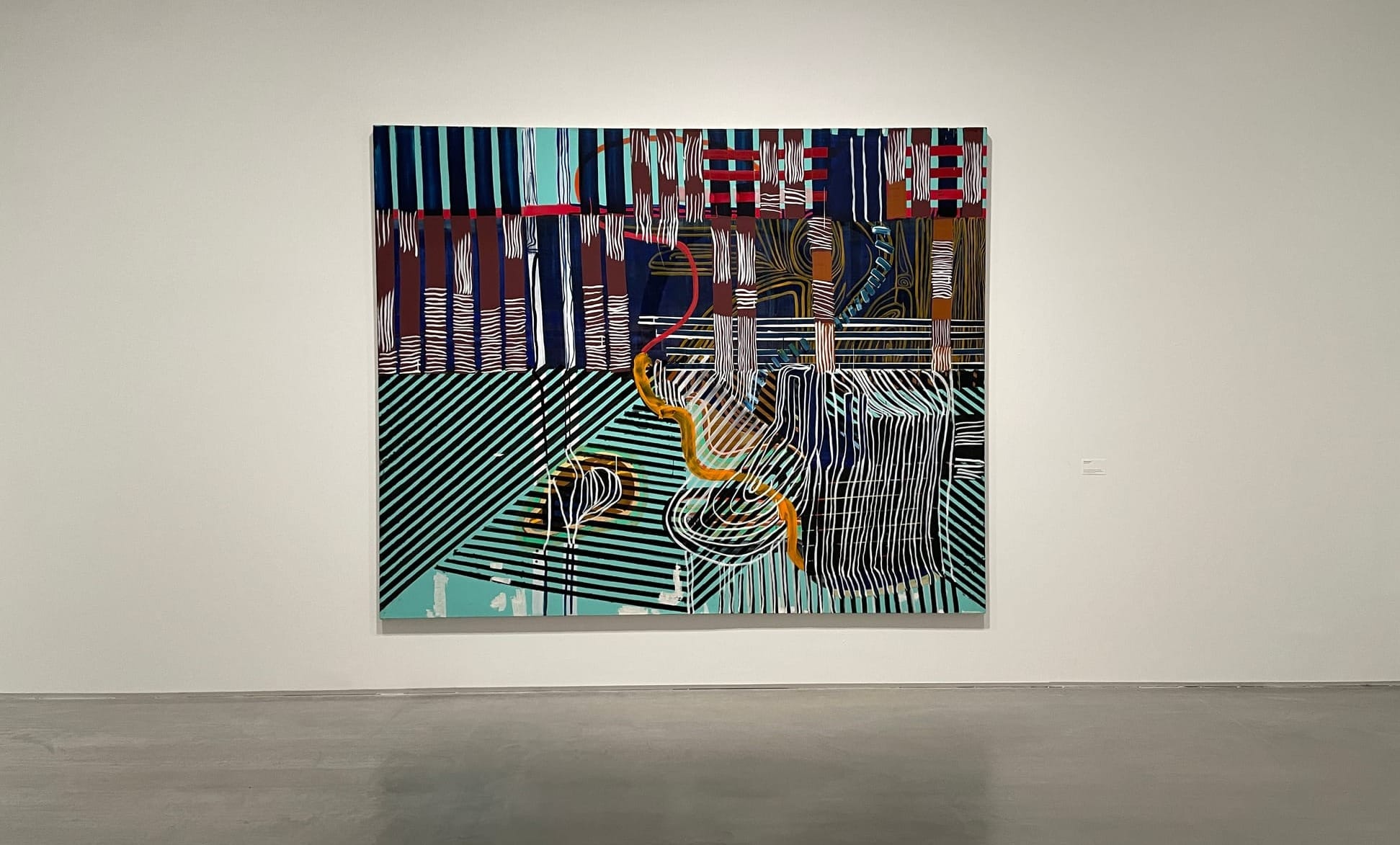
But these oneiric, dark-hued figurations eventually faded to black before the artist reinvented himself in New York in the early 1990s. Although the city stood in stark contrast to the rural Cantabrian town where Uslé and his partner, the artist Victoria Civera, previously worked, he recalled that the city “seemed like home to me” during remarks at the exhibition’s press preview on November 25, 2025. From his new life on the other side of the Atlantic Ocean, Uslé continued to see water as a crucial touch point: The river below the Williamsburg Bridge was a frequent inspiration, and in an interview with writer Kevin Power in the exhibition catalog, he refers to New York’s tremendous energy as a kind of “great, calm sea.” There’s also an undeniably liquid and flowing quality to the canvases Uslé has made since his move to the city, and the great number of large-scale works on display here immerse the viewer’s body in a kind of gentle, lapping rhythm.
Uslé is best known for his paintings, but he also digests the frenetic pace of New York City life through his camera. The exhibition features an expansive sample of his daily snapshots; “Sometimes they’re absurd things, sometimes they’re marvelous things,” the artist mused during the press preview. Many of the photos depict city steps, windows, bricks, and chain-link fences that echo Uslé’s more repetitive and structural painted shapes; others show free-wheeling forms like clouds, vines, and shadows that reflect his meandering, even mischievous, touches. The artist’s paintings are far too poetic and inventive for one to read his photography as a literal form of note-taking, but it’s still fascinating to see through his eyes in this way, and to trace the world from outside the studio to how it might later appear on canvas.
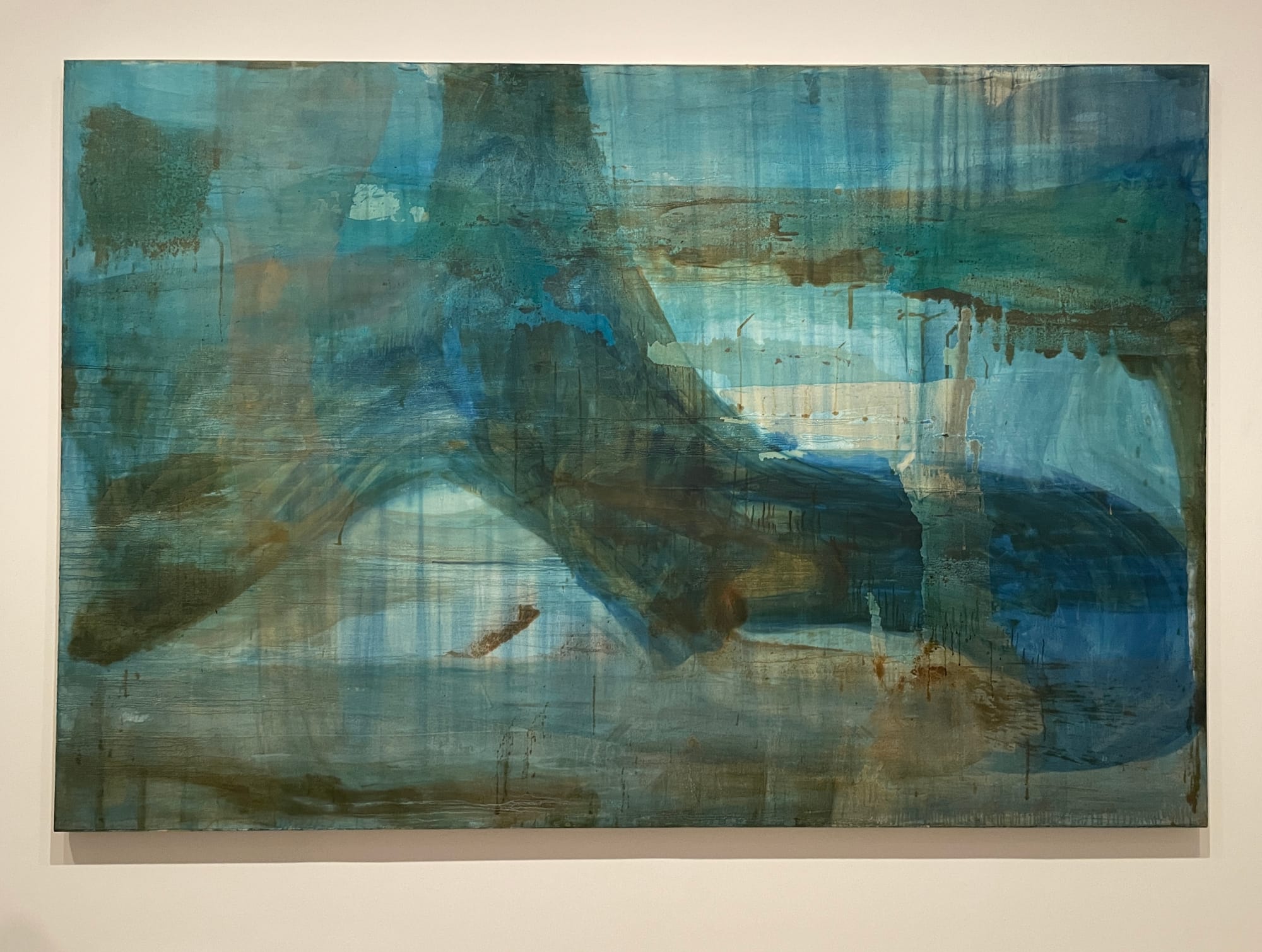
New York is a strong presence in Uslé’s work, but I agree with painter Shirley Kaneda’s assertion that his visual language “transcends cultural identity.” For me, his paintings only bring to mind the work of one other artist: fellow immigrant and Japanese painter Gen’ichirō Inokuma, who also synthesized New York City’s endless streets and subways in an energetic and individual mode of abstraction. Both artists bravely threw themselves into the faraway metropolis and all of the uncertainties it represented. They then brought those fascinating lapses and discoveries into their work, making sense of the city through painting.
Juan Uslé. Ese barco en la montaña continues at the Museo Nacional Centro de Arte Reina Sofía (Calle de Santa Isabel, 52, Madrid, Spain) through April 20. The exhibition was curated by Ángel Calvo Ulloa.