On February 2, wellness influencer Peter Attia stepped down from his role as chief science officer at the protein company David. On February 12, Goldman Sachs’ top lawyer Kathryn Ruemmler announced her resignation from the company. And on February 13, Hollywood agent Casey Wasserman revealed that he would sell his talent agency.
All of these business execs worked in very different spheres, but their sudden departures can be traced back to the same point of origin: their names cropped up again and again in the Department of Justice’s (DOJ) latest trove of Epstein files, released in late January. Over the past few weeks, many prominent figures have stepped down from their high-profile positions amidst growing scrutiny over their relationships to the convicted sex offender Jeffrey Epstein. A new tool called “Jwiki” is dedicated to compiling all of that information in one place—on, as the name suggests, a webpage designed to mimic Wikipedia.
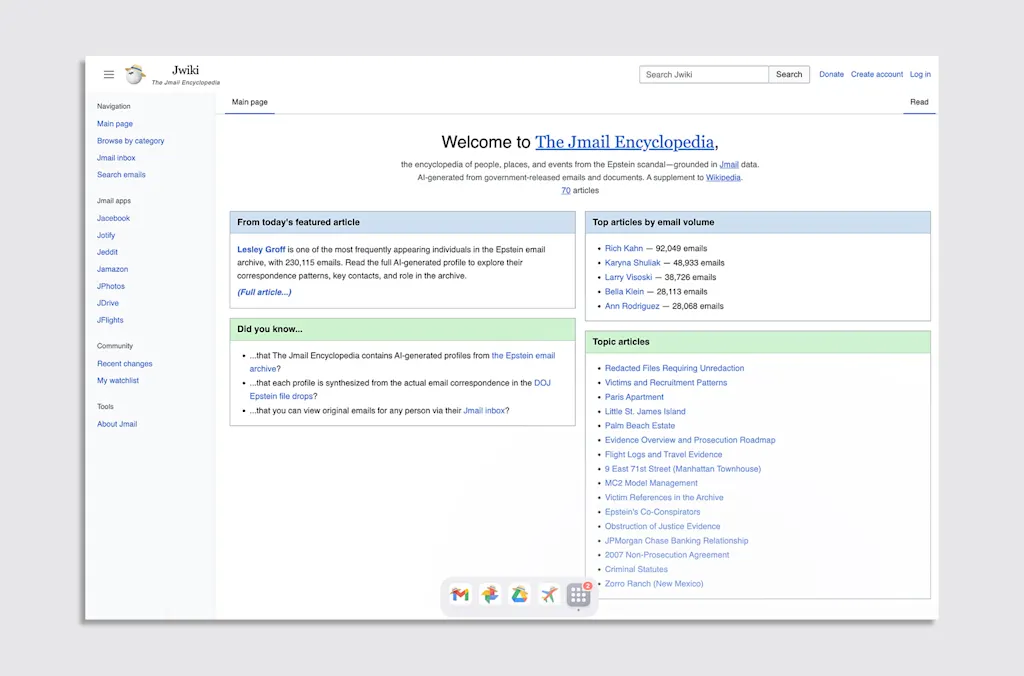
It’s the latest interface from a team of developers who have spent the last several months converting the notoriously dense and convoluted Epstein files into easily searchable interfaces, condensing about 3.5 million pages of material spread across .txt files, zip files, and Google Drive folders into recognizable formats.
With Jwiki, instead of sifting through all of the Epstein files for individual mentions of various public figures (a nearly impossible task for members of the public), users can simply search their name and receive a succinct summary of their involvement with Epstein.
How two technologists build the “Jsuite”
Jwiki comes courtesy of a team led by technologists Riley Walz and Luke Igel. Walz has previously built several viral websites, including San Francisco’s “Tech Jester” and a tool to track the city’s parking cops. In November 2025, Igel, who’s the CEO of an AI company called Kino, requested Walz’s help with a tool to demystify Epstein’s emails. They built the first iteration in just one night.
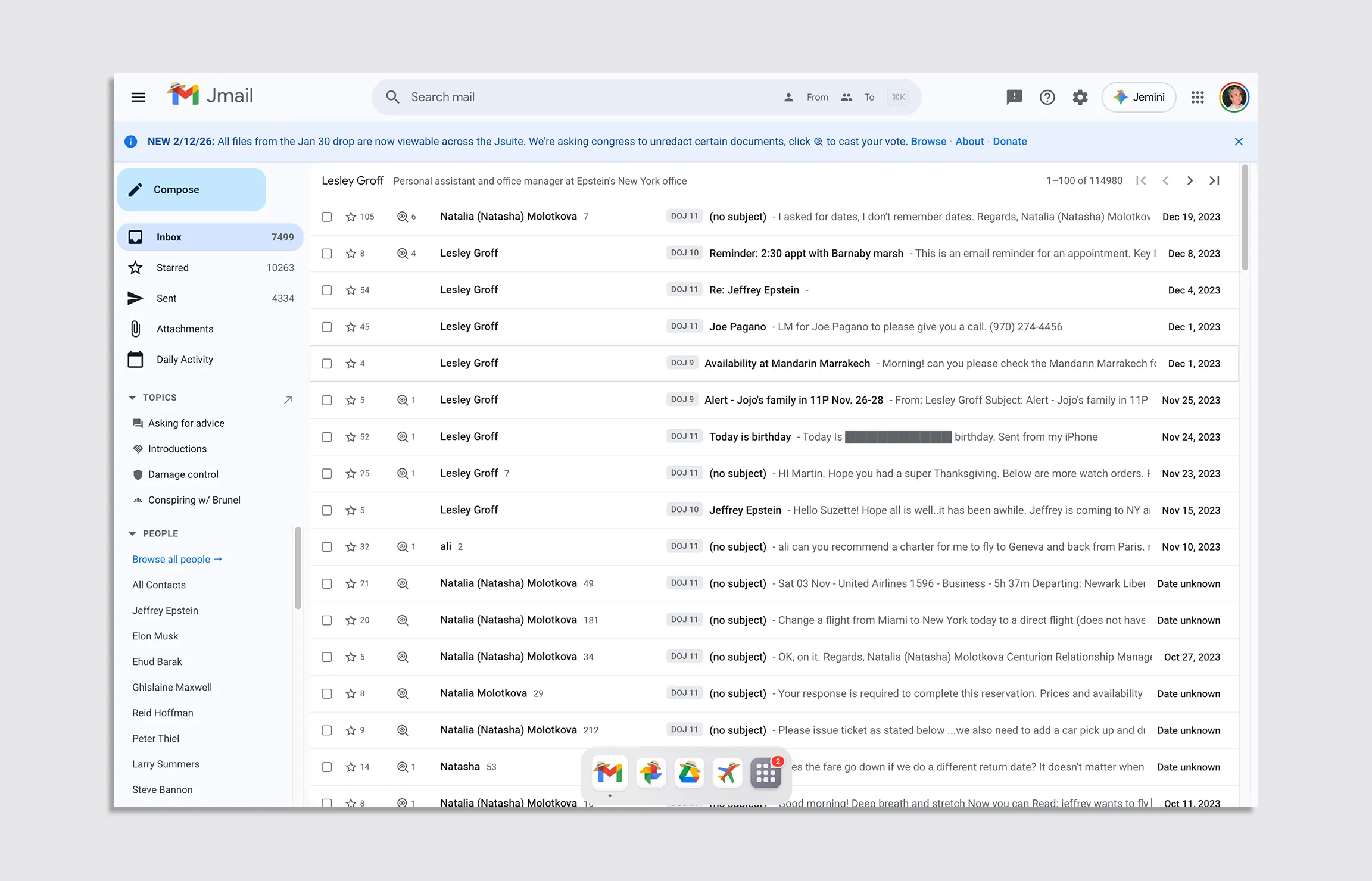
That initial tool, called Jmail, allows users to wade through Epstein’s seemingly endless email correspondence in a Gmail-style interface. To build it, Walz and Igel used Google’s Gemini AI to run optical character recognition (OCR) on the individual emails and map it onto a simulation of Epstein’s actual inbox.
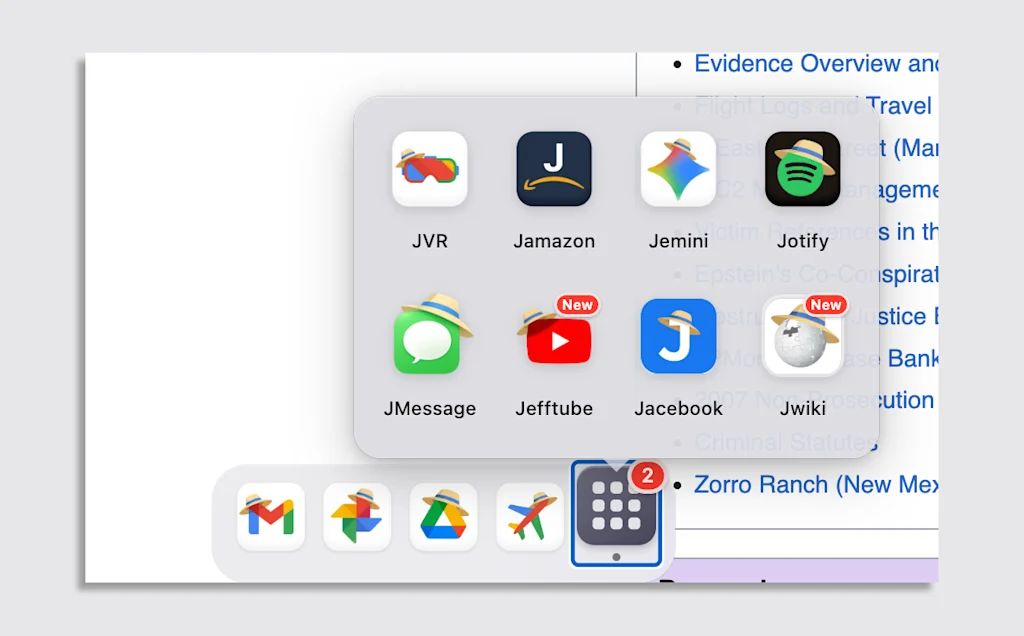
Since then, Walz and Igel have relied heavily on vibe coding to expand the Jsuite into other apps like Jamazon; which tracks Epstein’s Amazon orders through receipts; Jflights, which converts his flight data into a searchable map; and Jphotos, which compiles the files’ thousands of photos into one massive folder. In an interview with the publication Arena on February 12, Walz and Igel said that the Jsuite is receiving an average of 10,000 visitors daily, with a peak of well over a million visitors in a single day.
How to use Jwiki
According to a post from the official Jmail account on X, Walz and Igel’s team built Jwiki using their existing Jmail data. Upon first opening the site, users are greeted with a homepage that includes sections for a daily featured article, top articles by email volume, and top articles by viewership. The wiki includes entries on people, places, and events referenced in the files.
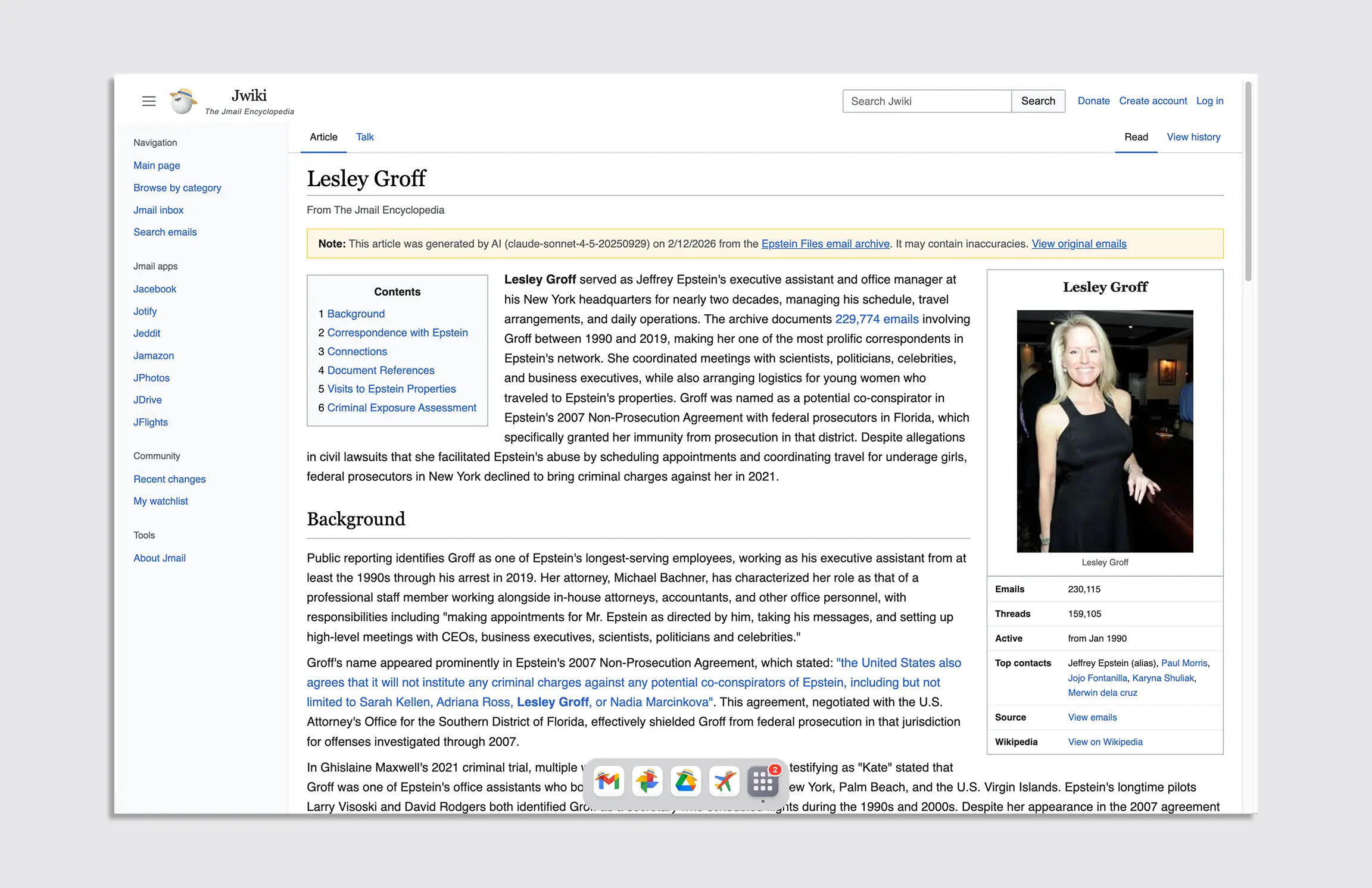
Users can either click on one of these displayed entries or look into their own areas of interest via a search bar. Clicking on Lesley Groff, Epstein’s longtime executive assistant, for example, leads to a Wikipedia-style summary that includes a breakdown of her background, correspondence with Epstein (a whopping 224,747 emails), personal connections, and visits to Epstein’s properties. It also includes a concluding section called “Criminal Exposure Assessment,” which, according to Jmail’s post on X, “cites U.S. codes that people may have been breaking as seen in the Jmail record.”
“We believe that the US government has a responsibility to fully investigate the people implicated by these files,” the X post reads.
Each Jwiki entry comes with the important caveat that its contents were generated by AI, meaning it’s fairly likely the resource is peppered with some inaccuracies and potential hallucinations. To address that concern, the Jmail team announced on X on February 18 that they’d opened the site for public contributions. Users can now sign in, propose edits to articles, and view the full revision history of every change. The edits are then reviewed and either approved or denied by a team of admins. Ultimately, the team says, its goal is “Wikipedia-style open editing, where the articles self-correct.”
As the Epstein files slowly begin to bring powerful business leaders to account (albeit not in a court of law), Jwiki is one of the best tools available to the public so far to understand exactly what the rich and powerful were up to behind closed doors.