Editors’ Highlights are summaries of recent papers by AGU’s journal editors.
Source: Geochemistry, Geophysics, Geosystems
Faults in mountainous regions commonly align with valleys and passes. This has important implications for infrastructures like roads and tunnels along and across mountains. The Brenner Fault in the European Alps is a typical example of such a fault. Unlike most other structures of the European Alps, the Brenner fault dissects these mountains in a north-to-south direction favoring the formation of valleys that connect the southern and northern sides of the European Alps through the Brenner Pass.
Through history, the European Alps acted as a bastion between the Italian peninsula and the European continent with the Brenner Pass as one of the few passages for men, goods and culture. The Brenner Pass remains today pivotal with highways, bridges and tunnels built along or near the Brenner Fault. Although the activity and history of the Brenner Fault over more than tens of millions of years until the late Miocene are relatively well known, its recent activity has long been controversial. Earthquakes aligned along the fault suggest that it is presently active. Nonetheless, evidence of its activity over the recent geological past has remained so far ambiguous.
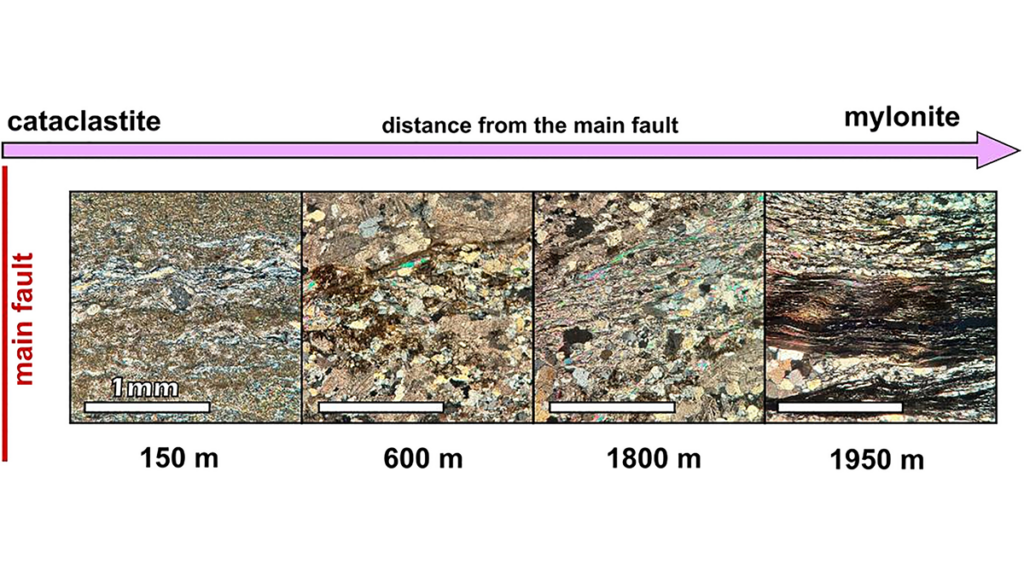
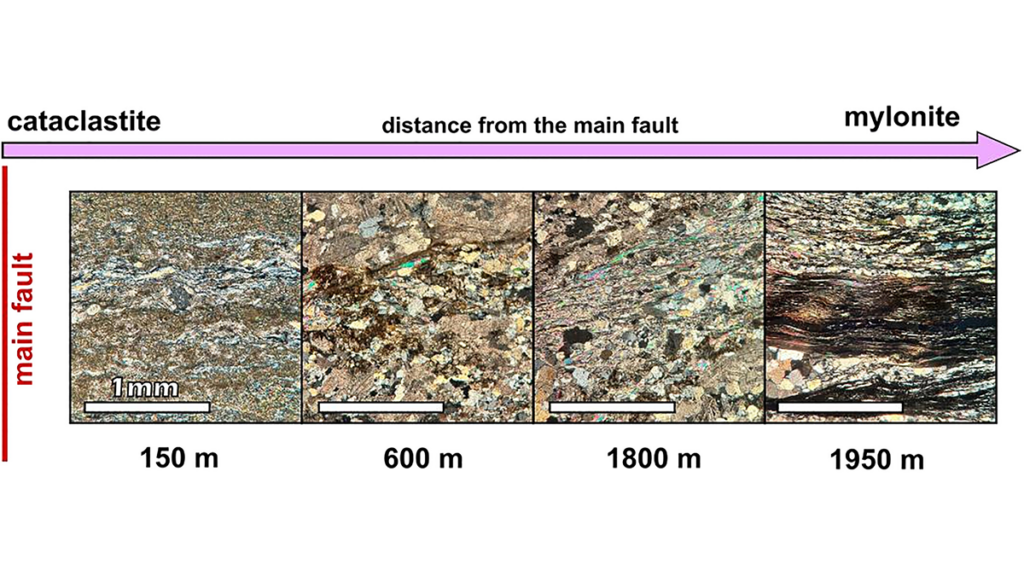
Argante et al. [2026] apply an established dating method, namely electron spin resonance, in a novel way. While this method has been extensively applied in the past to date sediments, the authors use it to detect the rate at which rocks cool through very low temperatures as they approach the earth surface. With their analysis, they determine the timing and relative movements of the fault walls during the Quaternary and demonstrate that the Brenner Fault was active during this time. Their data suggest that the fault activity affected the footwall rocks within one kilometer-distance from the fault. These focused movements of the rocks might have occurred at very high rates (>1 millimeter/year) while away from the fault, rocks moved at significantly lower rates.
Citation: Argante, V., Tsukamoto, S., Tanner, D. C., vonHagke, C., Brandes, C., Zhang, J., et al. (2026). Electron spin resonance thermochronometry indicates quaternary activity of the Brenner Fault (Eastern Alps). Geochemistry, Geophysics, Geosystems, 27, e2025GC012484. https://doi.org/10.1029/2025GC012484
–Maria Giuditta Fellin, Editor, Geochemistry, Geophysics, Geosystems
This research is included in AGU’s Special Collection “Alpine Mountain Belts in 4-Dimensions.”
Text © 2026. The authors. CC BY-NC-ND 3.0
Except where otherwise noted, images are subject to copyright. Any reuse without express permission from the copyright owner is prohibited.